YouTube SEO Strategy: How to Turn Channel Data Into Better Video Performance
 AUTHOR:
Capacity
AUTHOR:
Capacity
A year of paid search data across 104 arts and cultural campaigns reveals that branded paid search alone does not guarantee continuous visibility. Here’s why SEO and SEM work best as a system, not separate strategies.
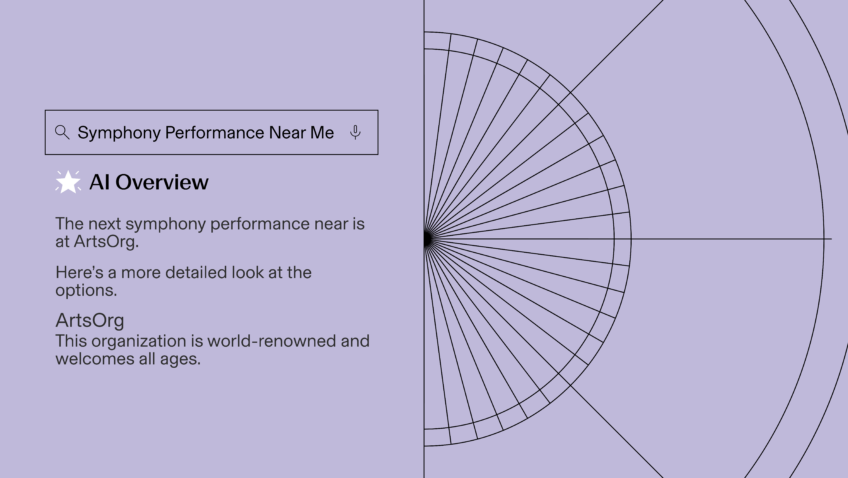
In looking at an aggregate of 104 brand campaigns from arts and cultural organizations, including symphonies, ballets, theaters, museums, and festivals, a pattern became clear: branded paid search campaigns were not consistently appearing for every eligible search.
On average, campaigns captured 39% impression share across their branded keyword portfolios.
Impression share is a directional metric rather than a precise measure of total market demand, and many factors can influence it, including competition, geography, bidding strategy, and campaign structure. Branded keywords are often considered the easiest paid search wins available. Someone is typing your organization’s name into Google. They already know who you are. They’re already looking for you.
And yet, across this dataset, organizations frequently disappeared from paid results for portions of those searches.
That matters because users continue searching whether your ad appears or not. When paid visibility drops, organic visibility becomes the next layer of discovery and conversion.
The dataset also revealed major variation in how consistently organizations appeared in branded search results.
Some organizations maintained 60% to 75%+ impression share across their branded campaigns, while others remained below 20% for substantial portions of the year.
This variation does not point to a single cause. Again, impression share can be influenced by budget levels, competitive pressure, geo-targeting strategy, bid strategy configuration, Performance Max overlap, and auction dynamics.
But regardless of the reason, the outcome is the same: there are moments when paid campaigns are not visible, even on branded searches.
That creates an important strategic consideration for arts organizations investing in search:
Across the dataset, lost impression share broke down into two primary categories:
These metrics should be interpreted directionally rather than as exact measurements of missed market share. However, they still provide insight into the operational realities of paid search campaigns.
Budget limitations can cause campaigns to stop serving during portions of the day or week. Rank limitations can reduce eligibility in competitive auctions.
Importantly, none of these scenarios stop users from searching. They simply shift where visibility comes from.
This is where SEO becomes strategically important.
Organic search does not pause when paid budgets hit daily caps. It does not disappear because of bid strategy constraints. It acts as the always-on layer that supports visibility when paid campaigns fluctuate.
The goal of this analysis is not to suggest that SEO practices alone determine paid search impression share. Many factors influence auction participation and visibility in Google Ads.
However, SEO and SEM are deeply interconnected systems.
Strong landing pages, relevant content, clear site architecture, and strong user experience can:
At the same time, strong organic visibility ensures organizations maintain discoverability when paid campaigns are not serving.
In practice, this means SEO does two things simultaneously:
For arts organizations, branded searches often happen during high-intent moments:
If paid campaigns are not visible during those moments:
Paid search is incredibly powerful, but it is not an always-on guarantee of visibility.
That is why organizations need strong organic presence alongside paid strategy, not separate from it.
The data reinforces several important realities about search visibility for arts and cultural organizations:
Paid search creates powerful moments of visibility and demand capture. SEO helps ensure your organization remains discoverable between those moments and strengthens the broader experience surrounding every paid click.
The organizations with the strongest search presence are not relying on a single channel. They’re building systems where paid and organic visibility reinforce each other.
Ready to evaluate how your organization shows up across both paid and organic search? Let’s build a smarter SEO/AEO and SEM strategy together.
Let’s Collab