First-Party Data Still Wins: How Arts Orgs Build Strong Lists with Meta
Ask CI
In a world where marketing trends change overnight, one truth hasn’t wavered: first-party data is gold. The ability to own and nurture your audience — through email lists, ad targeting, or the occasional direct mail piece — gives arts and cultural organizations a powerful edge. And the best part? You don’t need to reinvent the wheel to make it work.
Meta’s lead generation tools remain one of the simplest, most cost-effective ways to grow high-value lists. From sold-out Nutcrackers to opening weekend anticipation, arts organizations across the country are proving that investing in building first-party data has impacts on both immediate revenue and long-term loyalty.
There was a time where we thought of lead generation campaigns as a “nice to have” — an add-on if there was some unaccounted-for budget, or measurement hack for efforts that didn’t have a trackable, online checkout process. Now, we think of lead generation as a strategic “must have” at certain points in any arts organization’s calendar.
WHY FIRST-PARTY DATA STILL MATTERS
First-party data — patron information that you own in your database — allows you to reach audiences without depending on shifting algorithms or third-party cookies. It means:
- You own the connection, not the platform.
- You can segment and personalize communications.
- You have a ready-to-activate audience when tickets or registrations go live.
As privacy restrictions grow and paid media costs rise, first-party data ensures you have control over your most valuable asset: your audience.
National Ballet of Canada: Presale Hook
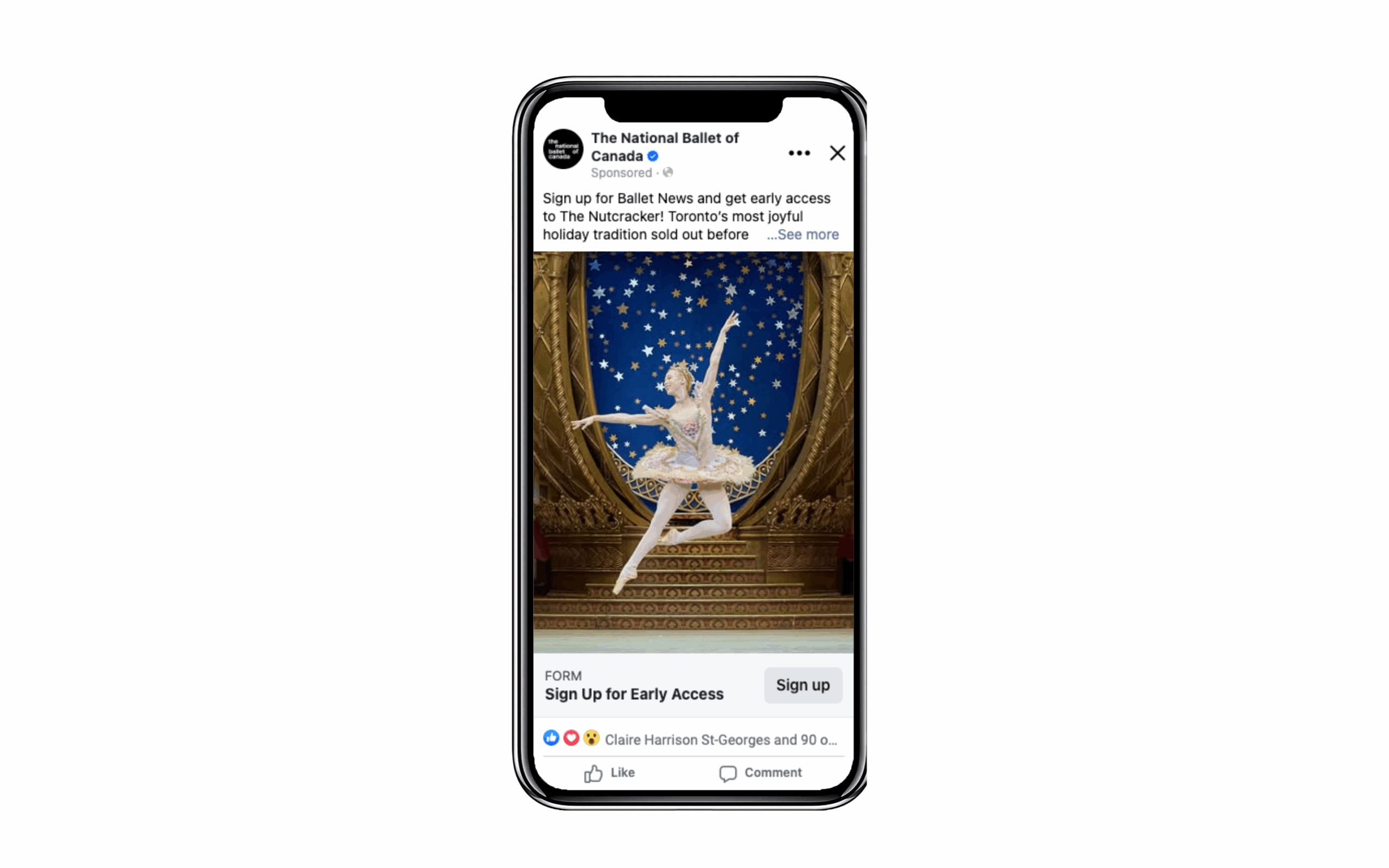
For the last four seasons, The National Ballet of Canada has run a two-week lead generation campaign for its Ballet News newsletter. The hook? “Get early access to Nutcracker tickets.”
The results speak for themselves:
- 2,600 leads in 2024 (up from 1,100 the previous year, with 1,600 from Instagram thanks to creative testing)$25,000 in attributed revenue from those leads ($19K Nutcracker, $6K Swan Lake)
The Nutcracker sells out every year, so the value proposition is clear: join the list, get your tickets before anyone else. NBoC has turned list growth into an annual revenue engine.
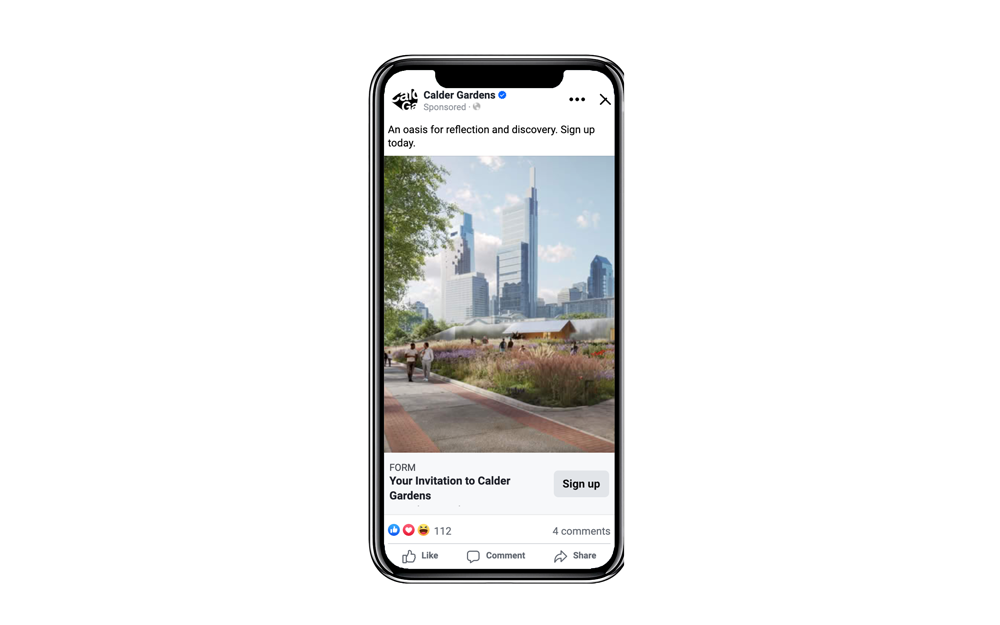
Calder Gardens: Generating Buzz Before Opening Day
What if you don’t have a long-standing list…or even an open building? Calder Gardens in Philadelphia proved first-party data still works.
Ahead of its opening weekend, Calder Gardens dedicated a modest media budget to a Meta campaign. With smart targeting (including lookalikes of Barnes Foundation audiences and local arts lovers), they generated thousands of leads at just $0.44 per lead.
Now, instead of starting from scratch, Calder Gardens launches its inaugural season with an owned audience ready to hear from them.
Hudson Valley Shakespeare: Targeting that Converts
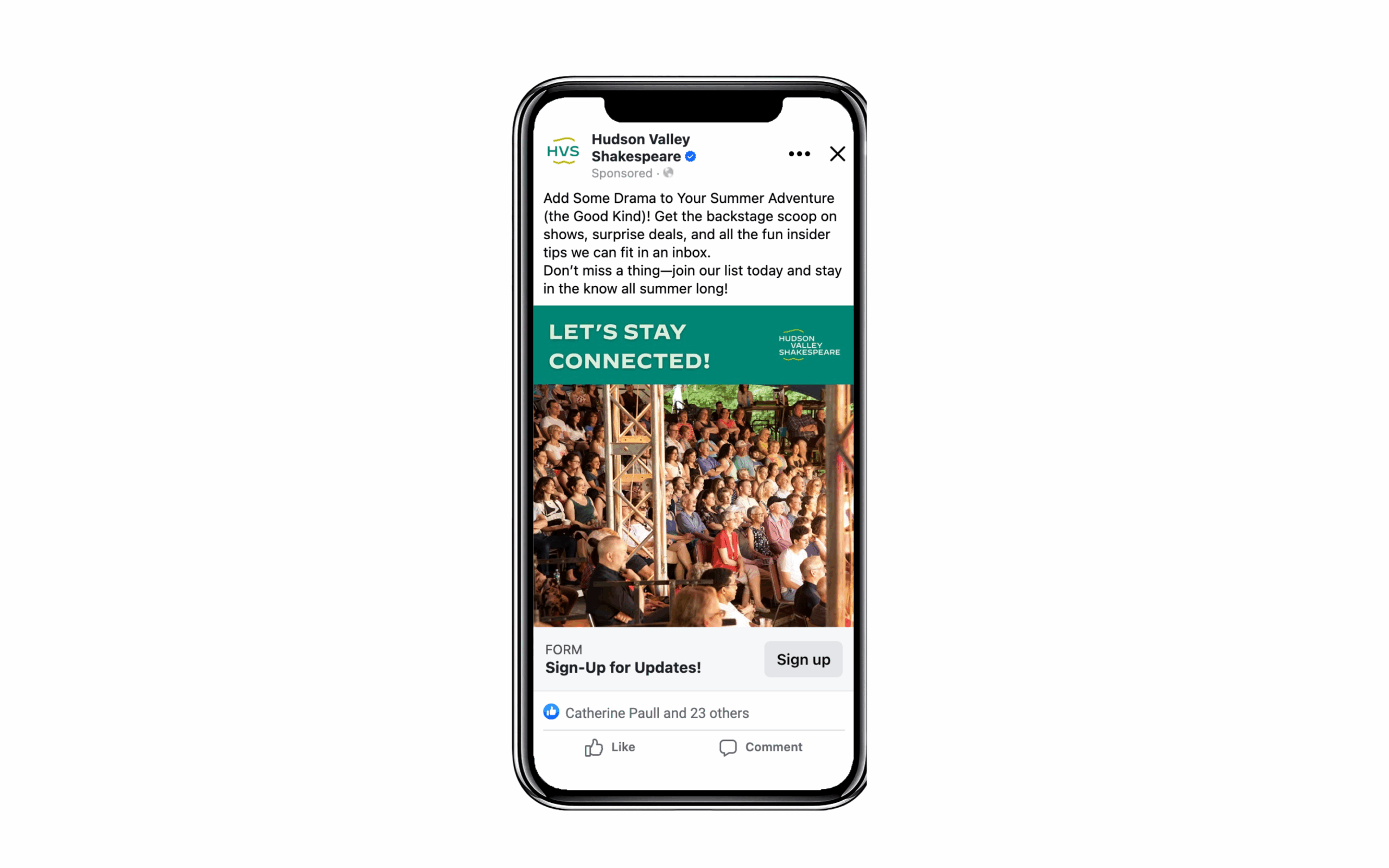
In May of this year, Hudson Valley Shakespeare ran a two-week Meta lead gen campaign. The campaign brought in over 1,000 leads at a cost per lead that was 33% below the theatre genre average for that time period per Capacity’s internal benchmarks.
Even better? During the campaign window, the audience targeted for lead generation contributed $500 in revenue for the festival (before the season’s single tickets even went on sale).
The Hop: Building Lists for Future Seasons
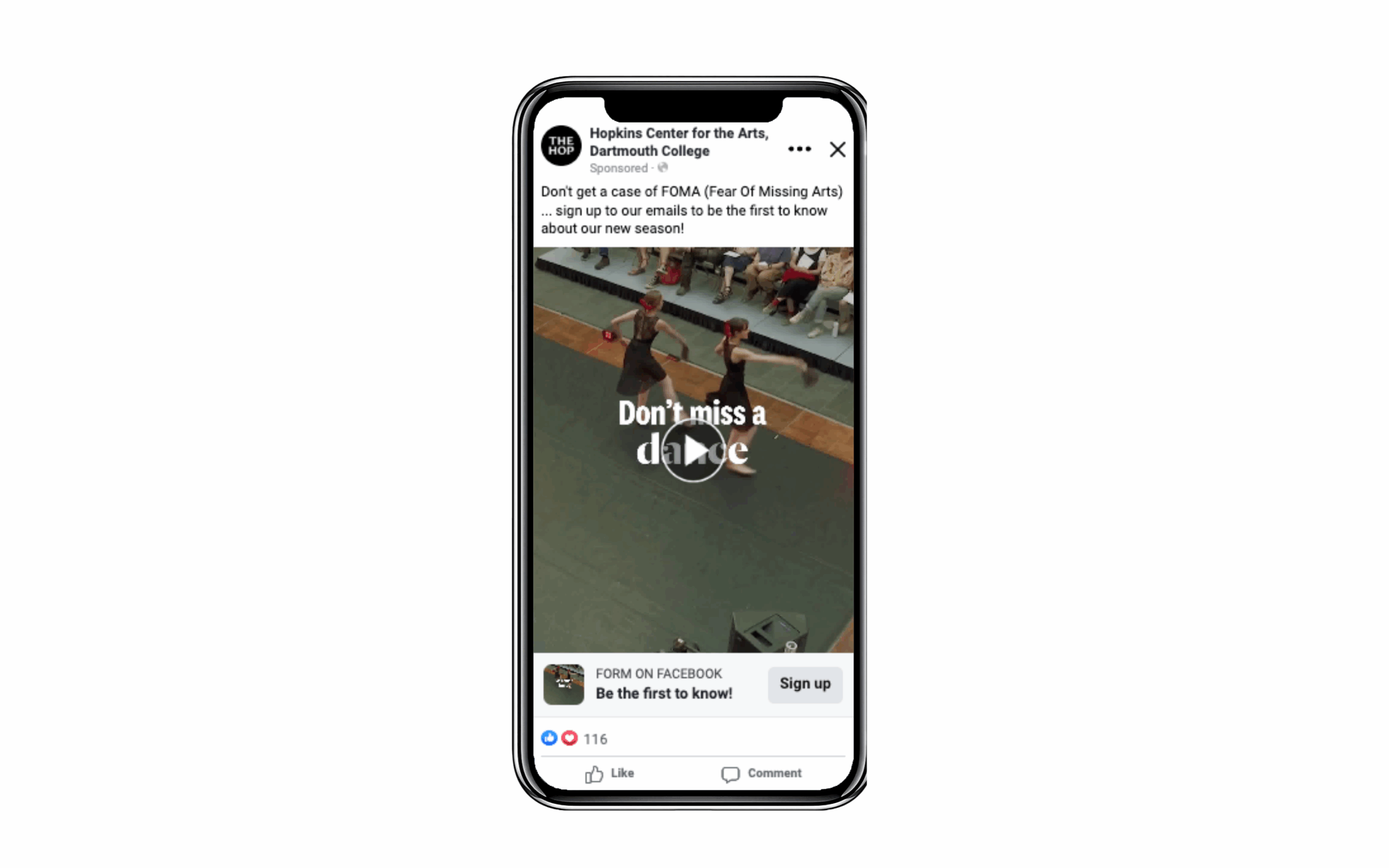
Sometimes the win isn’t today’s ticket sales — it’s tomorrow’s. The Hop, a university-affiliated performing arts center, launched a lead generation campaign ahead of its new season and campus opening.
Results included:
- Nearly 300 leads
- A cost per lead that was $1.35 cheaper than their previous campaign
- Strong performance from mid-funnel audiences like Social Engagers and Lookalikes
By capturing interest early, The Hop ensured its marketing team had a warm audience to activate once ticket sales opened.
Music Education: Leads as a Sales Proxy
For high-value programs like summer music camps, direct attribution can be tricky. But leads still deliver.
Two different music education programs built lead lists through Meta, focusing on video viewers, engagers, and lookalikes. Even a small handful of registrations translated into an outsized ROI, given the high tuition costs.

THE BOTTOM LINE
First-party data isn’t just a privacy-compliant fallback — it’s the foundation of sustainable growth. Cultural organizations that invest in Meta lead generation campaigns are seeing tangible payoffs: higher ticket revenue, lower acquisition costs, and stronger relationships with their audiences.
If you’re looking to make your marketing dollars go further while building a long-term asset, start with list growth.