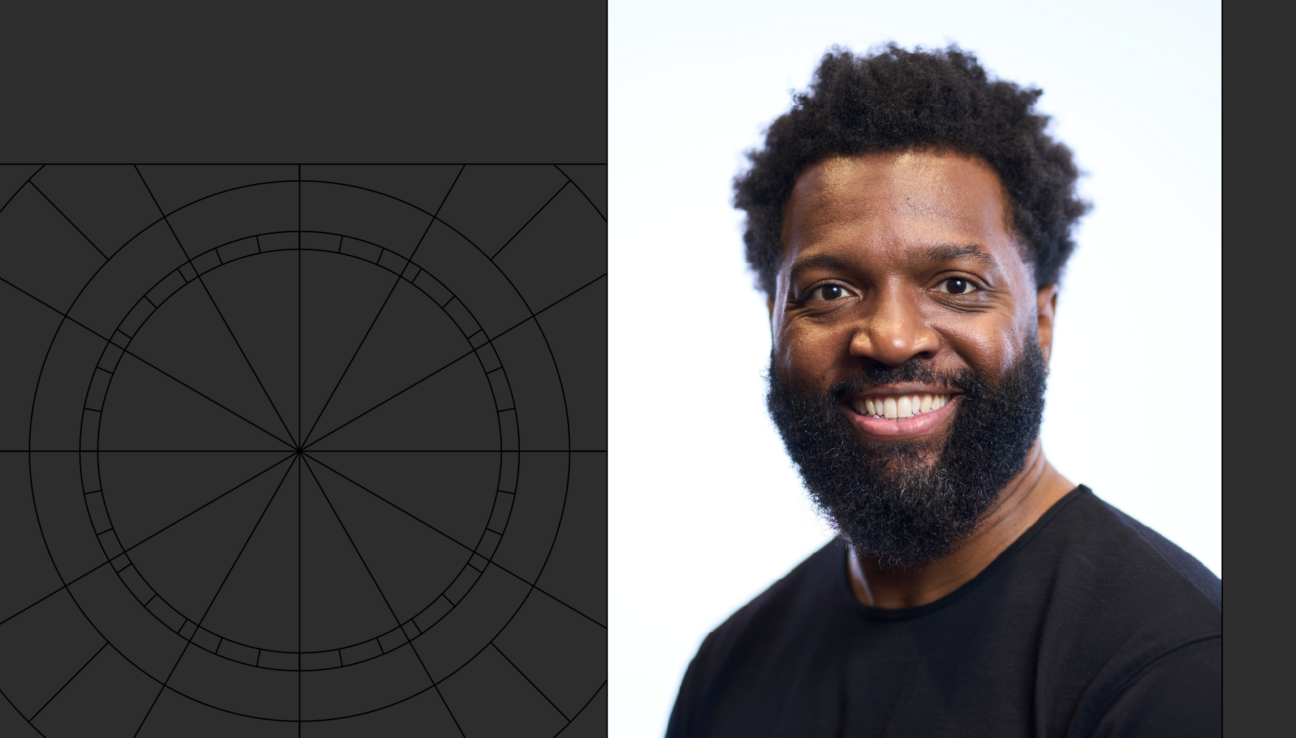
Cory Pattak, Lighting Designer
For Cory Pattak, lighting design has always carried a sense of magic.

This episode is hosted by Monica Holt.


Risk is usually something leaders are told to minimize. But for Sammi Cannold, it’s essential to success.
As an award-winning director across Broadway, film, and television, Sammi has built her career on ambitious projects—like staging Violet on a moving bus and reimagining Ragtime on Ellis Island. What stands out isn’t just the boldness of the choices, but the intention behind them: using place and performance to help audiences experience even the most familiar stories in new ways.
In this episode, Sammi shares how she found her voice as a young woman in a male-dominated field; how she brings new perspective to beloved works while still honoring their legacy; and what it means to be an “actor’s director” whether she’s working on stage or the silver screen. Plus, she shares why advocacy in entertainment doesn’t always have to feel like eating your vegetables, and breaks down the false dichotomy between mission-driven and commercial work.

Monica Holt: Welcome back to CI to Eye with Monica Holt. I’m so glad you’re here. I was happy to spend some time in December reconnecting with Sammi Cannold. While most directors spend their careers mastering one medium, Sammi is building hers across all of them — theater, film, television, live ceremonies — while simultaneously challenging some of the most entrenched assumptions about who gets to tell stories and how they should be told. When we sat down in December, Sammi was in Italy beginning her work on a lifelong dream project: being part of the creative team for the 2026 Olympic opening ceremony. Sammi and I talked about the real challenges in her career, holding creative vision while managing institutional risk, building partnerships between directors and marketing teams, and creating sustainable systems that let you enjoy the work instead of just surviving it. What I love about talking to Sammi is how honest she is about all of it. The risks, the joy, the exhaustion. Plus, her reward system for getting through to-do lists involves Bridgerton and a random number generator, which might be the most relatable thing I’ve heard all year. Let’s dive in together. Sammi Cannold, welcome to CI to Eye. Thank you so much for being here. It is so good to get to spend some time with you, not backstage, not in the rush of production, but really just the two of us sitting down together.
Sammi Cannold: Thank you so much for having me. I’m so thrilled to be here and I’m really excited for this conversation.
Monica Holt: Me too. I know you’re in a different time zone, so we really appreciate you making this all work. With your story in particular because we’ll get to talk about some sides of theater and entertainment that everyone doesn’t always have access to or knowledge about, I think that a really good way of grounding that is just by starting out asking you about how you grew up because there was a lot of theater and film in your life and what was it like being a part of that world? Did it feel like this was a natural path that you always wanted to explore?
Sammi Cannold: I was so fortunate to be born into a theater-film family. My mom was working in theater and documentary film when I was growing up and my dad was working in film and TV as well. It created this really vibrant artistic childhood that I feel so fortunate to have had, and a lot of it was spent in the back of rehearsal rooms or in tech, and I think that it created this assumption that I was going to go into the family business, not because they pressured me, but because I clearly loved it so much. I was always begging my mom to bring me to rehearsal and I think it’s the opposite of the journey that a lot of kids have where they have to convince their parents to let them go into the arts. I feel really fortunate in that way and I so embrace the privilege of it because I think a lot about Malcolm Gladwell’s 10,000 Hours Rule where he says that in order to become an expert at anything, you have to have 10,000 hours of practice at it. And for me that 10,000 hours started when I was a kid because I was introduced to the environment so early. So I’m really grateful.
Monica Holt: That’s wonderful. And so well put. Having the perspective from a young age not just that the arts are vital and important to the world around us, but also that they’re a viable career path, that they’re a place where you can pursue a passion while at the same time learning those business skills, as you say, is a privilege and also just what a wonderful thing to experience and also that you didn’t resist. That you didn’t say, oh, well I want to be contrarian and therefore… Or did you have a phase like that?
Sammi Cannold: I did have a period of revolt when I was in high school. I told everyone, I was like, I’m not going to do what my parents do. I’m going to go work in international education policy. I mean, total 180. And I think that part of that was that I’m very cognizant of the conversation around privilege and how it impacts what we do and how it impacts our access to what we do. And I think that I wanted to sort of figure out a way to contribute on my own terms. And what I ultimately learned after I got out of that mercurial period of revolt was that there was a way to embrace that privilege and figure out how to pay it forward to people who might not have the same lottery of theatrical birth and simultaneously pursue a career on my own terms. So I just continue to be really grateful that I had that exposure because without it, I don’t know that I’d be doing what I do.
Monica Holt: Of course. I think that’s a beautiful way to have things in balance and perspective. So you get to college and you have this opportunity to work as a PA on Porgy and Bess with Diane Pollis who is a Tony Award-winning director, and you are looking at someone who is taking hold of a room and creating an experience. How did that influence your sense of what it means to be a director watching someone like Diane work that young in your career?
Sammi Cannold: I mean, it was so thrilling. I was so in awe of her. She was my life hero. I mean, my friends made so much fun of me in college. I had photos of Diane Pollis on my wall, like — What kind of strange kid? And now over a decade later, I’m so lucky to call her a mentor and a friend. I was so enamored with her work, I think, initially because I had gone to see the Broadway revival of Pippin and I remember sitting there and watching it and being so knocked out by how somebody had made a story that we all knew and loved and music that we all knew and loved feel completely anew based on her interpretation of it. And I had this experience when I saw it where I turned around in my seat at intermission. I saw her standing at the back of the house and it really, for some reason, seeing her there and understanding the link between what I was seeing on stage and this person who I looked like was so helpful to me in understanding that this was a career that was available to me because I think it’s one thing to grow up in the theater, to be around all of it.
It’s another thing to see a female director specifically who is doing exactly the thing that I was excited to be doing myself. And so when I got to work for her on Porgy, it was really quite life-changing because I got to understand the process of how she took a known beloved property and then made her own version of it up close. And it just really opened my eyes to what that meant and what I could do in my own career in the world.
Monica Holt: It sounds like all you saw is potential and ways to channel your energy and your thoughts. I think sometimes as you express and certainly we’ll talk about more, being a woman, being a young woman, in a field that we know is dominated by men and sometimes by a very singular perspective… were there moments where you questioned whether you belonged in that world?
Sammi Cannold: Definitely. There were moments for me as a young woman that shaped my experience of what it meant to enter the field. I remember very specifically, I directed a concert version of Ragtime on Ellis Island when I was 22. And on the first day of rehearsal, Madeline Benson, who was the music director, who — she’s similarly, she was maybe a 24-year-old young woman at the time, we went shopping together to buy clothes to make ourselves look older because we were so nervous about being at the head of this room of Broadway legends when we were babies and worried that there wouldn’t be a sense of trust and authority. So we marched in on the first day in our older looking outfits, whatever that means. And one hour into the first day of rehearsal, an article came out on playbill.com and the headline was “Meet the 22-year-old director behind Ragtime on Ellis Island.”
And I was like, oh God, now everyone knows I’m 22. And what I understand now is that my male colleagues when they were 22, didn’t have the same degree of concern about trust and authority. And I think that what’s interesting to me now is I actually find that I experience more related to my gender now than I did when I was first entering the industry, which is the opposite of what I thought it would be because people have a certain image of what a Broadway director is, and sometimes there’s a bit of a recalibration in terms of what it means that this person who still looks like a 12-year-old girl is a Broadway director, and how do you reconcile those two things? And I think that’s very gendered.
Monica Holt: That’s interesting to look at it from that lens because you’re right, I think that young female in charge question is one that a lot of us encounter. I love the experience you’re sharing about the two of you going shopping for ‘What are the clothes to fit the image that we’re trying to present?’ I think is something that at least to me feels universal in those moments of how do we become the thing that people are comfortable seeing? It takes time to evolve past that, as you well know. And yet, as you say, even with more experience, more credit, more valuable relationships and trust-building in the industry, you are still facing this assumption, this stereotype of what folks have anticipated for so long. And so there is a sort of armor that might not be the physical suit shopping that you did then, but that still exists when you have to walk into those rooms at first. At what point did you feel… maybe it’s self-assured enough to walk into those rooms without feeling apologetic for your age or apologetic for your success, frankly?
Sammi Cannold: I think that assisting female directors who both won Tony Awards was so instrumental because I think that a lot of my female colleagues assisted men and couldn’t see themselves in the rooms that they were occupying early in their careers. And for me, I spent four to five years assisting women. It became to me entirely normal in my brain to do that. And so I just sort of channeled that confidence and went forth and there were moments where it would pop up and I would realize it. I mean, I remember a very specific moment with a technical director where we were in the middle of figuring something out, and I think that there’s an assumption sometimes that young women in particular don’t understand the language of technical theater. And this technical director was speaking to me in a way that it was like I was five. He was like, ‘There’s this thing called the moving light,’ or… I don’t remember exactly what the conversation was about, but it was very rudimentary and at the time I was maybe 25 and I didn’t yet have the courage to say back to him, I have a degree in theater.
Monica Holt: I’m not new here.
Sammi Cannold: I know what a moving light is. So I just was sort of standing there and taking it. So my dear friend and colleague, Jason Sherwood, who is a set designer, jumped in and said, Hey, and so I just want to recalibrate this conversation. Sammi knows exactly what you’re talking about. You can speak to her about this, this, and this, and I don’t really appreciate that we’re having this conversation this way. And I will always remember that moment because it was something I didn’t yet have the courage to do for myself. As small of a moment as it was, it was a big turning point for me because it was something where I was like, oh, if this person can stand up for me, I need to be able to stand up for myself.
Monica Holt: Yeah, that’s absolutely right. Kudos to Jason for stepping in, and I think your point about claiming that space yourself, to be able to assert yourself, even if it’s, as I sometimes say, fake it ’til you feel it, it still makes a big difference. So you mentioned briefly Ragtime on Ellis Island. You have this wonderful history of working on site specific performances and kind of re-envisioning the connection between the material and the space that it’s happening in. You staged Violet on a moving bus, which I encourage everyone to do a little reading up on because that was your sophomore year in college, is that right?
Sammi Cannold: Yeah.
Monica Holt: That’s incredible. And then Ragtime on Ellis Island. How do you think about a project’s physical space and how it impacts the story that you are trying to tell, and what is it that excites you about site-specific work?
Sammi Cannold: I think for me, the draw to site-specific work initially started somewhat out of necessity because when you’re a young director, people aren’t handing you the keys to theaters. They’re not saying, do you want to do something on our main stage? So I was excited about what it would mean to find spaces that were in a roundabout way more accessible. Both of those productions, Ragtime on Ellis Island and Violet on a bus, were just a dream. I mean, it was so thrilling to get to make something with no parameters or guidelines. It was sort of like reinventing a wheel. And both of those projects taught me so much about the conversation between the story and the space and how it can be symbiotic. I think that I’m really excited about pieces in which the site that they’re in enhances the story and the story enhances the site.
And it was really cool on both of those to feel that symbiosis. To me, the moment that sort of captures my love of site-specific theater personally is when we did Violet on a bus, the opening number of that show is called On My Way, and we staged it such that when Violet sings for the first time ‘And I, I am on my way,’ the bus starts to move on that lyric. And the 360 full activation of all your senses that happens when you literally move on a lyric was just like, oh, wow. There’s something really interesting there that I’m still really obsessed with and trying to find other things that achieve that spark.
Monica Holt: For sure. Can you explain for us how Violet on a bus worked?
Sammi Cannold: Yes. I’ve actually been thinking a lot about it recently because we’re trying to bring it to New York. It’s a puzzle piece of a — I know. But yes, basically the way that it works is you as an audience member would go to a designated bus stop, which in both cases was outside of a theater and the bus would pull up. Some of the actors would already be on the bus. You get onto the bus, you have an assigned seat, you sit down in that seat, and then six of the seats are saved for actors. When the show starts, the bus drives for about 40 minutes, and it has a very specific route, but basically you are on the bus and characters are getting on and off at different bus stops depending on when they enter and exit the story. And then it stopped at two different locations. We had one location that was a space that we retrofitted to look like a nightclub, and then a second location that was a church that was loaned to us, and we performed the big gospel number in this church in Cambridge, Massachusetts, which was amazing.
Monica Holt: As you’re thinking about productions and I mean just the real innovation that comes with a rethink outside of the proscenium, how do you weigh the risks of going down that kind of innovation, literal outside-the-box premise, against the expectations of what audiences have coming into it, or maybe even more so as you’re thinking about what you’re doing next, producers and institutions that you’re working with, and what their tolerance is?
Sammi Cannold: I have two sort of schools of thought that I’ve taken from others about this. And the first is when I was in college, I had a production that I wasn’t sure if I should go ahead with it or not. And I actually wrote to Diane Pollis — this was after I had interned for her — and I said, should I go ahead with it? And she wrote this beautiful email back that basically the headline of it was, ‘Success is completely tied to how much you are willing to risk.’ And I thought that was thrilling and also made me want to go vomit because it sort of like it’s so true. You know what I mean? It’s like I think any great innovation in history required a degree of risk-taking to say, okay, this might not work, but here we go. I think about that all the time, where: what does it mean to play this safe?
And playing it safe is not going to lead to being wildly successful. And at the same time, taking a big risk could also lead to being a massive failure. So you sort of have to weigh those things. But the other thing that has shaped my thinking about it recently is that when you’re 22, when you’re in college, you don’t have as much to risk because nobody knows who you are. You could do seven failed productions in a row, and the New York Times isn’t going to be like ‘Failure director,’ whatever, but when you have Broadway at the front of your name or you are working for an institution that has given you millions of dollars to make something and you feel an obligation to come through for the people that you’re working with, that weighs into the calculus a lot for me of, how can I take a risk but also have some sort of safety net so that I’m not letting down the people that trusted me. So it’s a bit of a mental equation that can really plague directors, I think.
Monica Holt: Of course. Well, and also satisfying your internal creative curiosity, balancing the projects you do so that you’re not losing kind of your tie to what makes your cup full at the end of the day. You mentioned it’s different than when you have Broadway in front of your name. So your Broadway directorial debut was in 2023 with How to Dance in Ohio. Would you mind just sharing a little bit about how the musical came about, but also because I think there’s a lot of richness to how you and the creative team chose to tell that story and really the prioritization of authentic representation in a way that there aren’t so many examples of in terms of the new musical Broadway canon. So could you just share a little bit about that for the listener who might not be as familiar?
Sammi Cannold: Absolutely. So How to Dance in Ohio is about a group of autistic young adults at a counseling center in Columbus, Ohio, and their therapist, Dr. Amigo, who has this idea to create a spring formal dance to help them confront some of the challenges and open questions in their day-to-day. And it revolves around this dance as sort of the lead up to this dance, but it’s also a slice of what the lives of this group of individuals are like. And it was originally a documentary and then Jacob Yandura and Rebekah Melocik turned it into a musical under the guidance of the incredible legend director Hal Prince and Hal shepherded the musical with them for the first, I think, year and a half of its development. And then he very sadly passed away in 2019. And when I heard about it, I was so moved by the prospect of even being in consideration for it because first of all, my brother is autistic, and it was a subject matter that I was really excited to engage with, see if I could contribute something in terms of advocacy. But equally, Hal was an enormous hero of mine. I mean, I think every director in the American theater would say some version of that, probably. He just is the grandfather of all musical theater directors in my opinion. And to be given the opportunity to try to continue and evolve the work that he’d begun was just really staggering to me.
Monica Holt: Yeah, it’s beautiful. And it is also hearkening back to our earlier conversation. That season when you made your directorial debut on Broadway was a record breaking year for the number of Broadway shows that were directed by women. Do you still see the momentum there? Because I know the trends haven’t been as consistent in the years after.
Sammi Cannold: I mean, no, the momentum is gone, and I don’t know why, but I was looking at some math. And so in that season there were 16 plays or musicals directed or co-directed by a woman out of 39 shows in the season. So that’s about 41% of the shows in the season, which is a record. In the 2024 – 2025 season, there were 11 plays or musicals, directed or co-directed by a woman out of 43 shows in the season. That’s 26%, so 41 down to 26. And then this season so far, there are six plays or musicals directed by a woman out of 33 shows in the season announced. And that’s 18%.
Monica Holt: Yikes.
Sammi Cannold: At first, I think when I saw the numbers last season, I was like, oh, okay, things fluctuate. 2024 – 2025 is a fluke. We were trending upward and then this year… but I think that the fact that this current year is so low is a really bad sign.
Monica Holt: Yeah, yeah, no, I was like, I don’t think we’re going to get a positive spin out of this one.
Sammi Cannold: And I think that what’s particularly crazy about it to me is that the year that it was 41%, Danya Taymor won the Tony for best director of a musical. So it’s not a referendum on women succeeding in these roles because clearly they’re succeeding. So I don’t know. I mean, part of me thinks that maybe it’s related to sort of the unfortunate path that our country as a whole is taking and in terms of representation and who’s in seats of power where, and I mean it’s important to say that these numbers, as sad as they are, are not as sad as the numbers for BIPOC directors on Broadway. So as much as this is a problem, that’s an even bigger problem.
Monica Holt: It’s disheartening that we still are having these same conversations it would seem, and if folks don’t already follow — there’s an Instagram account called The Agnes Index that I believe Katie Spelman runs in which she calls out the makeup of creative teams for mostly shows that are opening on Broadway, but she’ll do some regional shows as well. And it’s pretty sobering every time you read that. And I think some of that comes down to where the money is coming from and how the people with the money are making decisions more than it’s necessarily about training and pipeline, which are the go-tos that folks who are already in the industry try to bolster as much as possible. But at the end of the day, it’s folks with money who are making these decisions. It’s even more interesting to me because of the richness a new perspective can add on text that has already existed as much as it is with new musicals that are coming from the minds of people who hadn’t been represented holistically on Broadway for a long time. And of course, I think of you in that context, we worked together when you directed the Sunset Boulevard with Stephanie J. Block at the Kennedy Center, but also from the Evita that you directed first at City Center right before it went to Shakespeare and ART. And they are female-centered stories. Undoubtedly they are stories about these complicated, interesting, powerful women, but they were written by men. And so then to have your lens on them I think is something so wonderful about how we reimagine these contemporary classics. So I’m curious from that perspective too, as you work on shows that are so clearly driven by women when they’re on stage but conceived through the minds of men, how do you approach a situation like that as a director, as someone reinterpreting the text?
Sammi Cannold: I think for me, honestly, that’s the most exciting challenge because it’s an opportunity to say, I may have something to add or a dimension to add to this piece that is already so beloved. And Evita was something that I had been sort of thinking about since I was a teenager, and it was really important to me to say Hal Prince’s original and Michael Grandage’s production that I saw on Broadway when I was a teenager were both so incredible in their own right. And what I tried to do and what our team tried to do was not meant in any way to negate the value of those productions or of the original source material. It was to say, I think that in the year 2024, whenever we were doing it, there is something that we can say about what this piece feels like in the hands of women and Argentinians.
And it was so exciting to get to do that and to get to iterate on it. And I think that for me, the production that we did when we got to DC really felt like finally we got it right in terms of what we wanted the messaging to be. And I have conflicting feelings about reviews as every artist I think probably does, but Peter Marks wrote this extraordinary review in the Washington Post that was the nicest thing anyone has ever said about anything I’ve ever done, and just was so unbelievably meaningful to myself and to my whole team because here’s Peter, somebody who does not fit the demographic that created this piece and tried to make people see it anew. And yet he understood exactly what we were trying to do and was so excited by what we were trying to do, so much so that he called Shakespeare Theater Company the next day and said, I know I just put out this review, but I have to write a feature on this production. I’m so invigorated by it. And then subsequently, he and I got on the phone and just had an hour long conversation about the choices in this production for fun. I mean, that exchange to Me was like, aha.
Monica Holt: All that to say, you are also directing not just at the highest levels of theater and opera, but we’ve got to talk a little bit about television too. I will always be a Shonda Land girly and the squeal I squelt when I saw your name very recently on Grey’s Anatomy was loud, but very delighted. Talk to me a little bit about how that came about and what that experience was like as something that I would think would be completely different.
Sammi Cannold: It was the best, I mean the best. It just truly was such a phenomenal artistic experience when I went to school, didn’t study film or TV at all. And so I didn’t think that was necessarily going to be part of my journey at least so soon. And then through a number of wonderful people, I got exposed to what it would mean to be an episodic director in addition to any film director, and found that I really especially loved the form of episodic. And I have a friend who was a writer in the room on Grey’s two seasons ago, and she made it possible for me to come shadow for a day two seasons ago. And I met a number of people including a senior writer named Mark Driscoll and Debbie Allen and Chandra Wilson. And they collectively made it possible along with Annie Laks at Shonda Land for me to come shadow for a full episode last spring.
So I shadowed Chandra and it was just the most amazing crash course in how to direct in that medium. But what was beautiful is that Debbie and Chandra both come from musical theater, and so we speak very much the same language, and I think they recognize that in a way, an episodic TV set is somewhat similar to what it is to make a musical because there are so many moving parts and you have to be thinking in so many different dimensions at the same time. And so everybody at Grey’s so generously gave me the opportunity to direct this past fall, and it was the best. I loved every second of it and I can’t wait to do more of it.
Monica Holt: I love hearing that. How conscious of you, as you’re putting yourself into new spaces and really taking experiences and proving how they can cross different genres of arts and entertainment.
Sammi Cannold: I think the multiple adjacent industries part is something that really took shape for me this year because I’ve always wanted to work across industries, which really came initially from a love of ceremonies, which is similar to theater but different. And I was like, Ooh, is it possible to do both? And we’re recording this in 2025. This year is the first year that I’ve gotten to work in theater, indie film, episodic TV, live TV, and ceremonies, and what an incredible privilege that is to cross so many related art forms. And I think that what I’ve learned from it is that they’re feeding each other in the most beautiful way that I didn’t really expect where the language of the camera that I’m learning from episodic and from — I worked on the Tony awards this year — that language I then apply to how I think about a musical, not just how we shoot the sizzle reel of the musical, but how in certain moments it might make more sense to create a more cinematic experience.
How can you think about the language to your film and transplant it and vice versa? I think that I was initially pretty self-conscious going into episodic TV because I was like, I didn’t go to film school. I don’t necessarily have the same technical know-how as a lot of these TV directors, and I’ve read tons of books and listen to all the podcasts, but I was nervous about actually doing it. And what Debbie Allen said to me, because she’s the producing director on Grey’s Anatomy among 10 million other things that she does, is she was like, I’m counting on you to be the actor’s director that I know you are because you come from the theater. And she was like, I want you to give these actors a lot of notes and use what you bring from the theater. Don’t hide it because you think it’s not relevant to this world. And I really embraced that and was so grateful that she wasn’t asking me to become a director that I wasn’t, but to sort of merge a new skill set with an old skillset, which was really cool.
Monica Holt: What a gift. I’m curious how you choose what projects to do. Clearly there’s a curiosity element to it, but what really informs the choices that you make and the way that then you carry out each of those projects?
Sammi Cannold: I think that it’s really about being drawn to work that I come across that feels like it has an underlying mission. Sometimes that mission is overt and sometimes it’s more subtle, but I very actively seek out projects that are advocacy driven. I thought about it a lot on Grey’s Anatomy actually, because I was like, if you were to say television is advocacy, I don’t know what the first thing you might come up with would be. Maybe a documentary advocating for some movement or whatever it may be. But I think I was so moved by how an episode of Grey’s Anatomy with the millions of people who put eyeballs on it, is advocacy in that it is teaching people how to be better stewards of their own health, how to be advocates for their family members, how to have respect for medical practitioners. The episode that I directed, one of the storylines was about breast reconstruction surgery, and there was a lot of advocacy that Grey’s and ABC and Shonda Land and everybody put out when the episode came out about insurance practices related to that surgery, like an awareness campaign about that surgery.
When I talk to doctors, whenever I go to the doctor and say, I worked on Grey’s Anatomy, a third of the time, a doctor will say to me, I became a doctor because of Grey’s Anatomy. And I think that is so crazy to me that this piece of art is making the world better by increasing the number of people who can save lives. That just really moved me a lot because you might look at a single episode and not think about it that way, but it really is a form of advocacy in and of itself.
Monica Holt: I’m so happy to hear you say all of that because I think we get a little caught up sometimes, particularly in the nonprofit performing arts world, in terms of this, what is the mission arts work and what is the more commercial arts work? And that’s where we lead to a segmentation that doesn’t allow us to acknowledge what you’ve just said, which is creativity no matter what form of expression or outlet is something that we should all be rallying around and supporting in all of its forms and not trying to put different versions of it into boxes because we don’t know how it’s impacting every life that it touches.
Sammi Cannold: Couldn’t agree more. And I think that what’s important to me is that people know that advocacy doesn’t mean eat your vegetables. It can be entertaining and advocacy at the same time. It can be commercially successful and advocacy at the same time. It’s like, Wicked is advocacy. Yes, I’m drawn to things that are advocacy as overtly as How to Dance in Ohio, which is very specifically advocacy in its stated mission, but also drawn to things like Wicked that are subtler in what they are advocating for.
Monica Holt: As you look back to young Sammi and your earliest of experiences, what advice would you give her about pursuing a career in arts and creativity?
Sammi Cannold: I would tell her to enjoy it more because I think that I spent the last decade working so hard to get where I wanted to be. I didn’t sleep a lot. I spend my life sending emails and then there are moments when I’m in the rehearsal room or when I watch a scenic transition come together where I’m like, wow. And I’m reminded of what the thrill of it is for me personally, but I think that I haven’t prioritized enough loving it. And I think part of that is when you’re so sleep deprived and you’re overwhelmed by the mountain of things you have to do to pull something off, it’s hard to embrace the joy of it. And so one of the things that I’ve been working on a lot this year is creating systems that make that more sustainable and not sustainable in the sense that I can’t do it currently, but I can’t do it and enjoy it. And so I have a wonderful assistant who is now making life so much easier in a way that is starting to allow me to be present more, which I’m grateful for.
Monica Holt: How important, and I mean especially for you, someone who’s seen so much success already, but you’re still early in your career obviously, so a gift in some ways to be taking that lesson to heart now. When there are kind of tireless engagements and working through the night as you’ve said, what helps you maintain that kind of creativity and sense of purpose, particularly given how uncertain our industry has been in even just the past five years?
Sammi Cannold: I think that a lot of it is what the underlying mission of the piece is related to what we were just talking about, that if I can find the north star of why I was excited to tell the story in the first place, I can recalibrate my excitement and investment and drive to get it right. But I also think that recently I’ve come to embrace more that it’s such a privilege and a gift to be the leader of a room. And I love being the one to shepherd a community, and I take that role really seriously. And so it’s the thought of the people in my community that are looking to me that keeps me going because I’m like, I can picture the face of that actor tomorrow morning when I come in and I have a sort of loosey goosey plan versus if I have a solid plan and I want to do right by that person who trusted me to shepherd this work of art.
Monica Holt: For sure. That does bring us to our quickfire culture section, if I may. So Sammi, what is one piece of culture right now — a TV show, book, TikTok trend — that you are currently obsessed with?
Sammi Cannold: Okay, I’m rewatching Bridgerton and I’m on season three, and it’s quite wild to me how, even if you know how it turns out, every episode is like a nail biter. And on my to-do list every night I put six items of 10 minutes of Bridgerton, and then I use a random number generator to tell me what task I have to do at a given time. And then six times throughout the evening I’ll land on 10 minutes of Bridgerton and I’m like, oh my God. Best 10 minutes.
Monica Holt: This is genius.
Sammi Cannold: Yeah, thank you. I’m going to publish this system,
Monica Holt: Please. I await the blog post with resource guide. This feels very important. If you could go back in time, what is one live performance or event that you would want to attend?
Sammi Cannold: I’m really obsessed with these pageants that happened at the turn of the 20th century in American history. In particular, there’s a woman named Hazel MacKaye who was a female director at the turn of the 20th century who very few people know about, and she would direct these pageants with thousands of townspeople that were celebrations of American history in different ways. And most notably, she’s known for a giant suffrage pageant that happened on the steps of the US Treasury building. And I would kill to see that, but there’s no footage for obvious reasons.
Monica Holt: Maybe it needs to be recreated in some form.
Sammi Cannold: I’ve often thought about that.
Monica Holt: I’ll be there when you say the time is right.
Sammi Cannold: I’ll call you.
Monica Holt: Great. What is one free resource in any field that everyone should check out?
Sammi Cannold: I think the Broadway Briefing is incredible. If you don’t get it, it’s really worth getting. It is a daily digest that comes out every weekday of news in the Broadway and broader theater community, and it really helps me to stay current with what’s happening and what my friends and colleagues are up to
Monica Holt: Agree. And I’ll just shout out again the Agnes Index, which we mentioned on Instagram.
Sammi Cannold: Big one. Please follow.
Monica Holt: And our last question, your CI to Eye Moment: if you could broadcast one message to executive directors, leadership, staff, and boards of thousands of arts and culture organizations, what would that message be today?
Sammi Cannold: I think my message would just be a lot of gratitude because I know just from talking to friends in those spaces, you included, that it’s a very challenging time to run an institution. And I think it takes a lot of courage and bravery and tenacity to say, we’re going to make art on our own terms and we’re going to come through for artists and we’re going to support missions that we believe in. And I think that so often the conversations between artists and those institutions become really nitty gritty really fast, of, ‘Hey, I need 5,000 more dollars for the set’ and ‘Sorry, you can’t have that actor,’ and we don’t spend enough time acknowledging that I am so in awe of people who run institutions and so grateful that they continue to exist because it’s not a given.
Monica Holt: Hear hear. May we all stay strong and brave and courageous in the years to come. Sammi, it’s a joy always. I know you have lots of exciting things coming up, and I just really appreciate your time, as always.
Sammi Cannold: Thank you so much for having me. It was such a thrilling conversation.
Monica Holt: Thank you for listening to CI to Eye. If you enjoyed today’s conversation, please take a moment to rate us or leave a review. A nice comment goes a long way in helping other people discover the show. And if you haven’t already, click the subscribe button wherever you get your podcasts. We’ve got some great episodes coming your way, and I wouldn’t want you to miss them. A huge thanks to our team behind the scenes, including Karen McConarty, Yeaye Stemn, Stephanie Medina, Jess Berube, and Rachel Purcell Fountain. Our music is by whoisuzo. Don’t forget to follow capacity on Facebook, Instagram, LinkedIn, TikTok, and YouTube for regular content to help you market smarter. You can also sign up for Capacity’s newsletter at capacityinteractive.com, and I hope you’ll reach out to us to let us know who you’d like to hear from next on CI to Eye. I’m Monica Holt. Thanks for listening.

Sammi Cannold is a Broadway, film, and television director who is one of Forbes Magazine’s 30 Under 30 in Hollywood & Entertainment, one of Variety’s 10 Broadway Stars to Watch, one of Town & Country’s Creative Aristocracy, and a Drama Desk Award winner. Most recently, she served as the Creative Coordinator on the 2026 Olympic Opening Ceremony, made her episodic directing debut helming Episode 2204 of Grey’s Anatomy, was named a Sundance Writers Intensive Fellow, and was selected for Dolby and Antigravity Academy’s Short Film Studio. In theater and opera, she has directed over 15 full-scale productions on Broadway, at the Kennedy Center (in the before times), at Lincoln Center, and beyond. Additional: A.R.T. Artistic Fellow, member of Cirque du Soleil’s Creative Cognoscenti, Sundance Institute Theater Fellow, and work for CBS, ABC, Nickelodeon, and Apple TV+. B. A., Stanford University; M.A., Harvard University.