Skip to content
Follow Us

Get the best of Capacity Interactive delivered to your inbox.

This field is for validation purposes and should be left unchanged.
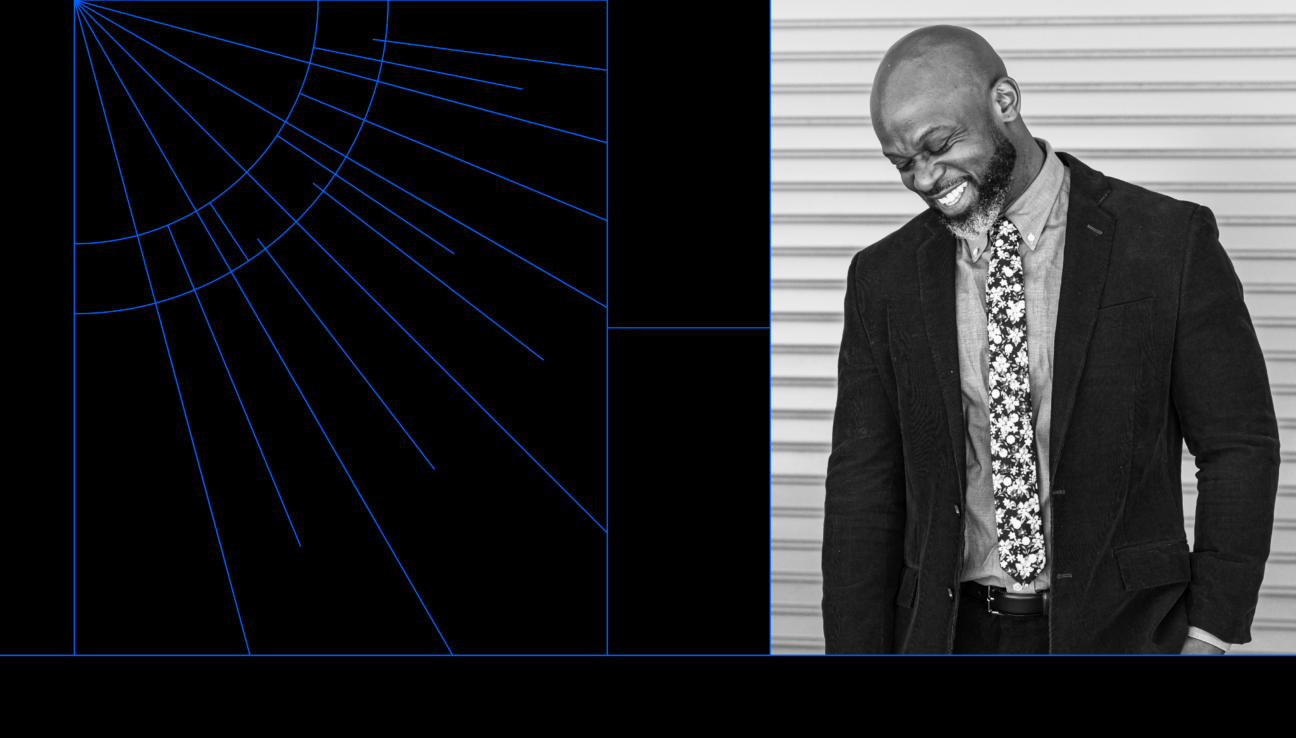
Carlos Simon, GRAMMY-Nominated Composer, Curator and Activist
Episode 171
estimation...

Carlos Simon, GRAMMY-Nominated Composer, Curator and Activist

This episode is hosted by Monica Holt.

0:00 / 0:00

In This Episode

Music has the power to move a room. For composer Carlos Simon, that effect was first felt in church, where music was both a creative act and a shared experience.

Raised in a family steeped in ministry and musical tradition, Carlos grew up surrounded by gospel, jazz, and the spontaneity of worship. From playing organ by ear during Sunday services to his later work with orchestras, film, and opera, he has built a compositional voice that blurs boundaries: bridging sacred and secular, improvisation and form, tradition and innovation.

In this episode, Carlos traces his path to becoming one of today’s most sought-after composers and the first-ever Composer Chair for the Boston Symphony Orchestra. Along the way, he offers insight into the deeply collaborative nature of his work and frames musical composition as an act of service.

Monica Holt: Hi everyone. Welcome to another episode of CI to Eye. This is Monica Holt. Our guest today is Carlos Simon, a GRAMMY-nominated composer, composer-in-residence at the Kennedy Center for the Performing Arts since 2021, and the inaugural composer chair of the Boston Symphony Orchestra. He is in fact the first composer to hold that position in the orchestra’s 143-year history. Carlos’s music spans orchestral works, opera, film, and chamber music, drawing from gospel, jazz, and neo-romanticism to create something that feels both deeply rooted and completely alive. I had the pleasure of working with Carlos directly for a number of years at the Kennedy Center, and what continues to inspire me about him is how he sees music as an act of service. Carlos comes from a long line of preachers — three generations — and while he may not have followed them to the pulpit, he’s never left it.

In our conversation, we talk about how he found his voice, what it means to compose with intention during a turbulent time in the world, and what he wishes arts institutions understood about trusting artists. We also chat a bit about the last commission we were working on together at the Center, “Monuments,” which he completed amidst everything else happening this past year. Let’s jump in.

Carlos Simon, welcome to the podcast. Thank you so much for being here. It is great to see you.

Carlos Simon: It’s a pleasure, Monica. It’s a pleasure to see you again too.

Monica Holt: Thank you for making the time today. I would love to just start as we start each episode, which is: tell us a little bit about how art and music came into your life.

Carlos Simon: Well, music has always been a part of my life. I come from a very, very musical family. My mom plays trombone. My father also sings, and I can just remember Thanksgiving dinners and Christmas dinners. We were just kind of gathering around the piano and singing songs. And a part of that comes from the church because my dad’s a preacher. My grandfather was a preacher too. And my great-grandfather was a preacher and everybody did something in the church. And most of the things were music. And so when it came to my dad starting his church when I was 10 years old, the question is, what do you do in the church? What is your responsibility? And of course, I love music, so music was my choice.

Monica Holt: Yeah. I mean, having three generations of preachers, that goes all the way back to 1927. Is that right?

Carlos Simon: Yes, that’s right.

Monica Holt: I didn’t know that your mom played the trompone. That’s kind of great additive for the story, too.

Carlos Simon: Yeah. She encouraged me to play piano and eventually organ, just because my uncles played organ in my grandfather’s church. And so she wanted me to follow in their footsteps. And I just knew that piano was my thing because I couldn’t sing. I couldn’t direct the choir. I was too shy to direct the choir. And piano was my thing. I could just be in my own space and still contribute in some way.

Monica Holt: What were some of the other musical influences in your life when you were growing up?

Carlos Simon: I loved any type of orchestral music. I like film music. Anything that included the orchestra, it was just gold to me. We couldn’t listen to R&B or rap or hip hop or anything like that. But the one thing I could listen to outside of gospel music was jazz.

And so when I heard the sound of the orchestra with songs by Frank Sinatra or Tony Bennett, I was just enamored with that sound. I was like, wow, that’s incredible. And there’s of course the Disney movies, the film music. All that stuff has always been inspiration to me, like Willy Wonka and all those Disney movies. I think similarly because it had the same effect that gospel music had, in terms of the music had the ability to change the mood of the room without you knowing it, particularly in church when — My father’s church, Pentecostal church, it’s a very charismatic style of worship. It’s very, very spontaneous. And parishioners are encouraged to worship however they want to, whether it’s like shouting or dancing, whatever they feel like. And the music has to go along with that. And so I learned the power of music in terms of how it can shift a room. And I saw the same thing happening with film music. We watch films and we feel a certain way and we don’t know why we feel it, but it’s in large part because of music.

Monica Holt: It’s so interesting to me because I think a lot of us who grew up in an age where, for these family-friendly movies, there was a just excellent level of music and orchestration happening as I’m thinking about that kind of golden age of the Disney musical too. So many of us, as you say, felt things, but I don’t know that we were connecting, that we understood why it was we were feeling that emotion until later in life. Were you as a young person able to identify that connection between music and emotion when you were watching on screen?

Carlos Simon: I think not right off. It took some time, but I saw similarities when I would watch a movie and particularly like Wizard of Oz or something like that and seeing how the characters were moving and the music was going along with it. The scarecrow’s falling down and so the music would have this droopy feeling like cascading down. When it came down to the church, I would try to do the same thing. Sister so-and-so in the pew was raising her hand? I would play something on the organ that kind of imitates that.

Monica Holt: You were scoring life, is really what you were doing.

Carlos Simon: I was doing my best as what I could, but it took years later to study and understand there’s an art to this.

Monica Holt: Walk me through a little bit of that process. When you were first playing piano, am I right that you first just learned to play by ear? So then what’s the journey from that through then your really formal music education?

Carlos Simon: Well, I started playing by aural tradition, by ear. I could play anything I heard and I didn’t think it was —

Monica Holt: It’s amazing.

Carlos Simon: — anything special because that’s what my family did. That’s how they learned. They can just play anything. And they’ve never been to a school, never taken a class, never taken a lesson, but they are virtuosi. So when it came to studying formally, I was putting names to things that I already knew, especially with being in church every Sunday. That was a conservatory for me. It is oral skills. It is piano skills and transposing things and learning things in different keys. And looking back at it, it is like a school every single week. And it’s so encouraging and it’s a very safe space. Never did I ever feel like I was discouraged or doing the wrong thing. Even if I knew I messed up on a Sunday, somebody would come and say, “You know, baby, you’re doing okay. Keep going. Keep doing what you’re doing.” And that kept me moving, you know what I’m saying?

So when I got to studying formally, I already had those skills. That was just understanding what I was already doing. And then enhancement came and learning different styles and all the music theory and of course reading music, which I didn’t know how to do until late in high school.

Monica Holt: I mean, that’s wild. When I think about how you are composing now and the scale at which you are composing, to have had so much musicality, so much knowledge coming in, but then to really sit down and think about, “What does it mean to read or write music” when you’re well past your adolescence… What was it like coming in at that point, knowing so much already, having so much skill and talent, but then going into a class where it is, “Can you do these 10 exact things?” How does that play out for you personally?

Carlos Simon: I mean, it gave me structure. It gave me this formal understanding of this thing that I loved. And honestly, I loved it. I love music theory. It was just the best thing ever. I remember just enjoying doing part writing, which is… No one ever says that. It’s like a puzzle. So I really enjoyed the process. The one thing I did not like is the formal study of piano, just because when you’re studying Bach or Mozart or Beethoven, you have to stick to the script. You’ve got to play what’s on the page, what the composer wrote. And me coming from my background and improvisation and just wanting to add stuff in, I just didn’t like it. And my teacher was like, “You have to play what’s on the page, black and white.” I felt so stuck, very claustrophobic. And for a long time I had performance anxiety, especially when I did my recitals and stuff like that.

That’s how I kind of got into composing because initially I went to college for piano performance. But at the same time, like year two or three during my undergrad, I added composition as a part of my degree. And I was hooked. I was hooked.

Monica Holt: Well, if you love music theory so much, the puzzle pieces you’re saying — I imagine that you start to fire on all sides of the brain with the way you’re thinking. I have to ask, now that you are composing, as you think about yourself not wanting to play the Bach or the Mozart exactly as it was, do you think about that and who is going to be playing what you’re writing and how you feel about whether they are staying in the lines or varying from it? How do you think about that now?

Carlos Simon: Well, knowing what I know about Bach is that he was also improvising his music and so was Beethoven. And so I like to put in that sort of caveat with the performers that I’m giving you 85% of what I expect to hear. The 15 other percentage is up to you. Whatever you decide to do, the interpretation, even if you want to improvise within reason, that’s okay with me. That’s how I approach my music, especially with singers. There’s a level of flexibility that I’m open to, even excited to hear.

Monica Holt: You have composed pieces at this point for orchestras all over the country, for all kinds of media and performance. If you are talking to a student who is just getting into music and they asked you, “What does being a composer mean?” How would you answer that question?

Carlos Simon: Being a composer means being a conduit, being an open vessel. It means to be a servant. I think any artist, you have to reflect what you see in society, what’s happening in the world, even everyday life. You have to be open. Everyday life is just sort of a journey for me. Just taking a walk and seeing people interact or seeing what’s happening in the world, reflecting on what has happened, history. And then you filter those things through the lens of who you are. So for me as a Black man in America who grew up in Atlanta, from a son of a preacher, I filter those things through my lens. And what comes from that is the music. There’s other aspects of this. The big thing is the spiritual aspect because I do think there’s things larger than me and I like to consider myself as a vehicle for that. So [the] hope is to help other people. Honestly, that is a joy, helping other people to kind of see different perspectives. So truly a composer is there to help people as a servant.

Monica Holt: I think that idea of music as a means of service is a very powerful viewpoint. I think very meaningful for everyone, I hope, but as you said through your own lens and history and how you’ve applied that to your work. I was particularly moved by brea(d)th, which you did with Marc Bamuthi Joseph after the murder of George Floyd. When you’re thinking about your lens and a very personal response to what’s happening in the world and also how that then becomes interpreted and viewed by audiences across the country and around the globe, how do you navigate that responsibility with your creativity? What is such a personal process like working on that with Bamuthi before it’s released to the world?

Carlos Simon: It’s heavy. It’s heavy. It really is heavy. And I consider it an honor to be used in this way, but it’s weighty. It takes a certain toll on my emotional wellbeing as well as physical wellbeing. That piece was difficult because so much pain came out of that and came out of this experience, not just in Minnesota, but from George Floyd and his family and the community. We took time to go there and to talk to people and to be in this space and try to understand as best we could what was happening, what was not just there, but also around the country. And we both kind of came together trying to understand, what do we have to say? What can we say here to better the situation and to make people aware of what’s really happening and what can we do further? That’s the most important thing.

It’s one thing to kind of reflect and try to understand what happened, but what happens after this? And that has to be a part of the piece too. And so what we came up with is that we all have a collective duty to be anti-racist. If racism has a system, anti-racism also has to have a system too. So that’s one thing we kind of put it in the piece. And Bamuthi’s saying these things and I’m underscoring and using the music to kind of highlight these things. So that piece was very difficult. There are other pieces that I’ve written too that are also political in nature, but that one was really, really difficult to write.

Monica Holt: Yeah. Well, I thank you for it. You and Bamuthi. And I feel very honored myself and privileged to have been able to watch the two of you work together in such a meaningful way on that and on many other occasions. Would you mind talking a little bit about how composing a commissioned piece works and what you receive at the beginning, what that dialogue is with an organization, and how it then leads to this beautiful new work of art coming to life?

Carlos Simon: Well, it’s different every time. Sometimes I’ll get a call from an institution saying, “We want a piece and it’s up to you. It’s carte blanche.” Or they may say, “This is the instrumentation and we want it this long.” Whether it’s 10 minutes or 15 minutes, five minutes long, then it’s my job to kind of understand what do I want to say in this piece. And so that’s a process that I take on a journey on my own of trying to figure out what type of piece I want to write, whether it’s based on a concept, historical event, a person or even visual, a piece of art, but it’s really up to me. And so once I start that journey, it’s all research. It’s all kind of deep dive, reading books and going to the places and talking to people and just kind of immersing myself in that whatever I want to say. And then the music kind of comes from that. I’ll take all the stuff being full and I’ll just go to the piano and I’ll improvise and record that improvisation. I’m not thinking about theory or analytical things at that point. No, it’s all just stream of consciousness. And then the analytical side goes on and try to understand the orchestration or different parts that may not work together and cutting things up and editing. And it can be messy, but it is the left brain, right brain type of thing. Generally speaking, I would say about 80% of the commissions that I receive are, “We just want you to write a piece and it’s 15 minutes long and for this type of instrumentation.”

Monica Holt: Do you prefer that to something that’s a very specific ask or is it that both kind of use different parts of your brain and are good exercises regardless?

Carlos Simon: My preference is carte blanche. I like going back and forth. Sometimes I’ll get commissions that say, “We want you to write a piece for our 50th anniversary,” or something like that.

Monica Holt: We want you to write the intro credits for a PBS series on the performing arts, maybe?

Carlos Simon: That’s right. Exactly. Exactly. And that’s fun for me because it’s a challenge. How do I kind of tap into what they want, but still be true to who I am as a composer?

Monica Holt: When I think of your work, I also think about how collaborative you are. We talked about your work with Marc Bamuthi Joseph. I also think about Good News Mass, which had its world premiere at LA Phil, accompanied by a film directed by Melina Matsoukas. You’ve also, in a more whimsical space, worked with Mo Willems on a children’s opera for Washington National Opera. What do you think it is about cross genre collaboration or cross media collaboration that is important to you?

Carlos Simon: Well, it’s really about storytelling to me. Being able to cross different genres and different types of styles, that is helpful in telling the story. Whatever the piece is, it’s important to be able to kind of use what is most effective to helping people understand the story or whatever I’m trying to say with the collaborators. I think of it like tailoring. It’s like receiving a commission to make a nice garment for someone. You want to tailor it just right. You get their measurements and understand what they’re going for, the style, what the event is, whatever, and you make the garment accordingly. But in the back of my mind, I’m thinking, okay, how is this person going to feel when they have it on? In addition to my mom playing trombone, she’s also a milliner. So she makes clothes and hats and stuff like that. So —

Monica Holt: This also explains your absolutely exquisite sense of style and taste, which everyone should be aware of. This analogy is really hitting for me having seen you show up and show out at events.

Carlos Simon: Well, she’s a large part of it. She’s a fashionista in and of herself. So yeah, but it’s tailoring. You tailor the piece to fit the performers. And sometimes that means tapping into a certain genre, jazz or avant garde, a 12 tone. It depends on, number one, the story, but also the persons playing it.

Monica Holt: That’s right. As you are thinking about commissions, is there anything that you wish organizations, whether those are the symphonies you work with or performing art centers or opera houses, is there anything you wish that these organizations knew about creating and sustaining strong relationships with artists and composers and musicians in general?

Carlos Simon: I think that it’s important for institutions to really understand that they have to give artists some space to be themselves. And at the end of the day, it’s about trust. We live in a very transactional world and a lot of times institutions may be looking for a certain type of art that is geared or tied to some type of monetary outcome or result. And yes, art — there’s that little fine line where you’re like, as an artist, you’re making money or you’re trying to make art. Which one? Which one is it? Yeah. And a lot of institutions are geared toward the money part. There’s a lot of hesitation about commissioning new work. So people will stick with the standard, the Beethoven, the Mozart, the things are going to bring the people in, and they kind of shy away from new music because they don’t know what they’re going to get.

Monica Holt: I think we need to, as institutions, develop a higher risk tolerance because we can’t look in the mirror all the time and say, “Why are audiences disappearing?” Well, where’s the new art? Where’s the unexpected release of emotion that comes from experiencing a piece of art for the very first time? I think of listening to some of your creations and collaborations, you have this beautiful way of composing pieces that somehow both feel familiar and completely exquisite and new and just pull these emotions out of you in a way that you’re not expecting. And so I will say what we need is for institutions to be investing in the new music and the risk, because I actually think that risk is smaller than if we just keep doing the same thing over and over again. I would love to hear a little bit, you’ve done some composition for film and for non-live performance. Is that a different approach than when you’re thinking about composition for the stage or is the process similar?

Carlos Simon: It’s the same. It’s just there’s an added factor of oversight, particularly with film. You have to be beholden to a director or a producer who’s wanting a certain sound. That’s fun. It’s fun for me. It can also be annoying, to say the least, but it’s a part of a larger service. You’re serving the film and part of that is collaboration. It’s interesting to try to understand how people understand music and how they communicate that through words. Music is a very difficult thing to talk about and to write about. How do you describe the Beethoven seven or this type of thing that’s happening in the score? It’s hard. How do you put it into words? And then for someone who doesn’t have a music degree or has never been to a music school or taken a class or doesn’t play an instrument… And part of a composer is to try to translate. What do you want the music to say? Using words of feeling also helps. It really helps me. What do you want to feel versus what should it sound like? That can mean anything. I want it to feel bright. I want it to feel yellow, even. And so you translate these things. So it’s a really fun, interesting journey.

Monica Holt: Well, and it’s so interesting to hear you talk about it that way because as I’m listening to you, what I’m also hearing is all of my arts marketing friends, they are trying to figure out how do you talk about the experience of music, live music in their case, to an audience regardless of their familiarity with the piece already? And so I think what you were just saying, how do you describe that feeling? It’s such an interesting question that we’re all grappling with from all sides of that equation. I would be remiss not to ask, one of the last projects that we were going to work on together was a Suite for D.C., which you were commissioned by the Kennedy Center to do I think in 2024, which was a piece and celebration of the 250th anniversary of the Declaration of Independence really centered on D.C. institutions and memorials and faith-based institutions and arts and culture locations.

Obviously, there were a lot of changes at the Kennedy Center last spring. How did that project evolve and change over the past year in the way that D.C. has changed over the past year?

Carlos Simon: Wow. The piece changed quite a bit from the inception. I initially had the idea of writing a site specific work just for the Kennedy Center. People come there as a part of visitation, and all over the world people would come and want to see this place. And so I thought it would be cool to have a musical soundtrack that people can listen [to] as they experience the environment. And so when I brought the idea to you all, it was like, okay, we can do this, but also, can we expand it out to the larger D.C. area? And I think that’s one of the great joys of working with great administrators, people who have vision. Artists can bring an idea to you. And then I was like, “Actually, we can make this bigger than what you are imagining.” And so I was like, “Absolutely. It’s more work, but it is incredible. It’s worth it.”

Writing the piece, I had to think about these monuments in D.C. What do they represent? What did they represent when they were building them? What can they represent? And so in the music, I feel it embodies those things, the history of it, what it currently represents, and what it can mean. That’s the idea of the suite itself. The piece is called Monuments, but there’s a little tagline, a subtitle that’s Suite for D.C. And it’s monuments like Thomas Jefferson Memorial, as he’s one of our presidents, one of the founding fathers of America, but also a slave owner.

Monica Holt: Oh, yeah.

Carlos Simon: And so that has to be a part of the music. It has to be a part of the story, the narrative. Each monument has these little things that I’ve embedded into the music that kind of show the history and the future, hopefully, the hope that kind of comes out of these monuments, the inspiration that people may experience as they go through these environments.

Monica Holt: For anyone listening, there is a beautiful recording of the piece online now and also a feature of Carlos talking about the process. And I think in a year where so much has changed at the Kennedy Center in D.C., this is a beautiful way in which art and artistry and thoughtfulness persevered. And so thank you for continuing to work on that. As you’re talking, and I’m thinking about your role at Georgetown University, you also teach. And as you are thinking about what you want to impart on future creatives in your field, what lessons do you think composers and musicians should hear holistically off the syllabus as it were? Because I imagine hearing you talk is probably very powerful as they’re thinking about how they navigate the world.

Carlos Simon: Well, I always say to my students, you have to make a choice whether you want to be outright in terms of your political affiliations and how you want to pursue that through your music. Being apolitical within your music, that is a choice. It is a political statement and they both have ramifications. I feel that, especially in this society, making a stance is important. One quote that I often live by is that all that is needed for evil to be successful is that good men or good women do nothing. And that’s from Martin Luther King. I think we all have an obligation to use whatever we have for awareness and sympathy and empathy, especially in these times.

Monica Holt: Yeah. Very, very well put. What about your students brings you hope and inspiration and joy when you’re working with them?

Carlos Simon: I think my students, they give me life and keep me youthful. I’m not old, but also I’m not young either.

Monica Holt: It’s definitely an interesting moment in our lives right now where we’re somehow figuring out which side of that equation we’re on.

Carlos Simon: Exactly, exactly. So I think being around people who are 18, 19, their understanding of the world is filled with passion and they’re looking forward to the future. And so that gives me a glimmer of like, “Okay, I’m looking forward to the future too.” What am I doing to help them pursue their works and sort of helping to blaze a trail for them, or at least give an example of what can happen, the life you can live as a composer, the life you can live? It’s better if you have a vision of what things can look like as a life. Seeing it lived out by other people inspires you to go to kind of make your own way and use this other person’s life as a model. And that’s something that I’ve done. They’ve seen other composers. It’s like, wow, I never knew that existed. I never knew you could have a teaching position and be a composer. Just these little things that you just see in other people that [you] are inspired by.

Monica Holt: That’s right. You’re part of the Blacknificent 7. Could you share a little bit with our listeners about what that group is and why it came together and came to be?

Carlos Simon: Sure. Well, the Blacknificent 7 is a group that I joined during the pandemic as a sort of a support group for composers, black composers. We are all over the country. I think of us as the Avengers. We all have our own thing. Everybody does everything, but we all do one thing that’s really, really good. Our music all sounds different, but we all have the same vision. And we just kind of work together. We’re good friends and we curate concerts. We’ve done projects together for different artists. So it’s a wonderful group to be a part of in terms of just support, just to be able to hop on the phone and say, “Hey, you have a minute just to talk?” And a lot of times it’s not about music. It’s about what you’re going through and getting advice from people. Or just yesterday, I just texted Jessie Montgomery, who’s an amazing violinist, a passage from a violin passage. And I said, “Is this possible? Is this too fast?” And she texted me, “Yeah, it’s too fast. You should change it.” So this is good friends, people I can trust and just lean on.

Monica Holt: I love that. Well, and just thinking back to what you were saying as you modeling for students in the next generation about what’s possible, where they can see themselves, all of that, I think also naming the support groups and the community that makes the work thrive and have more meaning too is such an important piece. You have new premieres — from what it feels like from my algorithm — every month this year, I’m seeing new Carlos Simon across the country and around the world. Are there any projects on your horizon that you’re really just finding some peace and joy with during a tumultuous time in the world?

Carlos Simon: Music is always so peaceful for me. I’m just grateful that I get to do what I love and I get to make a living doing what I love because some people don’t have both. And the one project that I’m really looking forward to, but it is challenging for me, is an opera that I’m writing. And opera is a difficult genre to write because you’re thinking about the staging, you’re thinking about the acting that may go on and how the music can play a part of that, the arc of the story. And that’s a different thing for me because it’s like I’m producing a movie. That’s what it’s like.

Monica Holt: Yeah, that’s right.

Carlos Simon: I am the director. I am the composer. I am the visual effects person. It’s all of these things. You put on the hats. And it’s a joy, but it’s also very, very, very challenging, very difficult to do. And when it’s mounted, I will be probably the happiest person ever in life. Just because —

Monica Holt: I can’t wait.

Carlos Simon: — for composers, historically, opera has been the pinnacle of artistic achievement. Thinking about composers like Bizet and Wagner and all these composers have written great operas and they have stayed throughout the centuries and been part of our culture and the canon. So it’s hard, but I’m ready. I’m ready. I’m orchestrating it now, and that’s why I’m saying — it’s fresh on the brain.

Monica Holt: Listen, I can’t wait. We’ll be cheering you on when the moment comes. Okay. So our quickfire culture, which we will make very quick. If you could go back in time, is there a live performance or concert that you would’ve wanted to attend?

Carlos Simon: Gosh. Oh, the premiere of Porgy and Bess.

Monica Holt: Oh, good one. What is one free resource in any field that you would suggest more people check out?

Carlos Simon: The library.

Monica Holt: Great answer. Then our last question is, if you could broadcast one message to executive directors, leadership teams, staff, boards, artists at thousands of arts organizations around the world today, what would that message be?

Carlos Simon: Trust artists and amplify their work.

Monica Holt: Couldn’t have said it better. I appreciate it. Carlos Simon, thank you. Thank you for the time. And thank you for all of the good that you are putting out into the world. We are lucky to be here witnessing your art and your collaborations right now.

Carlos Simon: Thank you, Monica. My pleasure. Thank you.

Monica Holt: I hope you enjoyed today’s conversation with Carlos. Before we go, I wanted to leave you with something special: a chance to experience his work firsthand. What you’re about to hear is an excerpt from Monuments: Suite for D.C., performed by the Kennedy Center Opera House Orchestra. This is from Movement Three: Arts and Culture, a tribute to the artists, visionaries, and behind the scenes champions who make creative life in our communities possible every day. We’ll let the music carry us out. Thanks for listening, and I hope this leaves you with a sense of beauty, reflection, and possibility as you move through the rest of your week.

[Music plays]

Thank you for listening to CI to Eye. If you enjoy today’s conversation, please take a moment to rate us or leave a review. A nice comment goes a long way in helping other people discover the show. And if you haven’t already, click the subscribe button wherever you get your podcasts. We’ve got some great episodes coming your way and I wouldn’t want you to miss them. A huge thanks to our team behind the scenes, including Karen McConarty, Yeaye Stemn, Stephanie Medina, Jess Berube, and Rachel Purcell Fountain. Our music is by whoisuzo. Don’t forget to follow Capacity on Facebook, Instagram, LinkedIn, TikTok, and YouTube for regular content to help you market smarter. You can also sign up for Capacity’s newsletter at capacityinteractive.com. And I hope you’ll reach out to us to let us know who you’d like to hear from next on CI to Eye. I’m Monica Holt. Thanks for listening.


About Our Guests
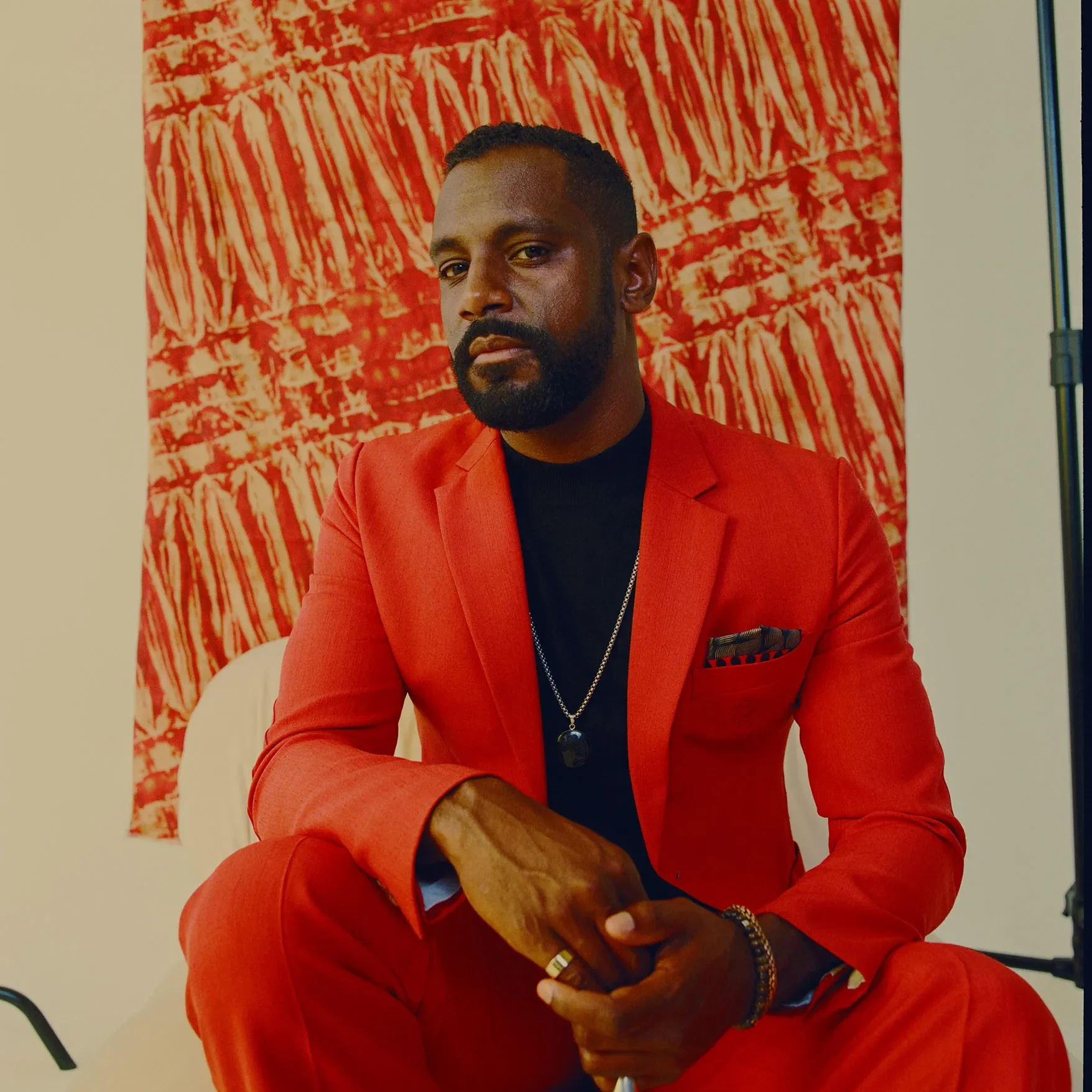
Carlos Simon
Carlos Simon
GRAMMY-Nominated Composer, Curator and Activist

“My dad, he always gets on me. He wants me to be a preacher, but I always tell him, ‘Music is my pulpit. That’s where I preach,’” Carlos Simon reflected for The Washington Post. Having grown up in Atlanta, with a long lineage of preachers and connections to gospel music to inspire him, GRAMMY-nominated Simon proves that a well-composed song can indeed be a sermon. His music ranges from concert music for large and small ensembles to film scores with influences of jazz, gospel, and neo-romanticism.

Simon is the current Composer-in-Residence for the John F. Kennedy Center for the Performing Arts and frequently writes for the National Symphony Orchestra and Washington National Opera. Simon also holds the position of inaugural Composer Chair of the Boston Symphony Orchestra, the first in the institution’s 143-year history.

In the 2024/25 season, Simon will have premiere performances with the National Symphony Orchestra, Boston Symphony Orchestra, BBC Symphony Orchestra for the Last Night of the Proms (in his BBC Proms commissioning debut), Jacksonville Symphony Orchestra, Cincinnati Pops Orchestra, Carnegie Hall for the National Youth Orchestra of the USA. The season also features the premiere of Simon’s Gospel Mass with Gustavo Dudamel and the LA Philharmonic, a work reimagining the traditional mass with gospel soloists and choir, with visual creations from Melina Matsoukas (Beyoncé Formation, Queen and Slim).

This follows previous commissions from the likes of the San Diego Symphony Orchestra, Washington National Opera (in collaboration with Mo Willems), New York Philharmonic and Bravo! Vail, Minnesota Orchestra, American Ballet Theatre, and Detroit Symphony Orchestra.

As well as his composition work, Simon frequently curates concert programmes, which often highlight his own music as well as that of close collaborators. Curation concerts have recently been programmed by Atlanta Symphony Orchestra, Boston Chamber Players, Tanglewood Festival for Contemporary Music, and the Kennedy Center for the Performing Arts. Simon also curated and arranged Coltrane: Legacy for Orchestra, a new project co-commissioned by TO Live (for the Toronto Symphony Orchestra) and the San Francisco Conservatory of Music, in partnership with the Coltrane Estate.

August 2024 saw the release of Simon’s first full-length orchestral album, Four Symphonic Works, comprised of live concert recordings by the National Symphony Orchestra from the Kennedy Center Concert Hall, conducted by Gianandrea Noseda. Simon also composed the original soundtrack for the PBS documentary Shame of Chicago: Shame of the Nation, which was released as a digital album in April 2024.

In September 2023, Simon released two albums on Decca. Together is a compilation of solo and chamber compositions and arrangements featuring Simon and guests such as J’Nai Bridges, Randall Goosby, Seth Parker Woods and Will Liverman. The work draws on Carlos’ personal experience as an artist to highlight the importance of heritage and identity, and the power of collaborative music-making.

Simon also released the live premiere recording of brea(d)th, a landmark work commissioned by Minnesota Orchestra and written in collaboration with Marc Bamuthi Joseph, conducted by Jonathan Taylor Rush. “Arguably the most important commission of Simon’s career so far” (New York Times), brea(d)th was written following George Floyd’s murder as a direct response to America’s unfulfilled promises and history of systemic oppression against Black Americans.

Simon was nominated for a 2023 GRAMMY Award for Best Contemporary Classical Composition for his previous album, Requiem for the Enslaved. The requiem is a multi-genre musical tribute to commemorate the stories of the 272 enslaved men, women, and children sold in 1838 by Georgetown University, released by Decca in June 2022. This work sees Simon infuse his original compositions with African American spirituals and familiar Catholic liturgical melodies, performed by Hub New Music Ensemble, Marco Pavé, and MK Zulu.

Acting as music director and keyboardist for GRAMMY Award winner Jennifer Holliday, Simon has performed with Boston Pops, Jackson Symphony, and St. Louis Symphony. He has also toured internationally with soul GRAMMY-nominated artist Angie Stone and performed throughout Europe, Africa, and Asia.  

Simon earned his doctorate degree at the University of Michigan, where he studied with Michael Daugherty and Evan Chambers. He has also received degrees from Georgia State University and Morehouse College. He is an honorary member of Phi Mu Alpha Music Sinfonia Fraternity and a member of the National Association of Negro Musicians, Society of Composers International, and Pi Kappa Lambda Music Honor Society. He has served as a member of the music faculty at Spelman College and Morehouse College in Atlanta, Georgia and now serves as Associate Professor at Georgetown University. Simon was also a recipient of the 2021 Sphinx Medal of Excellence, the highest honor bestowed by the Sphinx Organization to recognize extraordinary classical Black and Latinx musicians, and was named a Sundance/Time Warner Composer Fellow for his work for film and moving image.

Read more

Related Episodes

Paul Tate dePoo III, Set and Production Designer
EP 168
Mar 05, 2026
estimation...
Paul Tate dePoo III, Set and Production Designer

Before audiences fall in love with a story, they fall into a world—one shaped by the unseen artistry that turns empty space into something alive.

Set and production designer Paul Tate dePoo III has built a career shaping the physical environments that hold our favorite stories. From intimate stages to large-scale productions, his work lives at the intersection of architecture, storytelling, and psychology, where space itself becomes a character.

In this episode, Paul reflects on the collaborative nature of his work and the responsibility designers carry in shaping how audiences experience a narrative. He also offers an inside glimpse at how ideas move from sketch to stage, and why the most powerful design choices serve the story rather than call attention to themselves.

Cody Renard Richard, Tony Award-Winning Producer and Stage Manager
EP 166
Feb 19, 2026
estimation...
Cody Renard Richard, Tony Award-Winning Producer and Stage Manager

Great theater starts by creating trusted conditions for talent and creativity to thrive.

Cody Renard Richard is a Tony Award-winning producer and stage manager whose career spans Broadway, television, opera, and even Cirque du Soleil. Along the way, his backstage leadership has shaped acclaimed productions like the 2025 revival of Ragtime and this spring’s CATS: The Jellicle Ball.

In this episode, Cody talks about what it really means to lead from behind the scenes, and why stage management is such a powerful training ground for leadership. He reflects on his path through the industry, how he’s navigated power and visibility in a field that doesn’t always make room for everyone, and what it looks like to advocate for artists and audiences without burning out or losing yourself in the process.

Don’t Miss an episode

Don’t Miss an episode

Subscribe to CI to Eye and have your insight and motivation delivered on demand.

TUNE IN