

Skip to content
Follow Us

Get the best of Capacity Interactive delivered to your inbox.

This field is for validation purposes and should be left unchanged.
Paul Tate dePoo III, Set and Production Designer
Episode 168
estimation...

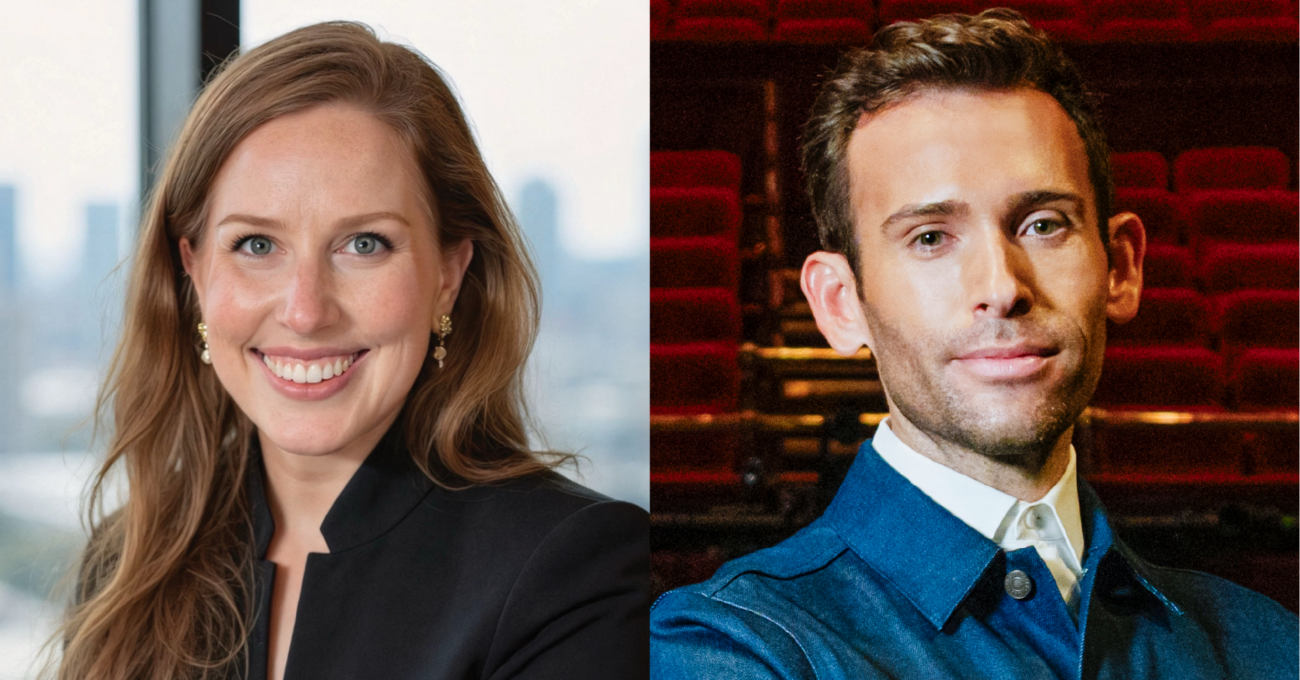
Paul Tate dePoo III, Set and Production Designer

This episode is hosted by Monica Holt.

0:00 / 0:00

In This Episode

Before audiences fall in love with a story, they fall into a world—one shaped by the unseen artistry that turns empty space into something alive.

Set and production designer Paul Tate dePoo III has built a career shaping the physical environments that hold our favorite stories. From intimate stages to large-scale productions, his work lives at the intersection of architecture, storytelling, and psychology, where space itself becomes a character.

In this episode, Paul reflects on the collaborative nature of his work and the responsibility designers carry in shaping how audiences experience a narrative. He also offers an inside glimpse at how ideas move from sketch to stage, and why the most powerful design choices serve the story rather than call attention to themselves.

Monica Holt: Hey everyone. Welcome back to CI to Eye. This is Monica Holt. Some of my favorite moments with art in the past decade have happened in the early hours in a rehearsal room or laughing together after 12 hours in a dark theater during tech, or watching the creative minds behind the onstage magic figure out how to make the impossible work. My guest today, Paul Tate dePoo III, has been present for some of my favorite memories. His work spans Broadway, Las Vegas, and opera stages around the world to name just a few. But what I really wanted to talk about with him today is him. Where this all started, how he thinks about his craft, and what it really means to spend your life building worlds for other people to inhabit. Paul is the architect, the interior designer, and the personal shopper for everything you see on stage. In our episode today, I wanted to pull back the curtain on some of my favorite projects of his to give you a real glimpse into how those worlds actually get made. From the first wild, impossible idea in a director’s head, all the way to the show that has to load in, fully assembled, in 12 hours flat. This one is for anyone who’s ever sat in a darkened theater and wondered, how did they think of that?. Let’s get into it. Paul Tate dePoo III, welcome to CI to Eye. Thank you so much for being here.

Paul Tate dePoo III: Thank you, Monica. It is such an honor. Thank you very much.

Monica Holt: I haven’t talked to you in a little while, so this is fun. Before we start talking through some of my favorite projects of yours, can we start at the beginning?. Where did you grow up and what are some of your earliest memories of the theater?.

Paul Tate dePoo III: I am from Key West, Florida, which is a two-by-four mile island right next to Cuba. And so my dad’s whole side is Cuban, and my mom came from Kansas and her family immigrated from Germany, but my mom had come to Key West. She’d been there for 35 years by the time that I graduated high school.

Monica Holt: Wow.

Paul Tate dePoo III: And it takes about three and a half hours to drive to Miami. And that’s over… I don’t know how many — over 50 some bridges. So needless to say, art and live entertainment was not readily available to the scale of what I knew existed back when I was five. And when I was five, the first thing was Michael Jackson’s halftime show. And after, I guess I was tapping the screen and I said, “Who made that?”. And someone said, “Oh, the football people made that.”. And I said, “The football people did not make that.”. And I had become more and more aware… There was the Athens Olympic Opening Ceremonies on TV, and I started to watch more award shows. I started to realize that something existed of, what does stage entertainment mean beyond a television?. My birthday is in January, and [the] Ringling Brothers circuit was always coming to the Miami arena and always hopping over when David Copperfield was basically across the street at the Jackie Gleason Center. So it was either David Copperfield or Ringling Brothers. And that was my gift every year that my parents would take me to go see one or the other. And it started with Ringling Brothers. And my parents would always say — there would be the act, but then I would always be staring to the ring that wasn’t lit because they were setting up the trapeze cables and all the netting. And they were like, “But what about the tigers?”. And I’m like, “The tigers are already set up. They’re fine.”. But watching this whole rig being set up… And in addition to David Copperfield and Ringling Brothers, my great-grandfather would take me to the fairgrounds because we would have this small little fair that would come to the island. And he would take me when the trucks arrived and when the trucks were packing up. So I didn’t really care about the ride in action. It was about, how do they all get put onto a truck?.

Monica Holt: So you like — destiny. You knew from the beginning: what happens on stage is great, but I want to know how did it happen?. What made it?. How did it get there?. I will say, “The football people didn’t make that” might be an all-time quote of understanding yourself at the age of five.

Paul Tate dePoo III: And my parents being like, “Well, just the way God made him.”. Because they didn’t really know what to do with it. And then as school went on, I would enter the talent show and I would start with these illusions. And I even had my mom locked in a box for some time with the neighbors coming home and they had to help get her out of the box because I somehow locked the door. And it became bigger and bigger and bigger until I got into high school and we started making a full-blown magic show where airplanes appear on stage. I made six people selected randomly from the audience disappear on stage. I mean, it was all very much in parallel and could be now classified as copyright on what David Copperfield was doing on stage, but….

Monica Holt: It was inspired by.

Paul Tate dePoo III: It was totally inspired by. And we would just make our own versions. And also homecoming floats were the one big outlet for the most classic thing I knew of what stage design was, that was the homecoming float outlet.

Monica Holt: So you immediately went from seeing this growing up, trying your hand at the life of an illusionist, and then working on building things. Did you ever — Yourself, were you ever on stage in high school in any shows or…?.

Paul Tate dePoo III: Yes, I was King in King and I, and I was the Prince in Cinderella.

Monica Holt: Oh, I’m sorry. So he was the onstage man who decided to leave the footlights to create backstage. Is that the story we’re telling here?.

Paul Tate dePoo III: Yeah. So we had these huge musicals with orchestras and then we would rent the sets from Las Vegas. So we did Peter Pan, Cinderella… I don’t even know what set rental place that would’ve been from, but I would also show up for the load-ins and then make sure that all the drops would be put in place because I always thought that they were lazy, the people that were unloading it, as in the people that worked at the high school. So I knew what drop package was coming. And then they would say, “Oh, we don’t have enough people to be able to pull that in time of the show.”. So then as the king, I would get off the set throne, go backstage, pull a new backdrop in, and then go back and sit on stage because it says that we went to a different part of the palace, so I wanted….

Monica Holt: You were following the stage directions.

Paul Tate dePoo III: Yeah. And the director sort of was like, “Oh, whatever,” because they just knew that I sort of dabbled both on and off and I loved it. I just wanted to give the biggest version possible.

Monica Holt: This has added so much depth to [the] Paul that I know, and it all makes so much sense. And it’s also so interesting to me because a lot of what comes up in these conversations is folks who weren’t really thinking about the backstage or behind the scenes when they were growing up. And so they came to them a bit later. An adult told them about it. But for you, you kind of got it early that there was a there there.

Paul Tate dePoo III: But I didn’t know that this existed. I didn’t know until Hurricane Wilma came and flooded the magic show, which we were at the Tennessee Williams Performing Arts Center teching it. And it was like an Annie Livabitz photo with all the magic tricks that I had built over the years, all underwater.

Monica Holt: Oh my God.

Paul Tate dePoo III: And my parents just didn’t know what the hell to do with me because there was no stopping this magician on this island, and they looked to me. I remember it being the biggest relief of, I knew the show that was in my mind was too big. It was too, too big and it wouldn’t have been what I wanted it to be. And I was starting to realize that. So I quickly realized I was about the creation of it all versus performing something every night over and over and over.

Monica Holt: How did you then decide — From there, you ended up in Boston for school. Yeah. How did that all happen?.

Paul Tate dePoo III: There was a classmate of mine that I was close to, Kaylee Bird, and she had a whole NYU portfolio put together for Tisch Film and she was ready to go. And I was like, “Uh-oh, wait, do they have a theater program?”. Literally this is how this went. I was like, “Well, I guess I should apply to Tisch.”. And so I made this portfolio of all the designs that I had done, the magic shows, and I still have it. And I took it to NYU and they closed it and they said, “We don’t do magic shows.”. And I was like, “I’m not here to do magic shows.”. And a parent of another student had overheard that comment and they pulled my mom and dad aside and they said, “Look, we just got done with Boston University and their opera program is… We just saw the scale of what they were doing and it’s worth looking at.”. And I took it to BU and the head of the department, Roger Meeker, and James Noone looked at each other and said, “We couldn’t be more excited to have you” on the spot.

Monica Holt: Oh my gosh.

Paul Tate dePoo III: So that’s how we get to Boston.

Monica Holt: That’s how we get to Boston. When you were moving through BU and then coming out of college, I know that you worked with a number of set designers. Learning, apprenticing, mentorship I think is probably a key role in your journey. As you think about mentorship and you think about what you were looking for coming out of school, what advice do you have about building those types of relationships?. How do you navigate that?.

Paul Tate dePoo III: I mean, the first job that I got outside of school was because I called the production designer to Michael Jackson, Michael Cotten, as he was designing This Is It at the O2 Arena in London. And I remember somehow I was in the city. I pulled over to a Starbucks and said, “Okay, this is quiet. I’m going to call him.”. I called and I thought it was going to be like, “Thank you for calling the offices of Michael Cotten.”. No, it was him picking up his cell phone on the side with ambulances going by and him staying on the phone and me being like, “Oh, I think that voice is who I know from watching interviews.”. And he’s like, “Yeah, send me your stuff and I’ll take a look and I’ll call you back.”. And I, right there, sent him my stuff, he called me right back and he said, “Great, can’t wait to work with you. Come by the studio.”. And I was like, “Hmm. That’s it, huh?”. So first thing is: the worst that anyone ever can tell you is no. And also really if you’re wanting to get in and you don’t have an established relationship, it’s like, try to find out as much as possible about what are they doing?. What is the program that so-and-so is working with to be able to create a product?. Also their personality on any sort of previous recordings or interviews, just to get a really big, thorough FBI investigation behind them. Just so that you’re not spinning their wheels. At least you have an idea and a sense of like, great, I want to work with this person. My first mentor was my professor, Jim Noone, followed by Michael Cotten and David Zinn [who] I interned with. And then the longest relationship and still one of the strongest is Derek McLane. I was with him as an associate for four years. And so many different mentalities and ways of approaching a project or multiple projects and what is management within all of that, conception to completion to opening night, and things that you just don’t learn by….

Monica Holt: Right. You can’t learn in school, you can’t learn from a textbook. You have to actually start watching it happen.

Paul Tate dePoo III: Yeah.

Monica Holt: So you go to school, you go through this mentorship, you founded your own design group. So the Tate Design Group founded in 2012. But if someone asked you, ‘What do you do,’ what would you say?.

Paul Tate dePoo III: The answer that I’m telling someone sitting next to me on an airplane that has no idea what I do is I say, ‘When you’re watching a show or a concert or any production, whatever’s physical that’s on stage minus the costumes and the actual beams in the air that are creating the lighting, I’ve been the architect and the interior designer and personal shopper for everything you’re seeing on stage.’.

Monica Holt: Yeah. You set the world of the story.

Paul Tate dePoo III: Yeah. If I am the architect and interior designer [and] personal shopper, there’s also the general contractor that is building it outside of our scope. So we’re not ever building it, but there’s a whole ‘nother world that makes it a reality.

Monica Holt: I like that. Architecture for storytelling on stage. If someone hired you, if they were hiring a set designer and they said, “We gotta have Paul,” how do you start that process with someone?. Walk me through how you get from someone asking you to become involved in a project to opening night, really. What is that process like from your perspective?.

Paul Tate dePoo III: I mean, a lot of the times the intro begins with, “Okay, this is a really crazy idea and it may be impossible.”. And that’s the most exciting part of a process is that introduction conversation, because there’s different types of directors and producers where some absolutely know how to even do the scribble that says, “What if it’s just this? “. Some do that and some do not. Some bring images, some do not. So there’s always this litmus test of like, “You like it?. No. Yes. No. No.”. And taking 1400 research images and literally whittling them down to let’s say 16… that’s a whole process in itself and it starts usually there unless there is a very strong sense that I can see that they are having an opinion about what the space should be.

Monica Holt: So it starts with, we know what show we’re doing. There’s a script. And the producer and the director bring you into that. You do your research, your photo processing, inspiration, your discussions with them. Then you have, let’s say, at that point you have a vision with the director and the creative team of what the show wants to be. You are sometimes not just leading the charge for what the physical set design is. You are also looking at the props. You are also looking at projections and video a lot of the time. How do you honor the vision of the director, the input of your creative collaborators, but also your own expertise and vision for how it comes together?. How do you balance all that?.

Paul Tate dePoo III: I think my job is to make any idea work. I mean, Josh Rhodes, he directed and choreographed this Evita that still to this day is another one of the most breathtaking — where he’s like, “I just imagine her coming from above and she’s just blowing like this bird that is just falling from the sky in slow motion.”. I’m like, “What the hell does that mean?”. And we did it. Do you know what I mean?.

Monica Holt: Yeah.

Paul Tate dePoo III: You figure it out, but there’s those harnessing statements that — those are not to be disregarded. Those are the key pieces of the puzzle to make a world happen.

Monica Holt: Well, I think this is what I appreciate about you so much is you can work with big vision, but you also are just not afraid of the brass tacks.

Paul Tate dePoo III: Yeah, that’s correct.

Monica Holt: You can take a vision at face value and then say, “Great, now let’s actually come up with literally what we mean when we say this so that I can understand if you want six steps on that staircase or eight.”.

Paul Tate dePoo III: There’s like a, “Great. We’ll make that epic thing happen, but now let’s get into logistics to actually make it happen.”.

Monica Holt: And I so appreciate that in you!.

Paul Tate dePoo III: And it goes into a blender and then it becomes something.

Monica Holt: Well, we’ve talked a little bit about how your work involves all of these different onstage elements, but I’d love to tell this story about how you first got into projection and video design because one of my favorite shows that we worked together on at the Kennedy Center was The Music Man starring Norm Lewis and Jessie Mueller, and it was directed by the absolutely wonderful Marc Bruni. And it was the first time you had designed for the series and you were brought in as a set designer. And then I believe Jeffrey Finn, the executive producer, called and asked you if you could also do the projection and video design for the show. Can you tell us what happened on your side of that phone call?.

Paul Tate dePoo III: So I was with Cory Pattak, lighting designer, frequent collaborator, and we’ve done a bunch of shows together. I mean, we’re basically like a brother duo, and we’re doing this production in Miami. We were working with a video team that consisted of multiple people from all different parts of the US and people were being flown in and out. It was so complicated. And I go, the next time someone calls and says, “Do you do video set design?”. I’m just saying yes and I’ll figure it out on YouTube. We get in the car and my phone is synced to the rental car and it pops up and it says “maybe Jeffrey Finn.”. And Cory just looks at me in the passenger seat and gestures his hands out like, “Come on, big boy. Tell him you do both video and projection.”. Because he knew that this was coming. And then he’s like, “Hello, this is Jeffrey Finn with the Kennedy Center,” which — the words “from the Kennedy Center,” I remember that moment on the Miami Interstate like, “Oh my God, the Kennedy Center is calling to do a production and I am about to lie, but I said I was going to do it.”. And he said, “Do you do video and set design?”. And I was like, “I do.”. And he’s like, “Great, you know Marc Bruni.”. And I had only worked with Marc one-on-one that summer previously and several times as an associate and I was like, “We’re going to make it work.”. I didn’t tell anyone. Marc didn’t even know. And we did all the video design and it seemed like people were happy with it once we completed it at the Kennedy Center, and that’s me faking until you make it. Because what I had realized was I had rendered everything and I realized that sometimes video design was taking on what we had done and then just animating it to create quote another layer. And by no means was I trying to create this graphic new voice of video design. What I was doing was I knew what Jeffrey had wanted was an extension of scenery to be video. And so if there was going to be that connection, that’s where I wanted to have a chance at trying it. But then Jeffrey was like, “Hey, do you want to do the next one?. It’s Tommy.”. And I was like, “I just gotta be honest with you, this is the first time we’ve done that. Tommy’s a totally different beast.”.

Monica Holt: Yeah. Well, and I should pause and say that’s because what you created for Music Man was gorgeous. And if you YouTube “The Music Man Broadway Center Stage,” you’ll see these projections in the background that are exactly as you talk about. They’re an extension of the scenery, but it is what I think brought Broadway Center Stage to the next level was that show and the care put into both the set and the video. But yeah, then Tommy, which was next, which was so much more intricate, all of that was built out to a click track so that everything was synced up perfectly, but that created a very different scale in terms of what you were delivering for that show.

Paul Tate dePoo III: Absolutely. I mean, it was like 26 different music videos, like what I remember saying. I remember being up all night for Music Man, finishing it while listening to Tommy, thinking, “You’re absolutely out of your mind if you say yes to it.”. Thinking, “This music is epic.”. And… another favorite.

Monica Holt: Another favorite. Your work extends well beyond musicals and plays and operas. You also did the production design for Usher’s Las Vegas residency. How do you decide to take that work on?.

Paul Tate dePoo III: Usher was in April of 2021. My husband and I, Will, we were going to go on some getaways and we were packing the car and I got a phone call, two of them back to back, and thought, “Well, maybe I’ll answer it. “. And, “Hi, this is Andrew. We were interested if you would be interested in designing Usher’s Las Vegas residency.”. And I was like, “What?”. And I was like, “When is this opening?”. And he said, “July of 2021.”. And I said, “Where?”. And he said, “Caesars Palace Colosseum.”. And he’s like, “Usher’s flying to Vegas and will be there tomorrow. Can you make it? “. And I think this was at one o’clock and me thinking, “Well, I bet I can get on a five o’clock flight and get there tonight.”. So I hang up the phone and I tell Will, and Will’s literally out in the street and he’s packing the car. And Will’s number one fun fact about him is that he is an R&B encyclopedia of lyrics. It is mind-blowing. And you would never expect it coming out of this very tall Southern gentleman. And he’s like, “Babe, you’d be an idiot if you didn’t go work with Usher.”. He’s like, “Just go to Vegas.”. I flew to Vegas. And first off, the Colosseum, there’s a whole chapter where in my life when I was younger, being in Vegas with my great-grandparents, I remember seeing the Colosseum being built and me thinking, “What show could possibly fit something that is that scale?”. And to walk into that theater [with an] empty stage and have Usher just standing there and being the coolest, one of the best collaborators in the world. I remember that was one of the most profound moments.

Monica Holt: Did it end up feeling very different than working on Broadway or was there a lot that was the same?. Is it — as you think about audience, as you think about spectacle, how do those things overlap or not?.

Paul Tate dePoo III: Was it different?. I mean, yeah, I mean, we’re not working with a script. One of the biggest things that I felt I could contribute was to not make it look like a hodgepodge traditional concert. I wanted it to feel, whether the audience appreciated it or not, that it had this journey and this arc to it. One of the best exercises to get mood boards done was we literally chopped up thousands of images, put boards out all across this very long table we had in our previous studio, and everyone just literally making their own little collage of like, “If you didn’t like the photo and it didn’t respond to you, put it in the trash.”. That’s how we started, because there was also a lot of opinions of people that had been with his core team since the beginning. So Aakomon Jones, his creative director, had been with him from — like, his right-hand best friend. Rio, his choreographer. Amy, Rio’s associate. They had all worked together forever. We were the new family within this. So to respect what they had been envisioning for probably two years now in their minds before something had happened on stage, that’s how we got to get into their minds. But man, they were — they are — the best.

Monica Holt: Well, and I think it’s what you’re saying, and we see this more and more in some of the big arena tours, is taking a lot of what we conceptually think of as that theater-kid-telling-a-story energy and creating large spectacle shows with artists of our generation, like Usher. I’m thinking of the Cowboy Carter Tour too, where it’s — you are telling one story, you can tell a cohesive story while still having all those treats and treasures that you expect when your favorite artist is on stage. But of course for you, I’m thinking of you working in a tiny theater [and] doing production design for that, [then] going to Vegas [and] working on this enormous residency… because all of these processes, as I’m hearing you talk, they sound connected and similar. You start with the art, you start with the artist, and then you work with collaborators, you tease out a vision, you then go and bring that vision to life in a very physical way. All of that, you can kind of assume, has similar parameters. Different scales, but similar parameters when you’re working indoors. But then I think about what happens when you take all of that and you go outside because you also worked on Turandot at the largest outdoor opera venue in the world in Austria, right?.

Paul Tate dePoo III: Yeah. Outside of Vienna, Austria is an old stone quarry. And so let’s say that The Muny is a hundred feet wide, I believe, that we know in St. Louis.

Monica Holt: Oh, that’s right because you’d worked at The Muny. You had done outdoor work at The Muny before. Okay, that’s a good reminder.

Paul Tate dePoo III: And that’s an audience of 11,000. When you overlaid the ground plan, this is twice the width of that.

Monica Holt: Wow.

Paul Tate dePoo III: And then you’re like, oh, we’re not messing around. Okay. That was approximately, I think, a three-year process, including COVID. It was really supposed to only be a nine-month process, which was pretty crazy for an opera of that scale. But with that director who was Thaddeus Strassberger, he’s also designed his own sets for his productions, his own video for his productions, while directing it. He knows the scale of it and is not afraid of the scale, and really lent into trusting us to create this in the timeline that we originally thought we were fitting it with him. And he had ideas at the beginning, but it obviously is an ever-evolving thing of realizing that this set is sitting outside and it has to go with summer storms and rain and wind, and it’s in a quarry so the science of wind and –.

Monica Holt: You have to be accommodating for all of this. And it sounds like you’re learning new skills along the way. Are you primarily thinking that that is impacting different materials on stage?. Or does that also bring into the whole design and visual element because you know that… I’m just trying to picture, the natural elements are then part of the story too.

Paul Tate dePoo III: Right. Well, that’s what we started with. It started with building a geographical model of what the landscape was because that is the sentiment. You start there. That is your empty box. But thankfully it’s this beautiful stone quarry and Thaddeus’ original words that we held onto were these beautiful Chinese ivory carvings and cork carvings. So all those intricate little dioramas you may see in museums or on shelf decor, the history of them is that they are these little intricate landscapes carved from stone and from cork. So we just leaned into that as being that this world was growing out of the natural surrounding. So as far as materials and what that was, they had worked at the shop that was phenomenal. It’s also — In Europe, there’s a certain level of, “Here’s the artistic idea, and then the engineers and craftsmen sort of make that come to life,” where it’s a little bit less ground plan and sections and draftings and all that stuff. But we basically showed up with seven suitcases of this model to then talk through with the shop. And then the shop really was hand in hand with us figuring out how to make that work. And they would have all these automated, basically robots that were originated for automobiles, carving out — the technical term is CNCing — giant flowers at scale. But that was a moment when you showed up and you said, “Oh my God, you actually built it.”. And it was astronomically ginormous and beautiful of what they accomplished and the time and especially over COVID because the whole country had shut down there and here.

Monica Holt: But what a beautiful thing to be working on an outdoor project in that time that could then flourish even more.

Paul Tate dePoo III: And the hardest thing was that there’s no IMAG. There’s no zoom-in to an outdoor… There’s no amplification of visuals. You had to really think about, how are that many people appreciating someone on stage singing Nessun Dorma?. You just have to always go back so that you’re telling a story. Yeah.

Monica Holt: Right. Nessun Dorma on a natural stage that’s been embellished in this beautiful way. And then I’m looking at that side by side with Usher in Vegas, side by side with, right now, The Great Gatsby on Broadway. These are all these different containers that you’re creating worlds in. And it’s fascinating for me to get a chance to actually hear you talk a little bit more about the technical side of it because sometimes I’m used to getting, “Okay, here’s the concept and then here’s the final product.”. And a lot of us don’t get to understand all of the different mechanics of what happens between the two. Great Gatsby on Broadway, if you haven’t seen it, that Marc Bruni directed — spectacle in every sense of the word. You warned me before I saw it that I would see kind of all of these different elements appear on stage and that’s impressive enough, but now it’s touring in multiple iterations. So it’s touring in the country, it’s been overseas, it’s going overseas again. What happens when you take a Broadway show and create it for tour?. I assume it’s not just copy paste, but I have no idea how complex that really is.

Paul Tate dePoo III: Yeah. So Gatsby started in the meetings with Marc about — when we were designing Guys and Dolls at the Kennedy Center, we completed the design. It was being built. And then once we realized, “Oh, we’re going on Christmas break, design’s done,” I told Marc, I was like, “What if this is what The Great Gatsby looks like? “. And I knew that he was talking about it. I had a connection with Chunsoo Shin, our producer, from working in Seoul, Korea. So there was this big [feeling of] me swimming around The Great Gatsby, knowing that it hadn’t even really been written yet. So we designed pretty quickly for the Paper Mill Playhouse, which then the day that that was being loaded out, we were told, “Oh, we’re actually loading it into … We have a Broadway theater.”. It was this fast track of, “Oh my God, here we go.”. And we opened it on Broadway and then we did it in London, rebuilt it for Korea… there’s never been downtime up until now that the tour is sailing. But you would think that when you’re creating a production, that you’re going to be able to then perfect something or perfect how something is done. But what I’m getting at is the show is ginormous. It’s a show that takes approximately four weeks to be loaded into a theater. It takes three months to build it. So four weeks to get into — just to get it into operation to tech the show. What we didn’t know is while we were at Paper Mill, they knew that it was going to Broadway and its destiny was already being filled out of its schedule. What we also didn’t know is that it was on a schedule, a touring model, that on Tuesday morning it shows up at 7:00 AM. Tuesday night at 7:00 PM there was a production. There was an opening night in a city.

Monica Holt: Right. For tours like that, you have to be loading in a matter of hours. This is not a multi-day situation.

Paul Tate dePoo III: So we have 12 hours to get to that curtain going up. It was one time where I thought, I don’t know what production… I don’t know what this is going to look like. Because on paper, we can sit here and reinvent it over and over and over. And there’s no automation on the deck. Famously, the set changes 56 times. There’s nothing moving furniture on the tour. That meant that choreography had to be a big part of everything that we see on stage that is doing the visual dance. And a lot of trusting, what were the essential things that were going to make the most impact for two and a half hours to an audience?. Always respecting, always thinking about the audience member that had seen it and loved it on Broadway and probably saw it multiple times. What would that person think when they’re sitting in the seat?. I was just worried about always delivering a product that wasn’t to the grandeur of what they had saw at its full majesty.

Monica Holt: I mean, incredible. When you think about the weeks that you have to perfect it on Broadway, and then as you say, creating something that can be loaded in and created in a matter of hours in any city across the country.

Paul Tate dePoo III: It’s all about layering. And I think that’s sort of maybe an overarching word to describe my work is layers. Different smoke and mirrors to make it all look like… something. And you don’t even need to know what you’re looking at.

Monica Holt: So I would say that that all sounds impossible in and of itself, taking shows and loading them in on such short notice. I know you’ve said that you get a thrill out of creating the Impossible. We’ve just talked about projects that you’ve done that run the gamut. So at this point in your life, what does impossible look like?. What is a project that you’d love to work on?.

Paul Tate dePoo III: I think a venue-specific — where you’re creating a venue. There’s so many new desires for taking something out of the standard of a theater. What does that mean to be able to build temporary architecture to support something?. Temporary architecture meaning a lot of what the Olympics are doing, of some of the stadiums where they’re not just building infrastructure for something to last forever and just decay over time because that tight size audience isn’t going to always be there. That’s of interest. I don’t even know what that is within it. But the more classic answer of what does exist that I hope is not impossible are the Super Bowl, the Olympics, the Oscars. I think it’s storytelling to millions of people. That’s what excites me.

Monica Holt: Storytelling to millions of people. That’s a good ambition. Well, we have reached our quickfire culture section. What is one piece of culture right now that you are currently obsessed with?.

Paul Tate dePoo III: Punch the monkey. Really concerned about him, but he seems like he’s doing okay. And just finished — I’m not a big series person, but just finish Pluribus. I sort of am obsessed with it.

Monica Holt: Okay. I haven’t started yet. I’ve heard great things.

Paul Tate dePoo III: Oh, yeah. And I don’t even know why, but I love it. It’s not impossible!.

Monica Holt: Terrifying. If you could go back in time, what’s one live performance or event you would’ve loved to be at?.

Paul Tate dePoo III: Anything at the Colosseum in Rome. They built a theater that also had a retractable ceiling and flooded and had lifts. What were they doing with that back in the day?.

Monica Holt: You’re the first person with that answer and I love it. What were they doing back in the day?. A question. What is one free resource in any field that everyone should check out?.

Paul Tate dePoo III: The Performing Arts Library here in New York is the best, as well as the New York Public Library’s picture collection where you literally have access to things that you will never find online. And they don’t even have everything they have online, but you just go and give them a subject of interest and they’ll curate and pull some incredible finds that… Things still in books and magazines. They’re not online and a lot of people still don’t just open up [a] book.

Monica Holt: Well said. And finally, if you could broadcast one message to executive directors, leaders, staff members, artists at thousands of arts organizations across the world, what would that message today be?.

Paul Tate dePoo III: It’s not about a message to them. It’s a message for people coming into those organizations of familiarizing yourself with, who is the organization?. I mean, I remember the very first second of walking into the Kennedy Center and [Vice President, Production Operations] Glenn Turner put out his hand and he said, “Welcome to the Kennedy Center, Mr. dePoo.”. That was this electrifying beginning of my life of figuring out what his history was with this organization, being able to meet you in the rows of the seats and realizing actually what you did and what you had become to take on that organization, that family… It’s really getting to know what organization you’re walking into and understanding who’s running it. Having the conversations on the side of the aisle that say, “How do you make the next thing better?”.

Monica Holt: I’m really grateful to hear you say that because I think one thing I think about a lot are the artists who walk in the door who are excited about the project they’re working on — and I say the artists inclusive of designers and company teams, but who are excited about the show they’re working on. They are there, they’re committed, but then they ask, “What else is happening here?. What else is going on?”. And I mean, for us, that also meant you collaborating on other projects across the building and hopefully more projects in the future across the country.

Paul Tate dePoo III: Guaranteed.

Monica Holt: Guaranteed. Paul, seeing your face makes my day. Thank you for sharing all of this. Love you. I think this is so interesting for folks who might not have any exposure to what the world behind the scenes really looks like when you’re in the mix of it. So thank you. Thanks for spending the time.

Paul Tate dePoo III: Thank you.

Monica Holt: Thank you for listening to CI to Eye. If you enjoy today’s conversation, please take a moment to rate us or leave a review. A nice comment goes a long way in helping other people discover the show. And if you haven’t already, click the subscribe button wherever you get your podcasts. We’ve got some great episodes coming your way and I wouldn’t want you to miss them. A huge thanks to our team behind the scenes, including Karen McConarty, Yeaye Stemn, Stephanie Medina, Jess Berube, and Rachel Purcell Fountain. Our music is by whoisuzo. Don’t forget to follow Capacity on Facebook, Instagram, LinkedIn, TikTok, and YouTube for regular content to help you market smarter. You can also sign up for Capacity’s newsletter at capacityinteractive.com. And I hope you’ll reach out to us to let us know who you’d like to hear from next on CI to Eye. I’m Monica Holt. Thanks for listening.


About Our Guests
Paul Tate dePoo III
Paul Tate dePoo III
Set and Production Designer

Paul Tate dePoo III is a Cuban-American scenic, projection, and production designer. In 2012, he founded Tate Design Group, which caters beyond the industry standard of theatre, to opera, film, music, dance, circus, events, restaurants and hospitality, architecture, and interiors.

On Broadway, dePoo is the scenic and projection designer for The Great Gatsby (winner: Drama Desk Award for Outstanding Scenic Design of a Musical; winner: Outer Critics Circle Award for Outstanding Scenic Design; nominee: Outer Critics Circle for Outstanding Video/Projections), as well as the scenic and projection designer for Monty Python’s Spamalot, and the scenic designer for The Cottage (Outer Critics Circle nomination).

Off-Broadway, his New York City Center Encores! credits include Dear World (directed and choreographed by Josh Rhodes) and Titanic (directed by Anne Kauffman). Regional and national work includes Take the Lead (Paper Mill Playhouse), directed and choreographed by Tony Award winner Christopher Gattelli; Sweeney Todd: The Demon Barber of Fleet Street (La Mirada Theatre), directed by Jason Alexander; and Immediate Family, directed by Phylicia Rashad. Internationally, dePoo’s work includes Titanic and Sweeney Todd in Seoul with OD Company, and Turandot at Oper im Steinbruch in Austria.

His concert and broadcast credits include Cynthia Erivo Live / Cynthia Erivo & Friends (The Kennedy Center / PBS). In large-scale live entertainment, he has designed for Usher’s Las Vegas residencies and Rendez-vous à Paris, as well as the 2022 FIFA World Cup Opening Ceremony in Qatar. A longtime collaborator with producer Jeffrey Finn, dePoo previously served as resident designer for The Kennedy Center’s Broadway Center Stage series, with productions including Nine, tick, tick… BOOM!, Sunset Boulevard, Guys and Dolls, The 25th Annual Putnam County Spelling Bee, The Who’s Tommy, The Music Man, Footloose, and Next to Normal.

Recent and upcoming work continues to expand the global life of The Great Gatsby across Broadway, touring, and international productions, including a 2026 WhatsOnStage nomination for Best Set Design for the West End production. More at pauldepoo.com.

Read more

Related Episodes

Babatunde Akinboboye on Hip Hopera, Authenticity, and Letting Audiences Lead
EP 154
Oct 16, 2025
estimation...
Babatunde Akinboboye on Hip Hopera, Authenticity, and Letting Audiences Lead

Reimagining a centuries-old art form takes more than talent; it takes courage, curiosity, and a deep belief that tradition can evolve. Few embody that spirit like Babatunde Akinboboye.

A classically trained baritone and viral “hip hopera” artist, Babatunde is redefining what opera can sound like—and who it’s for. His mashups of rap and arias have captivated millions online, and garnered attention from The Ellen Show, America’s Got Talent and TIME Magazine. He’s now channeling that distinctive style into his upcoming debut album.

In this episode, Babatunde shares how he discovered opera by chance, what it took to find his artistic voice in a space that didn’t always reflect him, and how blending genres can make opera feel newly accessible. He also offers insight into building genuine audience connections and broadening ideas of what great music can be.


Tom Gabbard on Cultivating Creative Cities and Building Space for Innovation
EP 153
Oct 09, 2025
estimation...
Tom Gabbard on Cultivating Creative Cities and Building Space for Innovation

Can a performing arts center change the identity of a city? Tom Gabbard has spent more than two decades proving it can as CEO of Blumenthal Arts in Charlotte, NC.

Under his leadership, Blumenthal has grown from a regional performing arts center into a national force. The organization not only ranks among North America’s Top 10 markets for touring Broadway shows, but also fosters experimental projects in Blume Studios, a 44,000-square-foot “arts R&D lab” that pushes beyond traditional stages.

In this episode, Tom reflects on how he balances commercial success with cultural mission, programs with local artists and community needs in mind, and pilots immersive experiences that redefine what arts participation can look like.

Don’t Miss an episode

Don’t Miss an episode

Subscribe to CI to Eye and have your insight and motivation delivered on demand.

TUNE IN