Ashley Hufford, Content Creator and Theater Influencer
The beauty of theater isn’t just what happens on stage. It’s the community that forms around it. And increasingly, that community is being built online.

This episode is hosted by Monica Holt.


Can a performing arts center change the identity of a city? Tom Gabbard has spent more than two decades proving it can as CEO of Blumenthal Arts in Charlotte, NC.
Under his leadership, Blumenthal has grown from a regional performing arts center into a national force. Charlotte now ranks among North America’s Top 10 markets for touring Broadway shows, and the organization also fosters experimental projects in Blume Studios, a 44,000-square-foot “arts R&D lab” that pushes beyond traditional stages.
In this episode, Tom reflects on how he balances commercial success with cultural mission, programs with local artists and community needs in mind, and pilots immersive experiences that redefine what arts participation can look like.
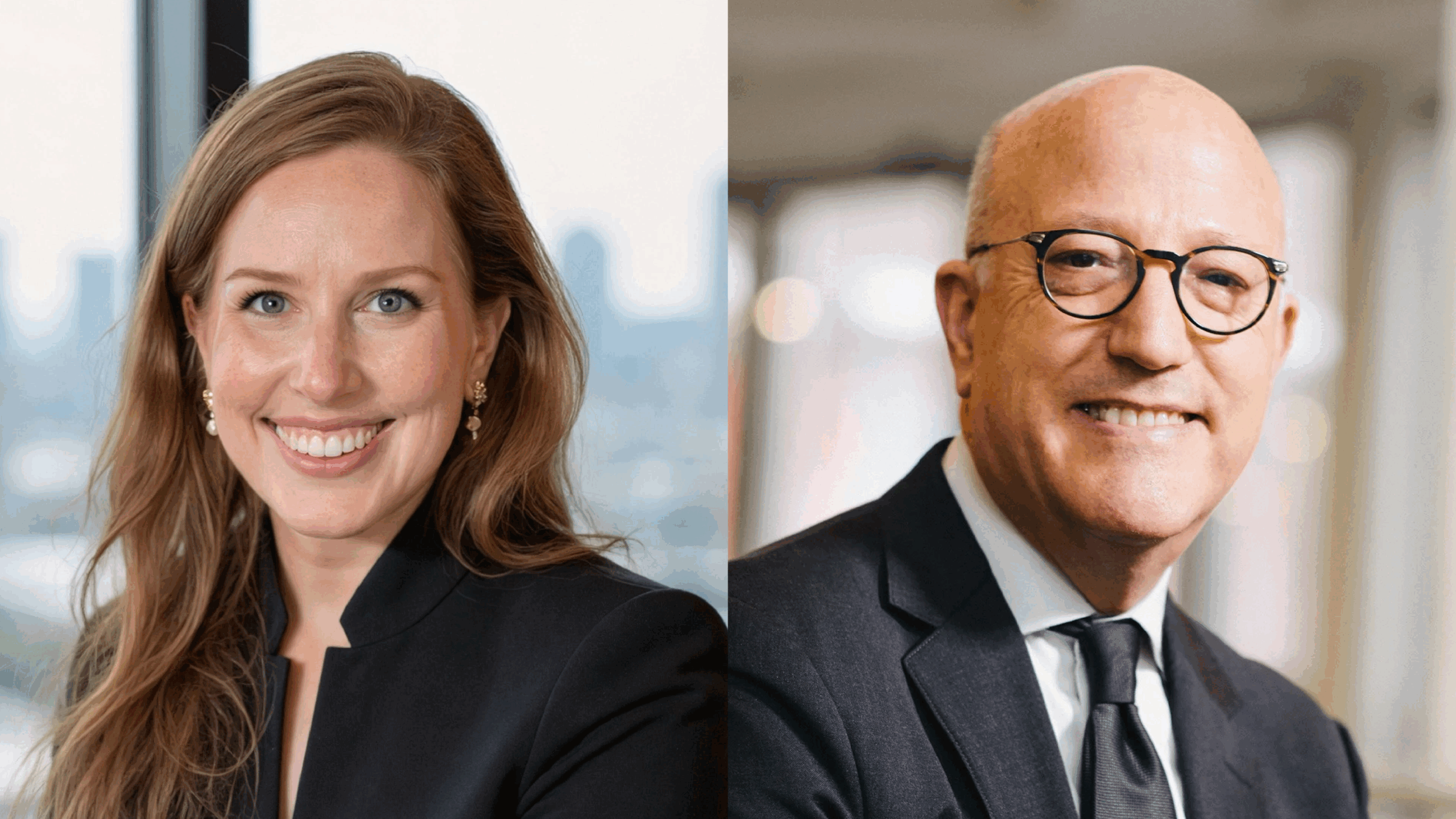
Monica Holt: Welcome back to CI to Eye. I’m Monica Holt. When Tom Gabbard left law school, he realized something about how he’s wired. Lawyers are trained to find all the reasons why something cannot happen, but what energized Tom was figuring out how to get to yes. That philosophy has driven his 22-year transformation of Charlotte’s Blumenthal Performing Arts, and as President and CEO, he’s experimented with new genres. He turned Charlotte into a top 10 Broadway market and built community by listening first. But Tom’s most ambitious innovation came from one simple question: Does anybody know someone whose worst nightmare is being stuck in a permanent seat for two hours? That insight led to Blume Studios, a 44,000 square foot immersive arts hub that in many ways serves as a research and development lab for creativity. At Blume Studios, Tom and his team are rapidly redefining who artists are, how we engage with them, and how anyone in the community can experience art. Tom shares how careful listening sparks unexpected new programs and how curiosity fuels transformation. Let’s dive in. Tom Gabbard, welcome to CI to Eye. Thank you so much for being here with us today.
Tom Gabbard: My pleasure. I’ve really been looking forward to this.
Monica Holt: So before we get to Charlotte and Blumenthal, could you tell us a little bit about your first experiences with art growing up?
Tom Gabbard: I grew up in San Jose, California and was lucky to be in a public school district that really embraced the arts. And I would say a pivotal moment for me was as a fourth grader going to hear the US Marine Corps Band at the San Jose Civic Auditorium. And I looked up there and I said, I want to do that, and started taking French horn lessons.
Monica Holt: That’s wonderful. Can I ask why the French horn called to you? Why was that your instrument of choice?
Tom Gabbard: Yeah, I tried a number of instruments at fourth grade and for whatever reason, they thought my embouchure because the embouchure in your lips and all of that come into play. They thought that was the instrument for me, and it was.
Monica Holt: The instrument chose the player, in that case. I’ll share with you, when I was choosing an instrument, I wanted an instrument that would help me get into a good high school and a good college. So something unique. And so it came down to the French horn and the oboe, and then I learned about spit valves on brass instruments and I said, no, thank you. I shall take a double reed. But I have lots of respect for brass players and who knows if I had the right embouchure anyway to go down that path. So you play the French horn, you’re entrenching yourself. The arts are clearly a part of your life from a young age, but I would say you have kind of an interesting journey that you took to land where you are now. It’s not necessarily a straight line. So can you talk a little bit about those aspirations initially and what ended up happening and how you pursued it?
Tom Gabbard: I’ve always just been immensely curious about the arts generally. So coming up through high school, I did a lot of technical theater and was a performer and my performance skills as a singer, secondarily as an instrumentalist, were strong enough that I had a full tuition ride through college. So I performed a lot and I’m so glad that I did that because frankly, it really anchored me in the aesthetic and it taught me so much about audiences, but I always knew that getting into management was what I wanted to do. So I went right from undergrad into an MBA program, which is very unusual.
And I thought at that point that I was going to go into symphony management. And so as a culmination of my graduate program, the Hewlett Foundation paid six months for me to do an internship and I thought I was going to go to work at the San Diego Symphony working for a guy by the name of Dick Bass who had played a big role in creating the Hollywood Bowl success. And about four months before I was to begin my internship, he called and said, look, I’m taking a job as the new CEO of the Minnesota Orchestra, and you can follow me there, but I’m not going to have any time to spend with you. And so with very short notice to make other plans, I went to the Scottsdale Center for the Arts, which was relatively new, but it introduced me to multidiscipline arts. Not just performing arts, but also visual arts and education. And looking back, that’s exactly where I needed to go and where I’ve maintained my career.
Monica Holt: I think what’s so interesting about your story in that way is that I talked to a lot of people who didn’t know or think about the management side of the arts until much later. How did you know that arts management was a career path?
Tom Gabbard: Yeah, I mean, I always knew that I was good at organizing, that I was eager to try to make things happen rather than being reliant on other people. I mean, I went off to college with my first lightboard that I had made out of a box and put four household rheostats in it and I had four fresnel lights, and that was so that I could do shows with my friends. So I always had this innate sense that somehow I would be involved in organizing the arts.
Monica Holt: Wow, that’s very cool to think about. Yeah, a lot of folks talk about, how do we make sure more people know that that’s a viable career path along with becoming a doctor, an engineer, or a lawyer? And speaking of, you spent some time in law school while you were working. What was the experience like? What did you take from it, and why did you ultimately decide to move on from that pursuit?
Tom Gabbard: So I did go to law school and finish the first year program really intending to get into entertainment law, but I didn’t continue on because I realized frankly that I was really good at trying to figure out the nuance of how to get to yes. And I felt like in law school I was being trained to find all the reasons not to do something, and that I’m wired more to figure out, “What do we have to overcome to make this happen?” But I will always be grateful that I had all these foundational courses, contracts, analytical thinking and writing. My writing really improved. So I’ll always be grateful for having that first year under my belt.
Monica Holt: That’s great. So many of those skills that you talk about are ones that I know we just need to fortify the field with as we move forward. So you kind of find your home in multi-genre presenting and producing on the West Coast, and now you find yourself in Charlotte, North Carolina. Could you tell us a little bit about Blumenthal Performing Arts and what your approach was when you came there as its incoming president and CEO, and what it was like when you arrived?
Tom Gabbard: Charlotte was a very different place then. Now a lot of people admire the vibrancy of our city and the dynamism of it. When they opened Blumenthal in ‘92, there was not a nice restaurant open after 5:30 PM. Literally, there was not a decent place to eat after 5:30. So that had begun to transform, but we still had a lot of work to do there. I will also say at that point they were focused on being an international finance center and were less focused on cultivating creativity. I’m really pleased to say now we are an incredibly vibrant creative city. Yes, we’re a dynamic business center, but now we’ve added this creative edge. I mean, I hear this from people who visit us frequently that say there’s something in the air here creatively, that people are buzzing, that they’re curious, that they’re interested. And the Blumenthal has been very much a part of it.
We’re a traditional performing arts center where we have resident companies like the Symphony Ballet, the Opera, we do a lot of presenting… We’re considered a top 10 market in the touring Broadway business. So a lot of Broadway. But we have gone way beyond that now, getting outside of our four proper theaters, and are doing outside festival work. We started the Charlotte International Arts Festival, which is largely outside, largely in neighborhoods, largely free. And then last year opened our new immersive experience center that we call Blume Studios. So we really have held on to the traditional scene. So it’s not like we’ve abandoned that programming, but we’ve seen the opportunity for growth in reaching out in these other ways. So finding different products in different places has been really integral to expanding those who are part of our family. And boy, has it really worked.
Monica Holt: That’s right. I’m looking forward to talking some more about Blume Studios in particular, but you mentioned that you really transformed Charlotte into a top 10 touring market for Broadway nationally. That’s pretty incredible given the size of the city and how new the performing arts center was. So what was the strategy you employed and how did you build that program to such great success?
Tom Gabbard: I mean, first of all, I think we have made a very concerted effort to help producers and creators actually have the investment capital to create products. So we are probably the most active investors in Broadway, touring Broadway, as well as the West End, of anybody out there, and actually manage a group that’s called the Independent Presenters Network that includes many of the leading performing arts centers and presenters of Broadway across the country. That group has played a key role in raising investment capital so these shows can form. But I don’t think people realize how fragile these shows are. They’re generally looking backwards at a hit and saying, oh, everybody would’ve known that was a hit. Well, they don’t. None of us do. And so the fact that we are able to mobilize money among these venues, which also then begins to create a pathway for a tour, because once a presenter feels not just financially invested but emotionally invested in a show, that lays a pathway for that show. We’re doing this with the industry in mind, and I definitely bring a philosophy of the greater good to it, but in the process, Charlotte ends up being well-served through that.
Monica Holt: Yeah, I’m glad that you shed some light on how the process works and the way that you’re looking at the market and its health and how to support. I think some of that isn’t always well-known by folks who are doing the work of promoting the shows or fundraising for the institutions. Some of that programmatic work can be a little more opaque just by nature, and I think it’s really important to hear how sustaining the national performing arts centers are when they work together to really be looking at the health of any genre of art, really.
Tom Gabbard: Yeah, we also bring more shows to Charlotte than just about any city and certainly as compared with other presenters. Typically now we’re in the range of 17 to 19 shows, most of which are equity shows. So we give people a lot of choices and approach that in a very supportive way. We have a program here for our season ticket holders where they can swap up to four shows. Some people will have a swap program where they can do one. We allow up to four. So that actually gives us more latitude to be expansive in what we do. We can have some things that are a little edgier because nobody’s forced to come see these shows. If it’s not their cup of tea, we’re not going to force them to do it. And conversely, if they’re really curious and they want the edgy things, they can give up the more conservative stuff. So honestly, I think that’s been a part of how we fed the market and their curiosity, and it certainly allowed us to bring some things to our city that otherwise would not have been financially viable.
Monica Holt: Yeah, that’s fantastic. And you’ve also, from the beginning, really had your antenna up in terms of what was missing locally that Blumenthal could be a part of. Can you walk me through a little bit of the discovery process you use when you’re looking to build those really authentic connections with the community and what art forms could be supported in Charlotte?
Tom Gabbard: I think with so much of what we do, we have to just be prepared to try things and take some risk. We have to manage that risk financially, but keep ourselves open. So one example, we for many years have had a spoken word program that we’re very proud of, but I will say they reached a plateau at a certain point and I thought I need to do something to energize that program. So through my various visits to Sadler’s Wells in London, I became aware of a program they annually do there called Breakin’ Convention. It’s an international hip hop festival, and I really admired what they were doing. They were bringing cool groups from all over the world, but also then working with local groups that they showcased in a weekend long festival. And so I turned to the artistic director, Jonzi D., and I said, look, I’m not sure if we’re right for this or not, but would you come and just check this out?
So he came to Charlotte and I said, look, just hang out for a few days. I’ll hook you up with some people that’ll show you around, and then you tell me at the end of the week, does Charlotte have the DNA for this? And then secondly, are we the right ones to do it if we do have the DNA? So we show him around and he said, you guys so have the DNA for this. He said, it’s all in the shadows, but you have the potential to really connect these people, and they were so complimented that you were even thinking about this. So for three years, with the help of Sadler’s Wells and their wonderful team, we brought groups from all around the world, but then also worked with our local hip hop community, not just dancers, but graffiti artists. I let them actually paint inside our night theater. My staff thought I was crazy when they were spray painting on the pillars of the inside of our night theater, but I said, Hey, look, this is about bringing street art into a proper theater and showcasing it in a beautiful way, and that includes the graffiti artists. So it did so much to energize that community, but also to connect us. Nobody in their wildest minds would’ve thought that Charlotte was ripe for that, and certainly Blumenthal, they had no history of doing this, but it was transformative for us.
Monica Holt: Yeah, it sounds like it’s really informed how you continue to seek out those opportunities for, again, meaningful ongoing relationships that introduce new artists and art forms and really connect the national scale of what Blumenthal can do with the local scene and the empowerment of artists there. You mentioned earlier Blume Studios. Relatively new for Blumenthal, it’s 44,000 square feet of something that industry experts say doesn’t exist anywhere else, which I believe to be true. You can tell us all the facts and figures associated, but why did this need to exist and what community were you trying to identify and uplift in building this 44,000 square foot studio?
Tom Gabbard: So in our case, we started doing immersive as a way to activate our team. Coming out of COVID, I had over 200 people that were out of work. And so in July of 2020, a few months into this, I got a call from Corey Ross in Toronto who said, look, I’ve just opened this immersive Van Gogh show, and I’m not quite sure, but I think I’m onto something. So boom, it right away appeared to me to be something that we could potentially do before we’re able to open our theaters and begin to reacclimate the public to coming inside for a cultural experience. So in June of 21, we opened immersive Van Gogh and over the next six and a half months, we had 300,000 people come through the doors.
And 78% of those people were new to file, meaning that they had never bought a ticket from us before. We have a very rich database because not only do we have a lot of different shows through our own venues, and we do all the ticketing in our venues, but we do ticketing for other clubs and theaters in the region. So we had this rich database and 78% of these folks were new to file, so we knew we were on the right path. I will also say in that journey, about a year later, I went to Barcelona to IDEAL and saw the immersive Next to Normal, and that’s when I realized, okay, these places can be actual performance halls that you could actually do a performance that was really quite remarkable. So that made us realize with full force, we needed to find a substantial facility to continue that work.
Monica Holt: Right. So coming out of the pandemic where you did Van Gogh, that was kind of a temporary trial to see if that would work. Incredible success there.
Tom Gabbard: But here’s what really was transformative for the long term. We very uniquely work with local artists to animate the space. In that case, we had 75,000 square feet. The digital art show only needed about 19,000 square feet. So we actually created an artist residency program and would have artists that – we actually paid them a stipend to be there 40 hours a week. They could work plus sell themed merch that was in the merch shop. And this version of immersive Van Gogh from Lighthouse, it was in 21 cities. We were one of 21 cities. That merch ended up being sold in other cities. That alone generated well over $600,000 to Louisville artists at a time that they were out of work as well. But that idea of connecting a commercial product that was brought in with a really authentic local arts component, that was something that was a key organizing principle.
Monica Holt: I mean, that’s brilliant. The idea of taking something – again, it’s what we were talking about earlier, how do you take what’s national in scale, but then for the local community, don’t just say, “And here’s this great art, aren’t you so glad that we presented it for you to experience?” But how can you get involved? How can we support our local artists in a meaningful way? Okay, so you have this incredible experience and then you were looking at how do you sustain that longterm? What would the right space be? I know that you also embarked on kind of a global research process as you were looking at what’s possible. So what gaps did you see not just in opportunity for Charlotte, for Blumenthal, but also just in existing immersive entertainment, and how did this become a moment to coalesce all of those ideas together into what became Blume Studios?
Tom Gabbard: Yeah, we bring a lens of: how do we accomplish something good for our industry, for our peers, and how can we help create replicable models? And so a number of principles that we’ve undertaken that hopefully will be inspiration to other people is a much more sustainable approach to creating space that is a form of a popup where you’re not making a huge commitment in infrastructure. At Blume Studios, our mantra is nimble, scrappy, highly creative.
Monica Holt: Nimble, scrappy, highly creative. That’s a mantra we should really start embodying.
Tom Gabbard: And as somebody that’s been in the performing arts center business for a lot of years, I can say that’s not how we usually build and operate these buildings.
Monica Holt: No, no, no, no, no, no. Quite the opposite.
Tom Gabbard: And so to some degree, that’s actually gotten me fired up to realize after a lot of years of building and operating very expensive places, that these spaces can actually be much more interesting and much more energized. And because of their scrappiness, we’re part of launching a 55-acre industrial site called the Iron District, and they expect it’ll take 35 to 50 years to build it out. And I said, “Hey, we’ll be ready to move around to help activate your site.” So in this warehouse that we came into, we made it a point to try to make sure that everything was movable within the building. So for instance, instead of building out permanent bathrooms, we put the bathrooms in shipping containers, and we can move them around in the building, we can move them elsewhere. I will say a source of inspiration there has been my friend Tris Baker in London and Troubadour Theaters, because Tris has been building these semi-permanent movable theaters in London for a few years, and working very constructively with developers to do exactly what I described there. He was setting up shop for a while, generating a lot of activity that brings the public, acquaints them, and then when they’re ready to cash out and build an office tower or something, then he picks up and moves. So I want to give a shout out to Tris and his team for that inspiration that we’re trying to embrace.
Monica Holt: For sure. I’m so curious, if you were to give the thesis statement for Blume Studios or the elevator pitch, how would you respond?
Tom Gabbard: I think in some respects, we’re an R&D lab for creativity. We are rapidly redefining creativity, who creators are, who artists are, how you experience creativity, so to create a place where we can experiment with those things… I mean, even the ticketed shows, we are experimenting with the marketing, we’re experimenting with how to organize them and operate them, but then when it comes to the free areas, we’re being able to work with local artists to create an affordable place for them to try things.
Monica Holt: Yeah, immersive is a word with a lot of weight these days as more and more experiences are being offered. What do you think are the audience’s expectations of attending an event or an exhibition or coming to Blume Studios?
Tom Gabbard: When I first started talking to my board about this, I would ask them the question, I’d say, “Does anybody know somebody that their worst nightmare is being stuck in a permanent seat for two hours?” And of course, everybody knows somebody like that, and it’s because they’re active, they want to move, and in our proper venues, we haven’t had a way to serve them. They deserve a creative experience as well. So an environment where people can be mobile and particularly that they’re encouraged to actually touch and participate in some way, that they can be interacting with the art. I think that’s a common feature through this. And something we don’t talk about often enough is, it does serve in a very unique way a sense of providing community that people are looking for.
And most of this immersive has what I would describe as light touch communal elements to it. When I think back to – a business that did that early on was Starbucks 30 years ago, having that setting where people could come and park themselves at a table and be around other people, maybe have a conversation, maybe not, but be a part of that communal experience that was what people were looking for. That is a much greater need now. And I find immersive actually provides that opportunity for people in a very unique way. With our free space, we find people that will go through the ticketed experience and then they’ll hang out for another 60 or 90 minutes. That, to me, demonstrates that that communal piece is part of what they’re looking for from it. The last thing I would mention – people should expect that every time they come out, it’ll be different and that they should have this sense of anticipation about, “So what does Blumenthal have up their sleeve this time?” And that sense of excitement that it will always be different. And I think that’s also part of what is unique about immersive that people are looking for.
Monica Holt: Has what you’re learning about programming and audiences through Blume Studios changed your perspective on anything? Was there anything that surprised you that you learned?
Tom Gabbard: Number one, it’s continued to help us connect with audiences that we historically haven’t had a lot of contact with. And frankly, the love and appreciation that that’s generated for us as an institution is quite remarkable and something that I just value every day. We talk about these institutions, we talk about how we can improve our brands and be viewed as more community centric. And this has been the most successful way that we have been able to show to the community that we really do care and that we really are listening, that they really are welcome. And particularly for the creative community, because especially a legacy group like us, we’re well known for connecting with traditional arts and traditional artists. And to have an opportunity to convey respect to an entirely new group of artists is an incredible opportunity.
Monica Holt: That’s really wonderful. You mentioned the kind of extraordinary new to file folks for Van Gogh. What is your approach with managing relationships for folks who didn’t come in through the traditional performing arts center and instead came in through Blume Studios?
Tom Gabbard: We certainly are embracing them into all of our communications, and hopefully they’ll come and participate in some of the other things. At some point when we catch our breath a bit, I think we’ll analyze that a little bit more to understand what things people have gravitated to. But I’m also okay if they don’t. For some of these folks, they don’t want to be in a permanent seat. And so if they just engage with this in these other ways singularly, that’s fine too.
Monica Holt: That’s valuable as well. Absolutely. If an organization is interested in pursuing something like Blume Studios, but they’re just at the beginning of this thought, they’ve seen the work you’re doing, they’re inspired by that… where should they start?
Tom Gabbard: I think first of all, my advice to people is just get started with something. And particularly when they look at a large scale operation like ours, it can be intimidating. That’s not what to focus on in the short run. I think finding, just based on whatever space you can come up with, that may just be a short-term trade, a pop-up of some kind. I do think a lot of these experiences have to be outside of our traditional venues. If you’re going to really reset this, then I think having the courage to step outside your traditional venue is really critical to this. But if people can identify some ideas that they feel passionate about, start small and then build from there. Just get started with something and learn your way.
Monica Holt: Just try. Let’s see what happens. So even as we were just talking about that, you are so clear in your centering of local artists, of community, in the work that you’re doing. You and I have talked before about how arts organizations need to understand their role in meaningfully shaping cities not just artistically, but quality of life. How does that impulse influence how you are operating day to day?
Tom Gabbard: We are an integral part of the team to create strong communities. I think that historically performing arts centers have been economic drivers, and they’ve been cultural czars, cultural temples. Now we’re seeing a role as a community builder. There’s an entirely new element of placemaking. We have an opportunity to make cities more interesting, to create neighborhoods that are more vibrant, but also to actually be a player in real estate. I mean, this is part of my inspiration from Troubadour where they work with developers to come in and put their theaters there for a few years, but they’re designed to be dismantled and moved so that they can actually be a really effective partner with a real estate developer who will give them space for little or nothing. So yeah, there’s an entirely different kind of real estate play than what we’ve seen with the traditional performing arts center.
Monica Holt: And I think as you’ve talked about before, shaping new development from the ground up, which is a whole other vantage point to this idea of arts as anchor institutions, beyond “how are the inroads with different business sectors.” How are we really working to see a city holistically? Do you have a sense of, as you look at Charlotte and the years ahead, what that type of partnership might look like?
Tom Gabbard: I mean, clearly we’re exploring an entirely different approach where we are with Blume Studios and being the first and only tenant of a development that’s 55 acres. That’ll be 35 to 50 years. And so what we’re hoping to see is an entirely new piece of real estate for Charlotte where the arts are really infused into it. And because we’re there first and then can be inspiration and good partners with others to follow, there’s an opportunity for us to help shape that in a very positive way. But I’m also really proud of what we’re doing, particularly with the festival work we’ve done to push the arts in the neighborhoods. And that is a part of Charlotte’s maturation as a city where for a generation or two, the focus was on our facilities in the downtown, and the downtown needed to be turned around. So that was the proper focus. Now, I think there’s acknowledgement that we need to look at neighborhoods. We need the legacy institutions that are anchors for the regional community, but there also needs to be a strong network of neighborhood, local, suburban facilities, particularly those that are aligned with the needs of families and kids. Those have to be close to home. So for Charlotte, that is definitely part of our next phase.
Monica Holt: It’s clear you have a very collaborative approach, very thoughtful in terms of how you intake research, but ultimately you are the decision maker on major innovations, like Blume Studios. When you’re looking at your leadership style and how that’s developed over time, how do you balance collaboration with decisive leadership?
Tom Gabbard: Yeah, and whether or not you’re talking about leadership within the staff or even leadership with the community, there is that push-pull of how far out ahead do you get with people and how far is too far. And I think we always have to balance that. I think it was LBJ that said, you can’t get so far out ahead of people that they don’t know who they’re following. And so yeah, there is always that push-pull of being out ahead for your team, for the community, but not so far out that they lose sight of that. I wish I had perfect advice as to how to do that, but I think intuitively, if you’re really listening carefully to the community, listening carefully to your team, you start to get a sense of how far out you can go. I mean, the analogy that I try to give with a lot of this is, I always want us to be reaching for something that’s just a tad beyond our grasp. Not so far that it’s impossible, but not so close it’s easily reachable. And I think if people can understand that there is that healthy quest to always be reaching out just a little bit further and have the confidence that you can navigate that, that helps lead you to the right solution.
Monica Holt: Well, that ties into wondering what keeps you energized about this work. I mean, you’re thinking in terms of decades and not seasons, particularly with the long-range planning you do. So what keeps you motivated? What keeps you excited?
Tom Gabbard: I’ve been lucky to have this abundant curiosity about life, but particularly the arts. And this new immersive work has just opened it up further, that there’s even more to be curious about, and particularly given the pace of how these things change, because I think even more so than what we’re used to seeing in the traditional arts, these are trends and they move fast and trying to identify them and when to mobilize and what the timing is of that is part of the challenge, but also part of the fun. And I think if people can bring abundant curiosity to it, it just makes it all the better.
Monica Holt: What’s giving you hope for the future of leadership in our field as you’re watching these transformations happen?
Tom Gabbard: I can see several generations younger than me that are now entering the field that do bring that openness, that are willing to look beyond the traditional solutions, and I think are ultimately going to serve us really well because they’re not hesitant to reach out to entirely new niches of audiences that in the past just haven’t been part of our world. That younger generation of future managers and future leaders to me is part of what gives me hope for the future.
Monica Holt: I love that. Well, we have come to our quickfire culture section where we love to end every episode. So if you’ll indulge me, what is one piece of culture that you are currently obsessing over?
Tom Gabbard: Oh boy. I’m probably late to the game here, but I’m enjoying listening to K-Pop.
Monica Holt: Oh yeah. I mean, better late than never on that one.
Tom Gabbard: It’s great.
Monica Holt: If you could go back in time, what is one performance or live event that you’d love to be present at?
Tom Gabbard: Well, and this is certainly the flip side to K-Pop, but I would love to have been at the first performance of The Magic Flute, which is one of my all-time favorites. It’s such a remarkable score, but so playful. But yeah, I would love to have been in the room when that was first performed.
Monica Holt: Is there a free resource that you think everyone should avail themselves of?
Tom Gabbard: Well, of course, CI to Eye, which I’m enjoying a lot and share with others.
Monica Holt: Flattery will get you everywhere.
Tom Gabbard: But among others that are out there, I’m a voracious Freakonomics podcast listener, and so that’s done a fantastic job of helping open my eyes to all sorts of things that I wasn’t aware of.
Monica Holt: That’s great. And then finally, your CI to Eye Moment. If you could broadcast one message to other executive directors, leadership teams, staffs, and the boards of arts organizations, what would that message be?
Tom Gabbard: Do everything you can to feed your curiosity, because I think if you’re excited about your own discoveries and things that are opening your mind and new experiences, then that will translate to other people. We can’t get people excited about things that we aren’t personally excited about. And so I think whether or not it’s through travel, whether it’s through other things that allow us to connect with other art forms and other experiences, finding things that get us jazzed, that are new to us, I think those new experiences mean so much.
Monica Holt: I could not agree more. Stay curious, be curious, wherever you are. Thank you, Tom. I so appreciate your time and your insights, and I look forward to the next opportunity I have to get to chat with you.
Tom Gabbard: Such a pleasure. Thank you.
Monica Holt: Thank you for listening to CI to Eye with Monica Holt. If you enjoyed today’s conversation, please take a moment to rate us or leave a review. A nice comment goes a long way in helping other people discover the show and hear from leaders in the arts and beyond. If you haven’t already, please click the subscribe button wherever you get your podcasts. We’ve got some pretty incredible episodes coming your way, and I wouldn’t want you to miss them. This episode was edited and produced with Karen McConarty and co-written by Karen McConarty and myself, Monica Holt. Stephanie Medina and Jess Berube are our incredible designers and video editors. Our music is by whoisuzo. Don’t forget to follow CI on Facebook, Instagram, LinkedIn, YouTube, and TikTok for regular content to help you market smarter. You can also sign up for CI’s newsletter at capacityinteractive.com and you’ll never miss an update. And you can always reach out to let us know who you’d like to hear next from on CI to Eye.
Tom Gabbard has been CEO of Blumenthal Performing Arts since 2003. The Blumenthal’s 110 employees manage six theaters in Charlotte, hosting over 1,000 performances annually, as well as extensive education programs, immersive projects, and the Charlotte International Arts Festival. During his tenure, the Blumenthal became a Top 10 market for touring Broadway shows in North America.
A member of the Board of Governors of the Broadway League, he serves on the Legislative Council and Finance and Intra-Industry Committees. He has been a voter for Broadway’s Tony Awards since 1997. In 2022, the League awarded Tom with Lifetime Tony Award Voter status. In 2012 the League awarded him the Samuel J. L’Hommedieu Award for Outstanding Achievement in Presenter Management. He serves as co-chair of The Jimmy Awards, the National High School Musical Theatre Awards held annually on Broadway.
Tom is a Past President of the Independent Presenters Network (IPN), a consortium of 40 leading touring Broadway presenters in North America, Asia, and the UK. Tony Awards as a coproducer/investor include for Monty Python’s Spamalot, Thoroughly Modern Millie, La Cage aux Folles, RED, Pippin, Kinky Boots, The Color Purple Revival, Hello Dolly, Dear Evan Hansen, The Band’s Visit, Oklahoma!, Hadestown, A Strange Loop, and Lehman Trilogy.
Other Broadway, Off-Broadway, national tour and London West End credits include Moulin Rouge, Ain’t Too Proud, David Byrne’s American Utopia, Death of a Salesman, Tootsie, Legally Blonde, Frost/Nixon, Matilda, Cinderella, Jagged Little Pill, Something Rotten, An American in Paris, Waitress, The Broadway Museum, and Back to the Future. He produced the New York run and the national tour of TRACES, and the national tour of 9 to 5. Tom is a leader in developing partnerships between the UK and US, working on over 25 UK/US transfers and London productions.
He was the Founding Managing Director of Pepperdine University’s Center for the Arts in Malibu, the Executive Director of the Arvada Center for the Arts and Humanities in Denver, and the Weidner Center for the Performing Arts in Green Bay. He holds an MBA in Arts Management from Golden Gate University and a BA in Music Performance from Pepperdine University where he also attended Law School.