
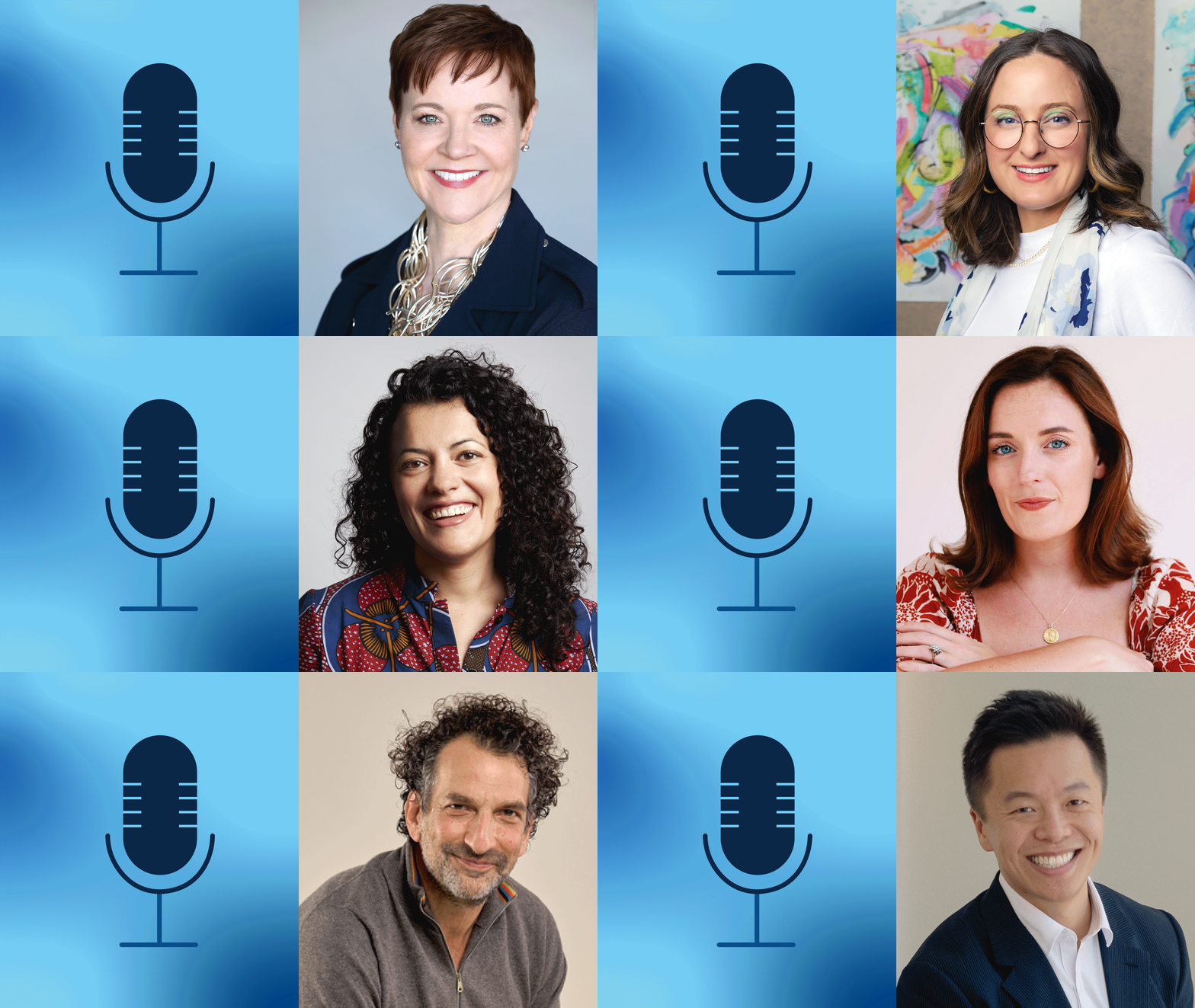
Join host Monica Holt as she reflects on the moments that defined the Fall 2025 season, and hear cultural leaders remind us why connection, creativity, and collaboration are more important than ever.
Attract and engage your patrons with a fully-managed ad strategy across all your platforms.
We'll help your organization use AI to save time and spark creativity while staying grounded in your values.
Your creative assets + our impeccable execution = thumb-stopping social content.
Let's harness your website’s data and uncover opportunities to optimize and grow.
We’ll partner on a strategy to level up your email program and help your ROI shine.
Ensure visibility across the search landscape with a technically sound website and content that deserves to rank #1
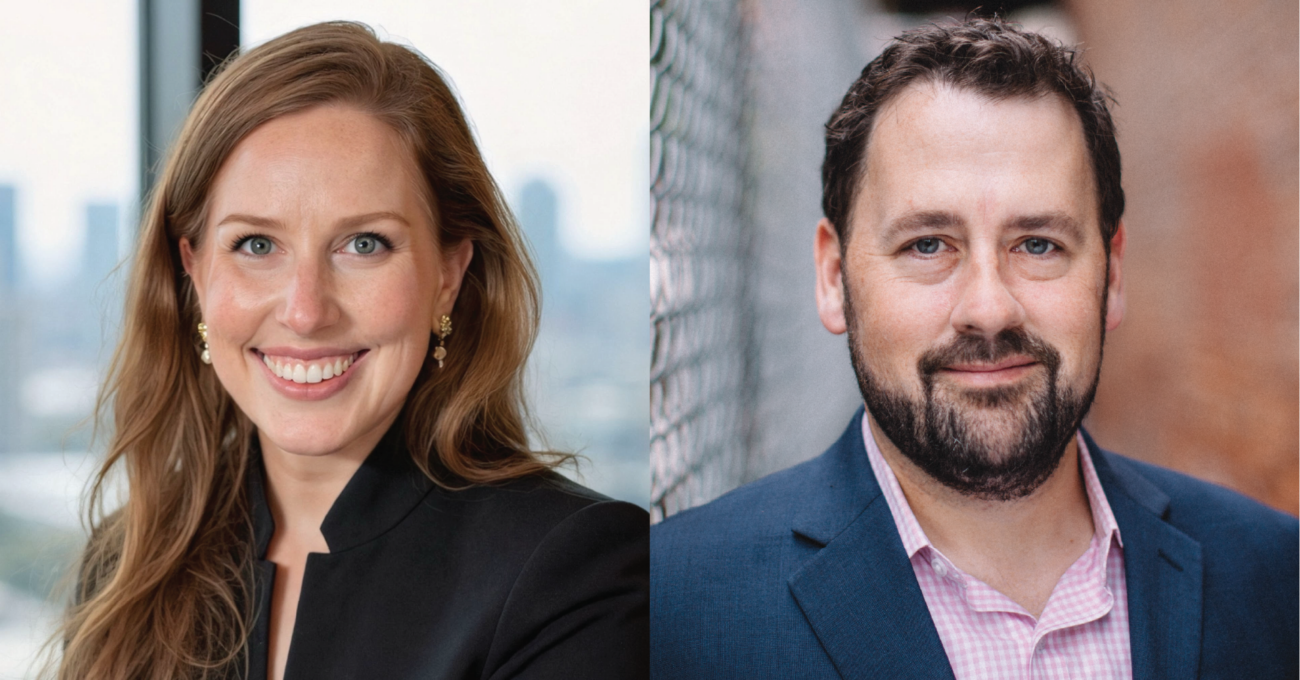
This episode is hosted by Monica Holt.
Monica Holt: Hi everyone. Welcome back to CI to Eye. This is Monica Holt. My guest today is Aidan Connolly, executive director of Irish Arts Center in New York City. Aidan’s story starts with his dad and singing in the Catskills and then winds through national theater tours, the Al Gore 2000 presidential campaign, and the New York State Senate before landing at the Irish Arts Center in 2007. Now, nearly 18 years later, Aidan has transformed a humble garage space into a thriving multidisciplinary cultural hub. What I love about Aidan’s approach is how he’s woven political campaign strategy into arts leadership, thinking in ecosystems and stakeholder communities while running the long-term math. We explore why Irish hospitality became the organization’s competitive edge, what it was like opening a brand new building 18 months into the pandemic, and his philosophy on transparency and succession planning while you’re still in the top seat.
Let’s dive in. Aidan Connolly, welcome to CI to Eye. Thank you so much for being here today and sharing your time with us.
Aidan Connolly: It is such a pleasure. Thanks for having me.
Monica Holt: I’m thrilled to talk to you. We only met for the first time within this past year, but your history and leadership in the field is so important. I recently was talking to Andrew Recinos who speaks so highly of you, and I know you just joined the Tessitura board, so congratulations on that.
Aidan Connolly: Yeah. Incredible community.
Monica Holt: Yeah. Thank you. Thank you for serving the leadership team there. We like to start every episode hearing from our guest, when was the first time that art touched your life?
Aidan Connolly: Yeah. I guess I’ll give two answers to that if I can. My dad was a showband singer — an amateur,but really capable amateur showband singer, I think, is the best way to describe — growing up in the west of Ireland in his late teens and early 20s. And so when we were kids, we would go to the Catskills and he and I would sing together.
Monica Holt: That is so great.
Aidan Connolly: Yeah. So that’s probably the real genesis. But when I think to what it means to me today, it was probably in my sophomore year of high school. I got cast in a production of Arsenic and Old Lace. Classic. And I was young and I was cast as Dr. Einstein in that show, which was a solid meaty supporting role. And at 14 years old, I was probably five foot one or something. Total baby face. But this high school drama club just embraced this sort of awkward, closeted teenager looking to find belonging. And I was never all that athletic growing up. And this was something that it turned out maybe I could be good at. But more importantly, certainly in retrospect, it was a place where I started to find my people.
Monica Holt: I mean, finding your people is the whole game and doing it in high school. I am so grateful for the safe spaces that theater always creates and how lucky are both of us to have benefited from the adults that created those spaces too.
Aidan Connolly: Incredible. And I’m very fortunate both in… I went to a public high school in Newington, Connecticut, which had an incredible music program. And beyond just the technical chops of those teachers, yeah, they really created those safe spaces as well as sort of getting us off the ground on our professional journeys too.
Monica Holt: Well, speaking of professional journeys, I mean, my understanding is that you went on to work for a number of regional productions and national tours after college. You studied English and drama? Is that right?
Aidan Connolly: Yeah. Yeah. I was an English and theater major. Yeah. I graduated college into a pretty bad economy, which was an opportunity because there weren’t a lot of jobs for anybody if you’re working in finance or other professions. There wasn’t a huge amount of opportunity. So there was a reasonable case to be made in those conversations with my parents when I said, “Actually, I think I’m going to move to New York and audition for shows and see if I can make something of this as a performer.” I’m so glad I took that ride in my 20s because yeah, I got to do a bunch of incredible shows, had a lot of really meaningful experiences, mostly on the road with the show Forever Plaid that was kind of a huge hit off Broadway in the 90s. And I think I did one of the first national tours of it, and I’m still friends with a lot of those folks.
Monica Holt: Yeah, I’m sure.
Aidan Connolly: But got to a point where I started looking for a different path.
Monica Holt: And I’m so curious because so many of us experience shows that are on the road and touring, and that’s a lot of folks’ first experience with art or theater is the tour that comes to their town. I’m particularly curious about the culture of touring then. What was that like moving through so many spaces within a year?
Aidan Connolly: Well, it’s funny. As I reflect on it, what I’m most glad about is that gave me an opportunity to see the country: blue states, red states, purple states. So as we confront the horrible state of our politics, I do still have a backdrop of having met and gotten to know now — granted, I was meeting front-of-house and back-of-house people in all these places, but also audience members. And so yeah, I think it gave me an appreciation for our country.
Monica Holt: That’s exactly right. Having been on the East Coast growing up, I’m now in the Midwest and I’ll share last night, we had two artists from the Twin Cities here performing in Iowa. And it was a pretty special reminder of both how to channel every emotion through art and how artists who have that gift can give so much to a community and a group of folks who are feeling something and just need it to be processed together in that space. It was a powerful reminder, as you say, that no matter red state, blue state, it doesn’t matter. The art is still there and it is still serving its purpose day in and day out.
Aidan Connolly: Yeah. Anything that is convening people in person at any scale. Just last week I had the opportunity to attend a humanities series at the Bushnell in Hartford, not far from where I grew up. And it was a conversation with Pete Buttigieg and the conservative podcaster and journalist Jonah Goldberg. And it was wonderful. What was so inspiring about it was going back to sort of my hometown or near my hometown and seeing 2,800 people coming together in one room to be inspired by what was a very thoughtful, engaged, collaborative dialogue. So whether it’s that kind of experience or an artistic experience, I think anything that is pulling people together who might not otherwise have a reason to be in the same room maybe is going to be part of the path forward into wherever we’re headed.
Monica Holt: I hope so. I think so. It’s funny that we are talking about politics at the moment because what I think is so interesting about your career is that after being a professional artist, you transitioned from the arts into politics and government. First, tell me, what was the trigger for deciding you were ready for the change and that politics was the thing to pursue next?
Aidan Connolly: Yeah, great question. Even though as I sort of got into my mid-twenties and I was getting all these great opportunities, I think there was always a little voice in the background of, “You’re not doing this forever.” So I started contemplating, what else am I going to do? So funny enough, New York being New York, I had — like a lot of young artists — my day jobs, working in restaurants and working at catering companies and all that jazz. And one day I found myself cooking hors d’oeuvres in the kitchen of a prominent Democratic Party fundraiser during the Clinton midterms in the ’90s. And the host of that event was a very prominent Democratic fundraiser and significant person in the world. So I literally, I still remember, I wrote a handwritten letter, which is hilarious, and basically said I’d love to get involved in the 2000 election in some way.
She got me an internship on Al Gore’s 2000 presidential campaign, an unpaid internship on the fundraising team. And I had been making money on the road and I could afford to go and do this unpaid for a while, built some relationships, incredible relationships that I still hold to this day. It kind of propelled me into a new chapter of campaigns, which I absolutely adored. And I’m fundamentally a campaign person.
Monica Holt: Well, and it’s so fascinating because I think even some of what we were talking about with the way arts brings people together, sometimes politics divides people. There’s some diametrical opposition between the two worlds, one would think. But you’ve worked in both sectors. So I’m curious what you think are the similarities and what can we learn from each other?
Aidan Connolly: Yeah, absolutely. So I ended up going to work in the New York State Senate for a number of years and in the state legislature back during those days, the Democrats in the Senate had no power. And so what was interesting there was when you’re in the minority, you don’t really have the ability to affect legislation meaningfully, but you do have the ability to build stakeholder relationships, to engage with the media. You can build campaigns to run candidates that are in support of the agenda that you believe in. We’re going into a legislative session. It was like, okay, what are we trying to do with editorial boards? What are we trying to do with activists? What are we trying to do with base voters? What are we trying to do with future funders of our campaigns? So you think about all of these different ecosystems and I would eventually come to realize, wow, this is just like what you need probably for an organization.
So I look at this idea of a political campaign or an organization of any type as being comprised of these ecosystems of segments of people that are animated by something inspiring and maybe a little bit against the tide in some way, but that one can mobilize folks to a spirit of common cause around it, communicate with diligence towards it, and achieve something that might not be possible, but for this unique community that comes together. And then anybody who’s worked in politics will tell you the two-year election cycle is a drag, especially folks who are working in fundraising, I think. You’re sort of in these two year cycles and it’s like, okay, now here we are again with another campaign. And often it feels like you’re starting from scratch. You might have a new candidate. And so what was so interesting to me as I contemplated moving into institutional development in the arts administration field… The opportunity to do that sort of stakeholder engagement and relationship building over a period of time so that you’re getting the sort of compounding value of all of that work yielded a sense of possibility.
Monica Holt: That makes sense. And it’s funny because one of the things I was curious about is fundraising parallels between art, particularly nonprofit art and politics. And this is clearly on my mind [because] we are in a midterm election year. We know it’s a manifestation where there’s going to be a lot of money and some of that is also going to impact the capacity of giving for nonprofits as people are prioritizing their dollars. So I am curious about anything that surprised you about fundraising in politics now that you’ve been kind of looking at it from the other side in nonprofit arts.
Aidan Connolly: Yeah. Well, I guess I would say it was rare that I was working for candidates who had a whole lot of power. So we had a really hard slog of it. We really needed to convince people, particularly during those state Senate races in the 2000s, we really had to focus on true believers who weren’t so transactional really and who really believed in what we believed. You’re inevitably going to be competing with everybody’s other interests, but I have found, at least in my experience here, that if you have a really good mission that has been fully thought through and has yielded a point of differentiation and you’ve got a good set of animating core values, the sort of competition is going to come and go in a way, but your greatest competition I think is with yourself and with your own sustainability.
Monica Holt: Yeah. Keep your eyes on your own paper.
Aidan Connolly: Keep your eyes on your own paper.
Monica Holt: Yeah.
Aidan Connolly: Yeah. Yeah.
Monica Holt: So the political journey is particularly interesting, of course, because then you were, in 2007, appointed executive director at the Irish Arts Center. And so I’m just curious, when did that organization come onto your radar? Obviously you told us a little bit about your parentage and your personal history, but what was happening in your life or in your mind that told you it was time to return to the arts?
Aidan Connolly: Yeah. Well, election years were really intense years and the off years were also busy, but you might have a little bit more time. So often people who are sort of perennial campaign workers might take a big trip after a really grueling campaign and then come back and sort of start the next cycle. Instead of doing that, I would go and produce a show somewhere, like a little gig.
Monica Holt: Oh, I see.
Aidan Connolly: So I kind of kept a foot in it. I was doing these little events down at Arlene’s Grocery in the East Village. I started to build relationships with, as it happened, contemporary Irish playwrights and maybe had come to a realization that Ireland really punched above its weight in the world of theater, and obviously in the world of the arts broadly, but particularly in the world of theater, which was my cultural language. And it was a point of pride that there were writers — well-known ones like Brian Friel and others — who were of Irish descent and who were being recognized as really great. So during that period of time, I was kind of dabbling and I had kind of come to learn about producing, really backing into it through political fundraising. So it’s sort of like, oh, you go and you raise the money from people who care about what you’re doing, and then you go and try and do what you said you’re going to do and do it responsibly and do it in an inspiring way.
So I’d go out and raise 10 grand and put on a weekend of gigs in these small places. And so eventually I had been introduced to Irish Arts Center by a mutual friend and rented it for a production and then started getting to know some of the people on the board and started to get interested in it and its journey. It was situated in Hell’s Kitchen on the West Side. And part of the Clinton Urban Renewal Program — the urban planning that was happening around residential and corporate real estate development here — there was a desire to provide city-owned land for these longstanding organizations. And the board had asked me to just do a study of where Irish Arts Center was in the landscape as they were contemplating, “Hey, maybe we can potentially get our hands on some city-owned land and potentially build something new.” So I said, “Yeah, sure.
I’ll talk to your people and share my thoughts.” But kind of came up with an initial hypothesis of how I thought Irish Arts Center could be competitive long-term.
Monica Holt: What was that initial hypothesis?
Aidan Connolly: Well, it was that it was operating in the off, off Broadway producing landscape. You remember those days where New York had scores and scores of 99-seat theaters that were producing houses? There’s very few now. And I think just the landscape financially and competitively to actually deliver an experience for New Yorkers, this is very, very challenging in those economics, especially if you don’t have a significant philanthropic base, which the organization did not have. So ultimately the hypothesis was to pivot from producing to presenting and to take the existing space that was there, which was this sort of humble old garage kind of space, go and find the best intimately scaled work that was happening in Ireland and figure out a way to put those shows on a plane, get them to New York, platform them, hopefully get the resources together to get them on the map, get them reviewed, start to build an audience.
So that was kind of one of the key things. The other key thing was to pivot to multidisciplinary because there are certain segments of people who are really interested in theater, but if you are able to expand that to music, dance, literature, humanities, visual arts… right? Now you have these whole new sort of segments that you can draw on. And if you can get to a place where you can deliver credibly across those disciplines, then you can build community across those disciplines. So that was sort of the theory, which of course then a year or two later I was called on when they were replacing their leadership and they said, “Hey, we know you like politics, but have you thought about doing something different?” And the idea was, “Here’s a canvas to bring great people together and build something new.” And as a New Yorker, that was just so inspiring and exciting and ultimately worth the risk.
Monica Holt: What was it like going through that internal transformation process first? How did you and the team approach rethinking what the Irish Arts Center’s place in the New York ecosystem was?
Aidan Connolly: Yeah. So look, so there was this hypothesis, but ultimately this hypothesis needs to be tested and it needs to be engaged and explored and kicked around. So we did a summer staff retreat and I took one of the frameworks from this book called Good to Great by Jim Collins. Within Good to Great, there’s something called the hedgehog concept, and I’m sure a lot of your listeners will be familiar with this. And the hedgehog concept is comprised of three circles, right? Three questions really. And you think about them as like three circles in a Venn diagram. The first question is, what can you be best in the world at? The second question is, what drives your economic engine? And then the crucial third question is, what drives the passions of your people? And the idea behind the hedgehog concept is that whatever the intersection of those three things is, is where you should focus your relentless energy.
And so we started with, what could we be best in the world at? So of course, we’re an arts organization that had operated mostly in the theater ecosystem. And so of course, we start by saying, “Oh, well, theatrical legacy and da, da, da, da, da.” And then we’re like, “Really? Are we going to be best in the world with that? ” Here we are in the cultural capital of the world with hundreds upon hundreds of incredibly well-resourced — Is that really what’s going to lead us down that road? And then somebody kind of flippantly said, “Well, we’re Irish. We throw really good parties.” And all of a sudden everybody was like, “Hmm, okay.” So this idea of Irish hospitality kind of came into the mix.
And so we got to this notion that actually, yes, we are going to be a relentlessly high standard New York arts and cultural organization, but what we’re best in the world at is hospitality and creating a culture of hospitality, which of course has a kind of Irish underpinning to it, this idea of Céad Míle Fáilte, 100,000 welcomes, and that idea of the warm Irish welcome and the experience that people recognize when they go to Ireland. And we thought we’re going to be that place in New York. We’re going to aspire to be that place in New York where you feel the feels. You can walk in on your own or you can bring a gang or you can come in and meet new people, but we’re going to give you just a great, warm experience. But where it really led was realizing that, no, it’s actually like the environment of hospitality for the artist because if we get that right, then that just radiates everywhere else.
The staff are feeling it, the board are feeling it, the supporters are feeling it, the audience is feeling it. So that kind of, I think, became New York standards of excellence on an intimate scale and an environment of Irish hospitality. So that just kind of…
Monica Holt: I mean, there you have it. Hospitality being at the core underpinning of the work, as you say, speaks not just for our audiences, but for artists, for our staff, for everything that you can do. I love hearing that. And I’m assuming with such a strong foundation like that, now as you are kind of in the midst of an expansion — two major construction projects, is that right? The first, the new building on 11th, which was completed a few years ago…
Aidan Connolly: Completed in ’21. Yeah.
Monica Holt: Oh, so you were under construction during the pandemic?
Aidan Connolly: We were.
Monica Holt: What was that like?
Aidan Connolly: Oh my God. Yeah.
Monica Holt: I’m sorry. I don’t mean to bring up the trauma, but —
Aidan Connolly: Yeah, PTSD. Yeah. We were 18 months into construction when that thing happened, and that’s where we really had to lean in on our core values. And our board at the time all had the common denominator of, “Look, we’re not going to be managing to outcomes for a while, so we just have to manage to guiding principles.” And I’m like, “What? No, we set a budget, we set a target, and then we blow that target out of the water. That’s what we do. ” And they were like, “Not now, we’re not.”
Monica Holt: How lucky were you to have those sound, strong voices though, reminding you that.
Aidan Connolly: Yeah, it was good. It was a real learning experience. And so we settled on a set of guiding principles and it was like, the health and wellness of our people, whether it was our construction workers or our staff or our artists or our audiences, that was number one, right? What are we doing to protect the wellbeing of our people? Number two was, how can we complete the construction as safely and efficiently as possible? Number three was communicate with candor and compassion and transparency to your stakeholders. So we did that and just rigorously modeled our way to where we needed to be in the summer of ’21.
Monica Holt: And then you opened.
Aidan Connolly: And then we opened. Yeah. In December of ’21.
Monica Holt: The opening of the new space, that project, what was that kind of moment of transformation for the organization? Because I know you’re kind of in phase two now, so I’m curious what you learned from that, what the organization became, and then as you’re looking ahead, how you think it’s going to continue evolving?
Aidan Connolly: Yeah. So we did the work to understand what were the activities that should occur in a new Irish Arts Center in the 21st century, reflective of Ireland as a modern country at the gateway of Europe, and why. And of course we went through a whole long journey from where we were in the early 2010s to where at the end of that decade when we got into construction, we did lots of partnerships around the city with organizations at the scale at which we were planning to build, et cetera. So we did an enormous amount of due diligence and we didn’t take our foot off the gas on what our strategy and financial plan was for those first few years of operation because we wanted to get the learning curve value out of the ambition with which we wanted to approach those first few years. And that comes back to fully realizing our multidisciplinary goals because of course, in the old space, we couldn’t really do dance.
There was a limit to what theatrical scale we could accomplish. And we did a lot of incredible music programming, but there’s a limit to the scale of that as well. And we couldn’t really do much in the world of visual arts. Now we have this incredible state-of-the-art flexible theater where we can do all of it. So we wanted to take those first few years and climb that learning curve, make sure as the public health environment was settling down that we were keeping an eye on our economics. And so in ’23, we said, okay, we’d had this long-planned second phase, which was the redevelopment of our original building, which ultimately would be an extension of the new building that we built because it’s immediately next door, but we had always planned to phase the project so that we could stay in the old building while we were developing and building the new one.
Then we move into the new one and then we come back for the old one. So that’s basically what’s happened. Fortunately, most of our stakeholders had a really good experience of being a part of phase one, and we’ve been able to get substantially all of them back to the table for phase two, which is a less expensive project than phase one.
Monica Holt: Yeah, that’s great. To have such forward momentum is such a wonderful thing. And to have that in the physical space. You are now, what, almost 20 years of leadership at IAC? That’s…
Aidan Connolly: Yeah, next March it will be.
Monica Holt: …a milestone. Congratulations.
Aidan Connolly: Thank you.
Monica Holt: As you continue re-imagining the future, first I’m curious, how do you keep your own clarity of thought and purpose at the same organization for that long, but also who do you turn to and who are your partners as you think about the long-term future for IAC?
Aidan Connolly: Yeah. So there’s more of us now. So there’s 25 full-time staff now. And I want to say that it’s roughly a third of that team have been here 10 years or more. Another third have been here probably four or five years or more, and then another third are newer. But as you know, in our industry, two years, you learn enormously.
Monica Holt: That’s right.
Aidan Connolly: So I think we’ve been fortunate in being able to recruit and generally keep great people for a long period of time. We think about succession a lot. The board and I have a succession plan, so I have a transparent dialogue with our board about that, which is great. It can be challenging, right? Those are uncomfortable conversations sometimes, but healthy ones.
Monica Holt: Can I just say, very refreshing to hear an incumbent leader talking about it that way, that plainly and that transparently. I think that’s something beautiful that more leadership needs to take a grasp of.
Aidan Connolly: Yeah. And maybe what keeps me motivated, and I know I’ve heard my incredible colleague, Rachael Gilkey — our director of programming and education, who has been here 18 years — what she often says is, “It’s been a new job every year,” because of the growth that we’ve achieved, and there’s always been something uber fascinating and challenging in front of us. And we have been part of a movement to put something on the map in New York City that is enduring and important and meaningful and consistent with our values. So that’s kept us, I think, inspired.
Monica Holt: Well, it’s remarkable that throughout it, as you say, a new job every year, and you’ve been creating and achieving such transformation at the organization, but all, as you say, tied to these underlying principles and ethos that feel tangible in everything that you’re doing.
Aidan Connolly: Well, at our best, right? I always remember the Samuel Beckett line, “Fail better. Ever try, ever fail, fail again, fail better.” Appreciating, feeling good about what you’re doing well so that you can have self-knowledge about where you need to improve as an organization, as a person, as a leader. I have been humbled many, many times, and yeah, you just try to always be developing and learning.
Monica Holt: “Fail better” is something I think that — I think every arts administrator should have a pad of paper with that at the top because I think we can become so type A and so overachieving that that reminder… Oh, that really rings true for me today.
Aidan Connolly: Yeah.
Monica Holt: So before we do a little of my favorite quickfire culture, I’m curious, what’s an unexpected piece of advice that you might give to arts leaders who are thinking about being at the beginning of their transformation journey for their organization?
Aidan Connolly: I don’t know how unexpected it is, but I will say it is doing the work to really understand your point of differentiation. What is it that makes what you do important in the world? And being really rigorous about that because the act of asking those questions builds stakeholders, community insights, surprises. So doing that work and then getting your guiding principles lined up and documented. And then I guess the third thing [is], run your long-term math. I’m always blown away how many strategic plans are out there. And I’m always flipping the pages to the eight-year operating math. And I’m like, where is it? The thing about long-term operating math is that you can actually get almost anywhere in eight to 10 years. If you plot yourself out that way and you run your math and you communicate your math with transparency, you’re going to build a lot of stakeholders that way.
And if you do those three things, then you can lean on any one of them when all the bumpiness comes. And most importantly, maybe the values piece.
Monica Holt: Well put. Well, we’ve reached the quickfire culture. We’re at the close of our time. So a little levity before the big punch at the end. What is one piece of culture right now that you’re currently obsessed with?
Aidan Connolly: So I am obsessed with Keri Russell.
Monica Holt: Okay. Cosign. I’m with you. Always, forever.
Aidan Connolly: So I’m currently watching The Diplomat. It will come as no surprise that I have watched every season of The West Wing thousands of times.
Monica Holt: Yes. It is my comfort show. Is it yours?
Aidan Connolly: Yeah. It’s beyond my comfort show. It’s my lullaby. But Debora Cahn, who was one of the writers on The West Wing, wrote The Diplomat, as you may know. And she’s amazing. She’s an amazing writer. And so I’ve just enjoyed this canvas. So it’s like Debora Cahn, the amazing writer from The West Wing; Keri Russell, and I’m blown away by her… And so I’ve been enjoying The Diplomat.
Monica Holt: And I have to ask where you are in watching it. Have you seen any of your West Wing friends yet, is I guess my question.
Aidan Connolly: Yeah, we have just started that season. So we’ve gotten Bradley Whitford and Allison Janney.
Monica Holt: Excellent. So fun.
Aidan Connolly: Further obsession. Allison Janney, who I saw in Taming of the Shrew at the Delacorte Theater. I don’t know when that was. Incredible. So if you think about all the physical comedy that Allison Janney did in the American President and some of the other things she did… I saw her in Taming of the Shrew and it was like, who is this woman? Yeah, she’s amazing.
Monica Holt: Okay. You and I need to start a separate Aaron Sorkin podcast because I…
Aidan Connolly: Love it. Yeah. I love that.
Monica Holt: I could go real deep on that.
Aidan Connolly: Yeah, yeah, yeah, for sure.
Monica Holt: It’s always…
Aidan Connolly: Yeah.
Monica Holt: Okay. If you could go back in time, what is a live performance or event that you would’ve wanted to attend?
Aidan Connolly: Leonard Bernstein conducting the quintet of West Side Story, the greatest musical theater score ever.
Monica Holt: Great answer. Bernstein makes, I would say, a fair amount of appearances in these answers. And that’s for darn good reason.
Aidan Connolly: Agreed. Agreed.
Monica Holt: What is one free resource in any field that everyone should avail themselves of?
Aidan Connolly: I’ve been listening to Adam Grant’s WorkLife podcast. Are we together on this?
Monica Holt: If I could interview one person, Adam Grant’s at the top of my list.
Aidan Connolly: I never got to take his class at Penn, but —
Monica Holt: Because you were there!
Aidan Connolly: Yeah. But he was kind of a star professor. I had amazing, amazing, amazing professors.
Monica Holt: I’m sure.
Aidan Connolly: But the reason I bring up Adam Grant’s podcast is because that’s what introduced me to the work of Brené Brown, who I really, really like. And I have found her writing about leading with vulnerability — again, something I aspire to and fail better at all the time — is really powerful. So that podcast has just sent me in a bunch of different directions.
Monica Holt: Agree.
Aidan Connolly: Yeah.
Monica Holt: All right. Adam Grant, Aaron Sorkin…
Aidan Connolly: Also, look, this is not something most people don’t know, but I was shamed by colleagues the other day who learned that I didn’t have a New York Public Library card.
Monica Holt: I will say New York Public Library, and particularly the performing arts library, has come up a few times as a free resource for everyone. And I’ll remind folks that the performing arts library, even if you’re out of state, you can make arrangements to go in and have time there. And here we are at our final question.
Aidan Connolly: Okay.
Monica Holt: If you could broadcast one message to executive directors, leadership teams, staff, and boards of thousands of arts organizations, what would your message today be?
Aidan Connolly: I don’t know if this is the most important one, but something that was said to me once by a professor [is], no matter how much you think you’re communicating, communicate more. And I think that manifests maybe most importantly with transparency for staff. You might feel like it’s being transparent about things that you might think are obvious, but a couple of layers down the organization, they have no idea.
Monica Holt: Yeah. Over-indexing on communications, I mean, it’s a muscle you’ve got to build, but it’s the critical one.
Aidan Connolly: Yeah. And being transparent about things that you haven’t figured out yet. I had an executive assistant once who rewarded me. I kind of went into a meeting — we had a great trust and I went in and we had this big problem that we hadn’t figured out. And my default position was to kind of just keep it to myself until I kind of had it figured out and not necessarily sharing it with staff. And I did. And he was like, “You know what? That was really cool. You earned a lot of points doing that.”
Monica Holt: I like that a lot. Aidan, thank you so much for your time. It’s so nice to get a chance to chat and to hear a little bit more of how you got where you are and how you’re serving the staff and the community and everyone in New York who is able to take advantage of all that the Irish Arts Center is offering. I can’t wait to see how the expansion goes.
Aidan Connolly: Thank you so much, Monica.
Monica Holt: All right. We’ll talk more soon.
Thank you for listening to CI to Eye. If you enjoyed today’s conversation, please take a moment to rate us or leave a review. A nice comment goes a long way in helping other people discover the show. And if you haven’t already, click the subscribe button wherever you get your podcasts. We’ve got some great episodes coming your way and I wouldn’t want you to miss them.
A huge thanks to our team behind the scenes, including Karen McConarty, Yaeye Stemn, Stephanie Medina, Jess Berube, and Rachel Purcell Fountain. Our music is by whoisuzo. Don’t forget to follow capacity on Facebook, Instagram, LinkedIn, TikTok, and YouTube for regular content to help you market smarter. You can also sign up for Capacity’s newsletter at capacityinteractive.com. And I hope you’ll reach out to us to let us know who you’d like to hear from next on CI to Eye.
I’m Monica Holt. Thanks for listening.
Aidan Connolly serves as Executive Director of Irish Arts Center in Hell’s Kitchen, New York City. During his tenure he has led the transformation of IAC into one of New York’s most dynamic multidisciplinary institutions, through the development of numerous presenting programs, residencies, festivals, collaborations, commissions, and institutional partnerships; revenue growth from $690,000 to $6 million; and the development of the first phase of a fully funded $60 million state of the art new facility from concept to completion.
Prior to his current position, Connolly spent a decade working in politics and government in New York and nationally, serving on the Gore 2000 presidential campaign, as NYC Finance Director for the NYS Democratic Senate Campaign committee in 2002, and from 2003-2007 as senior advisor, political director and chief of staff for the NYS Deputy Senate Minority Leader. During that period, he helped build a lean, effective political and fundraising operation for the Senate Minority and re-brand the Democratic conference as agents of effective, progressive change, ultimately helping to reduce the long-held Republican majority from seven seats to two, and leading to the passage of Rockefeller Drug Law reforms, the protection of access to emergency contraception, an increase in the minimum wage, and marriage equality. He later served as political director for Maureen White and Steven Rattner, national finance chairs of Hillary for President, in 2007-2008.
Connolly began his career as a theatre and concert artist, stage manager, and producer, appearing in numerous regional productions and national tours including Forever Plaid, My Fair Lady, The Secret Garden, and Assassins, and dozens of concerts with the Julliard Choral Union at Carnegie Hall, The Metropolitan Opera, and Jazz at Lincoln Center.
The son of Irish immigrants and native of Newington, CT, Connolly holds a B.A. in English and Theatre with honors from Providence College, and an M.B.A. in Strategic Management from The Wharton School, University of Pennsylvania. He is a four-time recipient of the John M. Bendheim Fellowship from the Wharton Social Impact Initiative and received the Presidential Distinguished Service Award from Irish President Michael D. Higgins in 2024. A frequent panelist for New York State Council of the Arts and the New York City Department of Cultural Affairs, he has served as a guest lecturer for the Master’s programs in Arts Administration and Theatre Management at Columbia University, and currently teaches nonprofit strategy, management and governance in the graduate program in arts entrepreneurship at The New School.
Join host Monica Holt as she reflects on the moments that defined the Fall 2025 season, and hear cultural leaders remind us why connection, creativity, and collaboration are more important than ever.
For Ming Min Hui, there’s no single “right” path to arts leadership—only the one you build through curiosity, courage, and a willingness to evolve.
Her career began far from the stage, in finance and corporate strategy on Wall Street. Today, as Executive Director of Boston Ballet, she sees that wide-ranging experience not as a detour but as the engine behind her leadership.
In this episode, Ming reflects on the value of expansive career paths, the power of collaborative problem-solving, and how she uses her business acumen to deepen the relevance of a 400-year-old art form in Boston and beyond.