

Skip to content
Follow Us

Get the best of Capacity Interactive delivered to your inbox.

This field is for validation purposes and should be left unchanged.
Best of the Season
Episode 162
estimation...

Best of the Season

Favorite Insights from Fall 2025

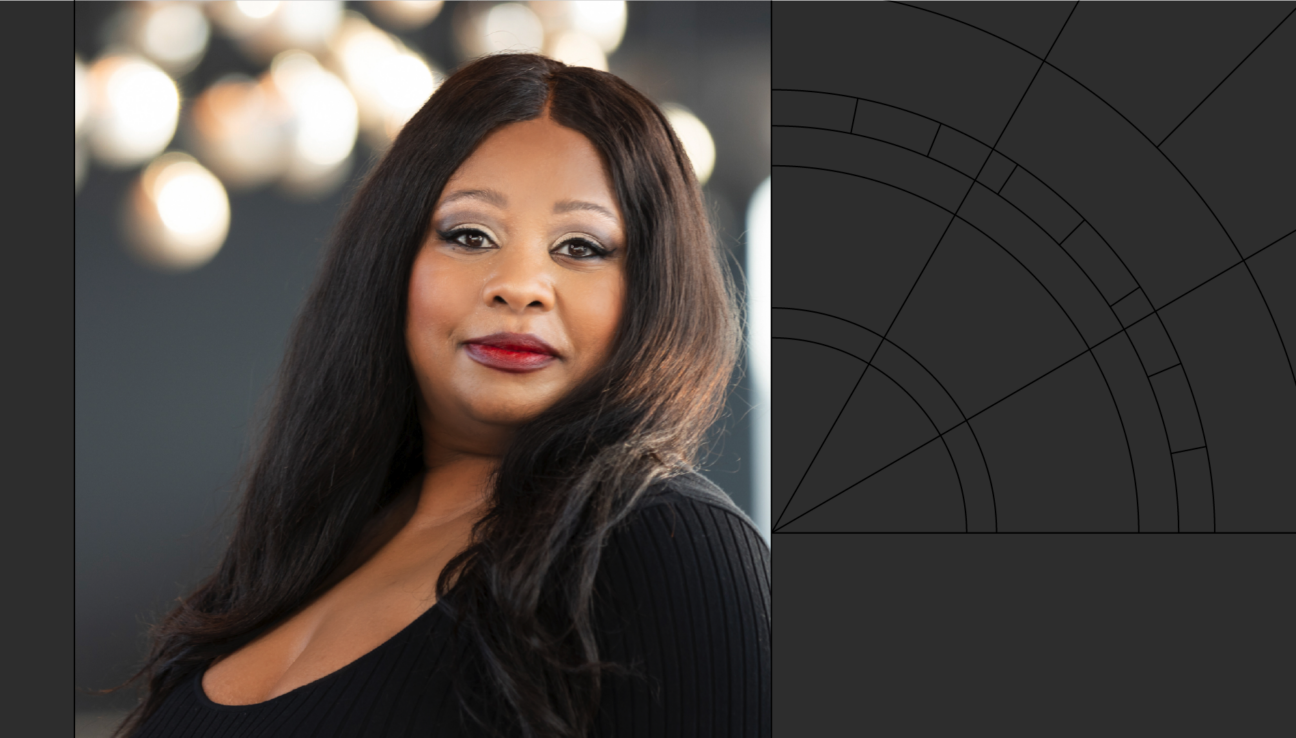
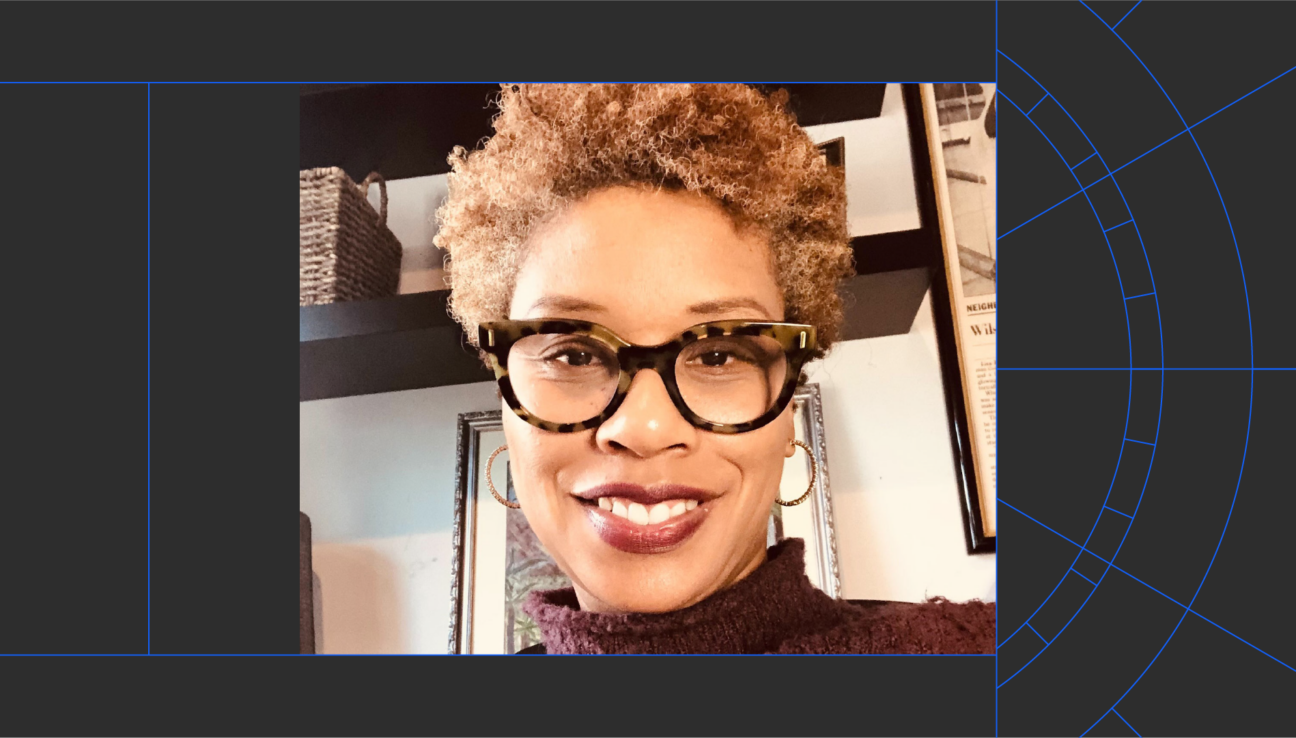
This episode is hosted by Monica Holt.

0:00 / 0:00

In This Episode

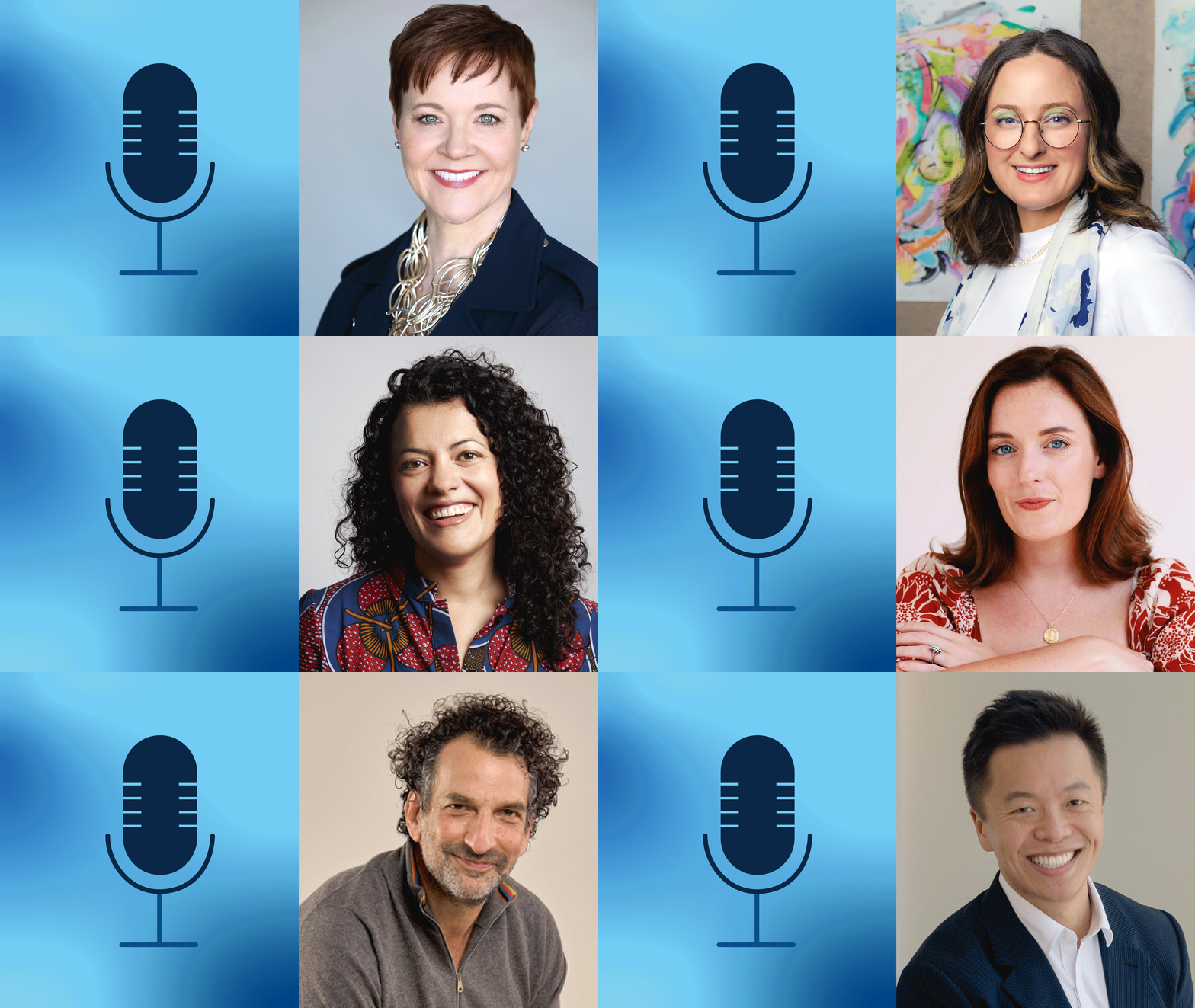
Join host Monica Holt as she reflects on the moments that defined the Fall 2025 season, and hear cultural leaders remind us why connection, creativity, and collaboration are more important than ever.

Advertisement: At Nel Shelby Productions, we give dance a life beyond the stage. We’re a full service video production team. We live stream performances, film with multiple cameras, make stunning trailers, and tell stories through film. My team of dancers-turned-filmmakers know how movement feels, and we capture it with heart, intuition, and joy. From intimate studios to grand theaters, we bring your vision to life. Visit nelshelby.com to check us out. We are ready to discuss your next video project.

Monica Holt: Hi everyone. Happy holidays from all of us here at Capacity. 2025 has certainly been a year unlike any other for so many of us, but for the past several months, I have felt lucky to be able to sit down each week with 18 guests whom I deeply admire to spend time together and to talk about our incredible arts and culture community. From guests that have been a part of my life since high school to those whom I’ve only had the great fortune of crossing paths with more recently, I hope you’ve enjoyed hearing from those who work across all corners of our field, but are all bonded by their unwavering belief in each other and in the power of arts and creativity in all of our lives.

And while my time with each of these guests was an enormous gift, I’m also thankful to each of you who showed up for these conversations, whether we were a part of your commute, your workout, your dog walk, or on 2x speed while getting through the Thursday afternoon slump. I’m so grateful that you’ve joined us throughout the year and I hope it’s helped you feel closer to our community too.

In fact, getting to be in conversation with you every week has meant so much to me that I couldn’t bring myself to step away after just one fall season. So I’m delighted to share that we’ll be back at the end of January and I’ll be bringing you more stories, more guests, and more to dig into together. As always, I’d love to hear back from you, so please keep reaching out to tell us who you’d like to hear from next. As we prepare ourselves for the year ahead, I thought we might also take a moment to reflect on some of the best tidbits from this season: the ideas that made us pause, the stories that made us smile, and the insights that will stick with us far into the future.

This year, like so many years, brought a lot of turbulence for arts leaders. Federal funding restrictions put arts advocacy center stage, and everyone felt stretched trying to do more with less. Erin Harkey at Americans for the Arts grounded us in why public investment in the arts matters and why it’s worth fighting for, even when the system feels impossible.

Erin Harkey: There’s a lot of models that we can think about in terms of broad national support for the arts and certainly private philanthropy and individuals and corporations have a significant role to play in that. But public funding is very unique in the way that it moves and operates in the system compared to those other resources. And the NEA actually did a great study where they mapped the giving of the top — I think it was a thousand private foundations, and where those dollars were going adjacent to where their funding was going. And they’re in 700 more counties. It is much more substantially distributed, and that gets even more finite as you get to state and sort of local funding and its ability to be targeted and to get into parts of the ecosystem that may be harder to reach for whatever reason in terms of private philanthropy. Public funding is more equitable.

So that’s important to remember and it’s important to still advocate for these dollars for that reason. And again, those communities where private foundations are not are completely reliant in some ways on public support. And that public support gets leveraged. I was on a program the other day and a caller called in and mentioned that his organization got a $5,000 grant from the National Endowment for the Arts that then they were able to leverage to like $65,000 worth of volunteer support. So the arts are punching well above their weight in terms of what that public investment also means. So it’s important, right? And these small arts organizations are important to their communities and important to folks. So we need to continue to dedicate ourselves to making sure that they’re able to do the work that they’re doing.

Monica Holt: And while we were navigating all that, we were also trying to make sense of rapid technology changes and a new frontier in how we work with advancements in artificial intelligence. So many of you feel torn, curious about what AI might offer, but wary of what it means for the human heart of our field. Capacity’s Jen Taylor framed that tension beautifully.

Jen Taylor: People are desperate for more time and support and they do see AI as a potential solution, but they’re also holding these real concerns about what makes arts human. So there’s a tension that we have to navigate about getting the most value out of something, but also being true to your values and your mission.

Monica Holt: A lot of our guests echo this same theme. Yes, AI can support our work, but it can’t replace the magic of gathering. David Jammy reminds us that in the age of AI, shared human experience doesn’t disappear, it becomes more precious.

David Jammy: I think we’re in a really quite interesting, quite pivotal moment. I think that… Listen, on the one hand, TV as a whole — particularly TV but film and TV — it’s in crisis. And that crisis is going to be exponentially increased in the next five years with the advent of AI-generated content, because it’s going to happen. And the generation of entertainment is going to be a tsunami of very cheap, very good, very competent entertainment generated out of or interacting with the world of AI. No doubt about it. And I think the next big thing is going to be the human in the world of AI, in the world of everybody being more and more isolated by social media and everything else. I think the idea of having a shared experience, whether that’s watching at exactly the same time and interacting with people or being in the same place as other people, is… Its currency is going to rise.

Monica Holt: Of course, we didn’t just talk about the pressures. We also talked about the possibilities and what arts organizations are uniquely built to do. Tom Gabbard at Blumenthal Arts helped us see what our institutions can be.

Tom Gabbard: I think that historically performing arts centers have been economic drivers and they’ve been cultural czars, cultural temples. Now we’re seeing a role as a community builder. There’s an entirely new element of placemaking. We have an opportunity to make cities more interesting, to create neighborhoods that are more vibrant, but also to actually be a player in real estate.

Monica Holt: The idea that community building is the fundamental work of arts and culture organizations came up again and again. People are seeking connection more than ever, and the arts can offer exactly that. Kendra Whitlock Ingram said it best.

Kendra Whitlock Ingram: Man, every time I go to a show, whether it be the Cultural Trust or frankly any of my arts colleagues that are successfully bringing audiences back, people want this. This is not going away. There’s still something that’s just so absolutely extraordinary. People, they just want it. They crave it. They want to keep coming back. I mean, we have people coming to shows they’ve seen multiple times before because they like how it made them feel. I have no fear that that desire is going to go away, but it doesn’t mean that we shouldn’t be vigilant about ensuring we run sustainable business, that we also adapt to the taste and changing needs of our audiences. We have to do that too. But I do feel very positive about the future of our industry.

Monica Holt: And Shanta Thake drove this point home beautifully by naming something many of us feel instinctively, but don’t always articulate: the arts are essential and they’re part of how we stay well.

Shanta Thake: What can the arts do that nothing else can? And what do we need now more than ever? And those answers are the same, which is to gather people. And so what a time to work in the arts, what a time to have what I think is one of the greatest needs of society right now, to be able to meet that need with the work that we’re doing. And to be able to articulate that differently as, this is not just entertainment. This is part of your wellbeing.

And we’re trying to really have a different kind of conversation that of course is being backed up by numerous studies. And I think the science is catching up with what we know but haven’t articulated in this way, which is: alongside diet and exercise, which are — everybody could articulate as things that are part of a healthy life. Doesn’t mean we want to do them, but luckily there’s this third thing which is arts! Participation in the arts and being in your community. And that’s fun. That can be a really beautiful part of a life.

And it’s something that sustains us, that makes us healthier, that creates things that have us living longer and are more connected to the people around us and are more connected to making our city stronger, to understanding what it means to even pick up litter on the street and wanting to care about our neighbors and ourselves in a different way. So we’re trying to just make that narrative more part of what we’re saying to everybody and making that more visible to people.

But then how dare we put up these barriers? If we know these things that actually were critical to people’s health and wellbeing, then it has to be for everybody.

Monica Holt: And of course, last week, Aly Maier Lokuta gave us the receipts — the real clinical data behind what we all know to be true.

Aly Maier Lokuta: We see positive health outcomes in every kind of domain. We see that attending a concert or going to a museum just once or twice a month has a similar protective value to your cognitive health as exercising for an hour or two per week. We see for youth who engage in the arts, we see higher test scores, which we know. We see higher attendance in schools, which we know. But we also see lower levels of social isolation and loneliness. We see lower incidences of substance misuse. We see lower incidences of behaviors that get criminalized in our classrooms. So these are things that influence your health early on that can have ripple effects.

Monica Holt: All of this — our community, the impact of art on health, and the ability of our organizations to create authentic belonging — should instill a sense of pride across the industry. Our work can shape healthier, more connected cities. The ripples of what we do reach farther than we realize, and that also means we can’t afford to stay siloed. Michael J. Bobbitt pulled us toward action, advocating for inserting ourselves into rooms where decisions get made — even when those rooms aren’t “arts rooms” at all.

Michael J. Bobbitt: We don’t get in rooms with healthcare, even though if you ask a thousand artists in a room, ‘How many of you all believe that arts is good for health?’ every hand will go up. And then you ask them, ‘How many of you have been to a healthcare convening in the last year?’ Almost every hand will go down. If you ask, ‘How many of y’all think that arts are good for education?’ you’ll see every hand go up. And then you’ll say, ‘How many of y’all went to the school board meeting when they were discussing the budget?’ And every hand will go down. So we self-segregate. And then sometimes you’ll hear people say, ‘But we weren’t invited.’ And then I’ll say, ‘Do you think that the climate community is sitting around saying, let’s not invite the arts. We don’t want them there’? I’ve gone to housing meetings and we have so many artists that are unhoused or living on people’s couches.

I’ll go to housing meetings and the leadership of housing will say to me, ‘Michael, what are you doing here?’ And then I’ll say, ‘Artists live in houses.’ And they’ll have a moment of going like, ‘Oh yeah.’ Right? So we self-segregate and then sometimes we get together in rooms in convenings and conferences and stuff, and we spend most of our time admiring the problem as opposed to orienting to solutions. I mean, what would happen if every convening was about solutions? Not about just sitting around complaining about what we don’t have, and then those rooms are gathered to share best practices. But I’m watching broke theater companies share best practices with other broke theater companies. And I go, what are we doing? Why don’t we have economists in the room and MBAs in the room helping us to solve the problems? So we self-segregate and a lot of it is that ‘they don’t understand us, they don’t get us.’ But what if we switched that and said, ‘We need to understand them. We need to get them. We need to pull them into our world.’

Monica Holt: Michael’s message was clear. If the arts are essential to our communities, then we need to behave like it. And that also means evolving to meet the needs of today’s audiences. Many of our guests spoke about this with such honesty. Alex Sarian called for us to all look at the places where we’ve gotten stuck.

Alex Sarian: Being critical of our organizations is the very first step towards making change. And I find that so many folks that are working within these systems are so scared of being critical because the feeling is that, oh, if I’m critical, then I’m admitting to failure. And I think we need that kind of mentality and approach to leadership where we can be wrong and perhaps we already have been wrong. And calling that out is not character failure. It’s actually a sign of strength, I think. And so for us to be able to do that personally, but also institutionally, I think is the first step towards recognizing that we need to change if we are going to align ourselves with what is potentially being asked of us. And I think to myself, of all the organizations that are striving for relevance, just think about what awaits you on the other side of that, when you have community support and government support and audience support and support from the artist community, and there’s no stopping you once you’ve achieved that because you’re not doing it for yourself, you’re doing it on behalf of others and with others, and that’s the greatest feeling ever.

Monica Holt: Critically examining ourselves and our work can feel uncomfortable, but it’s necessary. As Rachel Moore pointed out, it starts with making sure our values aren’t just words on paper.

Rachel Moore: You may have lots of pretty statements, but if you’re not living your values, your audiences aren’t going to change. And so looking at who your audiences are, who your participants are, what do they find interesting? How do our programs make people feel like their identity is strengthened? How do our programs increase a sense of community? Are we welcoming? Do people learn something new about somebody else or something different? That ability to be empathetic and understand the value of your community are the core constituent pieces of a functioning democracy. In this moment where we’re not talking to each other and we can’t listen to each other, having a place where you can learn is a way to help us strengthen our democracy, which is in jeopardy.

Monica Holt: And sometimes being critical of our organizations means asking the simple, slightly annoying question, ‘Wait… why do we do it this way?’ Our very first guest, the incredible Clive Chang, offered one of my favorite reminders of the season.

Clive Chang: It is a sort of setting of a behavior to just always ask the question, does it have to be done this way just because it has been done this way? And I think it’s something that if you don’t discipline yourself to ask the question, you will naturally default to doing it the way it was, because there’s a process in place for how it was, and it’s easier. So I’m a big fitness fanatic too, and one of my favorite sayings — I forget which fitness influencer kept saying it, but it’s like, ‘If nothing changes, nothing changes.’ And I’m like, oh my God, mind blown. If nothing changes, nothing changes!

Monica Holt: That spirit of curiosity is critical for all of us to adapt and uplift. And it also means looking at who we’re serving and who we’re missing. Ming Min Hui zoomed out and reminded us that the future audiences are going to look different from our past ones, and that’s an opportunity for all of us.

Ming Min Hui: If we are an unbiased selector of talent or an unbiased presenter of programmatic work, we ought to see some reflection then in the people who create the art, who are part of the organization, who are being served in the communities that they should be reflecting. And we know that this is in Boston an increasingly diverse population, but I think that there was a stat that came out in the Boston Foundation’s Indicator Report a few years ago that said one in every five babies or something is mixed race. My baby is part of that equation. I have a little half Chinese, half Puerto Rican Cajun baby. And I think about that all the time, then, in terms of who is this art form for going forward? There are going to be these questions of identity that we have to match and mirror or else we are just going to get increasingly displaced and considered irrelevant.

Monica Holt: Relevance also came up over and over again with these interviews. How do we make sure our work actually connects with the people we want to reach? Jane Raleigh reminded us that sometimes it’s about the small thoughtful steps that bring audiences along.

Jane Raleigh: Most importantly, I think I had to come to terms with the thought that the transformation had to be very slow and that you can’t just make all the changes you want to make and expect that the audience is going to come along with you. So I would frequently ask myself, what are the incremental steps that if in five years I would like the audience to be excited about something, what are the intermediary steps to get them there?

I have such a strong memory… I was at a ballet show standing in the lobby of the opera house during an intermission, and I had a long-time subscriber come up to me and they were like, ‘I hate your season next year.’ And I said, ‘Okay.’ I was practicing receiving feedback from anyone who wanted to give it. So I was just like, ‘Great, tell me more. Thank you for your honesty. Tell me more. Why do you hate the season?’ And they said, ‘It’s all new. There’s nothing traditional that I can hold onto, and I just feel totally out of my depth. I hate it.’ I said, ‘Thank you so much for that feedback.’

Literally not 10 minutes later, another subscriber came up and was like, ‘I hate your season.’ And I was like, ‘Oh, okay, tell me why.’ And they were like, ‘It’s so traditional. It’s the same stuff you always do. It’s so boring. There’s nothing new.’ And I was like, ‘Thank you so much for that feedback.’ Then I just left that conversation like, I’m doing it.

Monica Holt: But perhaps no one captured what relevance really means better than Babatunde Akinboboye.

Babatunde Akinboboye: Let the audience be right. Let the audience in on the decisions that are being made and things will change quickly. Because if we’re trying to market to the audience, they know what they want and they’re letting us know. Watch the signs, see what’s going on. I mean, we saw Hamilton, you see what’s going on in Bridgerton. There’s a number of little indicators of where we want to go.

And if it feels uncomfortable to do something that forward, think of yourself as a traditionalist. Opera and classical music has had a long history of evolving in relationship with the popular music at the time, which is why in opera, the Baroque stuff sounds completely different from Mozart. And Mozart sound completely different from Gershwin, because opera’s tradition is to evolve in relationship with the popular music. So if you really want to feel like a traditionalist, evolve.

Monica Holt: So how do we meet audiences where they are? We need to make our programs more inviting, more surprising and modern. Kate Lumpkin challenged us to create immersive, site-specific work that lets audiences play a more active role.

Kate Lumpkin: I think that we need to trust that audiences are excited about experiencing something new. So someone asked me the other day, what would you do if you got to take over a regional theater? And I was like, I would try to find a way to put my audience on the stage and my actors in the seats. Flip the theater. You say you can’t do immersive theater. Have you tried? You say you can’t fit something in this theatrical space. Says who? It might not look like Masquerade NYC, but there are so many different areas, crevices, places, things that you can use. Why not? Do you have a parking deck? What if you did a show in your parking deck? What does that look like? Right? Who says you can’t do Starlight Express in your parking deck?

And that might sound asinine to people listening to this, and that’s fine by me. Let me be asinine, let you have the better idea. But I think that we put so many limitations on our spaces when really there are ways to open those doors and play that you just haven’t tried. And there are audiences who are excited to do that. Tap into your local communities of people who are playing D&D, who are LARPing, who are cosplayers, who are theater makers, and other avenues, and bring them into your space. Ask them what they want. How can they be a part of the making that you are doing? Community outreach for people who are already doing creative play. How do we bring them into their spaces and their communities into your spaces and build from there? Instead of just ticket subscribers who have always been there for generations. Who are the people who are actively playing right now outside of your space? And how can you make them play inside in a new way?

Monica Holt: And while you’re looking at how your programming feeds your audience’s appetite, you can also go back to the basics of hosting. Make the room our communities are in feel warm, joyful, and welcoming. Orchestrator Macy Schmidt reminded us that small gestures can create big magic.

Macy Schmidt: Enhancing the magic does not have to be expensive. And that is something that I learned from trying to put fireworks everywhere. The ability to find small ways to elevate and enhance the creative so that what you’re creating for your audience is not just the music they’re hearing, but they’re walking away with something memorable. Thousands and thousands of people at our shows who have never seen an orchestra play live before, ever, want to see it again. And something that’s crucial about that is that they were brought into the door in a show where the audience knows there are no etiquette rules, and I want them to cheer and be unhinged. I’m telling the audience, I’m like, if you’re here, it’s your first time seeing an orchestra. This is how it works. We’re not going to be sitting here not clapping between movements. We’re supposed to have fun. Someone’s going to pass you a beach ball. Get into it. Inviting new audiences in and making sure they actively know that they aren’t going to be held to some mysterious etiquette rules that they don’t really understand, that no one will explain to them, because that’s what’s keeping them out.

Monica Holt: As the year came to a close, it was particularly meaningful for me to sit down with Deborah Rutter live at Boot Camp. Her conviction of shared purpose and her direct call to each of us is one that I hope we will all carry forward into 2026 and well beyond.

Deborah F. Rutter: Artists, their art, their creations, and the organizations that support them are the most important piece of our society today. We and they collectively are telling the story of who we are right now. We’re holding the mirror up to society, telling the story of who we are today. Do not back off. Do not shy away. Be strong, be honest. Be humble, but do not back off. It is really important for our artists to continue to express themselves and create their art, and it is our jobs to support them in a safe and encouraging environment.

Monica Holt: So how do we do that in the new year? With courage and with curiosity. Use these questions from Capacity’s President Christopher Williams as your roadmap.

Christopher Williams: How are you going to be courageous in 2026, 2027, and 2028? And how will curiosity help you get there?

Monica Holt: Thank you again for spending this season with me. Thank you for caring about these conversations, for sharing them, and for doing the work you do in your own organizations.

We’ll be back at the end of January, but for now, rest. Make something. Go see a new piece of art. Let yourself be surprised. Wishing all of you happy holidays and a joyful, art-filled New Year.

Thank you for listening to CI to Eye with Monica Holt. If you enjoyed today’s conversation, please take a moment to rate us or leave a review. A nice comment goes a long way and helping other people discover the show and hear from leaders in the arts and beyond. If you haven’t already, please click the subscribe button wherever you get your podcasts. We’ve got some pretty incredible episodes coming your way, and I wouldn’t want you to miss them. This episode was edited and produced by Karen McConarty and co-written by Karen McConarty and myself, Monica Holt. Stephanie Medina and Jess Berube are our incredible designers and video editors. Our music is by whoisuzo. Don’t forget to follow CI on Facebook, Instagram, LinkedIn, YouTube, and TikTok for regular content to help you market smarter. You can also sign up for CI’s newsletter at capacityinteractive.com and you’ll never miss an update. And you can always reach out to let us know who you’d like to hear next from on CI to Eye.


About Our Guests
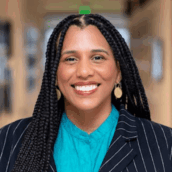
Alex Sarian
Alex Sarian
President & CEO, Werklund Centre

Alex Sarian is a bestselling author and President & CEO of the Werklund Centre, where he leads the most ambitious cultural infrastructure project in Canadian history. Appointed in 2020 at age 36, he became the youngest CEO of a major performing arts centre in North America and oversaw its transformation from Arts Commons to Werklund Centre, following the largest philanthropic gift ever made to Canada’s performing arts sector.

Before returning home to Canada, Alex spent nearly two decades in New York City, most notably as a senior executive at Lincoln Center for the Performing Arts. Named one of The Globe and Mail’s 10 most influential figures in Canadian arts and culture (2024), he is also a 40 Under 40 honoree for leadership in business and public life.

His bestselling book, The Audacity of Relevance (2024), was hailed by Forbes as “a manifesto for the arts in times of crisis.”

Read more
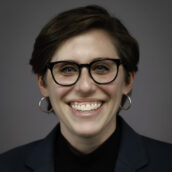
Aly Maier Lokuta
Aly Maier Lokuta
Assistant Vice President of Arts & Well-Being, New Jersey Performing Arts Center

Aly Maier Lokuta, MA (she/her) is the Assistant Vice President of Arts & Well-Being at the New Jersey Performing Arts Center (NJPAC), where she leads innovative programming, research, evaluation, and education at the intersection of arts and health, serving communities in Newark and across New Jersey. A multidisciplinary artist, Aly stays well through creating visual art, writing, and playing guitar. Learn more about NJPAC Arts & Well-Being at www.njpac.org/well, Aly’s art and consulting work at www.alysonmaier.com, and her Arts in Health blog at www.alymaier.substack.com.

Read more
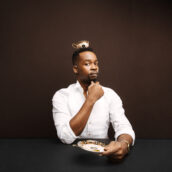
Babatunde Akinboboye
Opera Singer and Hip Hopera Artist

Babatunde Akinboboye is an internationally celebrated baritone and the pioneer of Hip Hopera, a groundbreaking fusion of classical opera and hip-hop. Combining the grandeur of operatic vocals with the rhythmic intensity of hip-hop, Tunde is carving out a new musical genre and a style all his own, captivating global audiences with his innovative artistry.

In December 2018, Tunde went viral after blending Rossini’s Largo al Factotum with Kendrick Lamar’s HUMBLE, amassing over 10 million views and earning features on TIME, Classic FM, MSN, and more. This viral success introduced audiences to his fusion of opera and hip-hop, a style he has since refined into his own distinct musical genre: Hip Hopera.

A classically trained opera singer, Tunde has performed with Los Angeles Opera, Detroit Opera, Utah Opera, and Portland Opera, taking on standout roles such as Matias Reyes in the Pulitzer Prize-winning opera The Central Park Five, Escamillo in Carmen, and Valentin in Faust. His dedication to showcasing works by African and African American composers has made him a champion for diversity in classical music.

Now, as a touring Hip Hopera artist, Babatunde is redefining opera for a modern audience. His upcoming debut album (coming soon) and the Wine Tour 2025 will showcase his continued evolution as a performer, merging centuries-old vocal techniques with contemporary beats and storytelling.

With a growing social media presence in the hundreds of thousands, Tunde is a cultural force, using his platform to make opera more accessible and push the boundaries of musical fusion. Whether on stage or online, Babatunde HipHopera is changing the game and bringing Hip Hopera to the world.

Read more
Christopher Williams
President, Capacity Interactive

Christopher Williams is Capacity Interactive’s President. Christopher has been marketing the arts across the country for nearly 30 years at performing arts centers, the Coconut Grove Playhouse, and New York City Center where he served as Director of Marketing before joining Capacity Interactive in 2013.

Read more
Clive Chang
Clive Chang
President and CEO, YoungArts

Clive Chang is President and CEO of YoungArts, the National Foundation for the Advancement Artists, whose mission is to identify exceptional young artists, amplify their potential, and invest in their lifelong creative freedom. Clive brings to this role a combination of commercial and not-for-profit arts leadership experience, as well as the perspective of a lifelong artist himself as a classically trained composer and pianist.

Prior to YoungArts, Clive was Executive Vice President, Chief Advancement & Innovation Officer for Lincoln Center for the Performing Arts in New York City. In this capacity, he oversaw fundraising, strategic partnerships, and innovation programs for the world’s pre-eminent performing arts complex—home to 11 world class arts organizations across its 16-acre campus. He had previously served as Director, Strategy & Business Development and Special Assistant to the President.

Prior to Lincoln Center, Clive was Director, Strategy & Business Development for Disney Theatrical Group, where he led strategic planning and growth initiatives for Disney’s commercial live entertainment businesses worldwide.

Clive holds dual Bachelor of Music and Bachelor of Commerce degrees from McGill University, an MFA in Musical Theater Writing from NYU/Tisch School of the Arts, and an MBA from the Harvard Business School. He was an adjunct professor in the graduate program in Arts Administration at Columbia University in New York City from 2018-2021 and serves on the board of the Music Academy in Santa Barbara, CA. Clive and his husband divide their time between Miami, FL and Weston, CT.

Read more
David Jammy
David Jammy

David is a South African born film and television producer who joined D+D in 2012. Before becoming a lawyer, as a student in South Africa, David was actively involved in the Anti-Apartheid movement and quickly learned the power of media to change the world. He was a co-founder of South African production house, Quizzical Pictures, which has produced thousands of hours of award-winning television and is widely recognized as the country’s premier production house. Amongst Quizzical’s numerous accolades is a Rose D’Or Television Award for Best Drama Series (2010) and a Peabody Award (2011).

David has produced content covering the globe, and in virtually every genre, all of which has contributed to his belief that whatever you’re producing, what matters most is the story you’re telling, and how well you tell it. Because, after all, everybody loves a good story. David is delighted to have found a home at Done+Dusted, surrounded by people who are as passionate and inspired as he is.

Read more
Deborah Cullinan
Deborah Cullinan
CEO, Yerba Buena Center for the Arts

Deborah is the CEO of Yerba Buena Center for the Arts (YBCA), the cultural anchor of San Francisco’s Yerba Buena Gardens development. By using culture as an instrument for social change, YBCA is reimagining the role an arts institution can play in the community it serves.

Read more
Erin Harkey
Erin Harkey
CEO, Americans for the Arts

Erin Harkey has over 20+ years of experience helping individuals and communities succeed through the arts. 

Erin was the Commissioner of the Chicago Department of Cultural Affairs and Special Events (DCASE). She served the City of Chicago as Projects Administrator, then Deputy Commissioner for Programming and First Deputy Commissioner. 

In her dual role as Senior Policy Advisor for Arts in Culture in the Mayor’s Office, she advised on cultural policy and arts strategy across all City departments and agencies.

She previously managed public art programs at the Los Angeles County Arts Commission and the Arts Council for Long Beach. 

Erin holds two master’s degrees in Public Art Administration and Urban Planning from the University of Southern California (USC), and a bachelor’s degree in Marketing from Howard University.

Read more
Jane Raleigh
Jane Raleigh
Former Director of Dance Programming, John F. Kennedy Center for Performing Arts

Jane Raleigh is the recently former Director of Dance Programming at the John F. Kennedy Center for the Performing Arts, where she served for 12 years.  In her role at the Kennedy Center, she curated and produced the Ballet and Contemporary Dance subscription series as well as a variety of dance performances on the Center’s Millennium Stage and in the Center’s REACH expansion spaces.  Locally, Jane co-chairs the Pola Nirenska Award jury and is an active member of the Thresholds Community Advisory Council at Dance Place. Nationally, she is a member of the Presenters Council of Dance/USA. Jane also performs throughout the Washington region with a variety of project-based companies.

Read more
Jen Taylor
Jen Taylor
Director of AI Strategy & Integration, CI

With 15+ years of experience, Jen has built and engaged audiences across off-Broadway, Broadway, and streaming. Before CI, she led digital audience growth for ad-supported and subscription-based streaming at A+E Networks (A&E, HISTORY, Lifetime). Now, she’s focused on how AI is reshaping marketing and audience engagement, helping arts organizations navigate emerging opportunities. Outside of work, you’ll find her at the theater, cooking, or planning a trip.

Read more
Kate Lumpkin
Kate Lumpkin
Founder and Lead Casting Director, Kate Lumpkin Casting, CSA

Recently named one of the Broadway Women’s Fund’s ” 50 Women to Watch on Broadway,” Kate Lumpkin (she/her) is the Founder of and Lead Casting Director at Kate Lumpkin Casting, CSA. Collectively, as a casting professional, she has worked on over 40 TV/Film productions and 90 theatrical productions in New York City and across the USA including shows at The Kennedy Center, The Actors Theatre of Louisville, The A.R.T, NYTW, and most recently, Andrew Lloyd Webber’s Masquerade.

Kate is also a Director/Choreographer and teaches workshops in New York and at numerous Colleges + Universities. She is an Assistant Professor of Musical Theatre at James Madison University. She has a degree in Anthropology and Folklore from Indiana University and is a graduate of the acting program at the William Esper Studios in NYC.

Read more
Kendra Whitlock Ingram
President and CEO, Pittsburgh Cultural Trust

Kendra Whitlock Ingram is the President and CEO of the Pittsburgh Cultural Trust in Pittsburgh, PA. Previously, she has held senior leadership positions with several performing arts institutions including: President and CEO of the Marcus Performing Arts Center, Executive Director of the Newman Center for the Performing Arts at the University of Denver, Vice President of Programming and Education for Omaha Performing Arts, as well as leadership roles with Shenandoah University, Vice President The Baltimore Symphony Orchestra, and The Detroit Symphony.

Ingram holds a Master of Business Administration from University of Nebraska Omaha and a Bachelor of Science in Music Education from Duquesne University. She is also an alumna of the League of American Orchestras’ Orchestra Management Fellowship Program. In 2021, Ingram was named to the Milwaukee Biz Times Notable Minority Executives List and was named as an honoree for the 2022 Milwaukee Business Journal’s “Women of Influence.”

Ingram serves on the Board of Governors for The Broadway League (co-chair of the Intra-Industry and Black to Broadway Committees) as well as the Board of Directors for Duquesne University, National Arts Strategies, Pittsburgh Downtown Partnership, and Board Chair for the Live Arts Centers of North America (LACNA) Foundation.

Read more
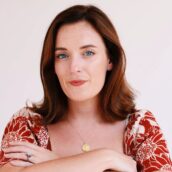
Macy Schmidt
Macy Schmidt

A first-generation Egyptian-American, Macy Schmidt has forged an unprecedented career as both a businesswoman and a creative. By the age of 27, she has already been named a Forbes 30 Under 30 honoree, collected her first Tony Award as a Broadway co-producer, conducted her own all-women orchestra headlining venues such as the Hollywood Bowl and Royal Albert Hall, and become the first & only woman-of-color orchestrator in Broadway history. She is known among partners as a tenacious, imaginative, and driven producer, and has been trusted to grow powerhouse IP by the most prominent global brands in media and entertainment.

Macy’s career has evolved through three distinct phases, merging her expertise as a musician, entrepreneur, and entertainment producer. She began her career as a Broadway music director, orchestrator, and arranger before founding The Sinfonietta in 2020—an all-women, majority women-of-color orchestra that quickly exploded into a global network. This venture ignited her passion for producing and large-scale project development, leading her to establish Overture Global Entertainment in 2023, a production company specializing in film concerts. She launched the company with major studio partnerships, including Mattel Inc. and Warner Bros. Pictures, solidifying her role as both a creative force and business leader in the entertainment industry. 

Macy has made history and collected countless personal career highlights: She made history as the first woman arranger or orchestrator to create a Tony Awards Opening Number—an “epic” (Rolling Stone) “orchestral dance overture” that was unprecedented in scope. Additionally, she became the first and only woman-of-color orchestrator in Broadway history for her contributions to the Tony Award-winning Best Musical Kimberly Akimbo. Beyond Broadway, Macy has been commissioned by The Walt Disney Company to create, arrange, and orchestrate the company’s 100th Anniversary Overture, further solidifying her reputation as a leader in symphonic creative direction. She guided The Sinfonietta on a 73-city national tour of Spider-Man: Into the Spider-Verse LIVE, which played to over 200,000 audience members in sold-out venues across the country. Her work has also been recognized in museum spaces: The Museum of Broadway commissioned her to create a custom musical piece for permanent exhibition, which was recorded by The Sinfonietta and commemorated with a dedicated plaque.

Her career highlights include high-profile televised events, such as the 9/11 20th Anniversary Presidential Memorial Program, where she performed for world leaders such as Joe Biden, Barack Obama, Hillary Clinton, and Kamala Harris. She has produced entertainment for major Hollywood events, including a gala honoring Greta Gerwig as the 2024 Pioneer of the Year, featuring, (you guessed it!), The Sinfonietta. Macy’s unique influence in entertainment has been further recognized by Forbes, which selected her for a 1-on-1 mentorship in Abu Dhabi with Secretary Hillary Clinton.

Macy’s vision and expertise for commercializing live music projects is not limited to the entertainment industry; she has consulted across industries, from advising TikTok’s corporate leadership on the role of digital musical theatre content for global audiences, to consulting for cryptocurrency firms and private equity funds on the relationship between live entertainment and DAO-based fundraising.

With a resumé of high-profile international engagements and consultancies spanning the globe — from supervising entertainment for the 2022 FIFA World Cup in Qatar, to projects in the UK, China, the Middle East, and India — Macy continues to shape the future of live music and entertainment on a global scale as an artist, a businesswoman, and an advocate for women in entertainment.  She is represented by CAA and ATC LiveX.

Read more
Michael J. Bobbitt
Michael J. Bobbitt
Executive Director, Mass Cultural Council

Michael J. Bobbitt is a distinguished theater artist. As the Executive Director of Mass Cultural Council, he is the highest-ranking public official in Massachusetts state government focused on arts and culture. Since 2021, he has led the Agency through several initiatives, including the development of its first Racial Equity Plan, d/Deaf & Disability Equity and Access Plan, and Native American & Indigenous Peoples Equity Plan; the launch of the nation’s first statewide Social Prescribing Initiative; the securing and distribution of $60.1 million in pandemic relief funding; and the design and implementation of a strategic plan for fiscal years 2024-2026. He has been appointed by Governor Maura Healey to serve on the Governor’s Advisory Council on Black Empowerment, the Statewide K-12 Graduation Council, the Mass STEM Advisory Council, and the Massachusetts Cultural Policy Development Advisory Council. Michael is a proud alumnus of the University of Massachusetts Amherst. He received an honorary Doctor of Fine Arts, honoris causa from Dean College and recently completed his MBA with The Global Leaders Institute.

He previously served as Artistic Director of the New Repertory Theatre in Watertown, MA; immediately prior to this he held the same position at the Adventure Theatre-MTC in Maryland for 12 years. While in Maryland Michael led the organization to be a respected regional theatre training company, and a nationally influential professional Theatre for Young Audiences.

Michael’s training includes Executive Education from Harvard Business School and Harvard Kennedy School, The National Arts Strategies Chief Executive Program, and Cornell University’s Diversity and Inclusion Certification Program. He has also completed YW Boston’s signature leadership program, LeadBoston, The Partnership, Inc.’s Next Generation Executives program, and the Civic Action Project’s CAP Collaborative. He is an appointed member of the Board of the National Assembly of State Arts Agencies and served on the New England Foundation for the Arts Board of Directors from 2021 to 2023. He has taught at Boston Conservatory at Berklee, Howard University, George Washington University, and Catholic University.

Michael is the recipient of numerous awards including the prestigious Kennedy Center Gold Medallion in recognition of his commitment to the arts and educational theatre. He was named one of the Boston Business Journal’s Power 50 Movement Makers and one of Boston’s Most Influential Men of Color by Get Konnected!. He is invested into the College of Fellows of the American Theatre – one of the highest honors bestowed on American theater professionals and recognized by Speak Out for his efforts to build a more inclusive cultural sector. Additionally, he is the recipient of MassOpera’s Action Bearing Award and OrigiNation Cultural Arts Center’s Sojourner Truth Award, and he was honored by the Greater Roxbury Arts & Cultural Center at its Juneteenth Jubilee in June 2024. He is a popular speaker and presenter at national and international conferences and convenings most recently delivering the keynote address at the Black Theater Network Conference in Los Angeles.

Michael has directed/choreographed at Arena Stage, Ford’s Theatre, The Shakespeare Theatre Company, Olney Theatre Center, Studio Theatre, Woolly Mammoth Theatre, Center Stage, Roundhouse Theatre, The Kennedy Center, and the Washington National Opera. His national and international credits include the New York Musical Theatre Festival, Mel Tillis 2001, La Jolla Playhouse, Children’s Theatre of Charlotte, Jefferson Performing Arts Center, and the Olympics. As a writer his work was chosen for the NYC International Fringe Festival and the New York Musical Theatre Festival. He has plays published by Musical Theatre International, Concord Theatricals, and Plays for Young Audiences. Michael has received the Excel Leadership Award (Center for Nonprofit Advancement), the Emerging Leader Award (County Executive’s Excellence in the Arts and Humanities), and Person of the Year Award (Maryland Theatre Guide).

Read more
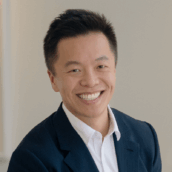
Ming Min Hui
Ming Min Hui
Executive Director, Boston Ballet

Ming Min Hui serves as Boston Ballet’s Executive Director and leads the company in partnership with Artistic Director Mikko Nissinen.

She first joined Boston Ballet in 2015 as Chief of Staff through the Harvard Business School Leadership Fellows Program, leading significant capacity-building initiatives such as the upgrade of Boston Ballet’s website and technology infrastructure, and the relocation and expansion of Boston Ballet School’s state-of-the-art Newton Studio. As the Ballet’s Chief Financial Officer since 2019, Hui helped steward Boston Ballet’s financial and operational stability through the COVID-19 pandemic, while providing leadership in the organization’s diversity, equity, and inclusion efforts.

Hui has a demonstrated passion for the arts – throughout her career, Hui has interned and volunteered with various cultural institutions including Yale University Art Gallery, Museum of Chinese in America, and Metropolitan Museum of Art. She was elected to arts software company Tessitura Network’s Board of Directors in 2022 and serves on the Finance Committee. She believes in the value of cross-sector experience and brings a for-profit background from her career in investment banking and corporate strategy at JPMorgan Chase to her work as an arts leader.

Hui is a graduate of Yale University with a B.A. in English Literature, and of Harvard Business School with an M.B.A. in General Management.

Read more
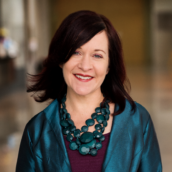
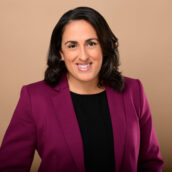
Rachel Moore
Rachel Moore
President and CEO, The Music Center

Rachel S. Moore is the president and CEO of The Music Center, Los Angeles’ premier performing arts center and the third largest in North America, overseeing an $80 million operation. She manages The Music Center campus, including four theatres, Jerry Moss Plaza and Gloria Molina Grand Park, on behalf of the County of Los Angeles, which comprise over $3 billion in county assets.

Moore directs The Music Center’s programming including its acclaimed dance series Glorya Kaufman Presents Dance at The Music Center, pioneering arts education initiatives reaching 150,000 students and educators annually across Southern California, and a wide range of free and low-cost programs. The Music Center’s programming currently impacts 400,000 Angelenos annually.

Moore joined The Music Center from American Ballet Theatre (ABT), one of the world’s great dance companies, where she served as CEO since 2011 and as its executive director since 2004. She is credited with transforming ABT’s brand, securing recognition for the company by the United States Congress as “America’s National Ballet Company” in 2005 and creating Project Plie, a national initiative to diversify America’s ballet companies.  Moore comes from the performing arts, having danced with ABT from 1984-1988 as a member of its corps de ballet.

Prior to her appointment to lead ABT, Moore served as director of Boston Ballet’s Center for Dance Education (2001-2004). From 1998-2001, she served as executive director of Project STEP, a classical music school for students of color in Boston, and was managing director of Ballet Theatre of Boston. She has also held senior positions with Americans for the Arts and the National Cultural Alliance, both in Washington, D.C.

Moore was recognized in 2025 with the Los Angeles Times Executive Leadership Award as the top honoree in the CEO/Large Company category. She was named “CEO of the Year” by the Los Angeles Business Journal’s 2019 Women’s Council & Awards and a “Woman of the Year” by the Los Angeles County Board of Supervisors and the Los Angeles County Commission for Women. She currently serves on the board of the Los Angeles Tourism and Convention Board, as an officer of the Central City Association of Los Angeles, as an officer and trustee of the Economic Club of New York, as a member of the Advisory Council for Ovation Television, on the Board of Advisors of Project STEP, as a board member and former chair of the Performing Arts Centers Consortium and on the Brown University Arts Advisory Council. She previously served on the board of the US Presidential Scholars Foundation. Moore is a member of the Young President’s Organization (YPO) and was inducted into the American Academy of Arts and Sciences in 2020.

Moore served on the advisory committee for the Los Angeles County Equity and Inclusion Initiative, which developed recommendations to enhance the participation and leadership of individuals from underrepresented communities in the arts. She also served on the board of the

LA 2028 Olympic Games Bid Committee. She served as a member of the Child Performer Advisory Board for the New York State Department of Labor, on the Board of Trustees for Dance/USA from 2007-2012 and the National Dance Foundation of Bermuda from 2007-2012, and as a member of the United States National Commission for UNESCO from 2005-2009. She has also served on numerous panels for the National Endowment for the Arts. She is the author of a book, The Artist’s Compass: The Complete Guide to Building a Life and a Living in the Performing Arts, published by Simon & Schuster in May 2016.

Moore served as adjunct faculty in Columbia University’s Arts Administration program, specializing in non-profit finance, from 2006-2010; in the dance department of Emerson College from 1998-2000; and as an instructor of non-profit finance in Boston University’s Graduate Program in the Arts in 2000. She was a US Presidential Scholar in the Arts (1982).

She holds an AB in Ethics & Political Philosophy from Brown University, Phi Beta Kappa, Honors (1992); and an MA in arts management from Columbia University (1994). She received an honorary doctorate in Musical Arts from the Colburn School (2019).

Read more
Shanta Thake
Shanta Thake
Chief Artistic Officer, Lincoln Center for the Performing Arts

Shanta Thake is the Ehrenkranz Chief Artistic Officer of Lincoln Center for the Performing Arts, where she spearheads all artistic programming and artist development activities, welcoming new and returning audiences and championing genres historically underrepresented on campus. Complementing the work of the ten resident arts organizations who share the Lincoln Center campus, Thake’s programming engages thousands of artists from across the globe each year. Previously, she was the Associate Artistic Director / Director of Artistic Programs at The Public Theater and Director of Joe’s Pub for a decade prior. Thake also serves as Co-Director of globalFEST, the world music festival whose mission is to foster cultural exchange and increase the presence of world music in communities nationwide.

Read more
Tom Gabbard
Tom Gabbard
CEO, Blumenthal Arts

Tom Gabbard has been CEO of Blumenthal Performing Arts since 2003. The Blumenthal’s 110 employees manage six theaters in Charlotte, hosting over 1,000 performances annually, as well as extensive education programs, immersive projects, and the Charlotte International Arts Festival. During his tenure, the Blumenthal became a Top 10 market for touring Broadway shows in North America.

A member of the Board of Governors of the Broadway League, he serves on the Legislative Council and Finance and Intra-Industry Committees. He has been a voter for Broadway’s Tony Awards since 1997. In 2022, the League awarded Tom with Lifetime Tony Award Voter status. In 2012 the League awarded him the Samuel J. L’Hommedieu Award for Outstanding Achievement in Presenter Management. He serves as co-chair of The Jimmy Awards, the National High School Musical Theatre Awards held annually on Broadway.

Tom is a Past President of the Independent Presenters Network (IPN), a consortium of 40 leading touring Broadway presenters in North America, Asia, and the UK. Tony Awards as a coproducer/investor include for Monty Python’s Spamalot, Thoroughly Modern Millie, La Cage aux Folles, RED, Pippin, Kinky Boots, The Color Purple Revival, Hello Dolly, Dear Evan Hansen, The Band’s Visit, Oklahoma!, Hadestown, A Strange Loop, and Lehman Trilogy.

Other Broadway, Off-Broadway, national tour and London West End credits include Moulin Rouge, Ain’t Too Proud, David Byrne’s American Utopia, Death of a Salesman, Tootsie, Legally Blonde, Frost/Nixon, Matilda, Cinderella, Jagged Little Pill, Something Rotten, An American in Paris, Waitress, The Broadway Museum, and Back to the Future. He produced the New York run and the national tour of TRACES, and the national tour of 9 to 5. Tom is a leader in developing partnerships between the UK and US, working on over 25 UK/US transfers and London productions.

He was the Founding Managing Director of Pepperdine University’s Center for the Arts in Malibu, the Executive Director of the Arvada Center for the Arts and Humanities in Denver, and the Weidner Center for the Performing Arts in Green Bay. He holds an MBA in Arts Management from Golden Gate University and a BA in Music Performance from Pepperdine University where he also attended Law School.

Read more

Related Episodes

Ming Min Hui on Luck, Leadership, and Wall Street
EP 160
Dec 04, 2025
estimation...
Ming Min Hui on Luck, Leadership, and Wall Street

For Ming Min Hui, there’s no single “right” path to arts leadership—only the one you build through curiosity, courage, and a willingness to evolve.

Her career began far from the stage, in finance and corporate strategy on Wall Street. Today, as Executive Director of Boston Ballet, she sees that wide-ranging experience not as a detour but as the engine behind her leadership.

In this episode, Ming reflects on the value of expansive career paths, the power of collaborative problem-solving, and how she uses her business acumen to deepen the relevance of a 400-year-old art form in Boston and beyond.

Alex Sarian on the Audacity of Relevance
EP 159
Nov 20, 2025
estimation...
Alex Sarian on the Audacity of Relevance

For Alex Sarian, relevance isn’t a buzzword. It’s a mandate for the future of the arts.

As President and CEO of Werklund Centre in Calgary, he’s leading the largest cultural infrastructure project in Canadian history, a transformation that will soon make the organization the country’s largest performing arts campus. But Alex is quick to point out that bricks and mortar aren’t the real story. The deeper shift is philosophical: a move away from mission statements as fixed declarations and toward a practice of asking, “What does the world need right now that we are uniquely positioned to do?”

In this episode, Alex reflects on the evolution underway at Werklund Centre and the ideas behind his best-selling book The Audacity of Relevance. He offers a roadmap for leaders ready to create with their community—not for them—and makes a compelling case for why relevance is the most powerful strategy we have for building a sustainable, future-facing cultural sector.

Don’t Miss an episode

Don’t Miss an episode

Subscribe to CI to Eye and have your insight and motivation delivered on demand.

TUNE IN