Holiday Creative: Match the Moment, Not Just the Audience
 AUTHOR:
Capacity
AUTHOR:
Capacity
Subscription and membership campaigns are some of the most important revenue-driving moments of the year for arts and culture organizations. They’re also some of the most resource-intensive. Between season announcements, renewal pushes, creative development, email sends, direct mail, and audience segmentation, teams are already juggling a lot before paid media enters the conversation.
So where can digital strategy fit into subscription, season announcement, and season-on-sale campaigns?
Based on data from more than 200 of these campaigns across performing arts organizations and museums, digital channels work best when they support existing audience demand, reinforce your broader marketing efforts, and stay focused on conversion-oriented audiences and channels.
Here’s what organizations should know before single tickets go on sale (you can also watch our webinar on this topic on demand).
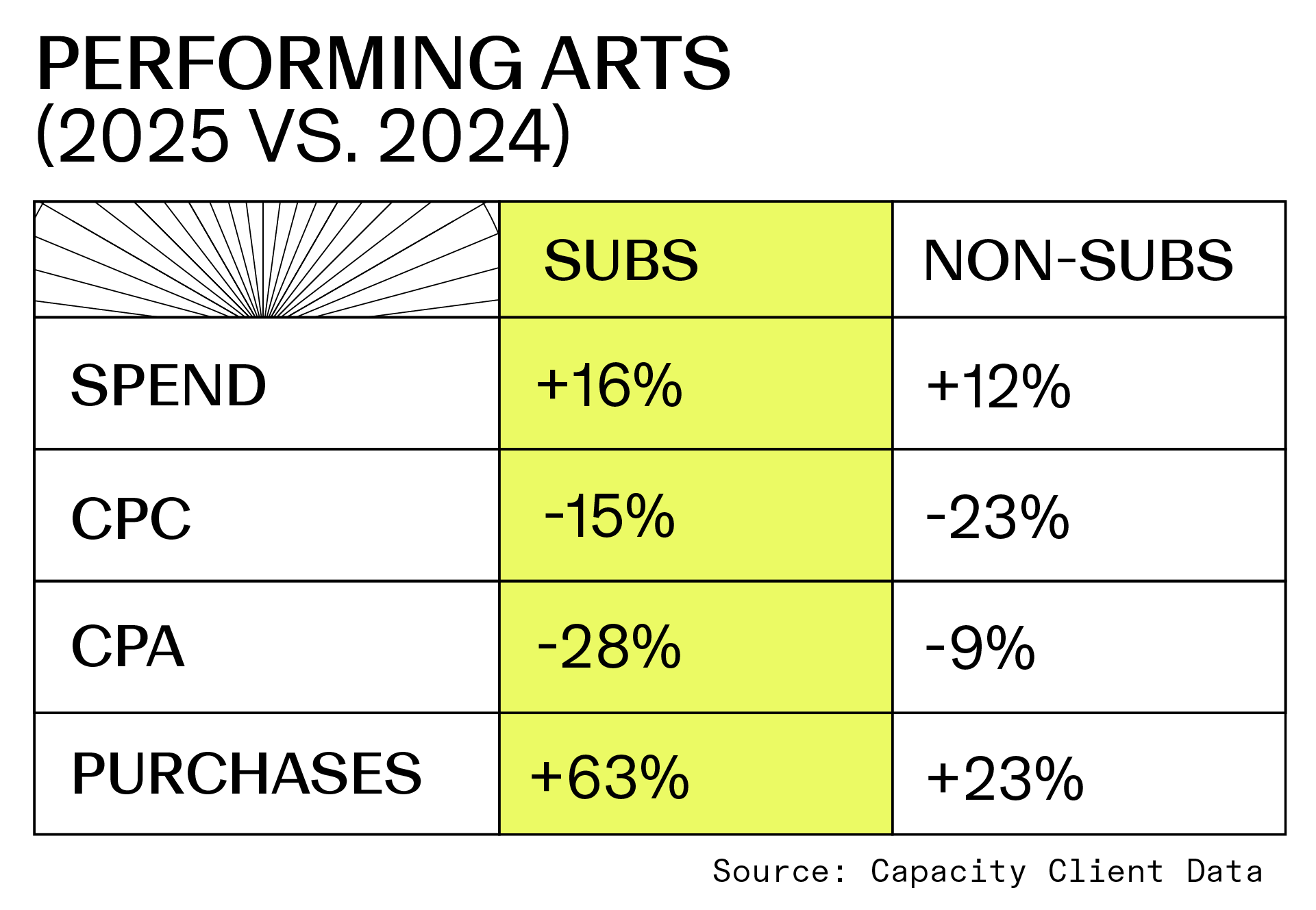
Performing arts organizations saw strong year-over-year gains in subscription campaigns from 2024 to 2025. Spend increased, but efficiency improved too. Cost per acquisition dropped more sharply for subscription campaigns than for non-subscription campaigns, leading to higher purchase volume, revenue, and ROI overall.
That trend matters because subscription campaigns are often treated cautiously. Teams worry that subscriptions are a harder sell than single tickets, especially through paid media, but the data suggests otherwise. When campaigns are targeted effectively and tied to a clear purchase opportunity, they can deliver strong returns.
Early 2026 data points to another important trend: organizations are experimenting with more top-of-funnel investment. CPMs, CPCs, and CPAs have all decreased so far this year, and paid view rates are up. But purchases have dipped slightly, likely because more budget is shifting toward awareness audiences rather than solely focusing on conversion audiences.
That doesn’t mean top-of-funnel campaigns are a bad idea. It does mean organizations should be realistic about what those campaigns are designed to accomplish.
Museums operate differently than performing arts organizations, and their campaign benchmarks reflect that.
Unlike a theater or orchestra announcing an entire season at once, museums rarely benefit from the same concentrated urgency around a single on-sale moment. Membership campaigns tend to run year-round without a natural deadline or major launch event attached.
As a result, museum membership campaigns generally saw:
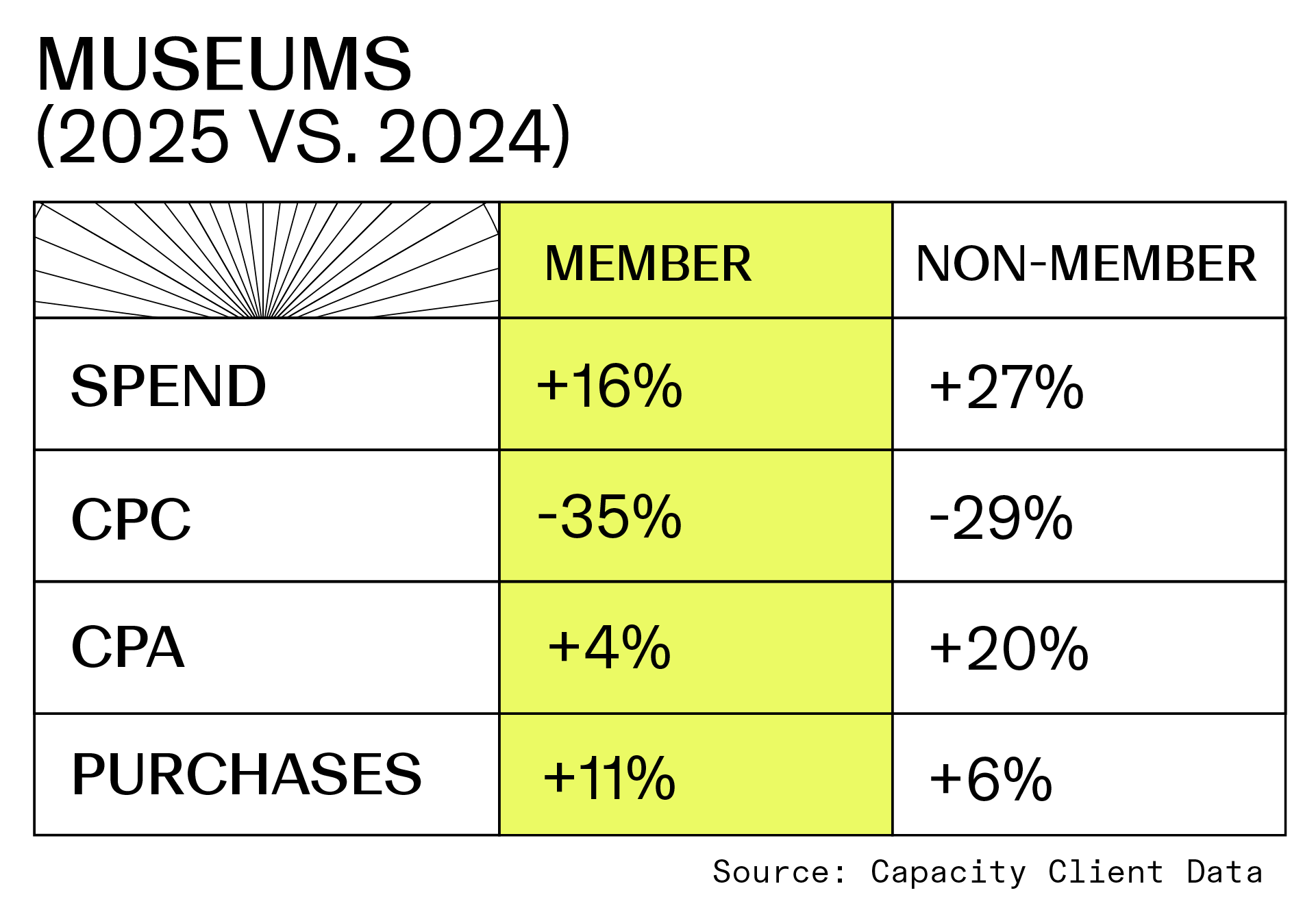
The encouraging news is that costs are also coming down. It’s becoming cheaper to reach audiences, even if converting that attention into memberships remains more difficult than it was last year.
For museums, this reinforces the importance of audience strategy. Membership campaigns work best when they focus on people who already know the organization and have demonstrated interest before.
One of the clearest takeaways from the webinar was simple: don’t launch paid subscription campaigns before subscriptions are actually available.
Many organizations are tempted to build hype before launch day with paid ads teasing upcoming on-sale dates. That approach can work well through organic social, email, or other free channels. But for paid campaigns focused on subscription sales, audiences need a clear next step once they click.
If the goal is conversion, the campaign should launch when:
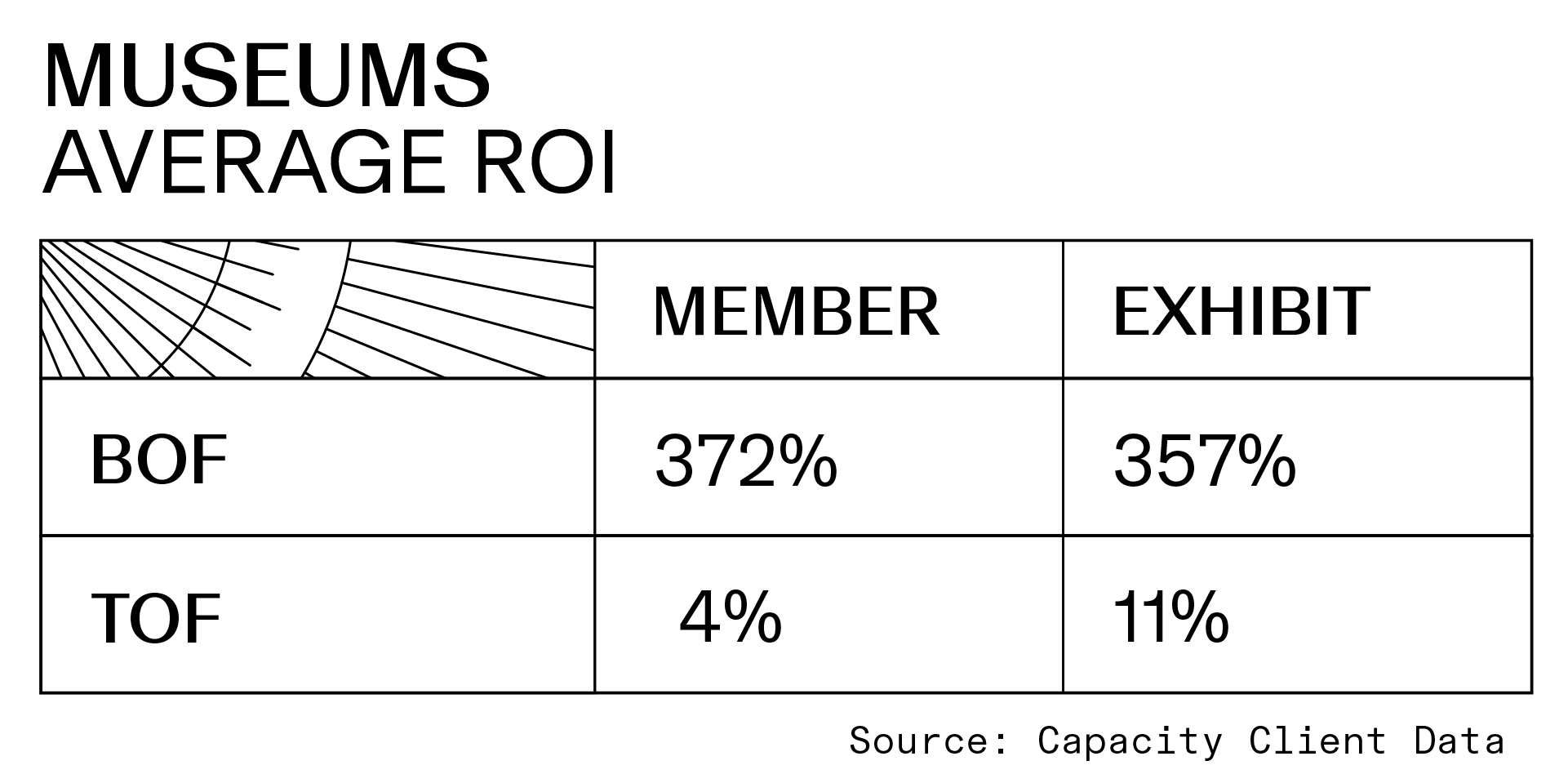
Organizations consistently saw the strongest returns from bottom-of-funnel targeting.
Across both performing arts and museum campaigns, most organizations allocated between 30% and 50% of campaign budgets toward bottom-of-funnel audiences, including:
That focus makes sense. Subscription campaigns are less about introducing new audiences to your organization and more about reinforcing an existing relationship.
The gap between top- and bottom-of-funnel performance becomes even more pronounced with subscriptions. Top-of-funnel audiences are far less likely to commit to a season package than to purchase a single ticket. In some cases, cost per purchase for top-of-funnel audiences was up to three times higher.
That doesn’t mean organizations should ignore audience development altogether. It just means subscription campaigns are not always the best place to prioritize it.
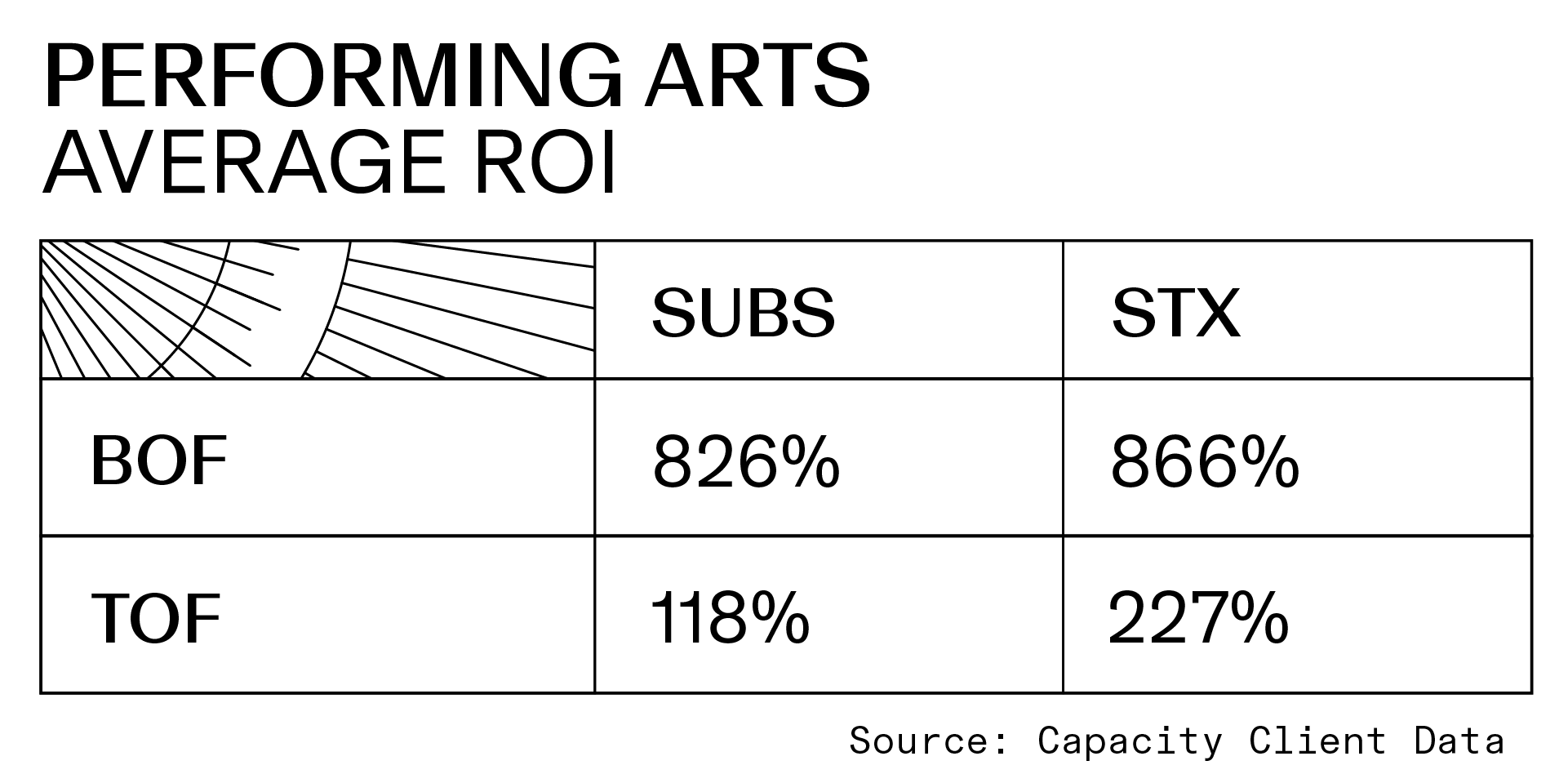
If your goal is awareness, reach, or long-term audience growth, a separate branding or awareness campaign is often a better fit. Those campaigns can run throughout the year and support future subscription efforts without forcing immediate conversion expectations onto new audiences.
When it comes to channel mix, the answer was surprisingly consistent: Meta remains the core platform for subscription and membership campaigns.
According to the benchmark data:
That dominance comes down to a few strengths:
Subscription campaigns often rely on emotion, anticipation, loyalty, and familiarity. Meta’s format and targeting tools support that particularly well.
That said, other channels can still play useful supporting roles.
Paid search delivered especially strong returns, with an average ROI of roughly 3,700% for subscription and membership campaigns.
Search works particularly well because it captures intent. Someone may hear about your season through direct mail, email, or social, then head to Google when they’re ready to buy. Paid search helps ensure they find the right page quickly.
Season announcement campaigns often come with strong creative assets, especially video. For organizations investing in high-quality trailers or season reels, YouTube and Demand Gen can help increase reach and awareness.
The tradeoff is efficiency. These campaigns are valuable for visibility and storytelling, but organizations shouldn’t expect subscription-level ROIs from them.
Performance Max campaigns showed positive returns, averaging around 500% ROI for subscription and membership campaigns.
Still, organizations should weigh that against reduced control over branding and creative presentation. If maintaining a highly curated visual identity is important during season launches, Performance Max may not always be the right fit.
Not every organization has the budget or staffing capacity for a multi-channel subscription push. The good news is that subscription campaigns don’t need to do everything to be effective.
For teams working with limited resources, we recommend a simpler approach:
That kind of focused strategy can still go a long way, especially because subscription audiences are often relatively small but highly valuable.
The strongest takeaway from the data wasn’t that paid media should replace traditional subscription marketing. It’s that digital campaigns work best when it reinforces everything else your organization is already doing.
A strong subscription or membership campaign can:
For teams looking to improve reach, support conversion, or strengthen audience engagement around season launches, these digital channels have increasingly proven their value.