Holiday Creative: Match the Moment, Not Just the Audience
 AUTHOR:
Capacity
AUTHOR:
Capacity
Orchestras continued to invest heavily in digital advertising on Meta and Google from the 24-25 season to the 25-26 season, but the biggest shifts weren’t necessarily in overall spending levels. Instead, many of the most notable changes happened within platforms themselves, as organizations adjusted creative formats, audience strategies, and campaign objectives.
The data points to two major themes:
Here’s what marketers at orchestra and symphony organizations should know from the latest benchmark data (comparing August 2024 – June 2025 to August 2025 – June 2026).
For orchestras advertising on Meta, overall investment changed very little year over year. The balance between top-of-funnel and bottom-of-funnel spending also remained largely unchanged.
Performance metrics told a similar story. Cost per acquisition and purchase rates generally stayed within a relatively narrow range year over year, with most metrics moving less than 10%.
The biggest improvement came in click-through rates.
Top-of-funnel audiences saw average CTRs increase by 26% year over year, while bottom-of-funnel audiences experienced an even larger 45% increase.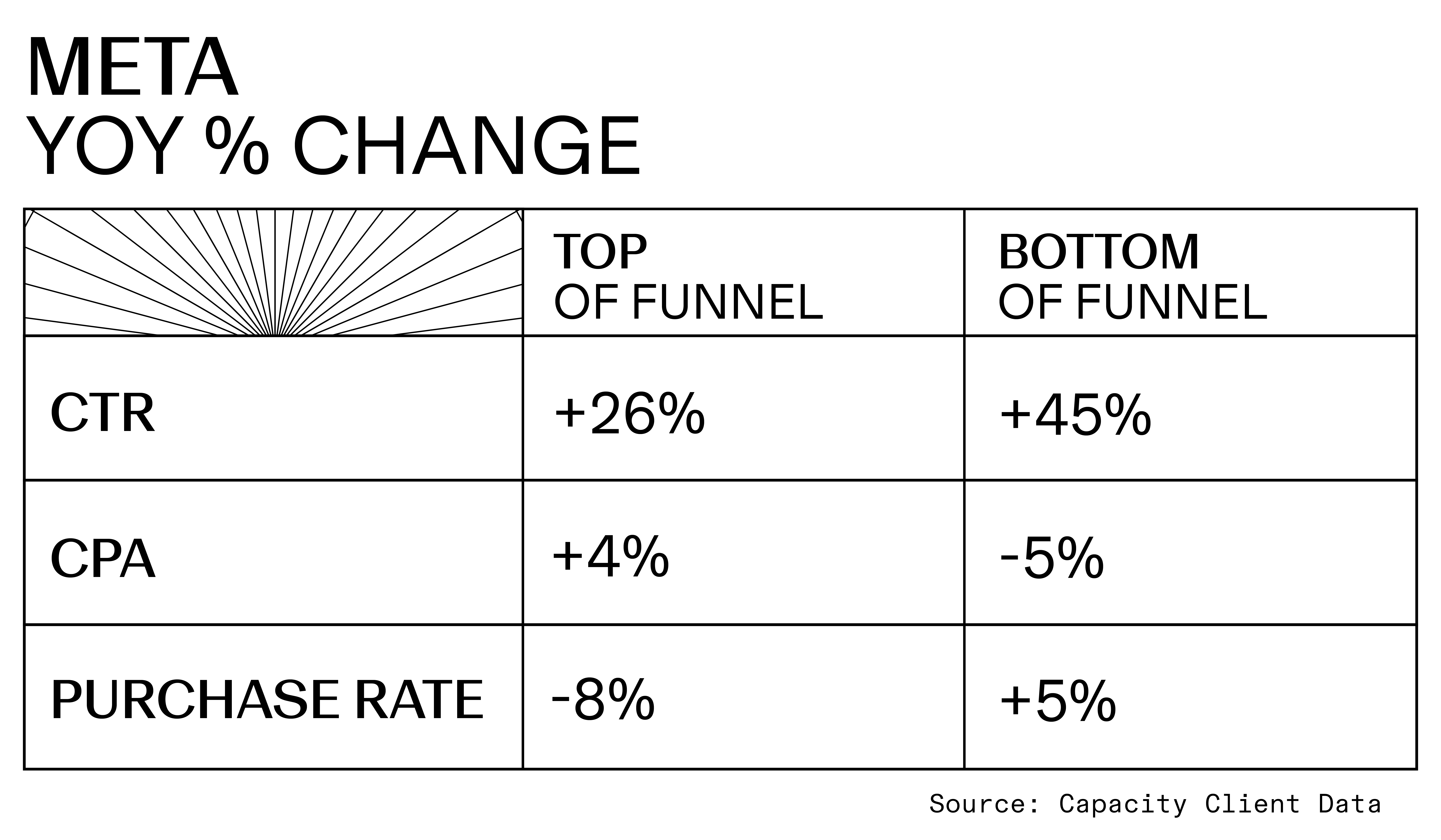
These gains suggest that audiences are engaging with Meta ads more frequently than they were a year ago, even though downstream conversion efficiency has remained relatively consistent.
One likely contributor is the ongoing evolution of Meta’s ad formats and delivery systems.
While overall Meta investment remained steady, the way organizations allocated that spend changed considerably.
The largest decline came from album ads, which received 36% less investment year over year.
Meanwhile, spending increased significantly in:
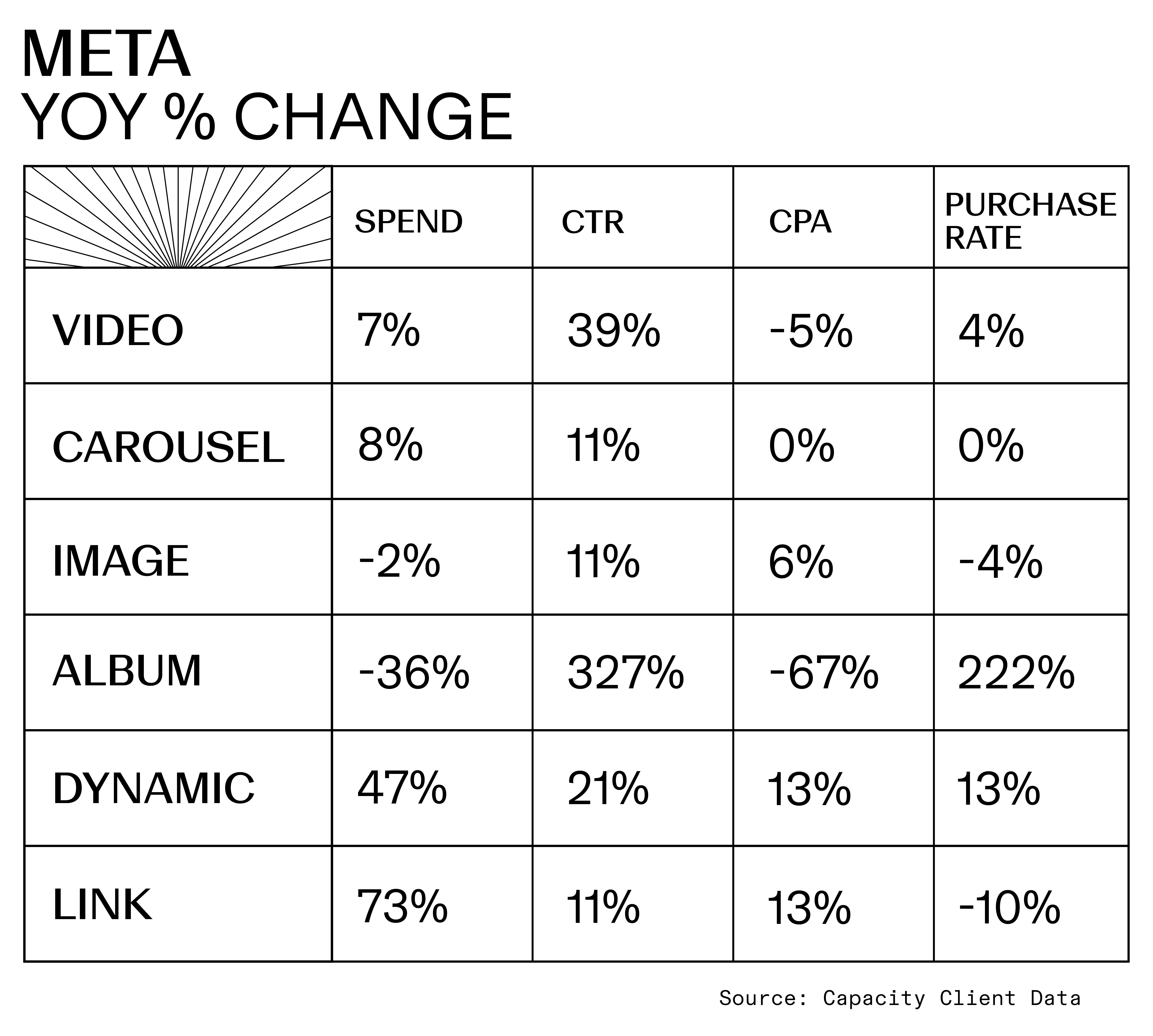
These shifts mirror broader changes happening within Meta’s advertising ecosystem, where automated and flexible creative formats are receiving greater emphasis from both advertisers and the platform itself.
Performance results were mixed.
Both dynamic/flexible ads and link ads experienced higher average CPAs year over year. However, dynamic/flexible ads also generated higher purchase rates, suggesting the format may have been helping organizations reach more qualified audiences even as acquisition costs rise. It’s important to note that this ad format is unfortunately being deprecated.
As Meta continues to consolidate and evolve campaign formats, orchestra marketers may need to place less emphasis on selecting individual ad types and more emphasis on creative quality, audience strategy, and testing within Meta’s increasingly automated environment.
Another notable Meta trend was the performance of video creative. Video investment increased by only 7% year over year across orchestra campaigns, but video CTR improved by 39%.
Part of this improvement may be driven by Meta’s increasing preference for video inventory across Facebook, Instagram, Reels, and related placements. It may also reflect stronger creative execution as organizations become more comfortable producing season trailers, artist features, behind-the-scenes content, and other video assets.
While Meta remained relatively stable, Google saw a significant change in investment strategy.
Bottom-of-funnel spend increased by 10% year over year, but top-of-funnel investment surged by 287%.
That additional investment produced meaningful improvements in performance.
Compared to the previous year, top-of-funnel Google campaigns generated:
These results challenge the assumption that awareness-focused campaigns are inherently less efficient. For many orchestras, top-of-funnel campaigns became more effective at both attracting attention and contributing to eventual conversions. This is aligned with what Google has been messaging, as well (see point 4 in this blog post).
The strongest contributor to Google’s top-of-funnel gains across Capacity orchestra clients was Demand Gen.
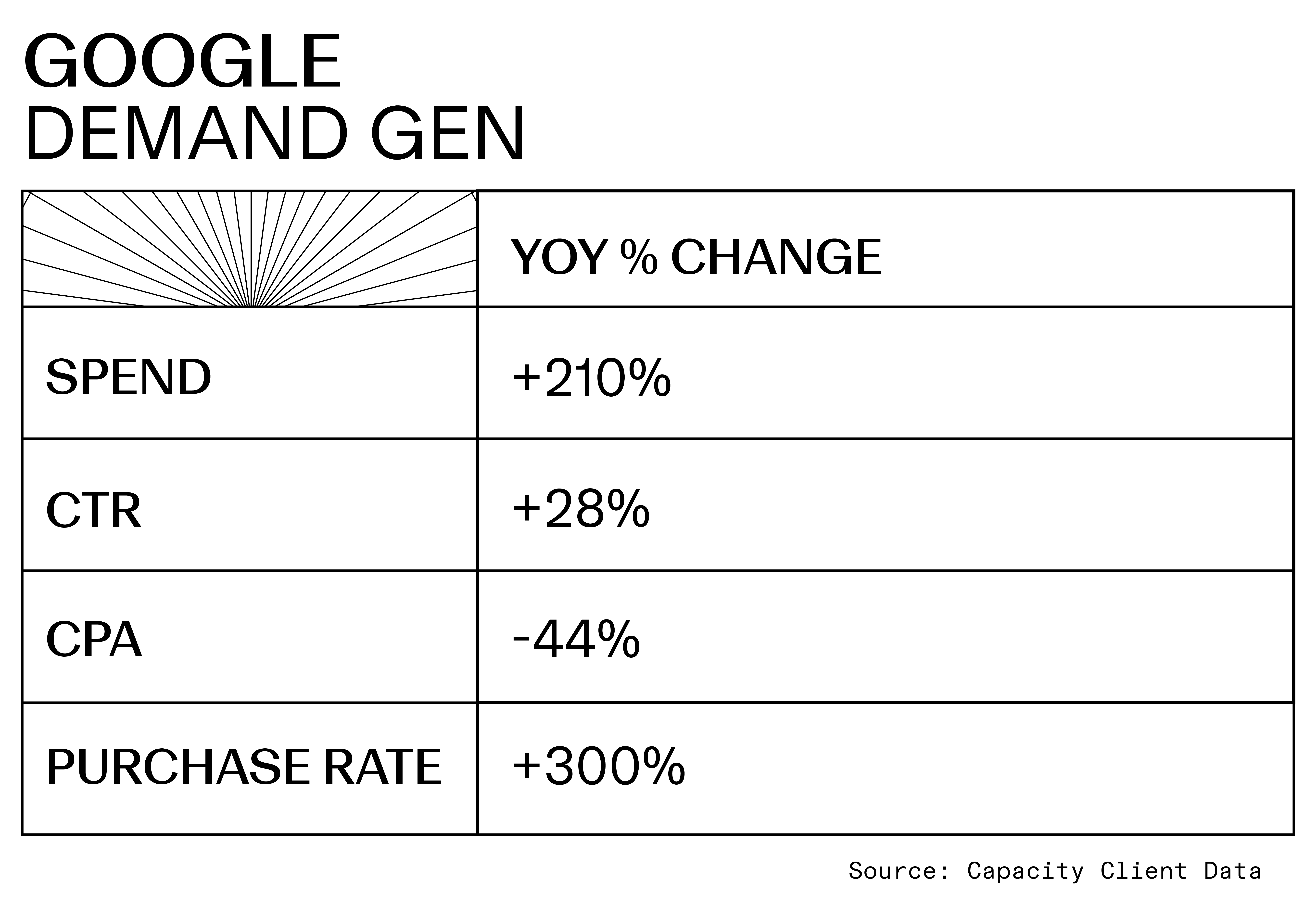
Demand Gen combines Google’s audience targeting capabilities with highly visual creative placements across YouTube, Discover, Gmail, and other Google-owned inventory.
For orchestras, the format appears to be helping bridge the gap between awareness and conversion by delivering stronger engagement while still supporting measurable purchase activity.
The picture was less positive for bottom-of-funnel Google campaigns.
Compared to the prior year, these campaigns saw:
The results don’t necessarily suggest organizations should reduce bottom-of-funnel investment. Rather, they reinforce the importance of maintaining a balanced media mix that supports both demand capture and demand creation.
Also, traditional paid search remained one of the most consistent channels in the benchmark data: investment levels were virtually unchanged year over year, and average CPA remained stable. At the same time, both CTR and purchase rates declined modestly.
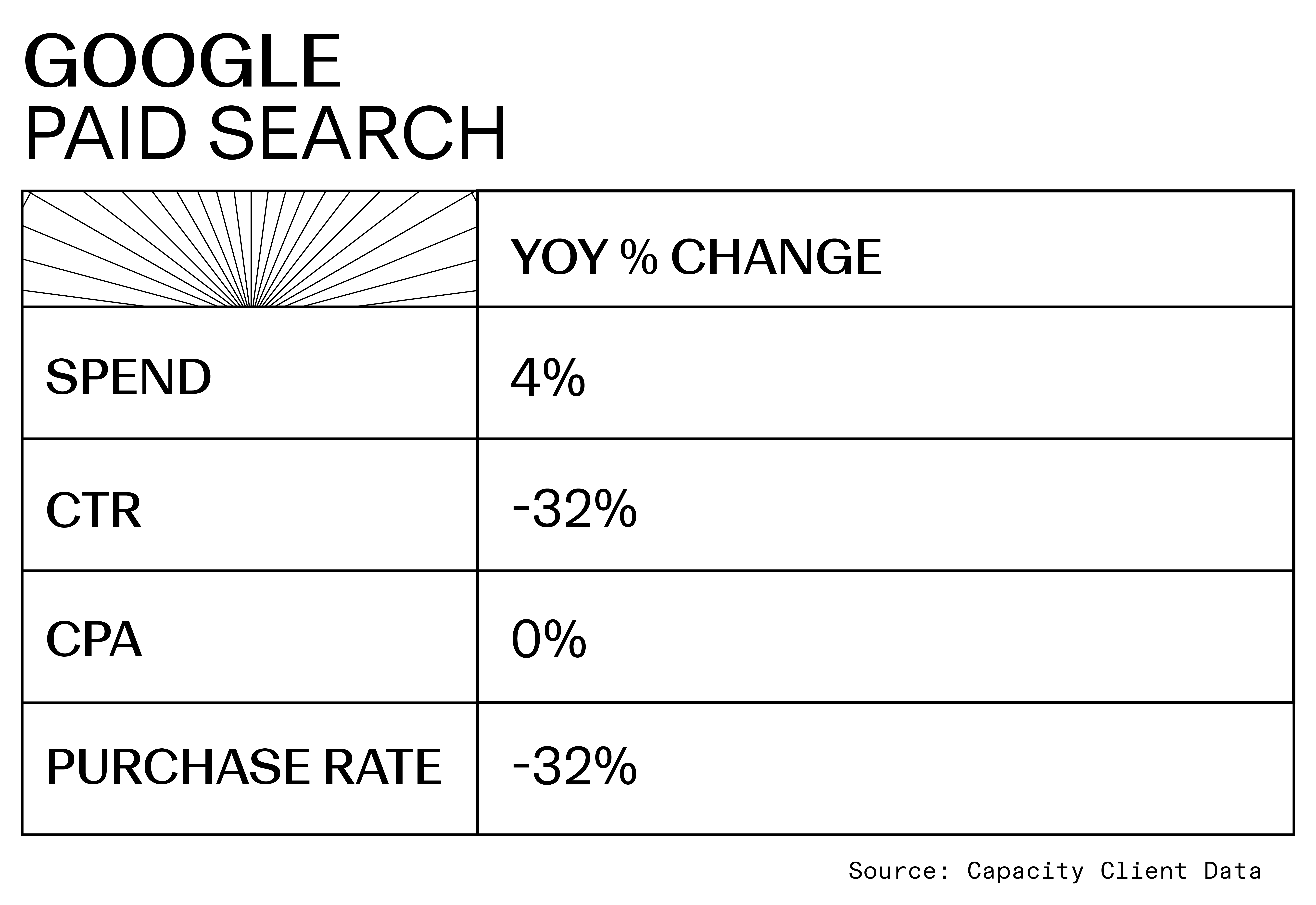
The combination suggests that search continues to play an important role in orchestra marketing strategies, even if many of the largest growth opportunities are emerging elsewhere within Google’s ecosystem.
Search remains especially valuable for capturing intent from audiences who are already aware of performances, artists, or subscription offerings and are actively looking for information.
One of the clearest trends in the benchmark data was the continued decline of YouTube-only campaigns, which have essentially been overtaken by investments in video serving via Demand Gen and PMax.
Orchestra organizations spent 63% less on video-only campaigns year over year, even as CTR decreased by 95% and purchase rates declined by 50%.
The biggest story in this year’s benchmark data isn’t rising or falling budgets. It’s where organizations are choosing to invest and which platforms are delivering stronger returns.
On Meta, performance remained stable while ad formats evolved rapidly, with dynamic and flexible creative formats taking a larger share of investment.
On Google, organizations dramatically increased top-of-funnel spending, particularly through Demand Gen, and saw substantial gains in efficiency and conversion performance as a result.
Taken together, these trends suggest that orchestra marketers are becoming more comfortable balancing audience development with revenue-focused campaigns. The organizations seeing the strongest results are increasingly treating awareness and conversion efforts as complementary parts of the same strategy rather than separate initiatives.
As platforms continue to automate delivery and prioritize new formats, success will likely depend less on finding the perfect campaign type and more on developing strong creative, thoughtful audience strategies, and a full-funnel approach to digital marketing.