Skip to content
Follow Us

Get the best of Capacity Interactive delivered to your inbox.

This field is for validation purposes and should be left unchanged.
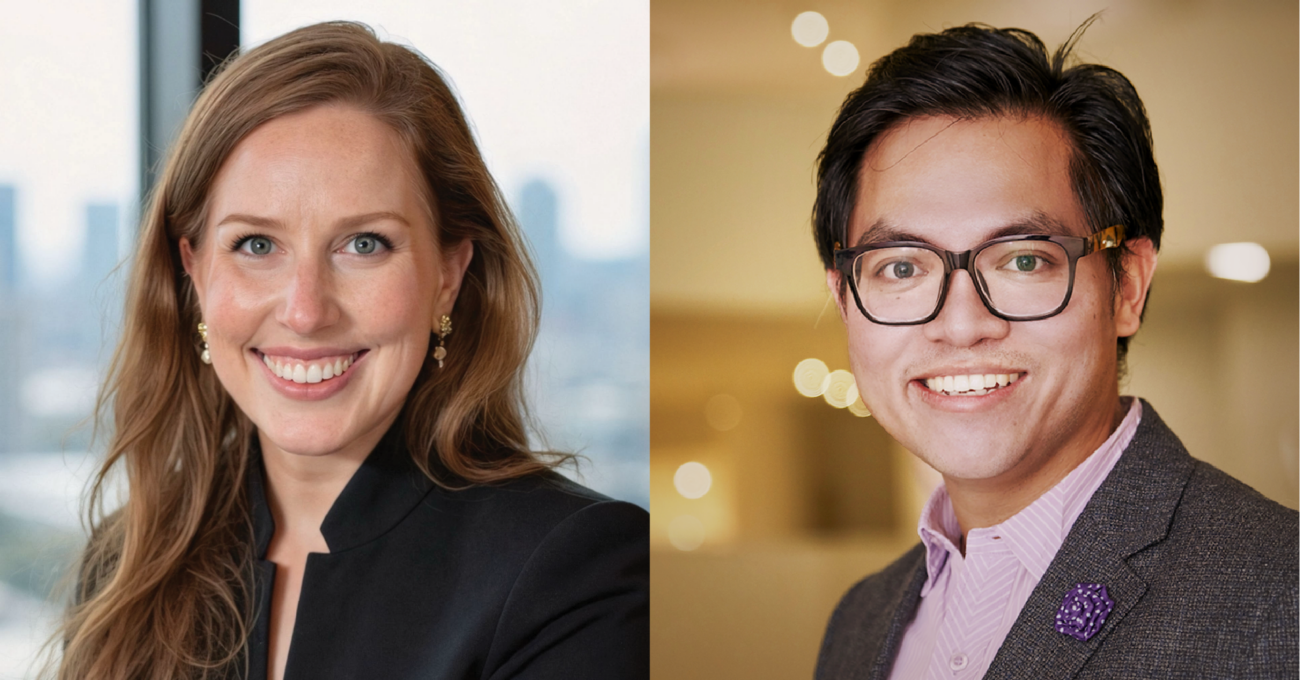
Duke Dang, Executive Director of Works & Process
Episode 167
estimation...

Duke Dang, Executive Director of Works & Process

This episode is hosted by Monica Holt.

0:00 / 0:00

In This Episode

Before a performance is polished, premiered, or reviewed, it exists in a more vulnerable state. What happens when you invite audiences into that space?

As Executive Director of Works & Process, Duke Dang leads an organization built around that idea. By welcoming audiences into the rehearsal room—where new work is tested and shaped—Works & Process transforms performance from a finished product into a shared journey.

Under Duke’s leadership, the organization has grown in scale and influence, setting the standard for how institutions can nurture artists at pivotal moments in their development. In this episode, Duke reflects on building sustainable pathways for artists across disciplines, creating space for artistic risk, and deepening audience investment in new work.

Monica Holt: Hey everyone. Welcome back to CI to Eye. Here’s today’s question: In a world drowning in content, most of which is perfect and polished, what do we actually hunger for? Personally, I’m craving messiness: the process of making; the moment before the thing becomes the thing. My guest today has built his life’s work around exactly that idea. Duke Dang is Executive Director of Works & Process, a performing arts organization that has spent four decades doing what most institutions are too precious to try: letting audiences in the room while the work is still being made. Duke came to America as a refugee and found himself in the performing arts almost by accident. He’s spent the years since dismantling every assumption about who the arts are for, who gets paid to make them, and what it means to truly take care of an artist. There’s a ton to explore in the work he shares in our conversation. I hope it’ll challenge you and make you think about what you can do next at your own organization. And for those of you keeping count, yes, there is another Andrew Lloyd Weber revival name-checked in this very episode. Let’s jump in.

Duke Dang, welcome to CI to Eye! Thank you so much for being on the podcast with me today. It is such a joy to see your face and to be talking with you about your background and about Works & Process.

Duke Dang: Thank you so much. It’s really an honor to be here.

Monica Holt: We like to start out by getting a sense of who you are and where your love for the arts came from. So when you think back, can you share a little bit about what your first encounter with the arts was growing up?

Duke Dang: Yeah, I remember the exact moment. I was born in a refugee camp. I came to America as an immigrant, very poor, and English is a second language for me, and it was in second grade. I went to Starview Elementary and the school had a partnership with the then Orange County Performing Arts Center, which is now called the Segerstrom Center for the Arts. They bused us to a performance that had an array of mediums. And opera, I didn’t understand. Theater, I really didn’t speak English at that time. Music was great. But when the dance was on stage, I immediately connected. I sensed that this medium is universal. We all have bodies, right? So fast forward, I’m in high school and I go to see the first Broadway national tour of Rent. It’s in Orange County. It’s very conservative. I hadn’t come out of the closet yet.

This was before Will & Grace, and to see a gay love story on stage — to see your story on stage — and to realize that you’re not alone, that for me was when I realized how powerful the performing arts can be. So I think those two formative experiences really was the beginning. I was fortunate in that I ended up at Boston University on a full ride and freshman year my elective was Art History 101, and that nurtured the seeds that were planted. And I said to my parents, ‘I want to pursue studies in the arts,’ and they thought I was crazy, but at the same time, I was there at BU on a full ride. And what I knew for sure was I did not want to go home over summer break, so I was like, I need to find a paid summer internship. Let’s put this into context. It’s 2001 at this point. The idea of a paid internship wasn’t really in the zeitgeist at that moment, but I was really fortunate that I landed an internship at the Glimmerglass Opera. It’s now called Glimmerglass Festival. And Glimmerglass provided housing. They provided transportation. They provided a stipend. And I was like, I’m there. I am there.

Monica Holt: Here we go. I want to talk more about Glimmerglass and the experience of having that type of internship where the intern was so well taken care of, because as you say, not everyone can afford to take an unpaid internship or an underpaid internship even. So how do you think that reality shapes then who ends up working and staying in the arts?

Duke Dang: Well, I have to say my experience again is I came to America as a refugee and just, we had no money. I grew up on Section 8, housing vouchers, welfare, food stamps. I’m a product of Head Start. When I was vulnerable, there were systems in place to support my family and myself. The performing arts, if you don’t have access to a paid internship and you don’t have the resources to be involved in an unpaid internship, you can’t even walk through the door. It’s game over.

Monica Holt: That’s right.

Duke Dang: And fortunately 25 years later, we’ve come around to this idea that interns need to be paid. So we’ve made progress. Let’s celebrate that.

Monica Holt: Yes, agreed. Thank you. So talk us through a little bit Glimmerglass to Works & Process.

Duke Dang: Yeah, so I continued to study art history, kept on applying for summer internships, and the next summer I applied to the Getty in California and they also had a paid summer internship program, and the Getty immediately placed me into the performing arts program. And fast forward a year, I apply to the Guggenheim, and the Guggenheim looked at my resume and said, well, he worked at the performing arts program at the Getty. We’ll place him with Works & Process, our performing arts partner. And that’s how this started. It was summer of 2003 and I moved to New York City. I find a sublet on Craigslist, and I arrive at Works & Process.

Monica Holt: There you go. 23 years ago, right?

Duke Dang: Yes.

Monica Holt: Can you believe that?

Duke Dang: Time flies.

Monica Holt: When I think of Works & Process, I also think of it as a bit of an artistic laboratory. But for folks who may not know Works & Process at all, will you walk us through how you would describe to someone on the street who asked you, ‘Where is it that you work? What is it that you do?’

Duke Dang: Yeah, so we understand how the food that we eat goes from farm to table, how a seed is planted, nurtured, harvested, brought to the supermarket. We buy it, we cook it, we eat it. With the performing arts, we don’t really understand how artists go from idea to studio to stage. And Works & Process does that. We support artists and their creative process as they go from idea to studio to stage. And most importantly for me, we make sure that artists have the resources that they need — which includes studio space, housing, transportation, artist fees — so that artists can not only create, they can create with dignity. The founder of Works & Process, her name is Mary Sharp Cronson. She founded Works & Process in 1984. Mrs. Cronson’s story is that she came from an incredibly privileged, well-resourced family. Her mother was the chair of Martha Graham in the seventies and eighties.

Her brother was the board chair of Juilliard. She was on the board of New York City Ballet and New York City Opera. And in the early eighties, the Guggenheim approached Mrs. Cronson and said, would you consider underwriting a performing arts series? And Mrs. Cronson recognized her privilege in that, growing up, she was always invited to go into the studio to see work created, to meet the artist, because if you understand how it’s created, you value it, you engage with it, you invest in it, you understand it, and you champion it. And she said, everybody should have this access and that’s why she created Works & Process. Works & Process is not the typical performing arts program because what we do is we weave performance with discussion with the creators while the work is being created. So you really get to go behind the scenes and you see as it’s being cooked and you appreciate it more. We’re all in on the conversation. Mrs. Cronson also came from a family that worked in hospitality, and so she was always thinking about how to take care of people. And it’s out of that ethos that we continue to think about, how do we take better care of artists? How do we do a better job of welcoming audiences? And how do we make sure that everybody feels welcomed and a part of the community?

Monica Holt: Yeah, that’s beautiful to hear and thank you for sharing more of the history, which I think is so important. I’m also curious, because Works & Process offers this opportunity for audiences to be viewing the work so early, why is that important for artists to also experience having audiences there, encountering the audiences before a work is ready for prime time or the grand opening? What is the value there from the artist’s perspective?

Duke Dang: Yeah, I’ll continue with this food analogy. If you’re cooking and you don’t taste the food as you’re cooking it and you just serve it, how do you know if it’s working or not? So if you’re an artist and you’re creating work, don’t you want to put it in front of a live audience from time to time just to say, wait, is it clicking? Am I connecting?

Monica Holt: And I think that goes — one thing that I’m sure people are sick of hearing me preach about is: one of my favorite Sondheim quotes that I’m not going to attempt in full here, is talking about the audience as the final step of a work of art being complete. What have you observed about how audiences respond when they’re invited to be part of that creative process instead of just being handed a finished product?

Duke Dang: Yeah, I think about my story. I’m 43 years old and I am a byproduct of an America that for two generations has not had compulsory arts education, right?

Monica Holt: That’s right.

Duke Dang: And yet we continue to present product. You see the show, you walk away, and you’re supposed to get it. The reality is when you have two generations of Americans without arts education, the work doesn’t speak for itself anymore, and we have to come around to that. So what can we do to make sure that after having done all the work of getting an audience to arrive, that they walk away and they understand it and they appreciate it rather than they feel alienated because they don’t understand what’s going on. The typical Works & Process experience, we do a lot of dance. So we’ll have a choreographer that says, ‘This is the work that I’m choreographing. Here’s the music, this is why I selected the music, and here’s a story that’s in my head that I’m trying to accomplish.’ And literally for 10 to 15 minutes, you hear the choreographer talking to the dancers: ‘Put your hand here.’ ‘Why don’t you lift your leg here?’ ‘That doesn’t work for you. Let’s try something else.’ And you’re watching this work being created and you realize what the intention of the artist is and you understand it and you walk away and you’re like, I’m an immediate expert because I saw it firsthand. We often say the magic is in the process. We just have to let everybody in on that secret.

Monica Holt: That’s right.

Duke Dang: Whereas the performing arts so often is you rehearse, rehearse, rehearse, rehearse, and you just perform it and it looks perfect and audiences don’t understand how you got there. More and more, I’ve been thinking about how the process is so essential in a world that is surrounded by content. Content is at this point almost limitless. Oftentimes the content that we see is ‘perfect.’ Unfortunately oftentimes it’s ‘perfect,’ and that’s in quotation marks, because of the AI that exists right now. And we’re just searching for things that are authentically human and it’s the process that is authentically human.

Monica Holt: I think what you’re saying is so important, and the imperfection of a process is also the experience of learning. And the curiosity of how things come to be feels even more important for us to be nurturing in this moment where, as you say, that arts education component is not necessarily existing in the way that it should be, particularly in this country. I forget, maybe I was talking to Christopher about this at the end of the year, [about] the videos that dance companies have started to put out of process orientation, what the rehearsal room is really like. And I remember from years ago, I think it was a dance company in Denmark that did an open rehearsal where they had a heart rate monitor on their dancers that was shown on a screen next to the stage so that again, audiences can understand, yes, the beauty, the elegant perfection of a finished classical story ballet is a wonderful, gorgeous thing to witness… but how much richer is that experience when you know what’s gone into the effort that’s put on stage?

Duke Dang: And the example I often cite is one of my favorite musicals, A Chorus Line. Why I think we love A Chorus Line is you get to hear the stories of all of the members that are part of the chorus line.

Monica Holt: That’s absolutely right. The work that you do at Works & Process I had so centered on New York and the Guggenheim and being very specific, but as you and I have been talking, I’ve been learning more about the artistic ecosystem that Works & Process has been building not just for audiences, but also for the artists themselves. Can you share a little bit about the broader work of Works & Process that those of us who associate it with the events that are happening at the Guggenheim might not be as aware of?

Duke Dang: Yes, thank you. So let’s go beyond the tip of the iceberg.

Monica Holt: Yes.

Duke Dang: The Guggenheim is our most visible partner, and we are so grateful to have this partnership with one of the most iconic cultural institutions in the world and one of the most iconic buildings. The reality is that we can’t access the Guggenheim all the time. So we have built an ecosystem of now 18 residency partners in six states, and these residency partners provide 24/7 space to create and rehearse in. They provide housing on site, and what we bring to the table is living wage artist fees that we’re very transparent about. We provide every artist that goes into residency $175 a day or $1,225 a week so that they can create and not be concerned about, ‘How am I going to pay the bills?’ So these artists can create knowing that they’re being paid, they have space, they have housing. It’s uninterrupted creative process time, and we always ask the artists that we’re working with, what do you need right now? It goes back to how do we take better care of artists? And so the artists will say, I need a studio with a wood floor or a Marley floor or with mirrors, or I need a stage, or I need a technical residency because I’m far enough in my creative process that I want to get lights on top of it. That’s why we have this resident ecosystem now. It is really about aggregating the resources that we need to support creative process.

Monica Holt: I mean, the way that you speak so clearly about supporting artists doesn’t mean that you are asking them to live in poverty to deliver on a product… You are seeing the artists for their entire being, their life as a human, their artistic experience, how they are seeing the world, and creating pathways for them to create with dignity. It is such a beautiful sense of purpose. Has it been difficult to engage with the field in this way being such a champion of the complete needs of the artist versus the focus on the end product on various stages?

Duke Dang: Yes. It’s been very challenging because there’s inertia that we need to overcome, right?

Monica Holt: Of course.

Duke Dang: And the inertia is that we have inherited an ecosystem that prioritizes product, yet we know that the definition of insanity is doing the same thing and expecting different results. And so [at] Works & Process, we’re doing something different to have a thriving performing arts ecosystem where artists are taken care of, where audience members understand and appreciate the work that they see so that they invest in it. And we’re all building community as this happens. It’s moving it away from transactional spectating to participating.

Monica Holt: That’s right. You’ve been vocal in saying that our ecosystem is broken and we need to really be approaching it with a bit of audacity. There’s a lot of politeness in our field. Careful language, careful critique. If we strip that away, what do you think our sector needs to wake up to most urgently right now?

Duke Dang: Well, first off, we need to get rid of toxic optimism.

Monica Holt: Okay, say more on that.

Duke Dang: I really appreciate how some of the big traditional funders in the field have pivoted, right? And they’re like, we are not funding this anymore. I’ll point out the Mellon Foundation. It’s very clear that they’ve moved away from funding institutions and funding artists directly. I admire that. And that’s what we do as an organization is we think about, how do we take better care of artists and how do we fund the artists? Because the reality is that if these artists aren’t working, then what happens to the institutions that have been built? So now the institutions that are existing without the traditional support of these foundations are like, what do we do?

Monica Holt: Yeah. It’s fascinating to watch. From where you sit, how would you advise these organizations that aren’t sure how to move forward right now?

Duke Dang: Well, it sounds like such a cliche, but it really is about, how do we work together? How do we collaborate? How do we look around to what’s happening? We’re very familiar with mutual aid, so let’s take that example and apply it to the field and seriously have a conversation of how do we work together? How do we do away with exclusivity clauses? How do we share resources? What does true collaboration really look like that isn’t about reinforcing institution-building, but thinking about how do we build the field together?

Monica Holt: I am so delighted to hear you say that rather than looking at, oh, there are too many mouths to feed in the artistic pot in a certain area — instead saying, we are all building a stronger cultural community. How can we do that together? What do I have in terms of space that I can offer you who might have a creative idea that needs a home that you don’t have? And how can we start to pair together to build a better brand for our cities, for our states, for our country that really fuels creative collectivity in a way that doesn’t exist everywhere yet?

Duke Dang: And I would also say we have inherited philanthropy that has prioritized brick and mortar, and how do we think about the bodies, the artists, that these buildings were created for? And that’s why [at] Works & Process, we do not have any brick and mortar, and because of that, we are forced to think about how do we collaborate and how do we first off identify and then deploy and utilize the resources that already exist. And it’s ultimately in service of artists in their creative process. But while doing that, it’s also about connecting audiences and communities with artists. That is one of the ways of building collaboration moving forward.

Monica Holt: That’s right. It’s so well said. And I think also as we think about who is engaging with the art, one thing that Works & Process has been doing for a while now is presenting work that expands beyond the kind of traditional western canon proscenium. What has been prompting and inspiring you to move the organization that way?

Duke Dang: So in 2017, Works & Process had the opportunity to have a residency and a commission by Michelle Dorrance and Nicholas Van Young in the rotunda of the Guggenheim. And one of the dancers in the company, Ephrat Asherie, approached us and said, this is so incredible. It’s a circular building, and so many dance forms come from the circle. Have you guys thought about supporting a club dance piece with street and social dance? Because I’m working on a project about New York City club culture and how when you go to a nightclub and you dance, you have a tendency to dance in a circle which is completely opposite from what normally happens in concert dance. Work is created for a stage. And we said, Ephrat, you’re absolutely right, and we’re going to commission this piece. We’re going to support it. And that was the beginning of this journey. Through Ephrat, we met another dance maker named Omari Wiles who comes from the ballroom community, and we started working with ball culture through Omari.

And then we also met a dance maker by the name of Caleb Teicher. And Caleb, who was known as a tap dancer, was also working in Lindy Hop, a partnered social dance. And so we were really thinking about this circular building that we call home and the dance traditions that come from the circle and how that could be a way of helping people spectate, but then also participate because it’s that social circle. Dance is where you participate. So you go to a birthday party, the music starts, you get up, you dance in a circle. You go to a wedding, the music starts, you get up, you dance in a circle. And at a time when we’re facing isolation, how do we ameliorate that isolation? You get people to start to dance together. And increasingly, and I’ve been thinking about this over just the past few years, at a time when words are so fraught, nobody has ever said to me, ‘Duke, when you dance, you dance like a liberal,’ or ‘You dance like a conservative.’ We all just dance together. It’s a conversation that we can have in an increasingly polarized time.

Monica Holt: I’m just going to take a minute to settle with that because that’s a really beautiful notion, and we see that more and more, right? As folks are coming together, we know how important art is to the act of community. And whether that is for healing or for protest or for anywhere in between, dance, music, these are part of our long, long, long histories, no matter where in the world you are.

Duke Dang: So part of this conversation also is, how do we transcend the proscenium? Because if you’re going to leave your house to see something, engage in something, is the proscenium the best way of doing that? Or are you actually looking for a real social experience?

Monica Holt: Yeah, I mean, you’re centering all of this on exactly the thing, which is: the performing arts are great at bringing people out of their apartments and together in one place to experience something.

Duke Dang: Bingo, because one of my favorite lyrics is from Cabaret. And it goes, ‘What good is sitting alone in your room? Come hear the music play?’ And as we’re experiencing this crisis of isolation, we all just have to get out of our rooms and come hear the music play or come out and dance.

Monica Holt: That’s right. That’s exactly right. I’m curious what you think of this emergence of these immersive experiences, some of which I think are very much immersive and engaging, and some of which are just using a very popular terminology right now. Because in a lot of ways, social dance and bringing that to people is the original immersive experience with art, right? It’s the original idea of bringing together folks around an art form that they’re used to seeing one way, but actually can be engaged with meaningfully,

Duke Dang: Right? And the word I actually prefer to use is ‘participate’ because I think ‘immersive’ has this notion of ‘I’m engaging with technology.’

Monica Holt: Oh, interesting. Okay, okay.

Duke Dang: Whereas participating actually means that you have to get in there and move, or you have to sing or you have to, in a partner dance, hold somebody’s hand and lead or follow.

Monica Holt: As you were talking about the art forms that you wanted to make sure Works & Process was uplifting, engaging in, it’s very notable how all of those things were tied to an artist that you were engaging with meaningfully. By the time we’re on air, so to speak, and with folks listening to us in their ears right now, Works & Process will have just announced a new artist-in-residency position embedded into the organization itself. Can you talk a little bit about that position and what inspired that decision?

Duke Dang: Yeah, we’re super duper excited. We’ve always been an organization that supports artists in their creative process, and we were very fortunate that 10 years ago we met an artist by the name of Caleb Teicher. Caleb’s been with us over the past 10 years, and as we were thinking about the position of an artist [or] curator in residence, we wanted to make sure that an artist is at the table to help us make decisions on how we can support artists right now. And Caleb is an artist that is performing, is creating, is touring, and we wanted to make sure that this artist is coming with practical, real time, real world knowledge that will then help us make better decisions in resource deployment, artist support… and Caleb will play a key role in helping us curate our open call residency program and also to curate the programming that we generally do. But the important thing is an artist at the table helping us make decisions.

Monica Holt: I think it’s incredible to be centering an artist in that way, because as I even try to imagine the changes that can be made to institutional decision making processes — when an artist is actually engaged with that work, the possibilities seem really extraordinary in how that can also lend itself to inspiration to the staff and teams as they’re imagining the future of an organization, even one as on the forefront of the future of the industry as Works & Process.

Duke Dang: Yeah.

Monica Holt: If another arts organization asked you, what’s the first thing we should rethink if we wanted to better support artists, what would you tell them?

Duke Dang: Actually, it’s very simple. It starts with a single question: what do you need right now? From that question, we’ve been able to respond. There was an artist that said, what I need right now is health insurance. And we called our insurance broker and we said, this is the situation, can you help? And Nick, our insurance broker, has been able to enroll countless artists onto Obamacare. And the reality is many of the artists that we support are making income thresholds that actually they’re qualifying for monthly premiums of $0 or $20 or $40. It’s just connecting these artists with the people that can help them.

Monica Holt: And I think your impulse to lead with questions instead of prescribed answers is always going to get an organization further. Is there anything in particular that is bringing you hope in our field right now?

Duke Dang: I think a new generation that is really thinking much more collaboratively, that is more open to having conversations and less about silos.

Monica Holt: I couldn’t agree more. I think the next generation of leaders rising, only beginning to emerge right now… I share that hope with you that it is one of community building, of collaboration, and of seeing how much stronger we can all be together. Well, we have come to my favorite little part of our conversation, which is our quickfire culture section of the podcast. So what’s one piece of culture right now that you’re currently obsessed with and loving and that’s bringing you joy?

Duke Dang: I would say CATS: The Jellicle Ball. I’m super excited about it.

Monica Holt: Yes. Speaking of ballroom.

Duke Dang: Yes.

Monica Holt: Really ushering that back in.

Duke Dang: Yeah, because a Omari Wiles — who is a longtime Works & Process artist supported with multiple residencies — Omari is one of the co-choreographers of CATS: The Jellicle Ball. And what I’m excited about is, again, this is a production that is transcending the proscenium. It’s a production that is thinking about both spectating and participating. It’s a production that is providing a platform for a tradition that has been under the radar for too long. And with the casting decisions that have been recently announced, this is a production that is really lifting trans creators, trans performers. So I’m super excited about CATS: The Jellicle Ball.

Monica Holt: I can’t wait for more people to experience Cats in this way that is both expressive and joyful and strings together this music that is so loved with an art form that makes complete sense in the new context that’s been created. Yeah, it’s very exciting. If you could go back in time, what’s a live performance or event that you wish you had been present for?

Duke Dang: Judy Garland at Carnegie Hall.

Monica Holt: Signed. Sealed. Done. Check. No further questions. What is one free resource in any field that you would suggest everyone checks out or avails themselves of?

Duke Dang: The New York Public Library for the Performing Arts.

Monica Holt: A fabulous answer also. And then our last question. If you could broadcast one message to executive directors, leadership teams, staff, and boards of thousands of arts organizations right now, what would that message be today?

Duke Dang: The magic is in the process. We just have to let everybody in on that secret.

Monica Holt: Beautiful. Duke, I am so grateful for your time. I think you have given all of us a lot to think about and consider how can we continue centering the process and centering artists in our work. Thank you. It’s been wonderful to chat.

Duke Dang: Thank you so much, Monica. It’s such an honor to be here.

Monica Holt: Thank you for listening to CI to Eye. If you enjoyed today’s conversation, please take a moment to rate us or leave a review. A nice comment goes a long way in helping other people discover the show. And if you haven’t already, click the subscribe button wherever you get your podcasts. We’ve got some great episodes coming your way, and I wouldn’t want you to miss them.

A huge thanks to our team behind the scenes, including Karen McConarty, Yeaye Stemn, Stephanie Medina, Jess Berube, and Rachel Purcell Fountain. Our music is by whoisuzo. Don’t forget to follow Capacity on Facebook, Instagram, LinkedIn, TikTok, and YouTube for regular content to help you market smarter. You can also sign up for Capacity’s newsletter at capacityinteractive.com, and I hope you’ll reach out to us to let us know who you’d like to hear from next on CI to Eye. I’m Monica Holt. Thanks for listening.


About Our Guests
Duke Dang
Duke Dang
Executive Director, Works & Process

Born at a UN refugee camp in the Philippines to parents seeking political asylum from the communist Vietnamese government, Duke Dang immigrated to California, growing up with the assistance of Section 8 housing vouchers, food stamps, welfare, and attending Head Start and public schools. An inaugural Gates Millennium Scholar, he earned his bachelor’s degree in Art History at Boston University where he studied abroad in Australia, Brazil, England, India, and South Africa. At New York University, he earned his master’s degree in Performing Arts Administration. 

Starting as a paid intern at Works & Process in 2003, in 2006 he became the General Manager with founder Mary Sharp Cronson, and in 2021 appointed Executive Director. Championing creative process from studio to stage, Works & Process’ 15 residency partners span CT, MA, NJ, NY, and VT supporting artists and their creative process with sequenced, longitudinal, uninterrupted fully-funded residencies featuring 24/7 access to studio space, adjacent housing, transportation, health care enrollment access, and fees of $1,050 per artists/per week culminating in local community sharing and iterative Works & Process presentations in New York City at the Guggenheim, Lincoln Center, National Sawdust, New York Public Library for the Performing Arts, SummerStage, and Arts Brookfield. A number of these projects have been honored with Bessie Awards, National Dance Project Grants, and are now also touring national and internationally with the U.S. State Department. 

During his tenure, Works & Process has expanded representation, centering BIPOC and LGBTQ+ street/club cultural practitioners, who have historically lacked access to institutional support. In 2021 Works & Process was honored with the Dance Magazine Award, in 2021 and 2022 Works & Process was nominated for the APAP William Dawson Award for Programmatic Excellence and Sustained Achievement in Programming, and in 2023 Duke was honored with the Dance Advocate Award  by Dance/NYC.  Duke serves on the Jerome Robbins Dance Division Committee and is a Board Member of Dance/USA. He and his husband in 2012 co-founded the Hudson Valley Dance Festival with Dancers Responding to AIDS.

Read more

Related Episodes

Cody Renard Richard, Tony Award-Winning Producer and Stage Manager
EP 166
Feb 19, 2026
estimation...
Cody Renard Richard, Tony Award-Winning Producer and Stage Manager

Great theater starts by creating trusted conditions for talent and creativity to thrive.

Cody Renard Richard is a Tony Award-winning producer and stage manager whose career spans Broadway, television, opera, and even Cirque du Soleil. Along the way, his backstage leadership has shaped acclaimed productions like the 2025 revival of Ragtime and this spring’s CATS: The Jellicle Ball.

In this episode, Cody talks about what it really means to lead from behind the scenes, and why stage management is such a powerful training ground for leadership. He reflects on his path through the industry, how he’s navigated power and visibility in a field that doesn’t always make room for everyone, and what it looks like to advocate for artists and audiences without burning out or losing yourself in the process.

Aidan Connolly, Executive Director of Irish Arts Center
EP 165
Feb 12, 2026
estimation...
Aidan Connolly, Executive Director of Irish Arts Center

Aidan Connolly knows that institutional growth isn’t just a matter of square footage. It’s a test of values.

As Executive Director of Irish Arts Center in New York City, Aidan is leading the organization through a major expansion and transformation—one that requires not only bold vision, but the discipline to protect what made the institution matter in the first place. 

In this episode, Aidan reflects on what it takes to lead values-driven change, how his background in politics shaped his approach to advocacy and stakeholder management, and how arts organizations can become not just presenters of culture, but civic homes for artists and audiences alike.

Don’t Miss an episode

Don’t Miss an episode

Subscribe to CI to Eye and have your insight and motivation delivered on demand.

TUNE IN