![Managing User Consent On Your Website [Updated 2025]](https://capacityinteractive.com/wp-content/uploads/2026/04/2026-Blog-Header-Brand-Redesign-JB-copy-36-scaled-848x478.jpg)
Managing User Consent On Your Website [Updated 2025]

 AUTHOR:
Ally Duffey Cubilette
AUTHOR:
Ally Duffey Cubilette
*This blog post was originally published on May 2, 2024 with the title “Third Party Cookies Are Going Away: What Does this mean for you?” It was updated on July 30.
7/30/24 UPDATE:
Google recently announced it won’t be deprecating third-party cookies—what a roller coaster! While much is still unknown, we know most other browsers (responsible for 30-50% of traffic) already limit the efficacy of third-party cookies. And we know that Google will still need to offer users some protection from digital tracking. Some are speculating it may look more like Apple’s App Tracking Transparency update from 2021 where apps had to display a notification to users asking them to opt in to tracking.
For these reasons, although the cookie is not crumbling entirely, the digital ecosystem is still undergoing dramatic changes and evolution will be necessary to maintain useful and representative measurement.
WHY THIS MATTERS
Third-party cookies have been how advertising platforms such as Meta and Google have gathered data from sites across the internet—including your own—to retarget website visitors and report on campaign success by tracking conversions.
The way platforms get data for audience targeting and conversion tracking is about to change.
Your infrastructure needs a tune-up to keep up with these changes.
WHAT IS CHANGING IN ADVERTISING PLATFORMS?
For Meta and Google to continue successfully targeting new and existing audiences, the platforms still need to receive customer behavioral data while respecting user privacy. Instead of browser-reliant pixels and third-party cookies, Meta and Google are moving towards first-party data and other strategies to retain measurement. Not only is this data critical for measuring and attributing conversions to campaigns, it also informs all the algorithms that make these platforms so powerful. The ability to drive dynamic bidding, inform delivery and targeting, and support dynamic creative to ensure we reach the right audience at the right time hinges on this data being available.
It’s undeniable: Digital measurement is getting more nuanced and more technical. We’re about to jump into the weeds, but stick with us—you’ll be glad you did!
your Next Steps
The following tactics can help future-proof your digital measurement.
Leverage first-party data in measurement
You might hear this tactic called: Enhanced Conversions (Google) or Advanced Matching (Meta).
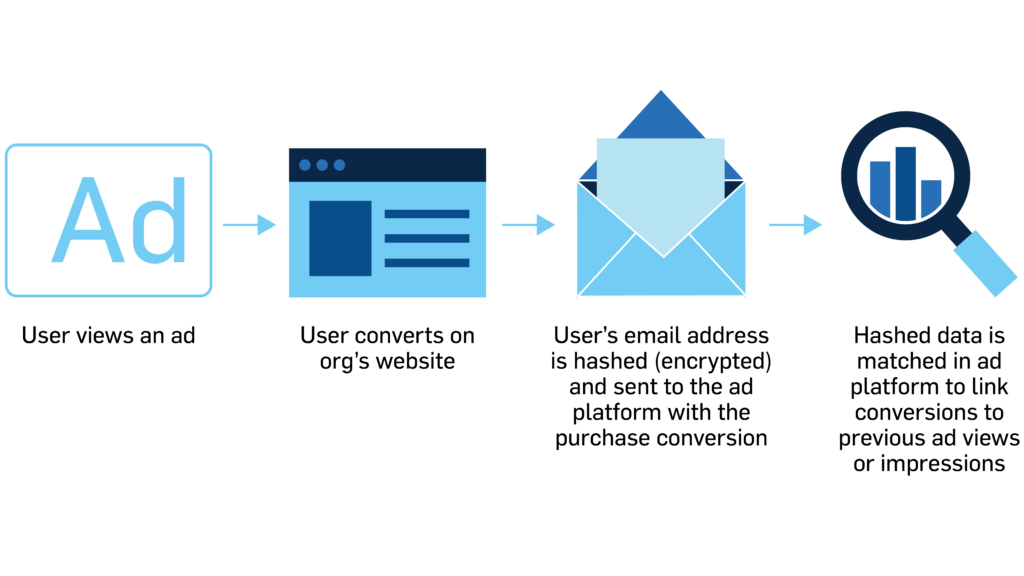
Using an industry-standard hashing algorithm, user data like an email address can be anonymized and shared with ad platforms when a purchase occurs. The platforms match the provided user data with their user accounts. Matched records are a cookieless way to connect website conversions with an ad impression or engagement.
Reduce browser dependence
You might hear this tactic called: Server-side tracking (general) or Conversions API (Meta).
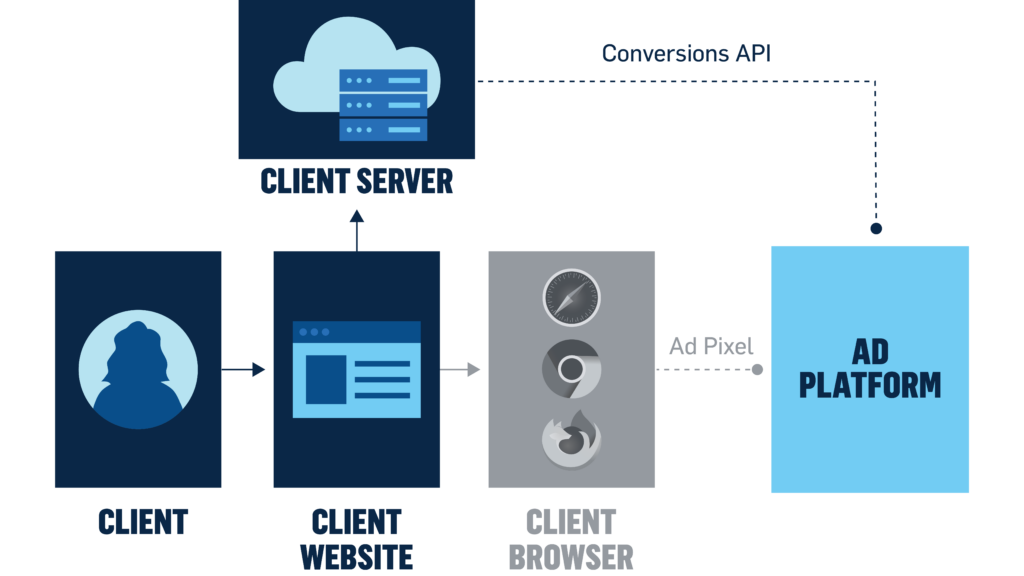
Rather than relying on the browser where tracking can be blocked or limited to communicate with advertising and marketing platforms, the pixel sends interactions from your site to a server that communicates directly with the advertising platform.
it’s time to shift
As the digital landscape becomes more privacy-centric, we will be able to measure less. As a result, our tactics and processes will have to shift. The infrastructure reinforcements above are critical to ensuring your measurement is as strong as possible so your data is representative, if not comprehensive.
Alongside other practices like relying on first-party data to reach existing audiences, contextual targeting, and taking advantage of platforms with their own rich first-party data, these practices will support efficient digital campaigns that reach audiences where they are spending time across the internet.
If you’re a CI client, reach out to your team to discuss how to upgrade your campaign infrastracture. If you’re not, contact CI to learn more about how we can help launch data-driven campaigns with a future-proof approach to measurement.
Let’s Evolve Measurement Strategically