
The arts help people feel, connect, and find the courage to act. How can we better harness that power—and communicate it beyond our own circles—to ensure the longevity of our field?
Attract and engage your patrons with a fully-managed ad strategy across all your platforms.
We'll help your organization use AI to save time and spark creativity while staying grounded in your values.
Your creative assets + our impeccable execution = thumb-stopping social content.
Let's harness your website’s data and uncover opportunities to optimize and grow.
We’ll partner on a strategy to level up your email program and help your ROI shine.
Ensure visibility across the search landscape with a technically sound website and content that deserves to rank #1
This episode is hosted by Monica Holt.
What if the purpose of music education was about more than developing musicians? What if it was about developing more empathetic, creative, and collaborative human beings?
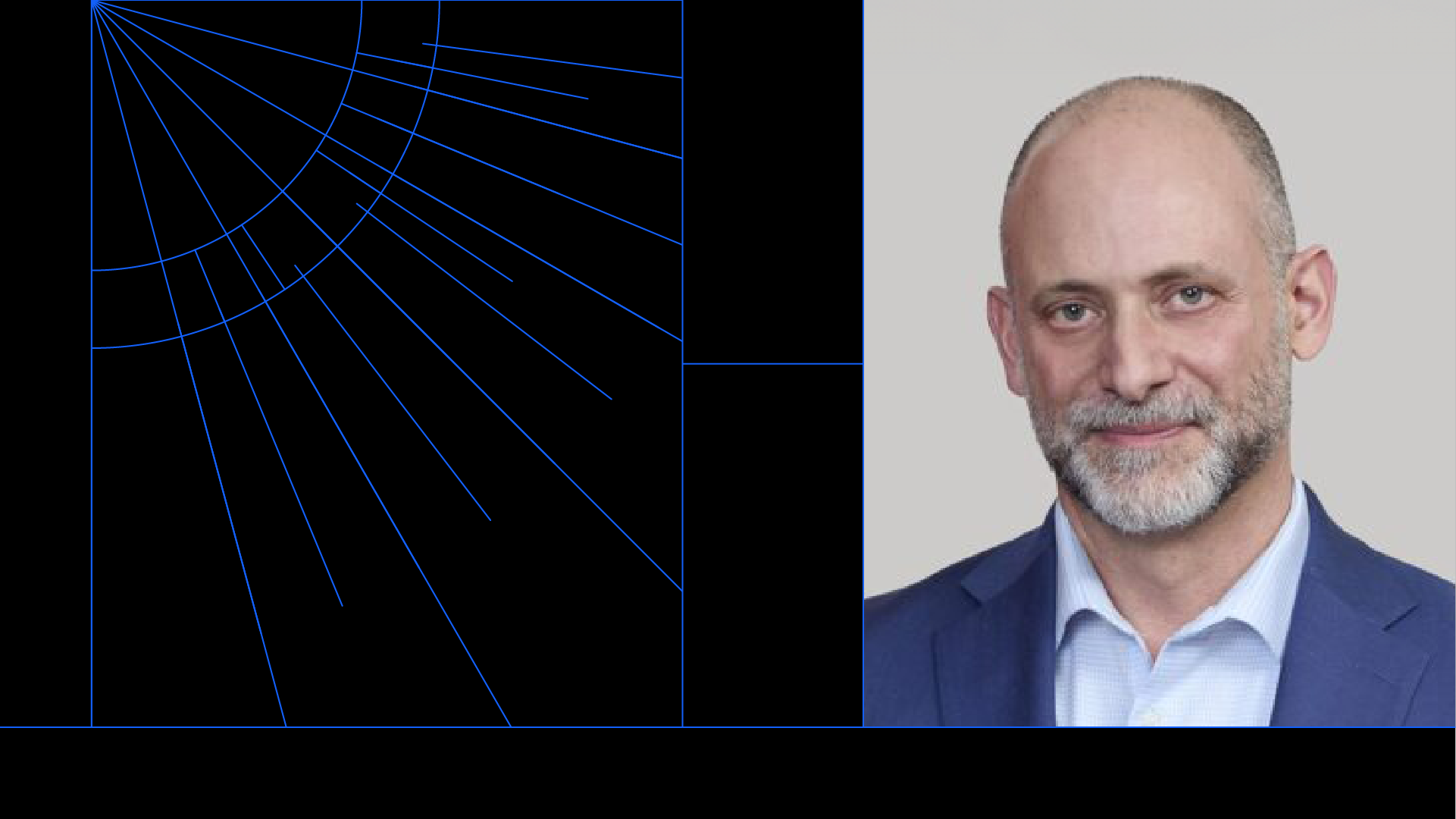
Tony Mazzocchi has spent his career challenging assumptions about who gets to make music and why it matters. After beginning his career as a professional trombonist, an unexpected opportunity to teach middle school band in Brooklyn transformed his understanding of what young people are capable of when given the right resources, opportunities, and expectations. Today, as President and CEO of Kaufman Music Center in New York City, he is working to make music an essential part of education and community life, expanding access to meaningful creative experiences for people of all ages.
In this episode, Tony joins Monica Holt to explore why artistic excellence and accessibility go hand in hand, how music develops human capacities that are increasingly valuable in the age of AI, and what it would take to make arts education a core part of every child’s learning experience. He also challenges arts organizations to rethink what it means to be relevant, arguing that their future depends on demonstrating their value to the communities they serve, including people who may never walk through their doors.
Tony Mazzocchi: Relevance isn’t something an arts organization can just declare about itself. It’s something we have to earn. I think that our job is not to simply argue that society should value the arts more. I’m arguing that arts institutions must take responsibility for becoming more valuable to society, and there might need to be change within that organization in order to fulfill that mission.
Monica Holt: Welcome back to Arts Unscripted: A Capacity Podcast. I’m your host, Monica Holt. My guest today is Tony Mazzocchi, President and CEO of Kaufman Music Center in New York City. Tony was working as a freelance trombonist in LA when he took a last-minute job starting a middle school band program in Brooklyn. He had no teaching background and as many as a hundred kids in one room. 10 years later, that became one of the best band programs in the city, and it taught Tony that talent is everywhere; opportunity isn’t. Cut to today at Kaufman Music Center where he’s working to close that gap. The center combines performance and education under one roof, including the special music school, a tuition-free public school built around music. We also chat about why making music together matters more now than ever in the age of AI. And Tony argues that it’s up to arts institutions to prove their value to the public, even if that means changing how we work. Let’s jump in.
Tony Maazzocchi, welcome to Arts Unscripted. Thank you so much for being here with me today.
Tony Mazzocchi: It’s great to be with you, Monica.
Monica Holt: Well, I’m thrilled. I would love to just jump in and start because what I have learned is that you first encountered the trombone when you were seven years old. And when I think of the trombone, it’s not a small instrument. And when I think of a seven-year-old holding a trombone, that paints a rather particular picture. So what do you remember about this first encounter with this beautiful instrument?
Tony Mazzocchi: Well, I’ve rarely heard of it described as a beautiful instrument, so I really appreciate that. So many trombone jokes. But yes, it’s a little rare that I started that early because we don’t see that happen very often these days, even though we need to see it happen more often. And it was rather large for my small body, but I remember that it was introduced to us in the third grade for us to choose it for the fourth grade. And I was fascinated by it to begin with. And then when I canvased my friends and realized that none of them had chosen it, it even made me want to do it more. And I’m just really thankful that it was this option. Music was not a part of my life. I did not have a family of musicians. This really came to me through the public schools, and I remember the excitement around all of it. It’s really easy to remember that actually.
Monica Holt: I love hearing that story. And the way you said it, choosing an instrument in elementary school for so many of us is this formative memory. And I worry. I worry about how prevalent that still is these days and how all of us who are now in roles that really tie back to arts education in some way feel this responsibility to make sure that as many kids have that opportunity as possible. Brass instruments at a young age are a little tricky, I would imagine, because also as you’re growing up, your breath power and just the way you need to be thoughtful about how you’re manipulating both the instrument and also the muscles you need… What was your memory then of growing with the instrument? And I’m curious if you feel like there are life skills now that you feel like you developed coming out of playing the trombone as a kid.
Tony Mazzocchi: Well, first, to the brass instrument and little people, the trombone is a little unwieldy because it’s just so ridiculously large compared to the size of us, but it is possible. And I think the goal from the first year was really to just develop a joy for it, even though here you are picking something up, you’re not able to really accomplish much. And then through repetition and through trial and error, you’re able to get these small rewards of first making a sound, putting two notes together, playing in an ensemble, and then the reward of being part of something larger when we all got together as a full band. I mean, you’re sitting there like, “Holy cow, here are all the instruments in one place and we’re about to do something together.” And making mistakes while everything is going with or without you and sitting in front of people under pressure and having to do that type of thing is pretty extraordinary actually. I would argue we all need a little bit of that.
Monica Holt: Absolutely. There are just so many skills that even for someone who doesn’t proceed with a life in the arts, arts education and being tied to creativity, it’s the beginning of how you interact with others and imagine and create, and the thoughtfulness needed is so paramount. When did the music go from something you enjoyed or were happy to be participating in to something you thought about maybe building a career around?
Tony Mazzocchi: Well, it happened rather late. It was really when I was a junior in high school. I went to a summer music camp, Interlochen in Michigan, and I was struck by a few things. Number one, I was amongst all of these people where music was just so focal to their lives. And for me at the time, it was something that I happened to be pretty good at and I was getting a lot of attention for being good at it. But when I was around all of these people who, by the way, played better than I did, took this more seriously than I did and had aspirations that I didn’t even know existed, my eyes became open and I came back to my senior year of high school and I said, okay, I did not realize that this is something that I could pursue possibly as a career.
And I still didn’t know if I wanted to do it or not, but I knew that I had to find the right environment to dive in headfirst in order to see if I wanted to do that. And I went to the Manhattan School of Music Conservatory in order to find out whether I liked it or not, because I knew if I went to a liberal arts college or university with a music program, I would be far too distracted by all the other things that were possible to do. I was very passionate about visual arts. I enjoyed writing. I enjoyed all of these things, and I knew that I had to focus with all my mind on one thing in order to determine whether I should do that or not. And it was a twisty turvy kind of self-realization.
Monica Holt: Yeah. Well, and so you attended Manhattan School of Music. You went on from there to have a career in performance, but at some point there was a shift into music education. What prompted that after being so intensely trained for a performance focused career?
Tony Mazzocchi: Yeah. Well, it was a total accident. I was living in Los Angeles, freelancing as a trombonist, and really finding success doing that and really kind of matching my identity to what my dream was. And a lot of things had me yearning for New York where I’ve really grown up. First of all, I just felt like a little bit of a stranger in a strange land in Los Angeles. I know a lot of New Yorkers feel that way. And I had met my girlfriend — who’s now my wife — who was living back in New York City. So it was a conundrum because I said, “Okay, I’m really engaged in pursuing the dream out here. I’m doing really well. I’m starting to make a living, but I want to go back to New York City and I’m not going to be able to make a living playing.”
Monica Holt: I see.
Tony Mazzocchi: And a friend called me up. He was at a barbecue with a teacher who knew this principal who wanted to start a middle school band program from scratch in the heart of Brooklyn. And he said, “Look, I know you want to come back. I don’t know if this is for you.” And I just couldn’t even get my mind around it. I said, “Yeah.” I was thinking more like subbing on Broadway, but I spoke to the principal. She gave me 12 hours to think about it because school started —
Monica Holt: Oh my gosh.
Tony Mazzocchi: Yeah, it was the end of August. School started the next week, and there just happened to be the ingredients in New York City that there was a provisional license which allowed people to just walk into a job and get the certification later. Otherwise, I didn’t have a music ed degree. I had no idea how to teach in a classroom. I said, “You know what? I’ll do this for a few weeks or a few months while I start freelancing again.” And I kind of led a secret life because I didn’t want to come back here and tell people that I was a middle school band director. I could not get my mind around that as my identity. And I did. I played professionally at night, got back on the scene, but really fell in love with teaching and ended up doing it for a decade and it ended up being my life’s work and my life’s direction from there.
Monica Holt: I would love if you would share a little bit about that time for you. What was it like to walk into a school and start a band program? Because that’s not a perspective we get very often.
Tony Mazzocchi: Well, it was absolutely terrifying. As a matter of fact, the first year I walked to school, I just had this complete knot in my stomach. We had up to a hundred students in a small classroom, some of them sitting on the radiators and on the window sills, and none of them had ever touched an instrument or read music before, and that was my band. And I had to teach them all of the band instruments from scratch while they all sat in the same room: flute, clarinet, sax, oboe bassoon, French horn. I didn’t know how to do any of that except for how to put together a trombone. They completely owned me. I had no classroom management skills. When they quickly realized I had no idea what I was doing, I just got absolutely destroyed by these kids. They ran wild. We had a lot of behavior issues and it was really tough.
And I just went home every single day, called my friends, [and said] “Show me how to put together a flute. Show me how to make the first note. Show me how to do this.” And by the end of the second year, I kind of found my bearings, but I will say that I approached this in a very different way than I approached at the end, which was: number one, I did not have a high expectation of what a middle school band could or should sound like. And I did not have a high expectation at all of what students from underserved populations could do in that scenario together. And I decided to search around the nation and the world for what a middle school band could actually sound like. I found a couple, and when I saw these students playing with fantastic posture, a beautiful sound, in tune, great repertoire, I could not believe it.
And I spoke to these instructors about how they did it, and I realized that it was absolutely incumbent upon me to figure out how to do that in my situation. Now, these were programs with money, they had small group pullout lessons, they had all these things. But I said, “Look, once you heard and saw what I saw, you can’t unhear it.” And I brought that back. And some of my students remember when I came back because they saw this fire in my eyes. I said, “Okay, wait, hold on a minute everybody. We’re starting over.” My principal and I worked to create the environment where we could get the most out of these students. And by that I mean we scheduled it five days a week. It was equalized in the curriculum. It was resourced financially, and it was just an inherent value that this was going to happen.
Once we created that environment and those circumstances, all of the students rose to the occasion. And of course, I had to rise to the occasion as well. And we created one of the best programs in the city, and those aren’t my words. Attendance rates went up, academic outcomes went up, and students from all backgrounds — socioeconomically, racially, culturally — went on to do these incredible things in the school, and we built this entire community around it. And this idea that talent was for some and not others, and that this musical rigor and training was only for a select few was completely turned on its head. That just changed my worldview forever. It changed the way I approached the rest of my life. And I realized that there are these myths that exist that are hardwired into all of us because of the way we’ve built our education system and because of the way we’ve built our arts ecosystem, that I wanted to spend the rest of my life trying to dispel those myths.
Monica Holt: Yeah. Well, and you’ve gone on and worked with young musicians in many different settings at Montclair State University, at Kinhaven Music School… Did you start to get a sense of what you wanted to build towards quickly as you were going through each of these schools and their programs, or were you still in an information-collection phase as you were looking at different programs and seeing maybe what success really means in an environment like that?
Tony Mazzocchi: Well, I’m always acquiring information, but at the core of it, I realized one of the greatest mistakes we’ve made in education is separating the acquisition of knowledge from the development of the human being, especially in this hyper-accountability model of education in the early aughts. We were spending an enormous amount of time talking about what students should know and not nearly enough time talking about who we want them to become. But I knew that through — Because I saw it with my own eyes, I knew that music developed capacities that are just fundamental to being human. And in the public schools, at Kinhaven, at Montclair, all of these things that we talk about, whether it’s creativity, empathy, communication, judgment, happens when anyone plays in an ensemble, constantly making decisions, listening or interpreting, doing it in real time with human beings. So even though I was holding people to the highest artistic expectations, the most important thing that I saw that music was teaching was not necessarily how to become a musician, it was really how to become a human being.
And I realized that because we’ve all graduated from the same educational system that has devalued or othered the arts, that we had to spend far more time out of the classroom making sure that we’re articulating the relevance of it to our friends who are not bad people and they’re not totally misguided. They just don’t know any better because music was always presented as an extra or a special in their life as well.
Monica Holt: Yeah, that’s right. And what we’ve been talking more and more about in the arts and culture space is the act of human beings being together, learning together, developing those skills at a young age we know is of critical importance. It’s also hard for me not to think about that in the context of all of these other conversations we’re having about what our relationship with technology is, and the age of AI… and even on major streamers, artificially-created music that is largely just based on existing libraries of music. Can you talk a little bit about what happens when two musicians are playing together in real time that we at least have not yet seen replicated meaningfully by a machine?
Tony Mazzocchi: Yeah, well, I think about that a lot. I spent much of my life performing, but when two musicians play together — or more — something extraordinary happens. They’re communicating without words, they’re anticipating each other’s decisions and adjusting to one another and creating something that neither could have created independently. When somebody plays a phrase differently or it takes a little more time, suddenly both have to respond in a way they maybe hadn’t planned. That’s what makes it human. I’ve been noticing that AI can produce very interesting musical material. It certainly can recognize patterns and generate some compositions and simulate aspects of expressive performance. But yeah, what interests me is not just the product, it’s what happens to the people creating it together. The value of making music isn’t simply that the music’s getting made, it’s what happens to us in the process of making it. And I think that that’s a very important difference to pay very close attention to in the age of AI.
Monica Holt: Yes, I agree completely. And of course the human stories that lead to the creation of the music itself, which then other musicians hold in their hands and recreate together in a way that only exists in that moment in time, that kind of ephemeral nature is something that I think we all need in our hearts and souls. And to that end, let’s imagine a future where we have dramatically expanded access to arts education for the next generation. So 20 years from now, what would you hope that impact is on society, not necessarily just about the arts?
Tony Mazzocchi: I certainly hope we’d have a society that’s more empathetic, more collaborative, more imaginative, and more capable of listening to one another. I think we’re living through a period in which the ability to coexist with people who think differently from us is becoming very important, and music offers the best model for that. In an orchestra, you don’t need everyone to play the same thing. Individual voices retain their identity, but they learn to work together towards something more meaningful. I’ve seen what happens when children spend years practicing that.
I mean, imagine a generation of business leaders and teachers, elected officials and parents who’d grown up listening, collaborating, taking creative risks, understanding that individual success was connected to the success of others… That would have enormous implications far beyond the arts, and that’s what I spend time thinking about. So my dream is not a society with more professional musicians, it’s a society shaped by more people who have experienced what it means to make music.
Can you imagine a meeting at the United Nations where all the elected officials have to sing in a choir together before they get down to business?
Monica Holt: I would love to imagine that. Well, all of this leads into where you are currently. So you are at the Kaufman Music Center. Well, I should stop because for those who aren’t familiar, would you tell us a little bit more about Kaufman Music Center?
Tony Mazzocchi: Well, this center is an extraordinary institution in New York City right here on the Upper West Side, one block north of Lincoln Center. It’s a total musical ecosystem. We bring together professional performance, education, community engagement under one roof. We have three major pillars, if you will. There’s Merkin Concert Hall. We present extraordinary artists, very innovative programming. There’s the Lucy Moses School, one of the city’s longest standing community art schools serving children and adults across generations. And then there’s Special Music School, which is a public-private partnership with New York City Public Schools, a tuition-free partnership where music is integrated into the daily academic experience from kindergarten through 12th grade, and we are the only K through 12 public school in the nation like it. What makes us particularly special is the relationship among those programs. A young student can study an instrument in school all day and then encounter extraordinary professional artists, perform on a world-class stage, and grow up in an environment where music is just an integral part of life.
And we’re increasingly taking that model beyond our walls. A couple weeks ago, we welcomed the inaugural kindergarten class at PS 149 in Harlem, another partnership of us in New York City Public Schools, bringing the Special Music School model into the foundation of this public school. And I think that’s where our future’s becoming really exciting. We’re not just a music center that provides extraordinary experiences. We are demonstrating what becomes possible when music is treated as essential to education and community life.
Monica Holt: That’s exactly right. And so as president and CEO of Kaufman Music Center, you obviously have a story that I think naturally leads to an organization like this one. I think what I’m struck by is this idea that creativity is universal, but sometimes access to those creative opportunities aren’t. Could you talk a little bit about that idea of creating greater access to creativity in a more universal way?
Tony Mazzocchi: Well, first of all, I firmly believe that creativity is a fundamental human capacity. I believe we are all born creative and that the system has perhaps taught that out of us over time. Creativity does not belong to a particular socioeconomic group, a particular neighborhood or kind of student, but opportunity has been distributed very differently, and that’s something that we have a responsibility to change. And so at Kaufman Music Center, I think you can see this philosophy operating in different ways. Again, the Special Music School. Children from all around receive an extraordinary music education within a tuition-free public school. We create opportunities for people across all ages and abilities at Lucy Moses, including through financial assistance and community partnerships. PS 149 in Harlem is a particularly meaningful example. And so I just believe we shouldn’t have to discover whether a child has musical or creative potential by first discovering whether their parents can afford lessons. Our responsibility is to build systems that make opportunity more universal.
Monica Holt: Absolutely. And you mentioned the Lucy Moses School, and the Lucy Moses School, as you said, serves learners of all ages. And so I’m curious about what you notice when adults either begin to make music — or perhaps they’re returning to make music — what you are seeing from that lens, and maybe if any of the benefits that we’re talking about with young people, is that still possible when you are an adult coming to music for the first time or the first time in a long time?
Tony Mazzocchi: Well, one of the most beautiful things about adults engaging with music is it reminds us that the creativity doesn’t have an expiration date. I think when an adult begins studying music or returns to an instrument after decades, they’re giving themselves permission to be curious again and to be a beginner and to make mistakes. And I think that’s not something that adults experience frequently in their professional lives. And there’s an extraordinary social dimension, right? There are these opportunities for connection again. We believe the arts are essential and they’re part of what makes life worth living at every stage of life, and that’s an incredibly important part of our mission.
Monica Holt: Yeah. I love the idea of how we can encourage folks to understand that, that you don’t have to stop exploring your creativity. You could work nine to five at a desk all day and that is your career, but there is still creativity to explore beyond that, and it still has all of these benefits, even if it’s just creating a new connection with a new person. So I think that’s a beautiful piece about this work. You spent so many years working directly with students before moving into more of an institutional leadership position. I’m really curious what that transition has felt like over time. What of your experiences in the classroom do you think shape the way you approach those kind of organizational challenges or problems that are brought to you to solve?
Tony Mazzocchi: I’ve spent so many years in classrooms and rehearsal rooms, and it certainly has fundamentally shaped how I approach leadership. I’ve just seen firsthand what happens when music changes someone’s life, and then you have to go back as a leader and try to operationalize how you get more people to see that and build around that idea. That experience that I’ve had, it changes the way you think about institutional priorities. When I’m sitting around with my board discussing budgets and strategic plans, it’s easy to become consumed by the mechanics of running an institution. I know I have, and those things matter enormously, but they’re not the reason the institution exists. The reason it exists is what happens to the people who come through its doors. And I think educators develop a particular kind of leadership instinct because of that. You learn quickly that you can’t simply tell people what to do.
You have to understand what motivates them, what obstacles they’re facing, and how to create an environment in which they can succeed. I just believe that institutions must be organized around the people they’re meant to serve, not the other way around.
Monica Holt: Such an important lesson. And it’s funny, you talk about how as a teacher, you learn that you can’t just tell people what to do. An important lesson for all of us, no matter what career we’re in.
Tony Mazzocchi: Yeah, it just doesn’t seem to work.
Monica Holt: No, that’s not quite the way into people’s hearts and minds. But as I’m thinking about — and I’m sure you’ve encountered people like this before who say, “Oh, I’m not an arts person,” or, “Oh, I’m not into that,” or X, Y, Z. Given that mindset, where do you start in those conversations? What tends to resonate for you if you meet someone who’s a little bit saying, “I’m not interested” or “It’s not my thing”?
Tony Mazzocchi: It’s an important piece of it because I actually center all of my work as a communicator around those people. And for every one of us who believes that this is for everybody and this is relevant, I can tell you there are hundreds who don’t. I always use my friends as the examples because most of my friends don’t think of themselves as an arts person. And of course, if they played an instrument when they were young and they didn’t sound good as soon as they got home and their parents who had the same thing happen to them said, “Yep, it just got handed down genetically, you’re not musically talented either.” That’s the myth we need to break. So I usually talk about things that matter to them. I don’t always talk directly about the arts at first. Sometimes if they’re a parent, we talk about our children and what kind of human beings they hope they’ll become.
If I talk to a business leader, we’ll talk about creativity and collaboration. If they’re concerned about the community, we can talk about connection, belonging and those kind of things. And suddenly we’re talking about experiences and human capacities that the arts are uniquely positioned to develop, and then the conversation changes. It’s no longer about convincing somebody that they should appreciate a particular art form. It’s about helping them understand how the arts connect to something they already value. I don’t think our greatest challenge is convincing people to love the arts. I think it’s helping people recognize how deeply the arts are connected to the things they already love.
Monica Holt: That’s exactly right. I’m also curious, given that so many of our listeners are currently arts administrators and whether they’re working at big performing arts centers or local regional theaters, whatever the case may be, they have an education division typically. They have education programs. Those education programs can be so deeply meaningful in the community they are in, but also not always necessarily get the primary attention organizationally at all times. I’m curious what message you might want to pass along to some of our listeners about what we all can be doing to be speaking to the importance of that access and impulse to creativity and how we can all be more supportive holistically.
Tony Mazzocchi: I think the first thing that’s really important is that arts organizations should not assume that they’re relevant just because we do amazing things. I think a truly relevant arts organization is an essential civic institution. It’s not just simply a place where they go see a performance or take a class. I mean, those are critically important, but we’re a place here that really needs to help shape the cultural, educational, and social life of our community and beyond. I think we have a responsibility to the broader public, including people who may never purchase a ticket or walk through our doors. So the question is, how do we take the extraordinary expertise that exists here in the organization and make it relevant to more people, more neighborhoods, more schools, more communities? That kind of impact is incredibly important. And I think artistic excellence and public relevance are not competing priorities.
Monica Holt: No, they’re not mutually exclusive. No.
Tony Mazzocchi: And I wonder if these institutions — We talk about relevance, and I think that we need to look in the mirror a little bit and ask ourselves what role we’ve played in the situation we’re in. Relevance isn’t something an arts organization can just declare about itself. It’s something we have to earn. I think that our job is not to simply argue that society should value the arts more. I’m arguing that arts institutions must take responsibility for becoming more valuable to society, and there might need to be change within that organization in order to fulfill that mission.
Monica Holt: That’s exactly right. As we think about that future and the change to come, what right now is giving you hope about the future of arts and culture in the US?
Tony Mazzocchi: Well, interestingly, I think two things are true at the same time with me. I’m very concerned about artificial intelligence and its place in education with our youngest citizens. And one of the things giving me hope is the very thing that concerns people right now, which is technology. It’s forcing us to reconsider some fundamental questions about what it means to be human. For such a long time, we’ve been constructing a lot of our educational and I would argue our economic system around the value of knowledge, efficiency, productivity, and now we’re developing machines that can perform these sophisticated tasks in those areas. So what’s left? I think we’re beginning to recognize how important creativity and empathy and judgment and imagination is. I think we’re starting to recognize how important human connection is. And that’s what arts education and the arts has been developing for generations. I see a lot of hope in the young people we work with and the extraordinary commitment of educators and artists around the country. So like I said, we just opened up a new public school in Harlem. I mean, that’s real progress, but my hope is that this moment we’re having in AI becomes a moment when we finally recognize the extraordinary value of human intelligence in all of its forms. And that could create a really remarkable opportunity for the arts if we are ready to use a shared language to talk about that.
Monica Holt: Wonderful. Well, Tony, we have reached our quickfire culture section. So as we wrap up, what is one piece of culture that you currently are obsessed with or loving right now? It can be a show, it can be something happening live on stage, a new piece of music, a TikTok trend.
Tony Mazzocchi: Gosh, there’s so much, but I’m going to be silly and just say I’m just finishing up Ted Lasso. I love it. I love it.
Monica Holt: Yeah, the new season is very special too. Okay. If you could go back in time, what live performance or event would you want to attend?
Tony Mazzocchi: I’m going to go with the Monsters of Rock Concert in 1988 at Giant Stadium in the Meadowlands of New Jersey. Now here’s why.
Monica Holt: Yeah, tell me more.
Tony Mazzocchi: So I am a hard rock and heavy metal head.
Monica Holt: Okay.
Tony Mazzocchi: And when I was growing up, I had very strict parents. I was not allowed to go to concerts. And all of my friends went to that concert. It was Van Halen, Metallica, The Scorpions. They were my heroes and I was not able to go. So I would go to that. I know, random, right?
Monica Holt: Yeah, but I mean, I love a first and a unique answer. So that —
Tony Mazzocchi: Yeah, I could have said the first performance of Stravinsky’s Right of Spring, but no.
Monica Holt: And that has been said. No, this is fun. What is one free resource that you think everyone should avail themselves of?
Tony Mazzocchi: Public library.
Monica Holt: It’s a classic. It’s a tried and true. We are here to support libraries.
Tony Mazzocchi: All the access to so many things are in the library. I haven’t been there in a while, so I don’t mean to sound like a hypocrite, but…
Monica Holt: No, it just means that you’ll go soon. This is my new favorite question. What is something that arts leaders are still afraid of that they shouldn’t be?
Tony Mazzocchi: Change. More specifically, questioning the assumptions around which their institutions have been built. I think we sometimes confuse preserving our mission with preserving the way we’ve always operated, and those are two very different things, and I’ve learned that the hard way.
Monica Holt: That is great advice and insight. Thank you. Our podcast is really built around this idea of collective joy and what that means to each of us individually. So I’m curious for you, when you think about the idea of collective joy, what do you think about?
Tony Mazzocchi: Well, of course, collective joy is one of the most extraordinary things that music can create. I have experienced it as a musician. I’ve experienced moments when an entire ensemble is completely connected, when everyone is listening, responding, and contributing and creating something together. But that sense of belonging and the sense that you’re part of something greater than yourself, where at the same time you haven’t lost your individuality in the process because your individual contribution is essential to what everybody’s experiencing. So I see this at Kaufman every day. I see this at Kinhaven where young musicians just live together, rehearse, perform together. I see it in audiences when they respond to a performance. Even tangentially, I experienced it here in New York City in the best way when the Knicks won the championship.
Monica Holt: Well, I was going to ask, when I talk to a New Yorker, I’m like, “When are we going to talk about the Knicks?” Because obviously that was a broadcast moment of collective joy for all of us to be a part of.
Tony Mazzocchi: Yeah, exactly. And it was the same thing, right? A bunch of individuals were part of something so meaningful, and I just think we need a lot more of that right now.
Monica Holt: Absolutely. And then one final question. If you could broadcast one message to executive directors, leadership teams, staffs, and boards of thousands of arts organizations today, what would that message be?
Tony Mazzocchi: Stop assuming the world understands why you matter. It’s our responsibility to demonstrate that every day. We need to move beyond asking people to support our institutions simply because the arts are important, and I think we need to start showing everybody how the work we do contributes to education, human development, community life, and the future of society. I hate to be melodramatic, but I actually believe that. And we need to be willing to change in order to make that happen. We have a responsibility. It’s not just preserving the institution that we’ve inherited, it’s to make these institutions indispensable for the generations that follow.
Monica Holt: That’s exactly right. Thank you, Tony. That was well put and I hope many will take to heart. Thank you for all of this. I so appreciate your time today.
Tony Mazzocchi: Oh, I’m so, so thankful. I’m so thankful that we have this time.
Monica Holt: Good to talk. More soon, I hope.
Tony Mazzocchi: Me too.
Monica Holt: Thank you for listening to Arts Unscripted. If you enjoyed today’s conversation, please take a moment to rate us or leave a review. A nice comment goes a long way in helping other people discover the show. And if you haven’t already, click the subscribe button wherever you get your podcasts. We’ve got some great episodes coming your way and I don’t want you to miss them. A huge thanks to our team behind the scenes, including Karen McConarty, Yeaye Stemn, Stephanie Medina, Jess Berube, and Rachel Purcell Fountain. Don’t forget to follow Capacity on Facebook, Instagram, LinkedIn, TikTok, and YouTube for regular content to help you market smarter. You can also sign up for Capacity’s newsletter at capacityinteractive.com, and I hope you’ll reach out to us and let us know what you think and who you’d like to hear from next on Arts Unscripted. I’m Monica Holt. Thanks for listening.
Tony Mazzocchi is a GRAMMY-nominated music educator, accomplished musician, author and visionary arts leader working to expand access to music while advancing a larger idea about the future of education: that schools must develop not only what young people know, but who they become. As President & CEO of Kaufman Music Center, one of New York City’s leading institutions for music education and performance, Mazzocchi is making the case that music should not be treated as an extracurricular privilege, but as an essential part of developing creative, collaborative, resilient and deeply human young people.
That mission has taken on new urgency as artificial intelligence reshapes education and the world of work. At a moment when technology can increasingly retrieve information, generate content and perform sophisticated cognitive tasks, Mazzocchi has become an outspoken advocate for education that places greater value on the capacities that remain distinctly human: creativity, judgment, empathy, communication, collaboration and connection. His work asks a fundamental question: What does it mean to educate a human being in the age of AI?
Kaufman Music Center’s Special Music School (M. 859), the nation’s only K–12 public school with music at the core of the curriculum during the academic day, provides a powerful demonstration of this philosophy in practice. Students receive intensive musical training alongside a rigorous academic education, demonstrating that artistic and academic excellence need not compete for space in a child’s education. Special Music School’s students have achieved extraordinary academic outcomes while developing within a community where listening, creativity, discipline, collaboration and artistic expression are woven into daily life.
Under Mazzocchi’s leadership, Kaufman Music Center is now helping extend elements of this model to a new community through SoTru Music School at P.S. 149 in Harlem, developed in partnership with New York City Public Schools. Offered at no cost to families, the program represents the first expansion of Special Music School’s arts-integrated approach to another public school community. The initiative reflects Mazzocchi’s larger vision: that access to sustained, high-quality music education should not depend on a family’s income, neighborhood, or ability to secure private instruction.
Mazzocchi also oversees Kaufman Music Center’s Pathways program, which removes financial and structural barriers to intensive music study for highly motivated middle-school students from communities historically underrepresented and under-resourced in classical music. Pathways provides private instrumental lessons, group classes, instruments, ensembles, performance opportunities, masterclasses and mentorship; creating sustained pathways through which young people can discover and develop their potential.
This belief in human potential has defined Mazzocchi’s career. Before becoming President & CEO of Kaufman Music Center, he served as Director of the John J. Cali School of Music at Montclair State University, where he developed new programs, expanded artist partnerships and advanced initiatives around access and innovation. Since 2010, he has also led Kinhaven Music School in Vermont, significantly expanding its programming, campus and financial foundation while creating new opportunities for young musicians. Earlier in his career, he worked as a professional trombonist and educator, experiences that continue to inform his belief that artistic excellence, collaboration and human development are inseparable.
His influence extends beyond the institutions he leads. Mazzocchi is an author, speaker, and national advocate for music and arts education whose work has been adopted by educational organizations in the United States and abroad. Through public writing, testimony, speaking and advocacy, he has increasingly challenged educators and policymakers to reconsider a quarter-century of educational priorities centered heavily on standardization and measurement and to ask a larger question about what schools are ultimately for.
At a moment when artificial intelligence and rapid technological change are forcing society to reconsider which human capacities matter most, Mazzocchi is not simply advocating for the preservation of arts education. He is demonstrating what a more human-centered model of education can look like, and working to make that model accessible to more young people.
His work reflects a simple but consequential belief: human potential is abundant. Our responsibility is to create the time, access, and opportunity for it to emerge.