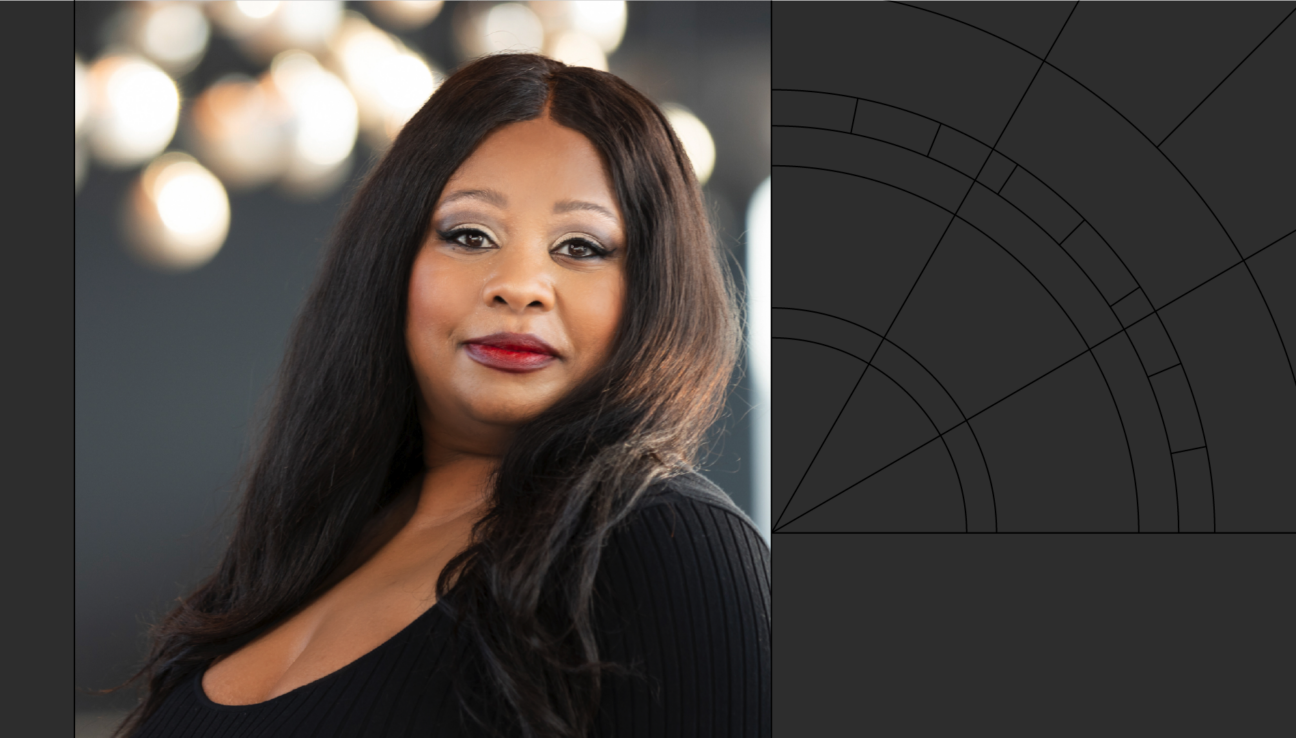
Michele Y. Smith, Chief Executive Officer of the Museum of Pop Culture
How do you build a museum around a subject that’s constantly evolving?

This episode is hosted by Monica Holt.


The arts help people feel, connect, and find the courage to act. How can we better harness that power—and communicate it beyond our own circles—to ensure the longevity of our field?
For Lisa Richards Toney, her connection to art is deeply personal. From finding her confidence through youth arts programs in Washington, D.C. to studying at Spelman College and working in arts education and management, she has experienced the many ways the arts give people a sense of purpose and possibility. Today, as President and CEO of the Association of Performing Arts Professionals (APAP), she brings that perspective to supporting the people who make live performance happen.
In this episode, Lisa reflects on how we can build new pathways to sustain our field, better communicate the civic value of the arts, and build mentorship across generations.
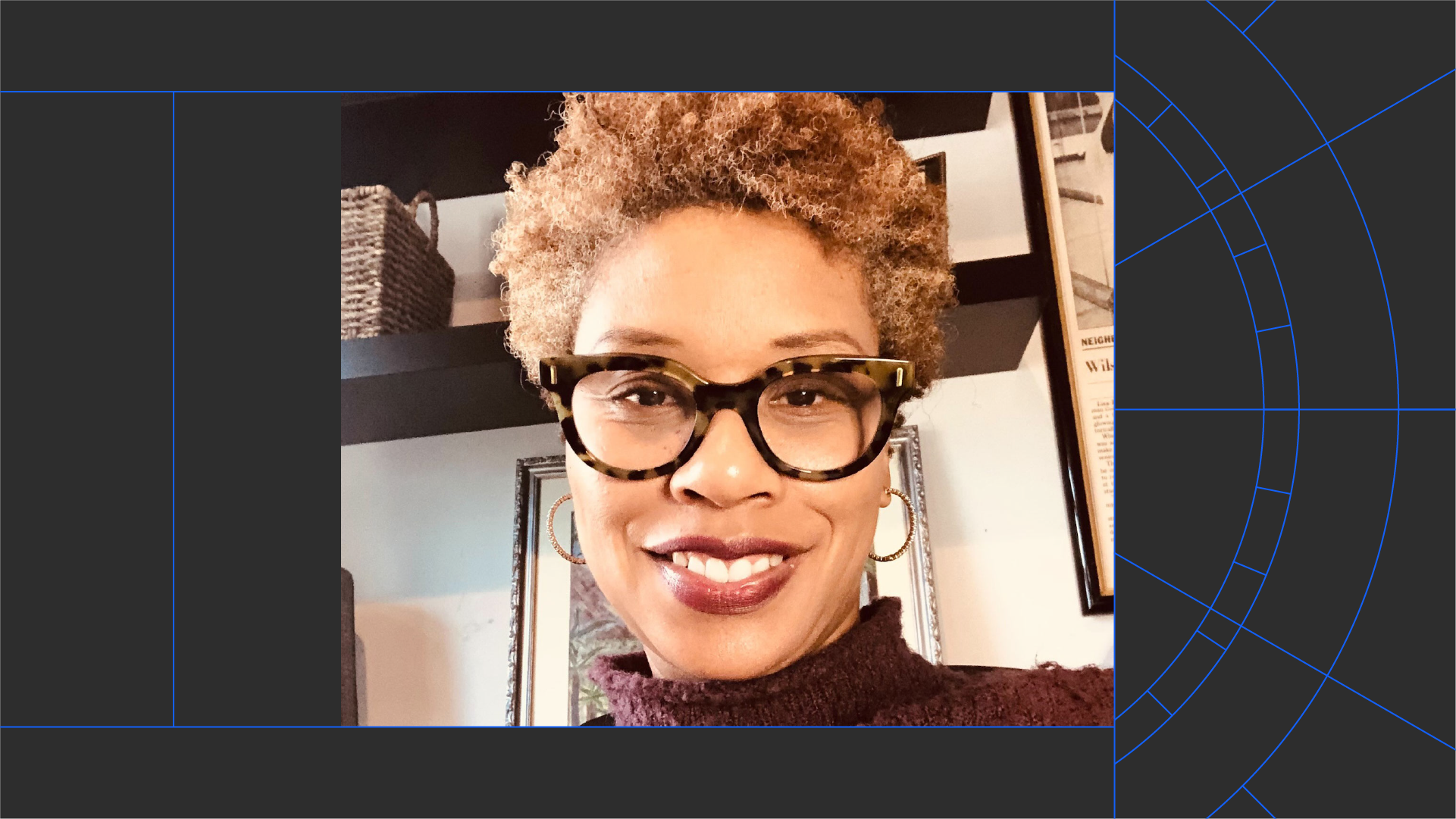
Lisa Richards Toney: The first order of business to me is to try to replace the fear with, well, what can I do? And what can I do to be at pace with this? And if you can shift your way of thinking, then even what looks like a loss, it’s just a new way of working.
Monica Holt: Welcome back to Arts Unscripted, a Capacity podcast. I’m your host, Monica Holt. My guest today is Lisa Richards Toney, president and CEO of APAP, the Association of Performing Arts Professionals. APAP turned 70 this year and its membership has now grown to more than 1,600 organizations. Every January, the APAP Conference in New York brings presenters, agents, managers, and artists together for over 1,200 showcases. I was so excited to speak with Lisa because I know her approach to change is to replace fear with one question: “What can I do?” When the ground shifts, she doesn’t dwell on it. And as a leader with a broad vantage point on our whole industry, she’s spending time looking for where value can flow back to the arts, from health and wellness to civic trust. Lisa reminds us that the organizations that have survived even on almost nothing have always relied on community and centers her conversation on those principles. Let’s dive in.
Lisa Richards Toney, thank you so much for joining us on Arts Unscripted today. Thank you for being here.
Lisa Richards Toney: Thank you for having me. It’s a pleasure to be here.
Monica Holt: We are so grateful that you’ve taken the time. The work you’re doing right now is truly of critical importance for all of us in the field and really anyone who cares about arts and creativity in our world today. And I’m looking forward to chatting a little more about you and also what has been on your mind of late. But we like to start each episode with a question about how you got to where you are and how did art first come into your life?
Lisa Richards Toney: When was it not? I mean, art was early on an expression that I was afraid to take, but I knew once I jumped into it, it would be kind of like a salvation. I have a couple of stories of me being really young and really shy and not wanting to do the thing. Like maybe when I was four or five, I was supposed to sing “the sun will come out tomorrow” on stage and I refused to go on stage and I stood in the wings and I was so scared. But I remember when I was six, I went to the Kennedy Center to see Annie. My mom took me and I was all dressed up in my sailor dress because that was what we did in the 80s. And I remember after the show was over, I was mesmerized and my mom’s like, “It’s time to go.” And people were leaving as they were leaving the theater and I couldn’t get out of my seat.
I was in awe of the flyover space. I was in awe of what I saw the orchestra doing once it broke down, that this was a constructed experience that we just had. And then there’s some person [that] comes on stage and seems really short in the midst of this big opera house stage and he was running everything. He was like, “Nope, that has to go.” And I was like, “Who is that?” And I said, “I want to do all of that.” And my mom was just like, “Okay, well we have to go now.” But I remember holding that in my body: “I want to, I want to, I want to.” And I think I kept it to myself for a long time. And what I would do is I would create these artistic moments in my home. I put on my Whitney Houston music, I choreographed a dance, I put all my cousins in a show.
We’d perform for family reunions, Sunday dinners at my grandmother’s house, all the things that we think of where little kids kind of make believe their world as they want it to be. So all of that was happening. And then it was when I was 12 years old, my mom noticed that I was still very shy and she said, “This can’t be, you have to get out of this.” So she put me in the DC Youth Ensemble. The act of doing the show was giving me a space to find a purpose and practice that confidence, a nice space to practice who you think you want to be and how you want to show up. And that’s what it was for me. And then after that, I tell you, I took off and I was never shy. No one would ever believe that that was my true story and it just built from there. But those were my first experiences that really put it all together for me.
Monica Holt: It’s beautiful that transformation that you walk through because that’s right that the shyness and stillness is sometimes so betraying of what’s really happening under the surface. And so for you to be able to identify that moment where you finally felt like there was a freedom or a break into yourself almost is so beautiful to think about. And when we talk about arts education, access to the impulsive creativity, these are the kinds of stories that are so meaningful. For you, Lisa, moving through that space through your teen years and then ultimately ending up at Spelman where you studied Theatre and English, but also spent a summer training at Alvin Ailey, which is wildly exciting, what was that time in your life like as you were kind of coming into yourself, but also starting to understand that there were both these onstage and kind of backstage arts management components to that big world that you had seen when you were waiting at the end of Annie?
Lisa Richards Toney: Those are such foundational years and it’s pretty defining. So I came into Spelman very privileged as a presidential scholar, and that meant that in addition to having a full ride for all of my education and everything that goes along with being a student full-time, I knew the expectations were really high of me because they said, “This young lady has promise.” And so whether it was Dr. Johnnetta Cole, who was the president of Spelman, [or] Dean Spence, they were always checking to make sure that that promise was right there steady. So that was very good because the scarcity of the arts experience is, are you really going to be able to make a career out of this? Prove it. Doubt, doubt, maybe, yes, you know. It’s like this rollercoaster of emotions around can I, can I not? And the excellence of Spelman College and the women leaders that I grew up amongst who said, “You got this and everything in you is made for this,” that’s what was poured into me.
So I started off as an English and Theatre major. I don’t know how that… I just decided to have two majors and I didn’t really realize the impact until senior year when I had two theses. And that’s just that. I was like, “What were you thinking? You are going to be writing for the rest of your life. You’re going to be writing in your grave.” So I loved all of that. It fed me in many ways: academically, intellectually, socially, spiritually, artistically. And I was also a dancer. I’d grown up dancing and in theater, I’d done all the things because the DC Youth Ensemble, we had to do it all. And I never had lost the idea that maybe just maybe I could be a professional dancer if I just kept working really hard. I went to Alvin Ailey American Dance School. It was a wonderful experience. There I met Judith Jamison, the illustrious… I remember she’s in the hall and I went up to her, “Ms. Jamison…,” and I had this whole ready speech. I remember she came in and looked at us in the class after I said it and I was like, “Oh my God, please don’t mess up.”
Monica Holt: That’s incredible. At that age also. Oh my gosh.
Lisa Richards Toney: I was like, “Lisa, do it. Do the thing. Percussive study, get it right. Make the leg — It has to be right.” Around the last days of the program, my ballet teacher said to me, “Lisa, are you going to stay with us? You have promise. You could stay.” And I said, “Well, I don’t know what that means. I have to go back to college.” And it was like, “Well, basically it’s up to you. What are you going to do?” And I remember this heat coming in my body. It’s the heat of nervousness, the heat of a decision I cannot make. And I said, “Thank you for the opportunity. I’ll think about that.” But what am I thinking about? Is it a contract? I don’t know. And it’s awful that young people — it’s like, well, what is provided with that?
And it’s not a fault of the teacher for saying that to me. She was probably just trying to get something started for me, but it also led me to think about, what is it about this industry and how we move through it that needs to have more care, more consideration, more thought, more trajectory about what this future is? What are we asking young people to truly invest in?
Most artists, especially as I grew up, nobody had time for that. They’re like, either you’re in or out. It was very cutthroat. And in some ways it still is. You just have to know. Opportunities don’t come how you want them to come all the time. They come how they come. And you have to be sharp enough to notice, to understand and decide, do you want to jump into things? Do you want to figure it out? But for some reason, I didn’t think that was the opportunity I should take.
I ended up deciding to go back to school, not really pursuing the conversation more because I’m kind of a planner, meaning I need to know what’s happening ahead and I knew I had to go back to school. And so I go back to Spelman College and even in a moment of despair, what was poured into me is “You’re right where you need to be. Whatever that was is not meant for you. The next thing is.”
Monica Holt: What’s meant for you is meant for you.
Lisa Richards Toney: That’s right.
Monica Holt: It’s interesting to hear you tell this story and think about what your mental state would’ve been at that time because a significant part of your own career then was dedicated to arts education, working with young people. And it feels like a really natural story about what would’ve drawn you to that work and how you are even now continuously trying to make a community think more about the care and thoughtfulness that you are describing right now. Can you talk a little bit about how those lessons — how you still think about that Lisa, even today in the work that you’re doing?
Lisa Richards Toney: Oh, all the time. I see the work that APAP does in my role here as president and CEO as a way of creating a wider funnel so that more people, more stories, more ways of working have a way to get through and land with some steadiness. I’m executing on that in a number of ways, but I’m constantly in that space. I mean, you’re right. When I left college and did some abroad work as a fellow with the Watson Fellowship and I interviewed 97 artists to tell the story of what their conversation is within their art and where does the art support it and where does it create tension for it? And where does the art support it is, in many cases, oh, the story I’m telling. It’s of my culture, it’s of my people. And then where does it counter it was maybe, oh, because it’s on a proscenium stage and now we have to charge for it and we have to market it. And these are the tensions that we have in an industry or anything once it becomes commercial. What is that departure from what you are?
So I was starting to learn about that and really get just firsthand accounts of that experience. That was my time in London. And then I worked for Dance/USA. I was a receptionist and I think that’s the most important person in the organization sometimes. Customer service is everything. I remember being at Dance/USA and I would see articles about different people or different issues and I would want Dance/USA to respond to it. And I’d say, “We should respond” and I’d have a whole point of view. And somebody said to me, “You are just the receptionist. Like, chill.” And I was like, “I am not just a receptionist. I have a lot to offer. But maybe in this job I am just a receptionist. Well, I just got to keep it moving.”
I never intended to stay a receptionist. It was a job that I could get, a job that paid me reasonably well at the time, and I was grateful for that as I thought about what my next step was. And then I went on to graduate school. I moved to New York and I was at NYU and I ended up doing arts education and arts management, but my primary was arts education. And it really amplified the work I had been doing. I was learning that it was more to the job than putting people on stage. It was being a counselor. It was being sometimes a parent. It was learning that there were gaps in young people’s learning where the work we were doing was a catalyst for them to make connections that they never were able to make because they could actually activate through their bodies, through different forms of expression.
So all of those things built how I see the world, I hope what I bring to the work I have now, what my intentions are, and how I look at people.
Monica Holt: Yeah. Let’s talk a little bit about now, because you became president and CEO of APAP in July of 2020. With all of those lessons in your head, what did stepping into the role at that particular moment really teach you about leadership when so many people were immediately looking to you for guidance, direction, and probably hope as well in that moment?
Lisa Richards Toney: There were so many lessons. I mean, I think one of the first was trusting oneself. Leadership people might say it’s lonely. It shouldn’t really be that way, but I know that’s to be true because so much of what that pyramid leadership is is that one point at the top. You notice there’s nobody else there. You know there’s nobody else to talk to. It’s top down. It’s a lot. So it can be very lonely, but understanding what you do know and being able to stand on business with what you do know. For example, I had to cut the budget in half when I first got there and I said, “Wait, wait, I don’t know enough yet.” But I had to figure it out. I had to know what I did know, what I knew about essential business operations, and I had to trust. And to be afraid is fine, but it’s something that I learned to do because I was afraid a lot when I was little. I would just go, “Fear, excuse me, could you stay over here? I have something to do.”
The second thing was building rapport quickly with the people around you. You can’t do things by yourself. So if it’s four people, if it’s 14 people, if it’s 24 people, establishing some baseline of “this is who I am and I want to know who you are because we got to get this done in whatever way it works for you” is essential. And I was able to do that. And then establishing the expectation that that’s how it was going to be.
The other thing I would say is not being afraid to make a mistake either, because the reality was that I didn’t know what I was doing, so I was bound to make many mistakes possibly. So I had to also find it in myself to be okay with a pivot. Okay, yesterday I said we’re going to do this. I’ve learned this new information. We have to do that. And to model that for people you’re working around, it’s okay to make a mistake, but at least own it and don’t have a whole bunch of excuses either, just period. I did it, I was wrong, period, I’m moving on. And I learned that in my arts work. The director says do this. If you don’t have it, state your case and figure it out and come back correct.
Monica Holt: Exactly.
Lisa Richards Toney: And the other thing I learned, which was very comforting, is that I’ve been inside of arts organizations who had millions of dollars and those who had a dollar. And those who had a dollar are still around. They haven’t shut down, they haven’t gone bankrupt, but they have a different currency and the currency is community. The currency is family. They rally together. We do things for free for one another. We barter services. That’s how we survive. People who have not had a lot of resources, they’ve been doing this forever. And I’ve been a part of that just as much as I’ve been a part of something that’s so professionally finished, if you will.
Monica Holt: Sure. No, I think all of the leadership lessons that you just walked through, it’s fearlessness, but I appreciate what you say that you have to learn to live with the fear. It’s not just going to go away. It’s how do you live a life that isn’t clouded by it? You have to know that sometimes you’re going to make a mistake and that also it is okay to keep moving through that too, particularly for first time leaders, first time CEOs. I think that is a hard lesson that a lot of folks who probably have been told to come correct at every stage of their career need to be able to live with both the fear and the potential for failure and just keep going and trust the community around you, trust what you’re building. I think those are beautiful lessons, but I can imagine coming in in that moment, the weight of that felt mighty and I really commend and applaud you for all that you were able to move through.
It occurs to me that it is possible there are listeners who may not be as aware of APAP as I am or some others that I might have worked with. Would you mind just talking a little bit about the role of APAP, the ecosystem that it serves and leads, and just maybe a little background on the organization?
Lisa Richards Toney: Sure. APAP celebrates 70 years this year.
Monica Holt: Ooh, congratulations.
Lisa Richards Toney: Most people know us as an annual conference that provides the environment for the presenting, booking, and touring industry to really flourish. So we have an expo hall with vendors who are selling shows, and then we have showcasing around the city of New York as well as within the hotel space that we use, sometimes over 1,200 showcases. So showcasing is a big deal, that expo hall is a big deal. And probably the third big deal is the learning, professional development sessions, the activation of our leadership programs on site, awards, events and so forth… Ways to celebrate ourselves as an industry. We as a staff team are pretty much gearing up for that every day. But in addition to that, I have made a charge to really understand the impact of our mission, which is what happens when that presenting community, which makes up the dominant group of our membership, goes back to their homes and actually presents said show that they may have purchased through APAP or with the support of APAP? And the impact that that has on its community from a civic trust point of view, from a health and wellness point of view, from an advancement of, “What does it mean for a community to be whole and a humanity to really take shape and be reinforced?”
And so that is also the work of us because we are also an advocacy organization. And so my job is to get out of the trees and look at the forest to be able to see where the trends are moving within that membership community, which is at this point over 1,600 entities, which on a good day is about 4,000 individuals in one space.
Monica Holt: Right. And that’s — just to be clear — that is artists, presenters, other cultural organizations. It’s a pretty broad view of the sector that you’re able to have from this vantage point as you’re thinking about trends and the health of the field, I would imagine.
Lisa Richards Toney: Yeah. Presenters, agents, and managers who represent artists, and then artists and then other entities. And the order is significant because of our founding. We were founded at the Wisconsin Union Theater, which is on the campus of the University of Wisconsin in Madison. Our founder, Fan Taylor, she believed that university presenters should have the same level of access to top tier talent as any other presenter working in the industry. It shouldn’t be this second tier thing that comes to universities. And then from there, there were other presenters that came into the fold: municipal, major ones, small, all the things. And then from there, the agents and managers were like, “Hello, you need us because we represent the artists.” And then they said, “Okay, fine. Let’s do agents and managers.”
And then at that point, it was Association for Performing Arts Presenters. The P was presenters and not professionals. And then my predecessor said, “We’re really talking about arts professionals and there’s a space in here for even more definitions than that.” That has been a great entree for me to do the work I’ve been doing, especially around who needs to be partnering with us, who wants to invest with us, who else do we need to be working with in this industry outside of ourselves to really do the work of now, which is transforming communities.
Monica Holt: Yeah, which is imperative to how we proceed and the kind of systems change needed in our field in this moment. And I know that that’ll also be part of… as you’re looking at APAP at 70 in the upcoming conference. But this shift in what presenting, booking, and touring are fundamentally for, and this… maybe it’s a re-understanding of what community really means. How do you think about what would have to change from where we are now to be most relevant, impactful, helpful, and even joyous for our future?
Lisa Richards Toney: Well, change is very tricky for lots of people. Most people, in fact. It’s actually quite scary. I encounter that frequently. People are losing their businesses. They’re losing the ways of working that they know to be true. The funding community has shifted. The ways in which they’re building an audience has changed. Audiences are demanding different things. They don’t have the same attention span. New things have taken the place of going to the live performance event. AI and technology have swooped on in. And the first order of business to me is to try to replace the fear with, well, what can I do and what can I do to be at pace with this? And if you can shift your way of thinking, then even what looks like a loss, it’s just a new way of working. That’s why I have to get my staff team really strong on the tree level because I’ve got to be able to look at the forest — because so much is shifting — and get ahead of it.
And what I’ve found is I am. So people say, “Oh, Lisa, when the funding shifted and federal funding, you don’t even seem upset.” I say, “I don’t have time to be upset. I’m a CEO. I got to figure it out.”
Monica Holt: I want to stitch that on a pillow. “I don’t have time to be upset.” Yes.
Lisa Richards Toney: So last season was a big deal of thinking around, what are three pillars that if the arts had to find new paths forward from its traditional model, what could that be? So at APAP, we investigated: what is there to offer us in health and wellness? What is there to offer us in technology? What is there to offer there in the concept of arts as civic trust?
Monica Holt: Yes.
Lisa Richards Toney: If you believe that the arts are essential to community, you believe that it’s a key part of our infrastructure to how we function, you believe that some of our arts institutions are the busiest buildings in some of our cities, you will understand that impact is the next point. We have a huge impact. Economic, it’s huge. And where does the impact come back to us? And so I remember spending this time re-engaging in: what are the values that art shows up in wellness? Oh, okay, social prescribing. Doctors are prescribing the arts for Parkinson’s, for dementia, for depression, anxiety. They’re actually sending scripts and saying, “Go to a show. This is going to pay for your ticket.” And insurance companies are reimbursing people that ticket fee. So that’s a real big deal. The biomarkers in one’s body are changing. The research is showing that in terms of long range arts exposure, your whole wellness picture is changing.
We already knew all of that. Now everybody else is trying to catch up, but the catch-up comes with opportunity and what we need to do is not just say “we already knew that” and then go on about our business. No, engage that because there’s a benefit that can come back to us that creates more sustainable opportunity for us, period. And so my job, and I tell my team, the litmus test is where is the value coming back to our industry? Are there new opportunities that emerge in this? And that has been exciting because everybody wants to know, “Well, what’s the benefit for me? Your job is not to be a health institution. Your job is to be an arts institution.” I said, “I know, but I certainly wish we wouldn’t bifurcate these things so much.”
Monica Holt: Yeah, I think that we have this opportunity to be helpful to solve some of the biggest problems facing all of our communities right now. But to your point, I think there’s this legibility issue between the knowledge we have about what it means for arts organizations to be that piece of civic infrastructure that we know is critical to thriving communities, but also for people who aren’t in our shoes or on our side of the curtain as it were, to know what that really means. I think people feel it in their bones, in their experiences, but I think we’re having some trouble translating it. I think we’re having some trouble talking the same language so that it doesn’t just feel like in civic conversation it is healthcare and housing and X, Y, Z and the arts. And arts are there for… It’s always in the “quality of life for the city” category. I’m like, yeah, well, all of this is quality of life. Why are we alive? And the arts have a role to play and are already playing that role in each of these different categories. It’s not just this separate cultural entity.
Lisa Richards Toney: That’s right.
Monica Holt: And I’m just curious how you are thinking about offering organizations that kind of vocabulary and language and encouragement even maybe to be a little louder, to be a little more clear.
Lisa Richards Toney: Absolutely. We’ve developed actually on our team a microsite. It’s essentially a site that discusses that. What are these pieces? We take our three pillars, we break them down. Where does the benefit flow back? Where does the return flow back to our members and to the field? What is the new vocabulary? We have a piece that really talks about — people say, “Oh, art’s a decoration or it’s a nicety,” but we replace it. We have a chart that goes, it’s not this, it’s this. It’s not that, it’s this. Ephemeralness is not going to help us get to the promised land. Permanency will. And the permanence of it is that it lingers. Where? And let’s examine what that is. Now the questions around democracy and people having a sense of purpose as citizens of our world is a big one.
People will say, “I’m interested in democracy. I can’t really talk to you right now.” And I said to them, “What does it mean to be someone who cares about democracy? It means someone who has the courage to stand up for something they believe in, but how does that develop? You have to have something that ignites a feeling in you.” I was at a show in Mexico last year in November. A lady behind me is in tears after the show and she said to me, “I’ve always known that I should feel a certain way about this issue, but I’ve never really experienced this issue, so I’ve just never had a chance to walk in the shoes of the thing. But yet seeing the shoes put before me and bringing me in as the character did, therefore allowing me to walk in his shoes, I actually feel the thing and I am just a mess now.” Because you are feeling the thing.
And what happens after that? Oh my God, it’s a whole new way of knowing. It’s an energy inside of you. And then you’re saying, wow, now I want to maybe do something. You can’t have action without feeling. You want people to stand up and fight for their rights. That’s an emotional call. It is heart work, and that’s what we do. And so that’s one of the stories I tell in hopes to help people understand when you say you care about democracy, the arts are a part of that because we are the fuel to help people remember who they are and how they feel. And if you didn’t know, now you know. If that artist did a good job and that director did a good job, and all those people who are employed to create this moment, they are helping to contribute to what we call a more just society where people are truly humane because they are in touch with who they are and how they feel.
Monica Holt: I want to sit with that for a minute. The heart work, it’s not often named as clearly as that because when we think about arts organizations and what is the business model and how are we performing, we get very far away from what you’re describing, which is to say the feeling leading to the knowing is at the crux of what our organizations, our artists are positioned to achieve and to be helpful with. It’s a beautiful story, the one that you told about the performance in Mexico. I spend a fair amount of time thinking about, how are we raising this next generation of organizers, leaders, thinkers, doers in our field? I’m curious from your perspective, for folks who might just be beginning their career in arts administration, who we want to keep close, who we want to stay in this field and grow with us and help us be catalyzed for what comes next, what do you think they need to understand most right now?
Lisa Richards Toney: It’s just a big question. In fact, I have a panel at a conference where I’m actually bringing on recent college graduates, seniors in college, and they’re going to tell us what do they want to know, what gives them pause about… Because I had all that when I was at a whole midlife crisis my senior year of college. I was like, “Well, how am I going to do it?” And I needed to know that there was some kind of trajectory of what I was supposed to do first, second or third, or I needed to know that it didn’t matter and that I was going to create my own because I had a very hard time distinguishing over what is the right kind of opportunity to dive into first, what was going to be… And I think those of us who are on the other side now can learn a lot from that as we start creating the olive branch to bring them in. And I mean that, the olive branch. Not like, “Figure it out.”
Monica Holt: Exactly.
Lisa Richards Toney: I mean, I have a whole vision of mentoring, which is 360. I think people who want to stay in the industry, who’ve been in the industry forever, need to have a mentor who’s like 25.
Monica Holt: Love that.
Lisa Richards Toney: And I’m going to finally get my staff to execute on that. They’re looking at me like… And I said, no, no, no, you should trust me on this. They’re like, okay. So we’re going to really work on that because the technology piece, the audience piece, audience versus fan bases, it’s very different. Social media, it’s a different thing.
Monica Holt: Oh, that’s a whole other conversation for us to have.
Lisa Richards Toney: Yeah, presenting versus promoting. And they don’t all have to be versus versus versus… but versus creates a little tension. So I think that that is important. But in terms of a person who’s new into the industry, I think you need to come in humble like you would do with anything because there’s a lot to learn and you need to understand as much as you are maybe asking to bring, you’re also learning to absorb because that’s just the give and take. Soak up everything you can, be strategic about who you meet with on your job, what you’ll learn. Stay out of the drama.
Monica Holt: Stay out of the drama!
Lisa Richards Toney: Stay out of the drama. Just stay out of it. Find a way to meet with the people who you’re working for. Be transparent because you want to learn. You’re trying to figure out how the work you do shows up on the other side.
Monica Holt: Exactly.
Lisa Richards Toney: When I was at the Kennedy Center, I was a fellow there. I was very fortunate to have been selected as a Vilar Fellow. It’s now DeVos Fellowship. And I can remember being assigned to youth and family programming and being told that essentially I was shadowing what would be like a company manager role, but then it was like the person that we brought in as company manager actually can’t do all of this, so we really need you to pull it up. So somebody says, “We need you to take leadership.”
And I remember intentionally playing my cards really cool. I said, “I’m going to do a daggone good job and be cool about it.” So I would do all of my work. I would ask the person I was working with, “Do you need anything for me to help you with?” So I tried to be helpful. I remember one time going, “Wow, that was a lot.” I was in charge of all these contracts. It was hundreds of kids. And then it was a Debbie Allen show. It was like Pepito stories. It’s like millions of kids everywhere. And I love kids, but oh my God. And they’re under 18, everything has to be… all the things.
And I remember being in rehearsal once and I think she said something like, “Who’s in charge of these contracts?” I thought something was wrong. I was shaking in my boots. I said, “If I did done something wrong, it’s over.” I was like, “I am.” I just had to stand on business because if it was wrong, it was going to be wrong. She said, “Well, good, because nobody’s complaining to me. Something must be right. Who are you?” I was like, “Oh.” And then I had the courage after having that kind of positive reinforcement to say, “Ms. Allen, could we maybe have lunch or just coffee? Just coffee, so that I could chat with you because I’ve really been excited that I had this opportunity to work with you, but I also know what you’re doing in Los Angeles and I’d like to learn more about your school and what you’re working on.” And she said, “Okay.”
I remember having my coffee. I would just tell her what I though because I talk a lot and I was like, “I love what you’re doing at your school, but I have some questions for you. Are you thinking about this and what about this?” And it was all business model and I had all these questions and I didn’t know it at the time, but I think I overwhelmed her.
Monica Holt: Sure, of course.
Lisa Richards Toney: She called the Kennedy Center to speak with me. She said, “All those things you talked to me about, I need you to come out here and do it because child, I got to go to China and I don’t have time for all that stuff, but you got me convinced that I’m supposed to be dealing with all this stuff and I want my business to be successful.” I said, “Are you offering me a job?” She said, “Yes, if that’s what you want.” I was like, “Well, okay.” It was just like that.
Monica Holt: Incredible.
Lisa Richards Toney: I went out there and I stayed and I learned so much and I was humbled to my knees because one of the things I learned very quickly was it quite doesn’t matter how smart you are, you have to be able to work with people.
Monica Holt: Yes.
Lisa Richards Toney: Go figure. I knew that intellectually, but I’m walking into an existing institution that has an existing way of doing things, and here I am, a brand new person, first person really occupying an executive director role. People are naturally like, “Who are you?” And so you’ve got to first build trust and you have to learn that what you know will come out in time and it’s not important right now.
The most important thing, like the first 90 days, is just trust, and I learned that. The only thing you can control is yourself. So you have to decide, how are you going to interpret what’s going on? And how are you going to give to it so that it makes it better as opposed to coming in, not knowing people, and telling them, “This is how I think it should go.” People look at you like, “Who are you? Go sit down somewhere.”
Monica Holt: No, exactly.
Lisa Richards Toney: So I think that’s a really important lesson for a lot of people to just know that there’s a lot of stake put in how smart you are. What do you know? But again, this goes back to what do you feel? And when you bring feeling first, it opens a whole new door and you can do almost anything.
Monica Holt: Absolutely. Well, we are coming to the end of our time together. And so for my final question, our podcast and Capacity are really built around the idea of collective joy. What right now does collective joy mean to you?
Lisa Richards Toney: Collective joy? Well, I guess collective joy to me means there’s a baseline of understanding that no matter what, we’re going to choose joy. So there’s some kind of shared agreement that even if one of us goes below zero, we have to bring up people to get to there and sometimes we have to do the give and take to get our space back to that base of joy.
Monica Holt: I love that. Well, and I also think about the spaces you create and thinking about APAP in January and the celebration and the conversations there, that is a place where I often feel very refreshed, renewed, and brought into a space of collective joy. And I am grateful for all that you and your teams pour into making that happen. Lisa, this has been fabulous. A first of many conversations, I think, because we have a lot to come back to over the next several months. But in the meantime, thank you for your generosity of time and spirit. This was lovely to have the time with you.
Lisa Richards Toney: Oh, thank you so very much. And I would be delighted to come back. You just say when.
Monica Holt: Okay, great. Famous last words.
Thank you for listening to Arts Unscripted. If you enjoyed today’s conversation, please take a moment to rate us or leave a review. A nice comment goes a long way in helping other people discover the show. And if you haven’t already, click the subscribe button wherever you get your podcasts. We’ve got some great episodes coming your way and I don’t want you to miss them.
A huge thanks to our team behind the scenes, including Karen McConarty, Yeaye Stemn, Stephanie Medina, Jess Berube, and Rachel Purcell Fountain. Don’t forget to follow Capacity on Facebook, Instagram, LinkedIn, TikTok, and YouTube for regular content to help you market smarter. You can also sign up for Capacity’s newsletter at capacityinteractive.com. And I hope you’ll reach out to us and let us know what you think and who you’d like to hear from next on Arts Unscripted. I’m Monica Holt. Thanks for listening.
Lisa Richards Toney has led the Association of Performing Arts Professionals (APAP) as President and CEO since July 2020. With more than 25 years of leadership in arts and humanities organizations, she has demonstrated a remarkable ability to guide institutions through transformation and growth. Under her leadership, APAP navigated the challenges of the pandemic, launching cutting-edge virtual conferences, member-centered initiatives like the Real Talk in Real Time series, and a five-year sustainability plan to future-proof the organization’s impact.
Lisa thrives on innovation and reinvention, consistently finding ways to meet the changing needs of the performing arts field. She challenges traditional models by drawing inspiration from outside industries, asking, “What can we learn as we build forward?” Her vision for APAP emphasizes creating value for members and positioning the organization as a servant-leader dedicated to advancing the performing arts ecosystem.
Before APAP, Lisa made her mark as Executive Director of the Abramson Scholarship Foundation, where she expanded professional development for scholars, and at the DC Commission on the Arts and Humanities as Deputy and Interim Executive Director, advocating for D.C.’s vibrant arts community. Earlier in her career, she served as Director of Writers and Schools at the Pen/Faulkner Foundation and was the inaugural Executive Director of the Debbie Allen Dance Academy, where she combined artistry and strategic growth.
Lisa’s career reflects her philosophy of reinvention as an art form. From her beginnings as a dancer to her transitions into arts education, administration, and leadership, she has consistently leveraged her multifaceted experiences to create meaningful impact. She credits early inspiration from mentors like Carol Foster, who encouraged her leadership at just 14, and formative training at Alvin Ailey School, which sparked her drive to pursue new ventures.
Lisa believes in the power of connection and collaboration. “We all need safe spaces,” she reflects, “to test our ideas and build confidence.” Her work ensures that APAP remains relevant and responsive to the evolving needs of artists, educators, and organizations, fostering a field where everyone can thrive.
A noted writer and speaker, Lisa authors the monthly column “A View From Here” for International Arts Magazine, where she shares insights on pressing issues shaping the performing arts field. She has brought her expertise to audiences across regions and cultures, from China to Madison to Romania, highlighting industry innovation and sector-wide trends. Recognized as one of “The Next 50” by the Kennedy Center and appointed to the NYC Live Entertainment Industry Council by Mayor Eric Adams, Lisa’s influence continues to shape the future of the field.
Her academic foundation includes a Bachelor’s in Drama and English from Spelman College, where she was a Presidential Scholar, and a Master’s in Arts Education from NYU as a John Beinecke Scholar. She further enriched her perspective through a Thomas J. Watson Fellowship studying Black Dance in Britain and a Vilar Arts Management Fellowship at the Kennedy Center.
Lisa was recently featured on The Middle Woman podcast, where she shared her professional journey and offered insights on fostering access and opportunity in the performing arts. Listen here. Her career embodies leadership, adaptability, and service, making her a driving force in shaping and empowering the future of the arts.