Skip to content

ResourcesPodcast

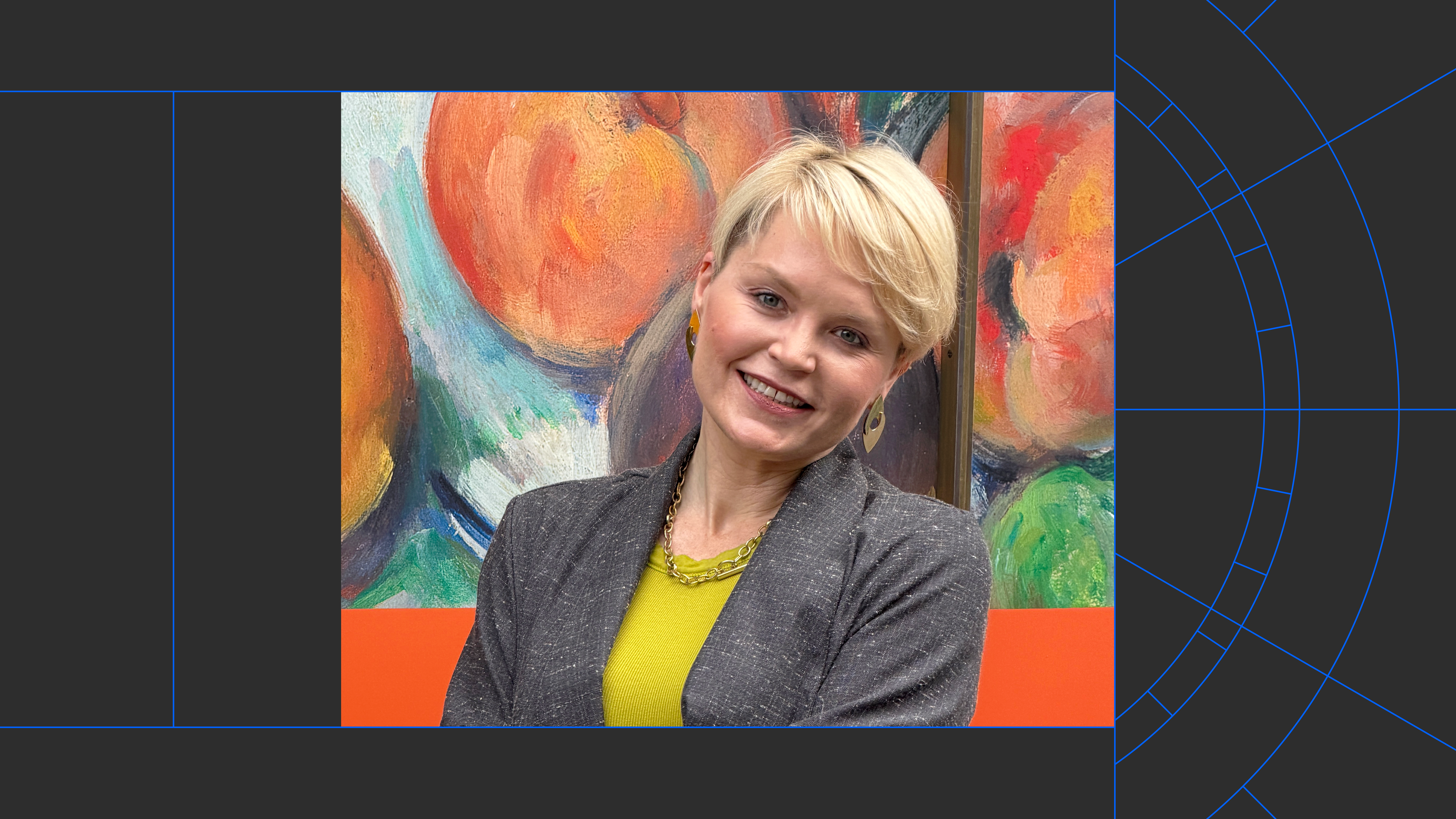
Kim Jakominich, Senior Director of Brand at Barnes Foundation and Calder Gardens

This episode is hosted by Monica Holt.

--:--:--
Ep 187
0:00 / 0:00
Tune In

IN THIS EPISODE

A great exhibition or performance can draw people in, but a strong institutional brand shapes how they understand the experience—and whether they feel invited to return.

Kim Jakominich has spent more than 15 years working across publishing, public media, museums, and cultural destinations. Now Chief Brand Officer at the Barnes Foundation and Calder Gardens, she leads an integrated team spanning marketing, communications, publications, design, editorial, and visual resources, helping steward two distinctly different brands while creating a more unified audience experience.

In this episode, Kim reflects on the unexpected path that brought her from Minnesota Public Radio to museum leadership, what she learned by realizing she needed mission-driven work, and how the Barnes’s philosophy of “seeing art differently” influences everything from visitor experience to brand strategy. She also takes us inside the creation of Calder Gardens, where art, architecture, and nature come together in an experience intentionally “open to interpretation.”

Kim also shares lessons for cultural leaders on breaking down departmental silos, thinking about brand through the eyes of the audience rather than the organizational chart, and reframing innovation as something more meaningful than chasing new technology. For her, the question is ultimately whether an idea removes barriers, sparks curiosity, and helps audiences discover that art has something to say to them.

Transcript

Monica Holt: Welcome back to Arts Unscripted, a Capacity podcast. I’m your host, Monica Holt. Before we dive in, a quick reminder, we’ve just now launched a brand new Instagram page for the pod. So if you’re enjoying these episodes, we’d love for you to follow along with us at Arts Unscripted. Okay, now onto today’s episode.

Kim Jakominich: The question should always be, how do we help people discover that art has something to say to them? If we’re using innovation to spark curiosity, invite people to participate in a way that feels authentic and ultimately become more welcoming spaces, then I think we’re moving in the right direction.

Monica Holt: Today’s guest is Kim Jakominich. Kim leads brands at the Barnes Foundation in Philadelphia. And if you know The Barnes, you already know why this is a fascinating place to be doing this work. The Barnes was built on a radical idea that art should be experienced directly without being filtered through someone else’s interpretation. So that means there are no wall labels, no dates, no titles, no hierarchy telling you what matters or how to feel about what you’re looking at. A Van Gogh could hang next to an unattributed piece of Pennsylvania Dutch folk art, and that’s entirely the point. Dr. Albert Barnes believed that when you strip away the scaffolding of expertise, you give people permission to actually look and then to trust what they see. What that means though is that Kim’s job is to market an institution that fundamentally resists being explained. So she’s developed a really clear-eyed philosophy about what that can mean.

Kim has spent 15 years re-centering every conversation about branding and innovation back to one question. How do we help people discover that art has something to say to them? Let’s jump in. Kim Jakominich, welcome to Arts Unscripted.

Kim Jakominich: Thank you. Thank you for having me. I’m excited to be here.

Monica Holt: Thank you so much for being here. I cannot wait for you to share a little bit more about your path and history and what’s currently happening at the Barnes Foundation. But before we get too far along, would you mind sharing what your first memorable encounter with the arts was? Was there a performance or a piece of artwork that moved you from a young age?

Kim Jakominich: Well, actually, it is one of my earliest memories. In fact, I remember being probably not even more than three years old and catching Phantom of the Opera on television. I just remember that it was a black and white TV. Of course, at that time, I did not know I was watching Phantom of the Opera, but as I grew up and became a pop culture junkie, I was able to connect what I remembered seeing at the age of three with what I now knew to be Phantom of the Opera. This all comes full circle because my very first off-Broadway experience was seeing Phantom of the Opera at the Curran Theatre in San Francisco, which was truly thrilling. I mean, with the chandelier crashing down, all of that, no spoilers, sorry, we’ve all seen Phantom, right? That just was the beginning of a lifelong love of seeing any sort of theatrical performance on stage.

Anytime I get to go and see a Broadway or off-Broadway play, I’m always very thrilled and I can’t help but think back to that toddling little girl pausing in front of a black and white TV screen and wondering, what is this? And also I’m scared.

Monica Holt: Yes. And also I’m scared. Well, you’re in good company on this podcast. We love a formative memory, particularly those that link to Andrew Lloyd Webber, who seems to be the unspoken patron saying of all conversations we have on this podcast and for very good reasons.

Kim Jakominich: So fun.

Monica Holt: It is. And that kind of storytelling lane that you found yourself in exposed to this story one way and then at the current theater in another one. I’m curious because then you went on to get your bachelor’s in English as a fellow English major. I know for some of it was the writing, but for some it was just the storytelling aspect. At what point did marketing then get on your radar and the whole idea of then applying these skills in the art world?

Kim Jakominich: I’ll say that I hadn’t really connected my English major to marketing when I was in undergrad. So I just want to come off the top and say I had no intention to work at a museum when I was in college. It hadn’t even crossed my mind, but it all led to marketing in a museum space when as with most BAs, you have to undergo some sort of internship before you can graduate. I could only think of working in a publishing company because I thought that English majors could only be editors or writers of some sort. And I was good at writing. I loved to read. So I applied to a place called Milkweed Editions in Minneapolis. I was thrilled to be selected for an interview, but then really confused when I was placed into the marketing function because I had applied for an editorial position.

But I quickly came to love my job there. I really appreciated the variety of tasks that met my day-to-day. I would sometimes look over at my editorial intern colleagues and see them reading what probably was their 10th slush pile submission of the day and be grateful to the intern sorting hat, if you will, for placing me into the marketing function because that is honestly how my marketing career was born.

Monica Holt: Wow. Your first then full-time marketing job after this internship was at Minnesota Public Radio. What was that role like? What was it like to start that work in the media space?

Kim Jakominich: I’ll be honest and say that the role was largely administrative focused. So I spent most of my time focused on the chief marketing officer whom I assisted. I remain honored to have work at Minnesota Public Radio, truly. It is a legacy public media organization and I still listen to it to this day. But I just didn’t see a path for growth for me in an administrative role and I didn’t enjoy my duties. So then when I saw a job opening for marketing specialists at Minneapolis Institute of Art, and I was apprehensive to apply because like many women, you read through a job description and you don’t hit every note. And so you think, oh, I shouldn’t apply. But I though, what the heck? And I went for it. And then before I know it, I had the job. I was a marketing specialist at a museum and it was terrifying.

Monica Holt: Talk to me a little bit about that. What made you nervous going into that transitional moment that ended up becoming such a formative part of your career ahead?

Kim Jakominich: So I didn’t grow up going to museums regularly, and so I didn’t envision myself ever working in one, which is interesting because while I was in college, I was taking a ton of art history classes and really enjoying them. I loved learning about art, writing about art, and I almost even double majored. Oh, wow. But I didn’t think about working at a museum. And I think it’s because I wasn’t aware of the other roles that exist beyond curatorial collections and education. And so didn’t think about all the other roles that power a museum, the operations engine, if you will, and all of the wonderful opportunities that happen within those roles.

Monica Holt: That’s exactly right. And it comes up frequently that folks who have gone on like you have to have just incredible careers and impact on the field didn’t quite know that this is where they were heading at the beginning because there wasn’t a depth or breadth of understanding of all of the possible roles that could be for them, right?

Kim Jakominich: Exactly. Exactly.

Monica Holt: You ended up staying at the museum for almost seven years.

Kim Jakominich: I did.

Monica Holt: What would you give as advice to someone who was just starting in an arts organization, whether it’s visual or performing, who wanted to stay for a while, who wanted to figure out a way to make impact at different levels and grow their career in one place?

Kim Jakominich: Yeah. When I think about an emerging career professional in any space, but particularly in the museum space, my advice is to raise your hand, make yourself visible, take on work that may fall outside the realm of your job description, and demonstrate impact while doing so. Make sure people know your name and know what you look like. That’s the biggest thing you can do. Once you have leaders then advocating for you and in your corner, understanding the ways that you have proven yourself indispensable, growth happens.

Monica Holt: Very, very well put. I couldn’t agree or co-sign more. I think the other question that goes hand in hand with folks who have experienced a journey at one organization is also the question of when do you know if you’re ready to leave? When do you know it’s the moment to seek an opportunity outside of that organization? And I’m curious for you if that came as a rush all at once or if it was kind of slowly over time you understood that your path was going to take you somewhere else.

Kim Jakominich: I would say it happened slowly over my final year at MIA where I was understanding that I had reached the ceiling for growth opportunity there. I was basically second in command in the marketing world, and my boss had been there for a very long time and I’d learned so much from her. And I felt like I was ready to spread my marketing wing, so to speak, and try something new. I stepped into a role at a content marketing agency, also in Minneapolis, where my heart wasn’t in it. I realized that what I need to do good work is mission-driven work. And so after a relatively short amount of time, I chose to leave and I decided I wanted to get back into museums, art museums really. And then it hit me. I don’t need to stay in Minnesota. And before I knew it, I was moving to Philadelphia, which was a huge leap and so happy to be here.

This place is filled with a fantastic cultural organization. So I feel like it’s got some good long career fodder here for lots of folks who love the region.

Monica Holt: Absolutely. What a community there. And I’m so grateful for you to share so honestly about what it’s like when you try something and it’s not the thing that you need next. And how do you reconcile with that with it feeling like, okay, but I needed to learn this lesson so that I could move on to the next thing. That’s so important for us to just all feel comfortable and transparent in sharing with each other. So I really appreciate that, Kim. You joined the Barnes Foundation in 2020. Talk to me a little bit about what drew you to the Barnes Foundation as the next organization that felt like the right fit for what you were seeking.

Kim Jakominich: I mean, it’s the Barnes. It is unlike any other museum in the entire world. There’s truly no other art space like the Barnes Foundation. So when you think about marketing being about differentiation and communicating what sets your institution apart, The Barnes does half the work itself by just being so different and so unique. I can honestly say every day I feel honored to amplify The Barnes’s multifaceted brand story through our various audience-facing channels.

Monica Holt: That’s beautiful. I would love for you to maybe share a little bit about the history of the museum and some of the background on The Barnes and how it came to be.

Kim Jakominich: Well, our founder, Dr. Albert C. Barnes, was a self-made Philadelphia millionaire who invented a patent for a medication called Argerole. So this took the world by storm. Dr. Barnes was a savvy businessman. He suddenly made a ton of money. He decided that he wanted to pursue his interest in art and art collecting. So he sent one of his best friends and artists, William Glackens, to Paris with $30,000 and the instructions to buy the best modern art money could buy. And so he came back with 33 paintings, including several paintings that are in our collection today. Matisse, Cezanne, Van Gogh, all the art that the world hadn’t really learned to begin appreciating yet.

Monica Holt: One of the unique pieces that I think really does set the Barnes apart is that visitor experience, specifically not having traditional wall placards that describe the artwork. And I think that’s worth maybe a little more explanation in terms of the methodology and the value vision set and how those knit together to change what a museum experience can be.

Kim Jakominich: So Dr. Barnes had a really unique way of thinking about arts. He believed it should be experienced directly, basically not filtered through someone else’s interpretation. So with removing the traditional wall labels, he’s also removing a hierarchy associated with art appreciation and giving viewers the invitation to slow down, look closely, make their own connections, and essentially trust your own observations. It’s a really different museum experience, one that can be polarizing if folks aren’t prepared. I’ve seen people walk into our space and just be blown away and overwhelmed and maybe even a little angry because they don’t know what they’re looking at. Wow. We do do a great deal of pre-visit information gathering for our audiences, making sure that they understand that the collection is different, that we have resources to help guide their experience, but not everybody absorbs those things when they come their way. So it’s interesting to watch how people take in that experience.

I’d say it’s really mixed between folks who really want to know, I want to know exactly who that artist is. I want to know what year that was painted, and I want to know why it’s important. Dr. Barnes didn’t care about any of that. So that’s why you’ll find a Van Gogh near an ashtray that could be attributed to just unidentified maker from Pennsylvania Dutch early 20th century or something like that. So it’s just incredibly unique.

Monica Holt: Yeah. And I imagine for you joining in 2020 when folks weren’t in person, I’m curious how you approach getting to understand the institution and its brand without being on site with your brand new colleagues as you were making such a big transition.

Kim Jakominich:

Well, I started about a month after the museum reopened. Getting to know the Barnes brand and any new brand, I think it takes so much time that you can’t even put a timeline on it. Coming into the Barnes, I spent at least a year just getting to know the people I work with, understanding their roles and the ways that they would prefer to collaborate with somebody in my role. I think an underappreciated part of understanding a brand that you’re working in-house for is the people that power the brand are as important as the brand itself because they’re synonymous with one another.

Monica Holt: That’s right and so well put. I also wonder this kind of close-looking personalized experience that visitors have, once you’ve learned more about that, how do you think that helps shape the overall brand and marketing strategy in a way that might’ve been different from when you were in a different museum environment? You mentioned the market differentiation being so easy for Barnes in a lot of ways, but how does that also change your approach?

Kim Jakominich: That’s so funny you should bring up what I said about market differentiation being easy for the Barnes because I also need to backtrack a little bit and say, when you hear the name Barnes Foundation, what do you think of?

Monica Holt: You don’t necessarily think of a museum.

Kim Jakominich: Right. You don’t think of an art museum. And so part of our brand challenge is to be conveying that we’re a space where you can come see art and that while you’re here, it’s going to be a different kind of art experience than what you’re used to. So that brings us to our brand slogan, if you will. It’s see art differently. It’s very simple, but it really works for the Barnes because when we’re putting ads out in the world and the ads show work of art from our collection or people inside of our collection, I want to make sure that we’re building recall over time for the idea that the Barnes Foundation is a place where you can see art differently.

Monica Holt: I love that. And the simplicity of it also, what’s not to like about that?

Kim Jakominich: Yeah.

Monica Holt: It’s interesting though, because it’s not just the Barnes anymore. In September of 2025, Calder Gardens opened. For listeners who might not be familiar, would you share just a little bit about what the gardens are, what kind of art is on display there, and what that creation felt like at the time?

Kim Jakominich: Yes. Well, Calder Gardens is really unlike any other cultural destination. Even the Barnes, Calder Gardens is a space dedicated entirely to the work of Alexander Calder, one of the most influential artists of the 20th century. And it’s not a traditional museum. Instead, Calder Garden brings together art, architecture, and nature in a way that is meant to encourage visitors to slow down and experience the work through their own perspective without didactics or any information about the works. I know you’re thinking that sounds like the Barnes. And it is in a lot of ways, but it’s also very different. It’s the only space in the world dedicated to the work of Alexander Calder. So it’s built to house his artwork. It bears mentioning that the building was designed by Herzog and de Meuron and the landscape by Piet Oudolf. And Calder’s sculptures are constantly in dialogue with the building itself and the gardens.

Monica Holt: Which is amazing. And I don’t think I would’ve realized that if not for this conversation, just that there is no space quite like it in terms of Calder sculptures.

Kim Jakominich: And it’s constantly changing, not just the artworks rotating in and out, but also the seasons affecting the gardens and the way that the lights and the gardens change our perception of the building. So the idea is that every visit will feel different. And this is also what has gone into the thinking behind Calder Gardens brand slogan, which is open to interpretation.

Monica Holt: Which we love and is a nice pairing even just between the two pieces of the organization. I know in some of the literature that I was reading and as part of what you were just talking about, this idea of an oasis for introspection for human connection. I’m curious how that positioning upfront might shape some of the branding decisions that you made when bringing the gardens online and into the fold with the Barnes.

Kim Jakominich: Sure. Open to interpretation is an incredibly valuable brand slogan in so many ways because not only does it truly encapsulate the visitor experience, it’s also a filter that guides all of our brand marketing and communications decisions. Rather than telling people what they’ll see or what they should think about any object in the space, we invite them to discover it all for themselves. And so to that end, our messaging is always intentionally open-ended. We want people to feel their own perspective is part of the experience, therefore open to interpretation.

Monica Holt: Yeah. I think how you bring curiosity instead of dictated experience into that museum culture is incredibly special. Do you have a favorite spot in the gardens?

Kim Jakominich: I have to say my favorite vantage point is always just walking up. The building itself, it’s stunning. It’s like a brushed steel that reflects its environment back onto it. So pretty. So if you think about it from sort of a meta self perspective, it is reflecting you back to you. And in that space, there’s also a key signature sculpture in front called Cock’s Comb. And it’s quite striking. Anyone that walks by Calder Gardens is compelled to look. And if they don’t already know what it is, they are wondering. And I’ve been numerous occasions where I’ve been sitting outside the building and folks just kind of walk up and they’re like, “What is this place?” And they’re so intrigued.

Monica Holt: Oh, I love to hear that. It’s nice to get a sense from folks what different places mean to the folks who are working in the building, particularly for Calder Gardens, because so much of that space is so new. In 2025, the Barnes also restructured to create that brand department that oversees both Barnes and Calder Gardens, which makes a ton of sense, particularly hearing you describe the vision, the desired branding and slogan for those spaces. But was it an easy transition to bring together the way communications, design, editorial, and marketing were all focused on both of these spaces? And were there challenges you didn’t expect or was it all beautiful opportunity laid out in front of you?

Kim Jakominich: Well, the teams that came together under the brand umbrella, marketing, communications, publications, design, editorial, visual resources, all worked together pretty closely anyway prior to the formation of the brand team. But our challenges would come from the fact that we all rolled up into different departments. So we had some folks reporting into curatorial, some folks reporting into operations such as myself, and then other folks reporting into advancement. And so while we’re a small lean team that is very collaborative and works well together, it’s challenging to work holistically when there are separate goals driving each team. So it made so much sense to bring our teams together so that we’re always in tandem and in lockstep from the very beginning of a project in ways that we hadn’t been able to do so before. Now that we’re charged with the care and feeding of two distinctly separate brands, the team is still pretty new, but we’re making really exciting strides creating together now instead of handing things off to each other.

Monica Holt: That’s great to hear. I know it’s still early days, but has that collaboration led to a shared vision more quickly than maybe before where it did feel like there were multiple folks who were putting a thumb on the scale earlier in the process?

Kim Jakominich: Absolutely. I think we have a really strong identity as a team now, understanding that all of our work rolls up to a greater whole and truly grasping the enormity of brand governance and how our team is ultimately responsible for that. Although everybody who works at any organization is governing the brand. It’s our team that’s setting the framework and the guardrails around how to govern the brand. And so I think that’s an exciting opportunity and one that we all feel an enormous amount of honor to have a role in. And the other big thing I think that’s really important for our team is to get everyone on the same page or on the idea that we are not thinking about our projects individualistically. We should be thinking about our audience and the way that our audience is experiencing the Barnes and Calder Gardens cannot be compartmentalized like, oh, that’s advancement or oh, that’s curatorial.

They don’t know. They’re having one Barnes experience. And so for our team to be able to help shape how that is entrusted across all the various teams that are doing brand work is truly powerful and exciting.

Monica Holt: There’s an important lesson in there for a lot of people in terms of how you think about the work you’re doing and what shared ownership really means. So the work at the Barnes and the work at Calder Gardens is wonderful on its own, but you’re also a part of the Art Museum Marketing Association, which I think is an important thing to raise up in a community where folks are always looking for shared experiences together, learning from each other. Could you tell our listeners a little bit about that organization, its goals, and the role you play with it?

Kim Jakominich: Sure. The Art Museum Marketing Association, also known as AMMA, is the only organization dedicated exclusively to senior marketing and communication leaders at North America’s largest art museums. So while there are great many museum conferences, all of them valuable, AMMA is unique because it focuses specifically on the opportunities and challenges of building audiences, strengthening brands, and demonstrating the value of institutions in a rapidly changing world. It’s a really collaborative community. People are remarkably open about sharing ideas, successes, and even failures. We’re all learning from each other always. We always joke that it’s our safe space. What happens at AMMA stays at AMMA. But truly every time we have our yearly convening, I come away feeling so renewed and so connected to my peers and just supported.

Monica Holt: That’s great. As you think about stewarding the folks who come next in the field, is there thought partnership that you have there in terms of helping to bring the ladder back down, bring up the new folks who are coming in and share some of that knowledge? Because I think it’s so great to get these leadership groups that we need, but I think there’s also this moment to then think about, okay, now how do we help create those rooms for who comes next and what’s going to happen in the future?

Kim Jakominich: This is a conversation that AMMA is actively having right now, thinking about how we can create space for emerging museum marketing and communication professionals. How can we share that knowledge with the field? I will say too, on that note, there is a wonderful organization that began in Minneapolis, and I think it’s spread across the nation in a few key cities, but it’s called the BrandLab. It’s an organization dedicated to connecting high school students with opportunities that they may have been unaware of in terms of a future career. The whole goal of that program was to sort of change the face of the marketing and advertising industry so that it more accurately reflects the population of people who are consuming all the advertising. I would recommend any institution who is interested in exploring those kinds of internship opportunities would lift them up.

Monica Holt: That’s great to hear. And it’s interesting because it does kind of dovetail into this question about how we find more meaningful opportunities for experimentation, particularly as we look to next gen. So I’m curious for you, where do you see those opportunities for investing in innovation for what comes next, whether that’s for the museum experience and guest experience or for the branding aspect of it?

Kim Jakominich: I think it’s really important to remove the idea of an innovation from the idea of chasing the latest technology. And again, bringing it back to the audience. Innovation should be about removing barriers for engagement. And so that could be thoughtful storytelling, smarter use of audience data to drive thoughtful storytelling. Digital experiences are important, but not for the sake of having them. The question should always be, how do we help people discover that art has something to say to them? If we’re using innovation to spark curiosity, invite people to participate in a way that feels authentic and ultimately become more welcoming spaces, then I think we’re moving in the right direction.

Monica Holt: I think that’s all right. And I love how guest-centered it feels like you have always been from day one, but particularly as you talk about the branding, the pursuit of the future, and also that experience, it is very heartening to hear that much focus placed on putting the guests first in each of those moments. What right now is giving you hope for the future of the field?

Kim Jakominich: I think what makes me feel really optimistic is the idea that excellence and relevance can go hand in hand. Museums have always strived to exhibit the highest standards of excellence, which can be exclusionary maybe. And I guess what I’m getting at is we don’t have to choose between scholarship and accessibility or between tradition and innovation. The best institutions are finding ways to honor their missions while meeting audiences where they are. If we can continue to do that thoughtfully and continue to stay curious ourselves, I think the future of the field is incredibly bright.

Monica Holt: Yeah. Well put. That relevance piece being so key to that. And what keeps you motivated and curious in the work you’re doing after 15 years of experience in the arts and culture field?

Kim Jakominich: Well, what keeps me motivated is the belief that art matters. Art is an excellent vehicle for building empathy, creating understanding across cultures, learning more about ourselves and each other. And so when I come to work, it is with that knowledge that what I do makes a little bit of a difference in the world and that keeps me going.

Monica Holt: Well, with that, we have reached our quick fire culture section. Starting us off, what is one piece of culture right now? It can be a TV show, a book. What’s one piece of culture right now that you’re currently obsessed with that’s bringing you joy?

Kim Jakominich:

I will say that I cannot recommend Widow’s Bay enough.

Monica Holt:

Sure.

Kim Jakominich: Very good. Yes. As a child of the 80s, it has everything I need to just be obsessed. It’s got horror franchise references, Jaws references. I could not get enough of it. I just ate it up. And I’m sad it’s over, but apparently it’s coming back for a season two. So I’m excited for that. And It’s been nominated for 19 Emmys or something like that. How many?

Monica Holt: Very, very many. Yes. That is a great recommendation. If you could go back in time, what is a live performance or event that you wish that you could have attended?

Kim Jakominich: Okay, this might sound dark, but I always think about the night that Marilyn Monroe sang Happy Birthday to JFK at Madison Square Garden in 1962.

Monica Holt: Okay.

Kim Jakominich: It’s such a storied evening. It is a moment before two tragic demises. Three, if you count Bobby. There’s a famous photo from that night as well of Marilyn, Jack and Bobby in a library of some sort of an after party with their heads bowed towards each other deep in conversation. And I wonder, what were they saying?

Monica Holt: I like this. You’d be there, you’d be in the photo, it would all be happening around you. That’s a good investigation, impulse. What is one free resource in any field that everyone should check out?

Kim Jakominich: I know this is going to sound cliche, but I’m a big fan of Wikipedia. I know it gets a bad rap sometimes, but I think it’s one of the greatest gateways to curiosity ever created. I’ll look up one artist or historical event and an hour, maybe two hours later, I’ve fallen down several different rabbit holes through learning about art, architecture, science, history, mass murderers, cults. It’s just –

Monica Holt: A classic Wikipedia spiral. We love it.

Kim Jakominich: It’s just a reminder that learning doesn’t have to be linear. And for me anyway, learning in a non-linear fashion is the most fun and kind of learning that sticks.

Monica Holt: Finally, if you could broadcast one message to executive directors, staff, leadership teams, and boards of thousands of arts organizations today, what would your message be?

Kim Jakominich: What’s important that we take our mission seriously, but I would advise that we don’t take ourselves so seriously. Museums should be places of curiosity, creativity, and joy, not just for audiences, but for staff. We shouldn’t lose those qualities to what can sometimes feral like bureaucracy or perfectionism that can get in the way of, again, innovation and creating a safe space for really great work to happen.

Monica Holt: Very well said. Kim, thank you so much for the time. I hope everyone gets out to the Barnes. I hope everyone gets to see Calder Gardens. Truly remarkable work, and I so appreciate the insight that you shared with us.

Kim Jakominich: Thank you so much, Monica.

Monica Holt: Thank you for listening to Arts Unscripted. If you enjoyed today’s conversation, please take a moment to rate us or leave a review. A nice comment goes a long way in helping other people discover the show. And if you haven’t already, click the subscribe button wherever you get your podcasts. We’ve got some great episodes coming your way and I don’t want you to miss them. A huge thanks to our team behind the scenes, including Karen McConarty, Yeaye Stemn, Stephanie Medina, Jess Berube, and Rachel Purcell Fountain. Don’t forget to follow Capacity on Facebook, Instagram, LinkedIn, TikTok, and YouTube for regular content to help you market smarter. You can also sign up for Capacity’s newsletter at capacityinteractive.com, and I hope you’ll reach out to us and let us know what you think and who you’d like to hear from next on Arts Unscripted. I’m Monica Holt. Thanks for listening.

View More
About Our Guests
Kim Jakominich
Kim Jakominich
Senior Director of Brand, Barnes Foundation and Calder Gardens

Kim Jakominich is Senior Director of Brand at the Barnes Foundation and Calder Gardens in Philadelphia, where she leads brand strategy, integrated marketing and communications, publications, editorial, and design. She joined the Barnes in 2020 and most recently led the brand positioning and public launch of Calder Gardens—the only cultural destination in the world dedicated to the work of Alexander Calder—with the Barnes serving as its operational partner. Over a 14-year career that has included roles at the Museum of the American Revolution and the Minneapolis Institute of Art, Kim has built a track record of growing audiences and institutional visibility through data-driven, audience-first marketing. She serves as vice chair of the Art Museum Marketing Association (AMMA), the only forum created specifically for marketing and communications leaders at major art museums to address issues unique to large-scale institutions, from earned revenue and digital innovation to crisis communications, brand strategy, and more.

FeaturedEpisodes

Arts Unscripted
Tune In

Listen Now

New Episodes Weekly