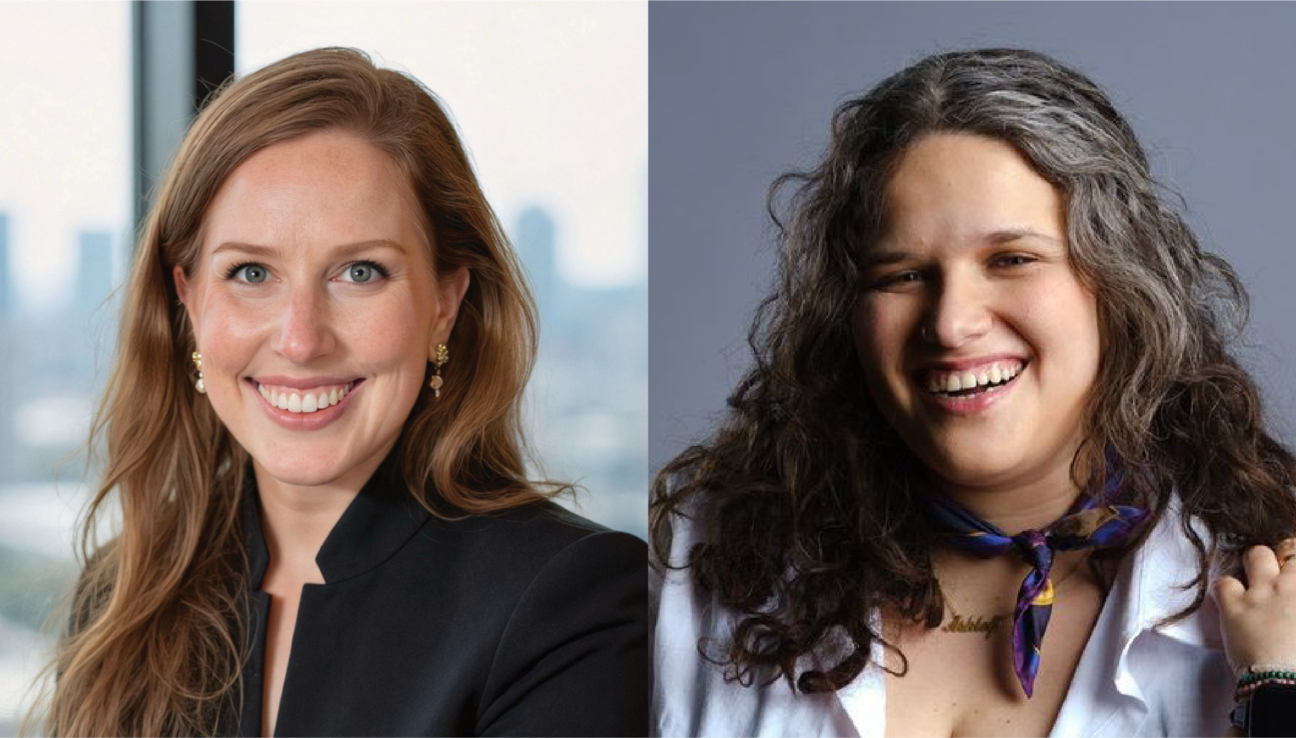
Ashley Hufford, Content Creator and Theater Influencer
The beauty of theater isn’t just what happens on stage. It’s the community that forms around it. And increasingly, that community is being built online.

This episode is hosted by Monica Holt.


What happens when art becomes part of everyday life, reaching people where they are rather than asking them to seek it out?
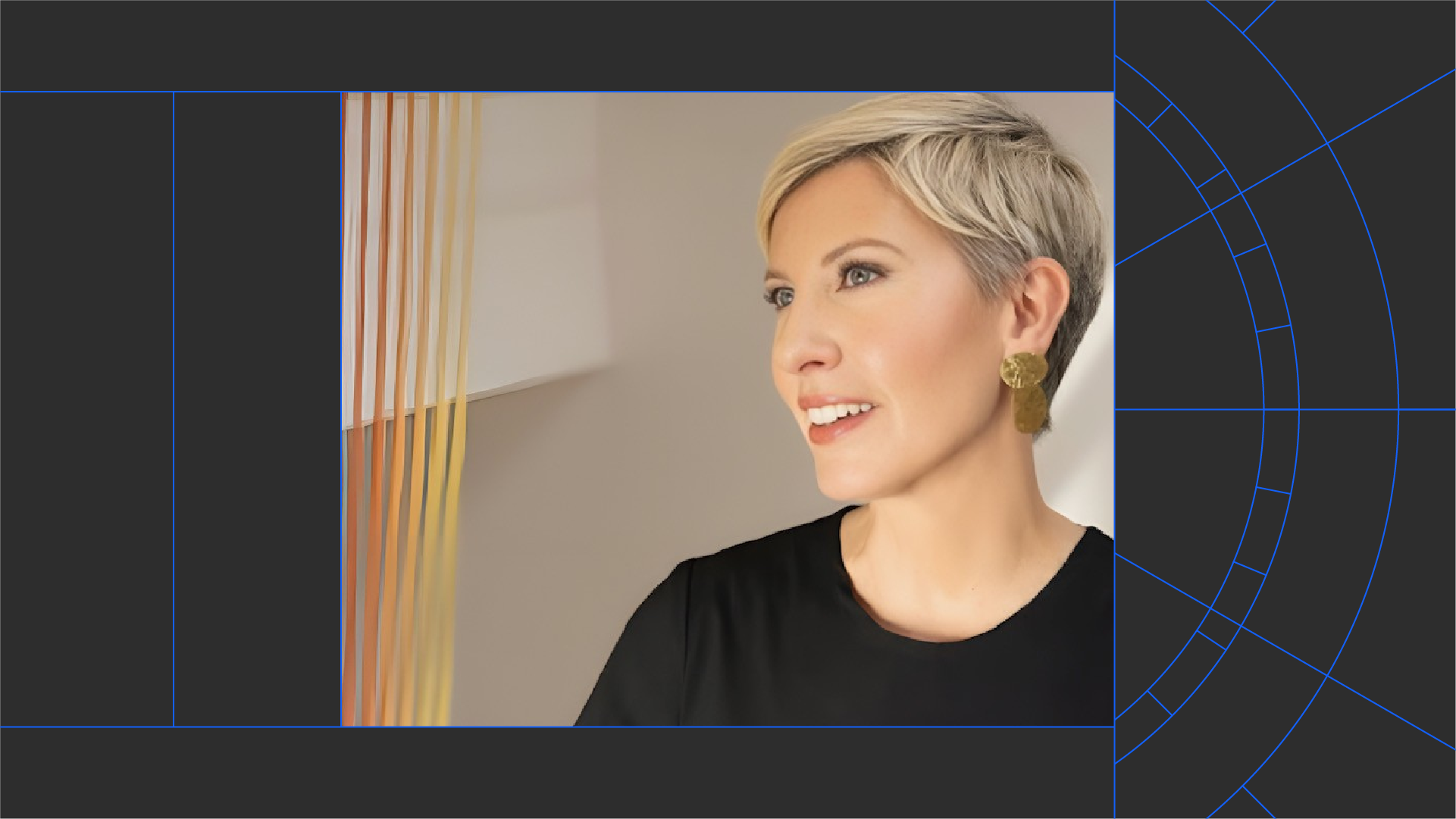
As Director of Arts and Design at New York’s Metropolitan Transportation Authority (MTA), Tina Vaz oversees one of the world’s largest public art collections, bringing visual art, music, poetry, and more into the daily journeys of millions of New Yorkers. Her career has taken her from public media to the Guggenheim Museum to Meta, where she led an ambitious global arts program. Across these experiences, she’s explored how art can transform spaces, connect communities, and enrich our lives.
In this episode, Tina takes us behind the scenes of the MTA’s public art program, shares compelling evidence of how art improves the transit experience, and makes the case for meeting audiences where they are. She also reflects on what cultural institutions can learn from public art, and why we should trust audiences to engage with challenging work.
Tina Vaz: It really goes without saying, I think that the transit system is the great equalizer. It is the place where everyone comes together. It might be one of our last truly democratic spaces. Putting art there in front of everyone really evens the playing field.
Monica Holt: Welcome back to Arts Unscripted, a Capacity podcast. I’m your host, Monica Holt. My guest today is Tina Vaz, Director of Arts & Design at the MTA, the Metropolitan Transportation Authority, which runs New York’s subways, buses, and commuter railroads. That makes Tina the steward of one of the largest site-specific public art collections in the world. There are more than 400 works in a museum that millions of people walk through every day without ever buying a ticket. Before the MTA, Tina spent years at the Guggenheim and at Meta, where she commissioned hundreds of artworks and saw firsthand how artists push new technology in unexpected directions. We also chatted about making art for an audience that never asked for it and might only give you three seconds of their time. And Tina shared what the MTA’s first ever writer survey found about how art impacts writers’ daily lives.
Let’s jump in after a quick word from today’s sponsor.
Nel Shelby: At Nel Shelby Productions, we give dance a life beyond the stage. We’re a full service video production team. We live stream performances, film with multiple cameras, make stunning trailers, and tell stories through film. My team of dancers turned filmmakers know how movement feels, and we capture it with heart, intuition, and joy. From intimate studios to grand theaters, we bring your vision to life. Visit Nelshelby.com to check us out. We are ready to discuss your next video project.
Monica Holt: Tina Vaz, welcome to Arts Unscripted. Thank you so much for being here today. It’s so nice to meet you.
Tina Vaz: It’s so nice to meet you too. Thank you for having me.
Monica Holt: We’ll get into your background and I’m excited to share a little bit about the journey you’ve been on, but I think because you’re working at MTA right now, it’s worth saying that when people think of New York, the subway is absolutely one of the first things that comes to mind. But what they might not know is that there is an Arts & Design division of MTA’s work. So as we get started, could you kick us off by just giving some insight into what Arts & Design is and how it came to be?
Tina Vaz: Sure. MTA Arts & Design is the MTA’s public art program. If you’ve ridden the subway or ridden the commuter rail, you’ve experienced or passed by our work even if you didn’t realize it at the time. The program was started in 1985. It was an outgrowth of the Percent for Art initiative wherein a percentage of construction budget was allocated for art. And it came at a time when the MTA was reinvesting in stations and in system infrastructure, and the decision was made to do that work with care. And part of that included incorporating public art into the upgrades at that time. Since then, the work has expanded beyond a permanent art program, which I’m proud to say is home to one of the world’s largest collections of public art with more than 400 pieces. Our work covers not just New York City Transit where many people encounter it on the subway, but also Long Island Railroad, Metro North Railroad, and Bridges and Tunnels.
So the way I like to think about it is we cover 5,000 square miles essentially from Montauk to Poughkeepsie.
Monica Holt:
That’s great. And will you tell us what your role with Arts & Design is?
Tina Vaz: Yes. I am the director of Arts & Design, so I oversee a team of curators, project managers, arts administrators who are responsible for delivering the full roster of permanent and non-permanent programming.
Monica Holt: It’s exciting, but a big position, certainly. I think what’s so interesting is not just the work as it’s happening now, but also how you arrived at the work. And so we are going to do a little time travel here for a second. Back to the beginning, was art always a part of your life? Do you remember your first experiences engaging with art when you were growing up?
Tina Vaz: Yeah, it’s hard for me to remember a time when art wasn’t part of my life. I would say that the peak of my creative output occurred in fifth grade. That was the year that I joined the band and learned to play the flute. That was the same year that I started participating in community theater, and I also won a playwriting competition that my town newspaper held that year. So that was a big year.
Monica Holt: That’s a big year. For sure.
Tina Vaz: But in terms of a work of art that I remember, I really remember from my very earliest childhood, Karita Kent’s Rainbow Swash, which is painted on a large natural gas tank along I-93 in Boston. I remember driving by that many times on my way to and from the city as a kid. I was aware at the time of the controversy around that work and was there a political profile hidden in the painting, and that just made it more interesting to me. It also taught me that art can have layered meanings and that people bring their own meaning and their own perception to a work of art.
Monica Holt: That’s exactly right. As you grew up, you ultimately started your career working in public media, and so I’m curious, what led you there and how did those experiences start your understanding of connecting with audiences?
Tina Vaz: Well, I will say that public media was really integral to my development as a child, as a young person. I grew up near Boston. WGBH is the juggernaut of public media in the United States, and so it was a part of the family really. And public television just introduced me to so many things that I wouldn’t have experienced otherwise, whether it was Nova or Masterpiece Theater or Sesame Street and The Electric Company and Zoom when I was younger, it was always there. And so when the opportunity came to work in public television and radio and work for WGBH, it’s iconic in Boston, and it felt really good to be part of something that I myself had benefited from and continue to this day to benefit from. And the mission at WGBH was to educate, entertain, and inspire. For me, that was and still is a very powerful north star.
But what I also learned is that you can’t really do one. It’s not enough. If you simply educate, then maybe you’re not really fully engaging someone. If you simply entertain, you’re maybe not giving them something to hold onto and think about. So it’s really about doing all three, and that is really where the magic happens. I think about that a lot. I’ve thought about it consistently throughout my career and certainly in the work that I do now.
Monica Holt: I couldn’t agree more with what you’re saying about it’s all about the interplay between these ideas and not just one single thing. So in 2011, you joined the Guggenheim in the communications department, and the Guggenheim is a pretty storied institution. What was it like to walk in there on your first day?
Tina Vaz: I mean, the Guggenheim changed my life in so many ways. It changed my professional life, my professional trajectory, and it remains really important to me to this day. It’s the reason I’m in New York. When the Guggenheim was founded by Solomon R. Guggenheim, he said that he wished for others to share my joy. And I think that that is such a generous principle upon which to found an institution, and that spirit of generosity really guided my work and my experience there. The building itself was commissioned as a “temple of spirit.” It’s not meant to be a neutral box. It’s meant to lift you up. And so what I learned there was just how transformative an experience of art can be.That job took me around the world to all of the Guggenheim museums in Venice, Bilbao, and Abu Dhabi, and really helped me to understand what it meant to be fully committed to artists.
Monica Holt: That is so brilliantly put. Also, I hadn’t thought about that idea of how the Guggenheim… I mean, obviously the architecture unto itself is art, but it deliberately not being a neutral box I think is a fascinating thing to think about as we think about our own museums, theater spaces, places for making art. Following your initial run at the Guggenheim, because you did return later, you actually moved to Meta and you led its open arts program. Can you explain what open arts is and what was it that excited you about this opportunity in 2019?
Tina Vaz: Well, I have to speak of open arts in the past tense because it was.
Monica Holt: It was, it was.
Tina Vaz: It was. But what it was, was an initiative inside Facebook, as Meta was called at the time, that commissioned site-specific artwork for Facebook offices worldwide and offered creative workshops in art making for Facebook employees. And the principle behind it was that building tech and making art are both forms of creative problem solving, and it was quite a run. I was there for four years. We commissioned more than 600 works while I was there. I worked there during COVID, during which we had to pivot what had been a decidedly and intentionally analog program to the digital world. We moved to working with product teams to commission work for experiences within the apps themselves. So it was a really exciting time to be there. And what made it really interesting for me professionally was that I had the opportunity that is somewhat rare in the communications profession to move from a role where I was supporting a creative vision or creative visions to directing that vision.
Monica Holt: Which it’s a big change ultimately.
Tina Vaz: It was. And fortunately, I had had such rich experience at the Guggenheim that I felt like I could bring a lot of those best practices and that thinking to that role and that ambition.
Monica Holt: That’s great. And so when you were there, you’re picking up all of these different types of interactions, both with artists, with the kind of administrators and folks who support them, with the audiences they engage with. As you decided to come back to the Guggenheim in 2024, how had your lens shifted?
Tina Vaz: Well, I had never really strayed too far in my mind. I had always really kept the mission of the Guggenheim really forefront in my mind and in my work. When Open Arts ended, there was an opportunity for me to come back to the Guggenheim at a time when they were going through not only a major leadership transition, but also a major branding initiative to launch in a very visible way what we had been describing for years, which was this international constellation of museums. And so I was able to be in the role to deliver that new brand into the world.
Monica Holt: What was the process of developing a new brand for the Guggenheim? Talk about wild undertakings in our field. What did that feel like? How did you approach that process or what were you looking to achieve even with that type of moment?
Tina Vaz: Yeah, I mean, it wasn’t so much developing a new brand for the Guggenheim as it was developing a comprehensive brand system. I will say while I had been at Facebook, colleagues at the Guggenheim and at Pentagram had been working for a few years on it, so I was lucky to take it over the finish line, but all credit to those who had worked on it for years. But we had always described the museums as a constellation, but this really made visible that each is a star, but they are all connected. So that included a few big moves. One was incorporating the names into the branding of the museums so that the place became very important and was foregrounded in the brand system. We also introduced the first logo mark, which Guggenheim had never had, and this dynamic G, as it was called, referenced the architectural forms of each of the museums.
Then the other interesting part of it was that as a precursor to the opening of Guggenheim Abu Dhabi, which is coming next month, there was a need for Arabic. And so the new brand system included a custom built font that was purpose built with Arabic.
Monica Holt: That’s fantastic. It’s interesting, again, to just think about in public media, in tech, in the visual arts space, and also just really in communications as a field, how you’re shaping your understanding of who art is for and where does it belong. I say that obviously as we talk a bit now about joining MTA. What was it that made this role feel like the right next chapter for you?
Tina Vaz: I mean, this role came along at just the perfect time in my life and in my career, and I think there are two primary reasons for that. One was that it really brings together everything I’ve done before. I started my career with very public mission of public media. I went to the Guggenheim where, again, really learned about how art can be transformative and how to help artists realize their vision and ambition. And then working at Facebook Meta at a scale that really very few other companies can claim, this role kind of brought all of those together in a really beautiful way that felt important to me. Then I think the other thing that was appealing to me was getting back on the side of driving the creative vision for a program.
Monica Holt: Yeah, that makes sense. I would love if you would share first just a little bit about the permanent artwork that Arts & Design oversees.
Tina Vaz: Our permanent collection and our permanent art commissioning program is the backbone of our program. As I mentioned, we have commissioned more than 400 works over these 40 years. It’s one of the largest collections of public art in the world. Each of those works is site specific, and that means it’s specific to not only its physical space, but to its neighborhood, its community context, the history of the place where it is cited. So each is an opportunity for an artist to respond to that specificity. I’m sure everyone can appreciate that the transit environment is not easy on materials, so we work in highly durable materials, primarily mosaic glass and metal that can hold up to the environment. Our permanent work is designed to stand the test of time, and that is part of the challenge, that’s part of the opportunity we are building for posterity. We have many works in our collection currently that have been on view since the early days of the program, and that is a privilege and a responsibility to be building for that long term.
Monica Holt: Absolutely. And could you give a couple examples of what some of those pieces of permanent art are?
Tina Vaz: Our permanent collection includes a wide range of artists, many of whom are well known to people around the world. We have works by Yayoi Kusama and Kiki Smith at Grand Central Madison. We have a Sol LeWitt. We have a Roy Lichtenstein. So these are really museum quality artists that people will be familiar with. But the beauty of our program is that we commission work through an open call process, which means that it’s open to artists who may be much earlier in their careers. Later this week, for example, I am doing a panel with two newly commissioned artists, Howardena Pindell, who is really a pioneering artist late in her career, and Ivan Forde, who is much earlier in his career, but is really such an exciting artist to see developing. I think that’s the beauty of this program. Something that people are often surprised to learn is that we don’t require artists to have prior experience in a given material.
So it’s rare, in fact, that an artist has worked in mosaic. The idea is to get the best artistic response to the opportunity and then work with the artist and a fabricator to realize that vision in the chosen material. The fabricators are really the unsung heroes in all of this because they bring that vision to life.
Monica Holt: I love hearing you talk about that too, because you had said something in a recent interview about if you’re riding transit, you are in the museum. I think it’s beautiful when you think about both the way folks are engaging with the art, but also to your point, how open this program is to emerging artists or artists in their ascendancy, artists who are experimenting with new materials for the first time. What does it mean to you to be taking that ethos, but also at the same time transforming a space that people mostly think of as functional, I think, going from a space being functional to a space where they can encounter art, whether they have decided to or not?
Tina Vaz: Well, I mean, it’s really an idea as old as the subway itself. When the subway opened in 1904, the founders of the system made sure that stations were grand examples of civic architecture. Beauty, design, aesthetics were very important to them when they opened the system. And so I think what we do is really an extension of that initial founding principle. That said, what does it mean to grab people in our busy world? This is work that no one asked for. It’s not as if they came and paid a ticket to a museum. They didn’t ask for it, but it’s there. And that is a place of trust and respect that we operate from, and I think that’s what makes it exciting. The bar is pretty high for what we do in that someone may only give you three seconds, but if that three seconds comes day after day, month after month after year, that can actually spark curiosity to learn more.
And even if what it does is give you a moment of pause or a moment of joy or just a quiet interior moment, then I think we’ve succeeded because those are hard to find in our world today.
Monica Holt: Absolutely. Absolutely. There are two programs that are also part of Arts & Design, Poetry in Motion and MTA Music. Can you talk a little bit about those programs and how they too contribute to this experience of traveling through the city?
Tina Vaz: Of course. Poetry in Motion, we’ve been doing that since 1992 with the Poetry Society of America. And for those who aren’t familiar, it is a short poem that is paired with an image of an artwork from our collection. It is really one of the most beloved aspects of our program. And what I find interesting and intriguing about the affection for Poetry in Motion is that it requires more than three seconds. It actually requires 30 at a minimum. And that tells me that the work is cutting through the noise, the visual noise, everything that’s happening in the environment, and we present those poems both inside subway cars and on subway platforms, and it tells me that there’s a space and time still for slow looking. So that feels rewarding.
Monica Holt: Slow looking. I like that phrase for slow looking.
Tina Vaz: And then music, it’s a much more direct way of engaging writers when a jazz trio is playing on a mezzanine, that’s pretty direct. And that too has been around since our very early founding. And in addition to the formalized busking program that we organize and support, we have introduced a new monthly station series that is tied to cultural themes and cultural moments. So just last week for Native American Heritage Month, we partnered with Cooper Union here in New York to preview two Native American operas that they were presenting in their great hall. And it was such a special way for us to celebrate the Heritage Month, but also introduce riders and passers by to this work that if they were interested, they could actually go see in long form. And what was really beautiful about that presentation was I had no idea how great opera was going to sound.
I mean, the reverberation, it was so powerful, you could feel it inside of you, but what was also really beautiful was just how many people stopped, and everybody who passed by just sort of knew that something special was happening.
Monica Holt: I love the connection that you’re able to see through the curation of live arts experiences, visual arts experience, written word, the humanities, pairing this all together. It’s really beautiful. I think particularly in this moment, this year marked Arts & Designs 40th anniversary, and the theme I believe was art everywhere for everyone. And how does that idea, you can hear it in just the way that you talk about these programs, but how did you really think about bringing that type of milestone to life in this really important season?
Tina Vaz: Yes, I will say it was our theme for the year, but also I think is our way of working really every day. For the 40th anniversary, one of the goals we set for ourselves was to really make the work more visible, to help people understand that the work that they maybe encounter is part of this larger program, is part of a larger commitment and a larger narrative. We did a public arts symposium at MoMA to kick off the celebration. As I mentioned, we introduced the new monthly station series tied to cultural moments. We expanded that to the five boroughs because we felt that it was really important that people across the system have those experiences of live music, and that in turn led to an ongoing collaboration with WNYC, who is now featuring each month, a performer from our program. So really just trying to get the word out about what we do.
Also, I think one of the most exciting projects that we piloted this year, and this was really the capstone to our 40th anniversary year, was an exhibition that’s on view now through March called In Service, MTA Photographs by Christopher Payne. And this was the first time we had ever taken over all of our photography light boxes. So we have 52 of these in five stations, five busy stations across the system, and typically they’ve been programmed with one artist at a time. But in this case, we wanted to present the work of one artist as a cohesive exhibition. What’s more, we actually commissioned this work as opposed to presenting work, which is what we usually do. He’s an industrial photographer and photographs manufacturing spaces, everything from pencils to Wilson footfalls to NASA submarines, but he really finds the beauty in making and manufacturing an industry. So we invited him to come behind the scenes at the spaces where our MTA fleet is built and maintained.
So he visited factory floors across the country where our trains and buses are being built. He came to the shops here in the city where they are maintained, and he captured the infrastructure that people take for granted. And what we showed them was not only a bus being born and following it through its life, to also just capturing the craftsmanship and the dedication and the human labor that goes into making the system work. We wanted to celebrate that. We wanted to show people where this comes from and really celebrate the labor and the commitment behind that work.
Monica Holt: I love also just the very cyclical nature of what we’re talking about here is infrastructure as art put into infrastructure to create art. It becomes this beautiful cycle of life in a world in which you are particularly uniquely suited to address. I think one part of that, and you’ve touched on this, is that we do sometimes get lost in the things that make a city function and what gets to make that list and what doesn’t. But I think what your work helps to illuminate over and over again is that art is an important part of that infrastructure list too. Pontificating for a moment with me here, what do you believe art contributes to a city beyond making public spaces more beautiful?
Tina Vaz: I think you can go back to the earliest cities and find that art is present. I don’t think we can talk about a livable city without talking about art in that context. It’s hard to imagine a city bereft of art. As I said, the founders of the subway system weren’t accidental about what the spaces were going to look like and how important it was to celebrate the culture, the shared histories, the public memory of the city. And that is really what art is uniquely suited to do. And even to think back to, just to go back to the Chris Payne exhibition, they’re not documentary photographs. They’re not photojournalism. They are the work of an artist, and it’s obvious that they are the work of an artist. And that’s a very unique way, that’s a different way of telling that story.
Monica Holt: That’s exactly right. It’s interesting you talk about it that way, because I think one thing that folks who are working at arts and culture organizations right now, they’re increasingly being asked to demonstrate value. And we’ve been talking a lot about relevance and how we work to either better do the work, which is of the utmost importance, but sometimes that work is happening and just not being told well. For you, for Arts & Design, for MTA, the work is woven into those daily routines of millions of people, but maybe so much so even that they get taken for granted on a different scale because you maybe don’t notice after some time. How do you think about understanding or measuring the impact that these initiatives are having on the lives around you? What do you think is the right way to have a lens on that in your role?
Tina Vaz: Well, I will say that my time at Facebook really helped me to understand why it’s important to know that. Everything at Facebook was measured on impact. So I was really well-trained to consider the impact of the work. And so I do think that’s important for us to know. And in fact, we, at the end of the summer, did our very first ever writer survey and asked about awareness, understanding, and perception of the art program. These are regular writers. It wasn’t an art specific survey. They were questions that were embedded in a regular survey. And what was fascinating, what was extraordinarily rewarding and validating was that 91% of people who responded said that they notice art in the subway. That tells us that it is getting through. Even if they’re not looking for it, even if they aren’t deliberately engaging with it, they are aware of it.
And I will say too, that the work that we create becomes part of your life. This is art that you’re actually living with. If it’s in the mezzanine, it’s the front door when you walk in. If you’re standing on the platform, it’s the living room while you’re waiting for the train. And so people do recognize it. They see it, they know it, even if they’re not actively engaging. The second finding that was particularly interesting to us was that of people who say they see art often in the system, 80% of them said that it improves their experience of the transit system.
Monica Holt: Wow.
Tina Vaz: So that’s like, okay, we’ve done what we came here for because I don’t know that many things that 80% of New Yorkers can agree on generally.
Monica Holt: Can agree on, yes.
Tina Vaz: But this group of respondents agreed that it improves the journey. And these are things that I think we know intuitively, and so it’s not necessarily earth shattering, but it is important to quantify that. It’s important for us to know that.
Monica Holt: That’s exactly right. I think sometimes we get in our own heads about, well, people might lie on a survey or people might not be consistent in their responses, et cetera. But I would love for folks to just as a whole embrace the idea that measuring the way you can measure, which sometimes is just asking people, is still better than not measuring, and it still helps tell the story. I deeply appreciate you sharing all of that. Given your time on all sides of the equation here, are there things that you think the more traditional cultural institutions could learn and adapt from MTA Arts & Design?
Tina Vaz: I will say I am a hopeless institutionalist, so I love institutions. I think institutions should be part of everyone’s everyday lives. And to some extent, that is what we try to do in the work that we do. I think that something that institutions could learn from us or could do with us is that public art can do something that is harder for museums, which is to meet people where they are. It really goes without saying, I think that the transit system is the great equalizer. It is the place where everyone comes together. It might be one of our last truly democratic spaces. Putting art there in front of everyone really evens the playing field. Everyone is there on equal terms, and there is not an assumption that you know anything or need to know anything about the art. And it’s okay if it’s just your own personal experience.
It doesn’t need to be mediated by someone for it to have an impact on you. I think I would love to see more opportunities for collaboration. I mentioned the work we did with Cooper Hewitt, and we have some other institutional collaborations coming up. I think it’s an opportunity to have a completely different relationship with an audience member. You’re not asking them to come to you. You are coming to them and you’re giving value to a much shorter experience that might be as profound to that person as spending an hour in a museum. For lots of people in the transit system, encounters with art, be it poetry, music, visual art, might be one of the few constants or consistent encounters they have with art. So I think if you sort of lower the threshold to entry, people will step over it, and I would love to see more institutions embrace that.
Monica Holt: That’s incredibly well put. As you are entering your second year leading Arts & Design, what are you most excited about right now? What are the new either collaborations or direction or initiatives that are bringing you joy and that you’re looking forward to pursue?
Tina Vaz: So much. I’m excited about so much. This first year was a lot of piloting and experimenting with some new presentation models, new ways of working. So I’m excited to take those forward. The takeover model that we piloted with the Christopher Payne exhibition, we are going to extend to our digital art program, for example. So that’s something that I am particularly excited about. We’re going to continue the work we’re doing with the station series. We have a very robust capital program ahead of us, so there will be a number of opportunities for new artwork commissions. I mentioned institutional partnerships. We have some that we are working on that I think will be really interesting. And then two areas that I am personally really excited about and beginning to explore, one is audio experiences. So many of our writers are listening to their headphones.
Monica Holt: Sure.
Tina Vaz: And I’ve been thinking about what it would look like to create or curate audio content that is built for the journey. And then the other thing I’m interested in more broadly is what we were talking about earlier, the wellbeing effects of art. Life in a city is stressful, the transit environment is stressful. How could we lean into that a little bit more directly and think more intentionally about the wellbeing impact of our programming?
Monica Holt: That’s fantastic. And I think such rich ground. I’m smiling thinking about where you might be going with the idea of bringing music in. I just can’t wait to hear how what you’re thinking about develops because I think that is just what we need. We all need more music in our lives everywhere. We do. And I think the more opportunities to create and commission is fabulous. So I’m thrilled to hear that. Well, we have reached the end of our time together. We do love to do a little quick fire culture survey of our own at the end of each episode. So if you will indulge me a few quick questions for you. The first is, what’s one piece of culture right now that you are currently obsessed with?
Tina Vaz: I am about 10 years late, but I am finally reading the Neapolitan novels by Elena Ferrante, and I have been reading them and then watching the corresponding TV series. And I’m on the fourth novel and the final novel, and I really don’t want it to end. I’m really doing a slow roll on this final novel, but I’m obsessed and wondering why I waited so long, but am incredibly grateful that I’m finally doing it.
Monica Holt: Yeah. And how lucky for you that you got to experience it all fresh. I’m sure lots of folks are jealous that they want to start over for the first time. Okay. If you could go back in time, is there a live performance event or exhibit that you would’ve wanted to be present at?
Tina Vaz: Yes. I am a child of the 80s and I was a little too young at the time of this concert, but I would go back to Live Aid in 1985. I would start out at Wembley Stadium in London, then I would hop on the Concord with Phil Collins and get to Philadelphia before the day was over.
Monica Holt: This is a very reasonable, well-thought strategy. I’m in full support. What is one free resource in any field that you think everyone should avail themselves of?
Tina Vaz: Public radio. It is the soundtrack to my life, and I learn something new every day. It’s like a library in your ears.
Monica Holt: A library in your ears. Gorgeous. What is something you think arts organizations should be less afraid of?
Tina Vaz: Their audiences. This role in particular has shown me that you can trust your audience. They do notice the work, they can handle challenging work, and our selection process is a public process. It’s informed by selection panelists chosen from the community. And I think if you look at our collection, that says everything about how curious and how creatively risk-taking your audience can be.
Monica Holt: I think that’s great. And finally, our podcast is built around the idea of promoting collective joy. What does collective joy mean to you today?
Tina Vaz: Collective joy for me is living in New York City. And I say that because it is just such a magnificent, messy city that takes so much out of you, but also gives so much back. Anything can happen anytime here, and that to me is so exciting. And even on the days when I’m feeling pretty ground down, something will happen that restores my faith in New Yorkers, in humanity. I think just the gift of being here is an exercise in collective joy, and I wouldn’t want to be anywhere else.
Monica Holt: Beautiful way to end. A little love letter to New York. We love that. Tina, thank you so much for the time today. It’s a joy to learn about the work you’re doing. I know I will think differently when I am in transit in New York, and I’m sure that’s true of a lot of our listeners, so really appreciate the time.
Tina Vaz: Thank you so much. Thank you for the opportunity to share this work. It is an act of love to a city that we all care so much about.
Monica Holt: I hope you enjoyed today’s conversation with Tina. Before we go, I wanted to play us out with some music from Art & Design’s MTA Music Program. Here’s the Dingonek Street Band playing their song, Siddhartha.
Thank you for listening to Arts Unscripted. If you enjoyed today’s conversation, please follow along with us on Instagram at Arts Unscripted and take a moment to hit that subscribe button and leave a review wherever you get your podcasts. We’ve got some great episodes coming your way and I don’t want you to miss them. A huge thanks to our team behind the scenes, including Karen McConarty Breiter, Yeaye Stemn, Stephanie Medina, Jess Berube, and Rachel Purcell Fountain. Don’t forget to follow Capacity on Facebook, Instagram, LinkedIn, TikTok, and YouTube for even more connection and insights into the arts, smart marketing, and collective joy. You can also sign up for Capacity’s newsletter at capacityinteractive.com.
Finally, we would love to hear from you. Please reach out to us on our Instagram and let us know who you want to hear from next on Arts Unscripted. I’m Monica Holt. Thanks for listening.
Tina Vaz is a cultural strategist, brand leader, and arts executive. She currently serves as Director of Arts & Design for the Metropolitan Transportation Authority, where she oversees the agency’s acclaimed visual and performing arts programs, including public art commissions, music, photography, and the Poetry in Motion series.
Her career has spanned some of the world’s leading cultural, technology, and media organizations. Prior to joining the MTA, she held senior leadership roles at the Guggenheim Museum and Meta, where she helped shape cultural initiatives, institutional strategy, and public-facing programs at the intersection of art, technology, and society. At the Guggenheim, she served as Deputy Director and Chief Brand Officer, overseeing brand, communications, and audience development for the museum and its international network. At Meta, she led Open Arts, a global program that commissioned artists and designers around the world and explored the role of creativity in shaping contemporary culture.
Vaz began her career in public media, working at WGBH and with PBS-affiliated producers, to connect broad audiences with science, history, current events, and the arts. A graduate of Boston University with a B.S. in Journalism, she remains passionate about storytelling, public engagement, and expanding access to culture in everyday life.