
Skip to content
Follow Us

Get the best of Capacity Interactive delivered to your inbox.

This field is for validation purposes and should be left unchanged.
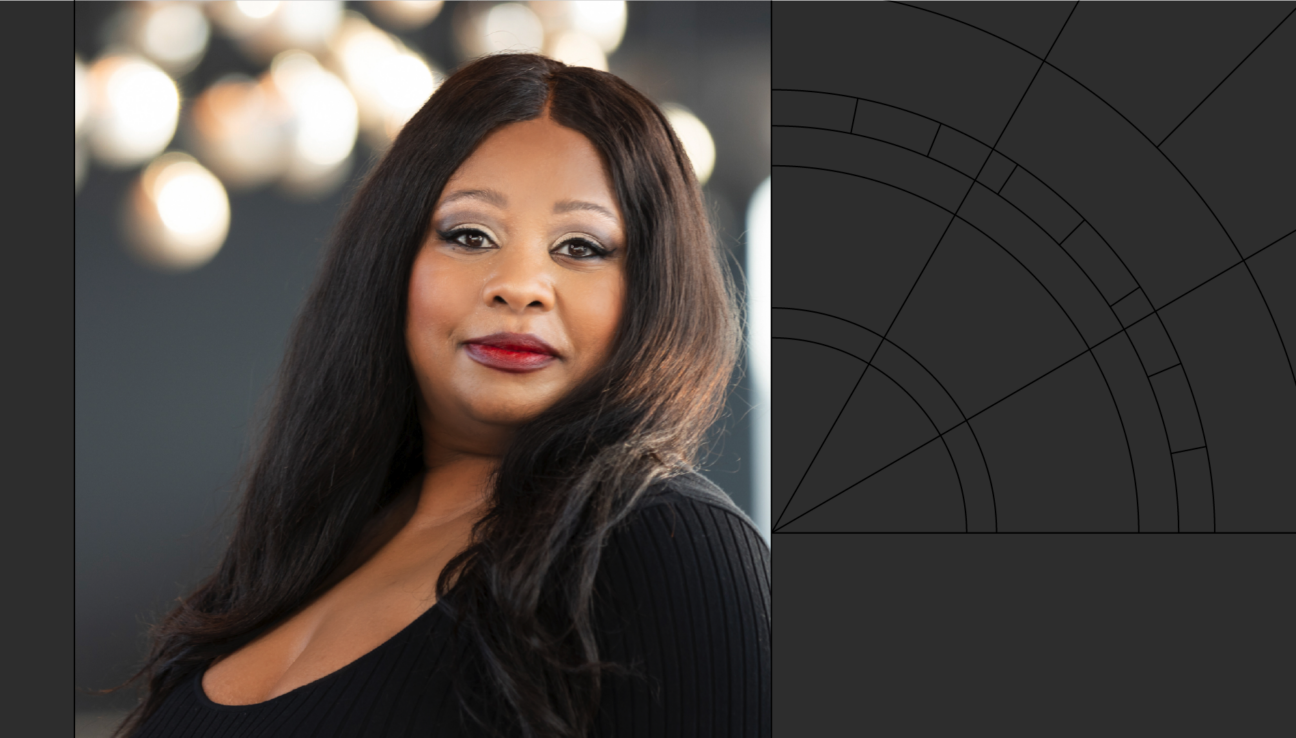
Derek A. Johnson, Chief Marketing Officer of the Seattle Symphony and Benaroya Hall
Episode 173
estimation...

Derek A. Johnson, Chief Marketing Officer of the Seattle Symphony and Benaroya Hall

This episode is hosted by Monica Holt.

0:00 / 0:00

In This Episode

The best leaders build conditions for others to shine.

Derek A. Johnson, Chief Marketing Officer of the Seattle Symphony and Benaroya Hall, has built his leadership philosophy around this very idea. Derek brings a thoughtful, people-centered approach to navigating the complexities of today’s arts landscape, drawing on years of experience across major cultural institutions like the Baltimore Symphony Orchestra and the Kennedy Center.

In this episode, Derek reflects on the power of servant leadership and how trust becomes the foundation for both strong teams and bold ideas. He also shares what it means to step into a senior leadership role at a pivotal moment for the Seattle Symphony, and how he hopes orchestra marketing will evolve in the years ahead.

Monica Holt: Welcome back to the podcast. I’m Monica Holt. Today’s guest is someone I’ve had the privilege of knowing and working alongside for over a decade. Derek Johnson is the chief marketing officer at Seattle Symphony and Benaroya Hall, one of the country’s most celebrated orchestras and a GRAMMY-winning ensemble approaching its 125th anniversary. He’s also someone who would much prefer to help others find their spotlight rather than spend an hour talking about himself. So for me personally, this was a wonderful way to trick him into sharing some of his brilliance with the field. Before Seattle, Derek spent years building his career at the Baltimore Symphony Orchestra and then the Kennedy Center, where he ultimately served as vice president of marketing before departing last summer. What I love about Derek’s story is that none of it was really planned. He showed up to his first arts internship fully intending to cut his teeth and move on to consumer packaged goods.

But 20 years later, he is one of the most thoughtful, values-driven marketing leaders working in our field. For me, Derek is one of the key people who made my time at the Kennedy Center so meaningful, and I’m grateful to have taken a moment in our conversation to reflect on some of that time together, as well as what it was like for so many of us to leave abruptly and at the same time. We also talk about what servant leadership actually looks like in practice, building the brand of both a world-class orchestra and the hall he calls home, and what it means to step into executive leadership at an organization you haven’t grown up in. Let’s dive in.

Good morning, Derek Johnson! Welcome to the podcast. Thanks so much for being here.

Derek A. Johnson: Thank you for having me on the podcast. This is really exciting.

Monica Holt: I am thrilled to be chatting with you a little differently than we normally have over these past 11 years. We are going to start the way that I start every episode, which is, will you tell us a little bit about what your first introduction to the arts was?

Derek A. Johnson: Absolutely. My mother is a music enthusiast, and so she wanted her children to have music in their lives. And she was never a serious musician herself, but she took piano lessons as a child and through high school and has actually recently returned to taking lessons again as an adult.

Monica Holt: Oh, that’s amazing.

Derek A. Johnson: Yes. So I started on the piano probably as a five or six year old.

Monica Holt: Wow.

Derek A. Johnson: Loved it for the first year or so. Then, like a lot of children, I did not want to take piano lessons anymore, but my mother was determined that I was not going to quit. And I had an experience at church where this gentleman came and played the flute, and it just touched me in a way that I had not experienced before. And although it was a very gospel, jazzy style, the sound of the flute is something that I wanted to be able to do and play. And so when it came time to picking instruments in band program, I picked the flute and my parents never had to force me to practice the flute. I absolutely loved it. So once I started doing that, I was allowed to let go of the piano.

Monica Holt: Got it. So you pick up the flute, you drop the piano, you’re saying the flute is for me. When you head off to college at University of Maryland — go Terps —

Derek A. Johnson: Yes.

Monica Holt: How did you then decide what you wanted to study?

Derek A. Johnson: So even before going to college, I knew I really wanted to do music, but that’s not necessarily a career path that is guaranteed success. I was also very interested in business. The funny part is a lot of it was I thought it would be fun to wear suits to work every day and have an attaché case.

Monica Holt: That tracks.

Derek A. Johnson: It does for me.

Monica Holt: Yeah. Derek was always the best dressed on the marketing floor, I will share with the group.

Derek A. Johnson: So my parents are the ones that suggested, “Well, why don’t you do a double degree?” I didn’t even know that was a thing that one could do. And so that’s how the dual track came along. When I got to school and wanted to do the business program, I started to realize that there were so many conflicts with my music classes that I was just never going to graduate if I tried to do both of those programs. So I chatted with my advisor and my advisor said, “Do the communications route, do public relations, and that will be your backdoor into marketing and business.”

Monica Holt: Interesting. I never knew that. But that’s how — that’s where you ended up.

Derek A. Johnson: That’s how that happened.

Monica Holt: When you had that conversation, when you were thinking about it, were you thinking communications through the lens of arts administration or were you still thinking about them completely separately?

Derek A. Johnson: Absolutely not. Completely separate in my mind. I think I had maybe heard the term arts administration once or twice at that point and just didn’t know what it was. I, in my mind, thought that I could have a separate career as a performer and also do the fun business type thing. I mean, I really thought that I was going to move to New York and work for a consumer packaged goods company or something like that.

Monica Holt: What?!

Derek A. Johnson: I don’t know if I thought that I was going to be in the New York Philharmonic on the side. Not sure exactly the thought pattern there.

Monica Holt: When do you think you realized that there were roles that you were well suited for working at arts organizations?

Derek A. Johnson: It is really interesting because if you were to just look at my resume, look at my education, you would think I had planned this out because on paper it looks that way. It was not until I was well past my internship and working full time with the Baltimore Symphony Orchestra that it really clicked for me that this is what I’m meant to be doing. This is where I’m called.

Monica Holt: When you accepted the internship at Baltimore Symphony Orchestra, was the idea for you just “How do I get close to the art and music that I love?” What brought you there?

Derek A. Johnson: No.

Monica Holt: No?

Derek A. Johnson: None of that.

Monica Holt: This is going to sound like you and I have never had a conversation before, but this is genuinely…

Derek A. Johnson: I don’t know if we’ve spoken of our origin stories so much. For the degree requirement for PR, I was required to do an internship to graduate. Every week, the comms department would send out a bunch of internship listings and I was of course doing my own search for internships and I see this internship with the Baltimore Symphony Orchestra and it is a public relations/marketing internship not too far away from College Park, Maryland. I read the description and I said, “Well, this is perfect. This is how I will get my PR and marketing experience in a field that I already know and love. So I’ll cut my teeth there and then move to New York and work for a consumer packaged goods company.”

Monica Holt: I wish I had known the Derek that was really focused on how to be working in comms for consumer packaged goods. Okay. So you land at BSO for this internship. From there, you then move into a full-time position. Will you tell us a little bit about what that first role was, what did it entail, and what about that was the bug that bit you?

Derek A. Johnson: I was hired by the wonderful Eileen Andrews, who was the VP of PR at that time. She later became the VP of marketing and communications for the Baltimore Symphony. So at the conclusion of the internship, Eileen had asked me if I wanted to just keep interning until I found a full-time job. And I said, “Sure, I’m not doing anything else.” And I was really loving the work that I was doing. Fortunately, there was not a long period of time between when the internship ended and when the organization decided that they were going to stop relying so heavily on their marketing agency and bring it in-house. That created some entry level marketing positions. So I transitioned directly from my internship to a marketing coordinator role with the Baltimore Symphony, and it was so much fun. A lot of what I was doing was grassroots marketing, taking posters to various bars and clubs and music shops in the Baltimore area.

Pretty quickly thereafter, my role transitioned a bit into an advertising and media coordinator. And so at that point, I was focusing a lot of my time learning about ad buying and just that side of the business, which was also just really fun for me saying, “Oh, I have a meeting with the Baltimore Sun, or I’m meeting with the Washington Post.”

Monica Holt: So you’re at the BSO, you get bit by the marketing bug, you’re getting your arts administrator chops. What then made you think, “Maybe it’s time for me to look for something new?”

Derek A. Johnson: It probably was between, I don’t know, year three and year five of even working at the BSO when I decided that this is it. We are going to continue with arts administration. I was happy at the Baltimore Symphony. It was a great team, a wonderful organization. I was there when Marin Alsop became the first female conductor of a major U.S. orchestra. There was a lot of excitement around that and the start of the OrchKids program. But as many people do, I wanted some upward mobility. I started wondering what there was outside of the Baltimore Symphony, but it needed to be the right thing. I wasn’t going to just jump anywhere. And it just so happened that Eileen Andrews left the Baltimore Symphony Orchestra and started at the Kennedy Center as VP of Public Relations.

Monica Holt: That old place.

Derek A. Johnson: That old place. And then a few months later, I received a phone call from one David Kitto who was head of marketing at the Kennedy Center at the time. And he had just had a conversation with Eileen about if she knew anyone who might be a good fit for marketing manager for the National Symphony Orchestra, looking for someone that really had some music experience, marketing experience, and was hungry for it. And what really convinced me to explore the opportunity was when I got a phone call from Monica Holt.

Monica Holt: Oh, yes.

Derek A. Johnson: Yes.

Monica Holt: No, I very well remember when David talked to me and we had been wondering what to do about this role and then getting the chance to meet you. So it was very thrilling on our side of the equation when you decided to come join us crazy folks there.

Derek A. Johnson: Yes.

Monica Holt: Okay. So you go from the Baltimore Symphony Orchestra, you show up day one at the Kennedy Center. Yes, you were coming in to work with the NSO, but there’s such a broad range of art that happens there. Obviously it’s a much more complex, larger organization. What was it like moving between those two organizations? What was most exciting? What challenged you the most when you made that switch?

Derek A. Johnson: Well, the first thought was, oh my goodness, I cannot believe I get to work in this hallowed institution that I grew up coming to. I still have the playbill from the first time I came to see a performance, which was once on this island. That was before it went to Broadway. It was in the Eisenhower Theater. I still have the commemorative coin from the gift shop that I got that same evening as well.

Monica Holt: Wait, I knew about Once on this Island. I don’t think I knew about the commemorative coin.

Derek A. Johnson: Yes, I do. But I came in there knowing, “Oh, I know so much about orchestras.” So there was that aspect of it, but also knowing that there’s still so much to learn. And one of the first projects that I got to work on outside of the Symphony Orchestra was the Finding A Line Festival, which was —

Monica Holt: Our skateboarding festival!

Derek A. Johnson: Our skateboarding festival with Jason Moran. And my mind was just blown that an institution could come together and literally build a skateboard ramp and park in front of the building and have it connect to music. It was just fascinating.

Monica Holt: Well, it was such a beautiful example of bringing new folks into the fold, having experiences that were not tied to a ticketed seat in a theater. And I feel like carrying that with us closely as we look at all of these other experimentations that are happening right now becomes even more valuable.

Derek A. Johnson: Yeah.

Monica Holt: So I have such fond memories of when you joined and when the marketing team there was coming together. But when I think back on that time, and then I think about also how busy we were, I have to ask, do you ever find yourself wondering, how were we balancing all of those things together? Because I feel like I’m remembering so many moments of us being able to find joy. When things were stressful still, we found time to do a puzzle or to chat about Grey’s Anatomy or whatever the case may be. Do you still think about how you carry that type of joy in the workplace forward when it’s not always tied directly to the show or the performance, which is always wonderful and joyful?

Derek A. Johnson: I was recently thinking about this and saying, “Well, was I romanticizing those days? Because we were so, so busy.” But I think it’s because there is an element of, this is how the arts operate. I do know that’s not necessarily the most healthy way to go about it, but I was, I’ll say, just as busy at the Baltimore Symphony Orchestra. We were one art form, but there were still so many things to do.

Monica Holt: Of course.

Derek A. Johnson: And yet the core group there, we were able to find joy in community outside of what was happening on the stage. I do think it’s really important to prioritize those moments of joy when we can. So I definitely think fondly on those days, knowing that we were really working quite hard. I think there was also a shared joy in the fact that we had a clear understanding of what we wanted to do as a team.

And I think in hard moments, it’s easy to come back to that. It’s, “Well, this is hard, but I know why I’m doing this.” And I know Courtney and Frank and Stephanie and Billy were all working towards that same goal.

Monica Holt: Yeah, very well said. It makes me smile. It will always make me smile thinking of that. Making that move though, going from a singular genre to so many different approaches, which also means different viewpoints, different inputs, how did you approach working on art forms or new work that you hadn’t yet been exposed to?

Derek A. Johnson: Absolutely. So I am a lifelong learner in this aspect. I am a sponge. There’s so much about classical music that I still don’t know. So I’m always eager to hear from the artistic team about “who’s the up-and-comer?” or “this is such a rarely performed piece by such and such composer.” And so I just take that same kind of approach whenever it’s a different art form that I’m not familiar with. And the Kennedy Center was blessed with such amazing curators of those areas who not only knew what they wanted to bring and had a viewpoint of what should be experienced, but they were also amazing communicators of why they were programming the way that they did. So just spending time with the artistic team and having those conversations was really invaluable for my own knowledge. And then of course, on the back end, I’m looking for trends in data to learn about how these audiences respond to the art because not all audiences perform the same way.

And it’s important to highlight our education colleagues as well, because they play a major part in the understanding of it. They have a lot of good relationships with community members who are doing the same type of art who just might not be on the same scale as something like a Kennedy Center.

Monica Holt: That’s right. And it’s actually interesting that you mention education there because also what I so appreciate about you is that even while you were working full-time and experiencing all of this new art, you were also teaching at D.C. Youth Orchestra Program.

Derek A. Johnson: Yes.

Monica Holt: Will you tell us a little bit about your involvement in that program and what it meant to be working there while you were working at the center?

Derek A. Johnson: Indeed, yes. I relate a lot of things back to my parents.

Monica Holt: And we love your parents, so they are welcome to be inspirations.

Derek A. Johnson: Yeah. It’s very much of a, “to whom much is given, much is required.” They have really instilled that upon me and my siblings. That was important to me. So being a teaching artist with the D.C. Youth Orchestra was my way of letting these particular students see a Black man with a flute teaching. The representation piece really, really does matter. I remember in a masterclass many, many years ago, one of the participants said to me, “Wow, this is like major culture shock seeing you here. Where I’m from, you’d be on the basketball court.” And that has stuck with me all of these years. So I really did think that it was important for me to be in that role with the D.C. Youth Orchestra. And the kids were fun. They were just really an incredible bunch of kids. Some of them didn’t want to be there, but by that second or third class, they get on board and they’re having fun with it.

The flute is notoriously difficult for beginners. It’s not necessarily an instrument that you pick up for the very first time and squeak something out. It just sounds like air for a while. So there’s a spark of joy, of wonder when they finally get a sound out and it’s a good reminder of where you started and where you can get to. And so I also think of that when the days are getting kind of long at work and you’re starting to say, “Why am I doing this?” I like to go into a theater where I know there are going to be a lot of first time buyers and just look around and see them interacting with each other and happy to be there and talking about the art at the end of the performance, like, “Well, that was so cool. Oh my gosh, I’m going to come back.”

So it brings it together. It’s a good reminder of why we do what we do and the connection that it brings.

Monica Holt: Yeah. You and I were on the same team or we were working together and collaborating throughout your whole time at the center. Well, by last spring, you were the vice president of marketing.

Derek A. Johnson: Correct.

Monica Holt: We had gone through organizational changes of every kind. We had built new buildings. We had weathered a pandemic and we were hoping that our organization was moving into a moment of great growth and ambition as we looked ahead in the future. And certainly there was the period of the most significant change that was unexpected that we had seen in our time at the center. We all were having personal and emotional reactions to what was happening undoubtedly. So as we are processing our personal emotions, how we are feeling about how we can be helpful for our colleagues and our teammates, there is also something unique about living in a marketing and branding space while you are watching an institution’s mission change on a dime, I mean, more or less overnight, what was that like to be watching with just your professional marketing hat on, aside from all of the other very complex and difficult processing that was happening?

Derek A. Johnson: Sure, sure. The first word that comes to my mind is chaotic. It really was. And I tend to thrive off of clarity and there was none of that at that time.

Monica Holt: That’s the gentlest way you could have put that, and I so appreciate that.

Derek A. Johnson: And what I told my team is, I will give you as much information as I can as I know it, but unfortunately information is hard to come by. And so what we can do is try to still provide service to the arts as we’ve done. I also really, in that moment, saw myself as a sort of buffer — in some points, a bulletproof vest — between the new leadership and my team as well. And I will take on as much as I can to make sure that they are able to function in the best ways that they can, while also knowing that everyone is going to have to make an individual decision that is right for them personally as well as professionally and was very open with my team about that.

Monica Holt: Yeah. I think that was something that we shared with each other early on, was that the message for everyone was we have to take care of each other no matter what the decisions individuals need to make are, and you have to be able to support any decision coming in a moment of crisis as people are trying to look out, not just for themselves, but for their community. It’s just interesting to talk to everyone in a moment of reflection of an experience that I hope no one else has to go through again, but I think it’s also important to name that because where you and I and so many people found themselves was a bit unusual, which is: you have this group of colleagues that you’ve been working with for an extended period of time who you have these great memories with. And usually what happens is someone decides it’s time to leave, they find a new job, you send them off, you wish them well, and now you have a friend at this organization across the country and isn’t that great.

It’s a very different thing when more or less in the same six-ish month time span, you and all of the colleagues and teammates you’ve built over 10, 15, 20, 30 years for some are all figuring out what’s next at the same time. You and I had a passing phone call in an airport where I think you were flying to Nashville and I was flying to the Midwest. And of course, Derek and I love Grey’s Anatomy and we have talked about it throughout our friendship and we were like, “Is this what it felt like when people were going to find their residencies after medical school?” But it was a really strange thing for everyone to be going through a process. So I’m curious from your perspective, what was that like for you suddenly being in a space where you were exploring all kinds of different options and trying to figure out where you wanted to head next?

Derek A. Johnson: Yeah. I really likened this to kind of junior, senior year of high school when you are figuring out what’s the next step. And you’ve been in school with these classmates for all of high school, in some cases, elementary school and middle school as well. And some go to school locally, some don’t go to college, which is fine, and then others go across the nation. And so that’s very much what this has felt like for me. I like to find joy in moments of hardship, and that at least has been a moment of staying in touch with colleagues and seeing where people are landing because it seems like everyone is landing extremely well and there’s such a network out there now. And I don’t mean just of Kennedy Center colleagues who are looking out for each other, but the field itself has opened its arms and just thrown them around us and said, “Let us help you.” And I think that’s one of the wonderful things about working in this type of industry where I don’t know if I would’ve experienced that had I gone on into consumer packaged goods.

Monica Holt: I promise we don’t have a bingo sheet where we’re trying to achieve saying “consumer packaged goods” a certain number of times. No, you’re absolutely right. And I couldn’t agree more with what you just said. The warmth, welcoming, and frankly, healing, I think, has just been extraordinary as a virtue of the strength of our field and the people in it.

Derek A. Johnson: For sure. And I did have a moment again of, am I staying in the arts? I knew that if the answer was yes, then it would likely mean relocating. I’m from the D.C. area. I went to school in the D.C. area. I’ve been there my entire life. My family is there as well. Very similar to you, Monica. But again, I am committed to arts administration at this point. It is very clear to me that this is where I should be. And so that’s really how I started the approach of, okay, if this, then what’s next?

Monica Holt: Well, it takes us to what you did decide and where you are now having landed well yourself, albeit across the country, because in January you started your new role as chief marketing officer at Seattle Symphony and Benaroya Hall. How did you know that that organization was the right fit for you?

Derek A. Johnson: That’s a really great question. Returning to a symphony orchestra after coming from the Kennedy Center with so many various art forms, I took pause. I had to think about what that meant. I mean, the symphony’s my first love, and so I knew there would be no issue in terms of, am I going to find this fulfilling? But my mind has been expanded to the point that I need there to be other things as well. This amazing opportunity presented itself with Seattle Symphony and Benaroya Hall. And what really clicked for me is, one, the reputation of the Seattle Symphony already. I mean, it’s an amazing orchestra. [It’s a] GRAMMY-winning orchestra with almost 125 years of existence at this point. So, solid on the artistic part. And the other piece is that Benaroya Hall is a venue which can present the same art forms that I loved in other places.

So from that standpoint, it really made sense for me that this was going to be a good fit, as well as the city of Seattle itself with the opera and the Pacific Northwest Ballet. I’ve already managed to get to both of those in the short period of time that I’ve been here.

Monica Holt: Excellent.

Derek A. Johnson: Yes, indeed.

Monica Holt: Well, the other exciting thing is that Benaroya Hall is reopening in the fall. Can you talk a little bit about what’s changed [and] what the public can expect? Because it’s a pretty exciting moment, I think.

Derek A. Johnson: It is. It’s a fun moment for the institution. So the hall itself is still open at this moment. We’re continuing to have a full season of programs — Benaroya Hall being the home of the Seattle Symphony Orchestra — and that season will close in June. So there’s already a lot of work happening invisible to the public eye getting prepped for this larger renovation that’s going to take place over the summer where it will be closed for six weeks. And it’s sort of a re-imagining of the public spaces of Benaroya Hall. The eating area is going to be completely redone. There will be a cafe. All of the seating areas are going to be refreshed and there will be a lounge area put in. The Overlook Lounge is what we’re calling it. And at the heart of all of this is a community room, too, so we can continue to do the work that we’re doing with our cultural partners.

And the goal is really to help evolve the viewpoint that Benaroya Hall is where you go regardless if there’s a performance or not. It’s going to be open during daytime hours. People can come in, grab a bite, meet up with friends, have a drink. So I’m really, really excited to see just the hang time, the hang space that people can experience.

Monica Holt: That is so great to hear. I mean, using cornerstone cultural institutions to their fullest extent in this particular moment in time where we know we want to be safe gathering spaces for community, places that bring people together, that create connection… I think that’s a beautiful aspiration. I’m so thrilled to hear that.

Derek A. Johnson: Indeed. And I am also interested in bringing in people who actually have maybe no idea that Benaroya Hall was there or Benaroya Hall is the home of the Seattle Symphony Orchestra. What’s interesting is that the symphony itself will be coming up on 125 years in a few years. And Benaroya Hall is maybe 26, 27 years old at this point. So the Symphony brand is about a hundred years older than the hall itself. And so a fun task is really building up the brand of the building itself. There’s such opportunity there while also maintaining the status of the symphony.

Monica Holt: That is such an interesting challenge. We hear so many times how the inverse can be true, right? The building was there before the organization was named or what have you. So it’s fun to be on that side of, how do you uplift a building?

Derek A. Johnson: Exactly.

Monica Holt: That’s very exciting. You and I are both experiencing for the first time joining an organization in a senior leadership level, having not worked our way up through the ranks. How does that change your approach as you get familiar with the institution and its systems? And has it allowed you any sense of freedom for letting go of some of the minutiae that you may have carried with you when you were growing through an organization over time?

Derek A. Johnson: Yes. I got a bit of a practice run with this.

Monica Holt: Oh, that’s right. In Nashville.

Derek A. Johnson: Yes, indeed. So I had about a three- or four-month stint as interim VP of marketing at the Nashville Symphony Orchestra, which is [a] really great team down there. And knowing that I was only going to be there for a certain period of time meant that I could not be bogged down with sort of the day-to-day and the minutiae of things. It had to be more of a high level thought for the senior leadership team and then what sort of processes, what sort of strategy can we put in place for the marketing team in this short period of time? And that was very helpful for me to have that sort of experience coming into the Seattle Symphony Orchestra and Benaroya Hall. As I mentioned earlier, I’m a lifelong learner and that is especially true moving to a different area, working with a different organization. And so one of the first things that I did when I got to Seattle was to start my listening tour.

So I’ve been meeting with all of the different team members on the marketing [and] communications side, but also with the senior leadership and other departments and figuring out what it is that everyone does, what they think about the organization itself. And so it’s much easier for me to then take back the conversations that I’m having with the team, knowing what the overall goals are, where we’re headed as an institution, and then think about the next three to five years, and how is it that we are going to get there? I am still thinking about the sales for this upcoming weekend, but it is not the first thing that is on my mind because I have a talented, capable team that is thinking about that.

Monica Holt: Yeah. It is strange sometimes to not know exactly how the things are moving from one person to another in the organization as you are making good conversation and decisions that are happening simultaneously. It’s a strange thing. But you’ve mentioned a few times about your approach and lifelong learning, and I absolutely think of you when I think of that. But the other thing I think about is your strong understanding and belief in servant leadership. And I’ve obviously seen that directly in the way that you work with teams across an organization. Can you talk about how you think about it in the day-to-day and how you feel you try to reflect that in the way that you show up for your colleagues?

Derek A. Johnson: Yes. When I think about servant leadership, I think about it in terms of prioritizing the needs of the team over any sort of individual glory or fame that I can get out of it because our goals are shared. And so I very much care about the ways in which the team works together. And I don’t think that it is a fluke or some sort of outlier that teams that have good communication, that respect each other, that know what they’re working towards tend to hit their goals more than those who don’t.

Monica Holt: Absolutely.

Derek A. Johnson: I am not an “achieve goals by any means necessary” kind of person. That’s just not the way I operate. And I’m trying to socialize this idea within my team right now, that we can’t all be working at 100%, 100% of the time. Ideally, everybody would be working 80 to 85% of their capacity because the way that our business works, there are going to be fire drills 15% of the time. So if 15 to 20% of the time we’re dealing with fire drills and we’re already at 100%, then there’s nothing left to give. And that’s where burnout comes from. Dissatisfaction. It’s hard on retention. That’s why it’s really important to look into processes and systems as well to try to streamline where possible to create more efficiency.

Monica Holt: That’s right. Right now, what are you seeing in terms of meaningful opportunities for innovation and audience engagement?

Derek A. Johnson: Really good question. For the first time in my career, PR is part of my job description. I’ve been thinking a lot about this piece and what does that look like in terms of building audiences in the 21st century and how people are consuming things. And that influencer space, for better or worse, it is a growing piece. And as traditional coverage of arts in the major papers and local papers and publications are just diminishing rapidly, it’s important to dive in that space. And I think there are so many who are starting to do that really well. I think that’s a major opportunity to help bring people in. And it doesn’t always have to be related to what is happening on stage. There’s the piece of, just come and have a wonderful experience, come have a drink with friends in this space and commune and see a show and talk about it after. We don’t have to approach things at the historical level or the absolute enthusiast point of view.

Monica Holt: Right. Exactly. How is this experience going to make you feel? What are you going to think about looking back on that time that you spent there, not just how excellent was the sound or how wonderful was the soloist? Those are factors into a total experience.

Derek A. Johnson: For sure.

Monica Holt: If you could experiment with one idea in arts marketing or in arts production that had no constraints, no budget limitations, what idea would you want to move forward?

Derek A. Johnson: I have been talking about this for so long now, and I need to make it happen in Seattle because I’m going to be upset if now someone else does it before. But I love the idea of, I guess it was in the ’90s — I’m an elder millennial here. There were the music videos that would be played and then facts about the production, the artist, and whatnot would pop up. So if everyone in the audience has on some sort of Meta glasses or something like that where you could just be watching the symphony perform and facts pop up or listen to the oboes in this section or listen to the bass line, that sort of thing. I just think that would be such a fun experience to have. It wouldn’t be disruptive for those who want a more traditional experience and speaks to the point that our attention spans are a little bit less than they used to be.

Monica Holt: That’s right. Yes. We need to get you talking to the right folks about that one before anyone else thinks of that. Absolutely. What are you most looking forward to at Seattle Symphony and Benaroya Hall?

Derek A. Johnson: Oh, I’m really looking forward to the grand opening in fall of this. And there are also some other major projects that are coinciding with that opening that I’m not quite at liberty to fully discuss yet.

Monica Holt: Right. Well, we’ll have to stay tuned in to all the channels.

Derek A. Johnson: Indeed. So I’m excited about it.

Monica Holt: Next year will mark your 20-year anniversary in the arts and culture industry. As you think back over your career and looking at where you are now, ultimately, if someone asks you, what’s kept you in the field this long, what would you say?

Derek A. Johnson: Especially hearing that 20 years ago, I had no idea that I was even going to be in the space —

Monica Holt: Exactly.

Derek A. Johnson: Yes.

Monica Holt: Packaged goods were calling.

Derek A. Johnson: They were calling. Really what has kept me here is the satisfaction and the fulfillment that I have received from the arts, both in terms of the nourishment of my soul, as well as the professional opportunities. I’ve had wonderful mentors over the years, you being one of them, and I want to be that for others as well.

Monica Holt: Well, great. We have now reached the quickfire culture section.

Derek A. Johnson: Okay.

Monica Holt: So here we go. What is one piece of culture that you are currently obsessed with?

Derek A. Johnson: We have talked about this through this entire podcast. I am in a constant perpetual rewatch of Grey’s Anatomy. And so I am currently watching Grey’s Anatomy. I am on season 20 at this point. It is fun rewatching it while living in Seattle, even though —

Monica Holt: I was going to ask, is it immersive art now because you’re there while it’s happening?

Derek A. Johnson: Exactly. Even though they don’t actually film in Seattle, every once in a while, they’ll mention a street name that I actually recognize now, or they’ll say something about Halloween and Capitol Hill. I’m like, “Oh, I understand that. That makes sense to me.”

Monica Holt: I love that. We talked to Sammi Cannold at the end of last year and she’s a theater director, but she’s also been working on Grey’s a bit in the past couple of years. And I told her, I was like, “I’m not going to fan girl out too much. And I love everything that you do in the Broadway community. But pretty exciting to be in the Shonda-verse too.” Shondaland, I should say. If you could go back in time, what live performance or event would you have wanted to attend?

Derek A. Johnson: I would want to see Leontyne Price’s farewell performance of Aida at the Met, which might have been ’85 maybe.

Monica Holt: Gorgeous answer.

Derek A. Johnson: That is a voice that has captivated me ever since the first time I heard it. Truly magnificent. So I would’ve loved to have been there.

Monica Holt: What is one free resource in any field that you think everyone should avail themselves of?

Derek A. Johnson: This is going to sound so basic, but I love Merriam-Webster. Just go to their website.

Monica Holt: Derek! You said loud and clear, “Everyone use a dictionary more.”

Derek A. Johnson: Use the dictionary. Use Merriam-Webster. Their website will let you know the 10 words you’re probably using incorrectly. It’ll give you a word of the day. There’s a slang section now, so it’ll keep you up to date on what the kids are saying.

Monica Holt: This might be my new cultural obsession. I love it for all of the right reasons and also a little bit for the unintentional shade of just telling everyone that they need to use it. If you could broadcast one message to executive directors, leadership teams, staff, boards, artists at thousands of arts organizations all over the world, what would that message be today?

Derek A. Johnson: Yeah. Aimed at senior leadership specifically, I would say, do not underestimate the importance of internal communications. This is sort of a theme I’ve been hitting on, talking about shared goals. People work better under that. It is easy when you are in a meeting with your peers and you’re looking at the balance sheets and talking about, “What are we going to do?” to forget those who are actually performing the work and making sure that you’re translating the overall goals to a level that they see how their work actually contributes to it. Because again, we’re all working these hard, long hours, but people want to know that they’re contributing to something.

Monica Holt: Very good advice. Derek, thank you. Thank you for the privilege of time with you and thank you for all that you shared. I really couldn’t have asked for a more joyful way to spend this afternoon.

Derek A. Johnson: Monica, thank you for asking me to join. Happy to be here.

Monica Holt: Thank you for listening to CI to Eye. If you enjoyed today’s conversation, please take a moment to rate us or leave a review. A nice comment goes a long way in helping other people discover the show. And if you haven’t already, click the subscribe button wherever you get your podcasts. We’ve got some great episodes coming your way and I wouldn’t want you to miss them. A huge thanks to our team behind the scenes, including Karen McConarty, Yeaye Stemn, Stephanie Medina, Jess Berube, and Rachel Purcell Fountain. Our music is by whoisuzo. Don’t forget to follow Capacity on Facebook, Instagram, LinkedIn, TikTok, and YouTube for regular content to help you market smarter. You can also sign up for Capacity’s newsletter at capacityinteractive.com. And I hope you’ll reach out to us to let us know who you’d like to hear from next on CI to Eye. I’m Monica Holt. Thanks for listening.


About Our Guests
Derek A. Johnson
Derek A. Johnson
Chief Marketing Officer, Seattle Symphony and Benaroya Hall

Derek A. Johnson is Chief Marketing Officer of the Seattle Symphony and Benaroya Hall, where he has led marketing and communications since January 2026. He oversees audience development, brand, and positioning, with a focus on growing engagement and strengthening connections with audiences across the region and beyond.

Most recently, he served as Interim Vice President of Marketing at the Nashville Symphony, where he led marketing, sales, and audience development during a leadership transition.

Before that, Johnson was Vice President of Marketing at the John F. Kennedy Center for the Performing Arts. There, he led strategy for more than 2,000 programs each year, supporting work across the National Symphony Orchestra, Washington National Opera, and a wide range of programming including jazz, hip hop and contemporary culture, social impact, theater, dance, and education. He has had the pleasure of building and supporting teams while helping to connect new audiences to the performing arts.

Johnson began his career at the Baltimore Symphony Orchestra, where he rose to Senior Marketing Manager. A flutist, he previously performed with Anita’s Flutes and the Category 5 Wind Ensemble, both community-based groups, and served as a Teaching Artist with the DC Youth Orchestra Program. He is a graduate of the University of Maryland and has served on the boards of One More Plate and the Phoenix International School of the Arts.

Read more

Related Episodes

Brent Reidy, Andrew W. Mellon Director of the Research Libraries at the New York Public Library
EP 174
Apr 16, 2026
estimation...
Brent Reidy, Andrew W. Mellon Director of the Research Libraries at the New York Public Library

Libraries are often thought of as quiet repositories. But at their best, they are living, evolving spaces where culture is preserved, interpreted, and reimagined.

Brent Reidy serves as the Andrew W. Mellon Director of the Research Libraries at the New York Public Library—one of the most expansive and dynamic cultural collections in the world. With a career that spans musicology, consulting with arts institutions, and nearly a decade at NYPL, Brent brings a unique perspective on how libraries function not just as archives, but as active participants in the cultural ecosystem.

In this episode, Brent reflects on what it takes to engage new audiences; how digitization efforts intersect with access and institutional mission; and how preserving the past can help shape a more inclusive and imaginative future for the arts.

Carlos Simon, GRAMMY-Nominated Composer, Curator and Activist
EP 171
Mar 26, 2026
estimation...
Carlos Simon, GRAMMY-Nominated Composer, Curator and Activist

Music has the power to move a room. For composer Carlos Simon, that effect was first felt in church, where music was both a creative act and a shared experience.

Raised in a family steeped in ministry and musical tradition, Carlos grew up surrounded by gospel, jazz, and the spontaneity of worship. From playing organ by ear during Sunday services to his later work with orchestras, film, and opera, he has built a compositional voice that blurs boundaries: bridging sacred and secular, improvisation and form, tradition and innovation.

In this episode, Carlos traces his path to becoming one of today’s most sought-after composers and the first-ever Composer Chair for the Boston Symphony Orchestra. Along the way, he offers insight into the deeply collaborative nature of his work and frames musical composition as an act of service.

Don’t Miss an episode

Don’t Miss an episode

Subscribe to CI to Eye and have your insight and motivation delivered on demand.

TUNE IN