Skip to content

ResourcesPodcast

TONYS WEEK: Beth Callen, Musician, The Lost Boys

This episode is hosted by Monica Holt.

--:--:--
Ep 183
0:00 / 0:00
Tune In

IN THIS EPISODE

The Tony Awards often celebrate the names on a show poster, but every Broadway production is carried by countless artists whose work rarely fits neatly into a category. So in anticipation of this year’s awards ceremony, we’re spotlighting a few of the performers, collaborators, and creative forces behind nominated productions.

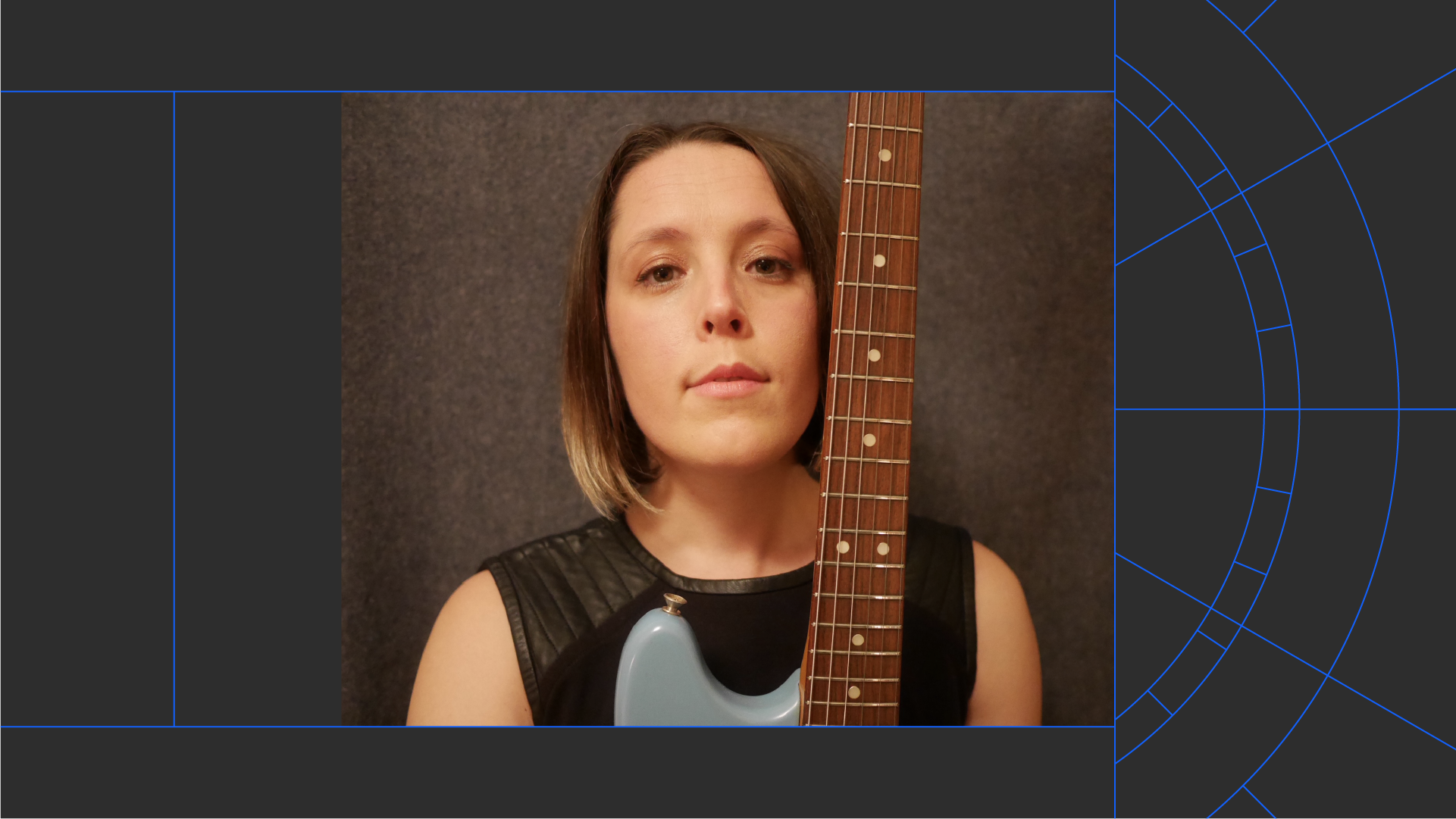
Beth Callen follows her curiosity wherever the music leads. A multi-instrumentalist, songwriter, and educator, she has traveled from indie folk stages and an all-female Guns N’ Roses tribute band to some of Broadway’s most acclaimed productions, including Head Over Heels, A Strange Loop, Suffs, and now The Lost Boys

In this episode, Beth discusses the realities of building a career as a working musician; why mentorship matters for the next generation of artists; and how greater visibility for pit musicians can deepen our appreciation for the live magic that happens eight times a week on Broadway.

Transcript

Beth Callen: A lot of Broadway audiences don’t realize there is a live band often and I think it makes it exciting for people to know it just adds to the production. It’s such an impressive feat that this happens eight times a week. It’s part of the spectacle and I think that’s what makes Broadway musicals so special.

Monica Holt: Hi everyone. This is Monica Holt and welcome back to Arts Unscripted. It’s Tony Awards week and we’re wrapping up our series of conversations that go behind the scenes of some of this year’s award-nominated shows. My guest today is Broadway musician Beth Callen. Beth found her way to this career through a children’s rock band and an all female Guns N’ Roses tribute band and a lot of hours practicing at an outdoor coffee table. She’s played on Broadway in Head Over Heels, A Strange Loop, and Suffs, and currently she’s playing the score of The Lost Boys at the Palace Theater. This is one of the most ambitious productions to open this season and it’s a show that’s asking audiences to feel every note. Let’s dive in. Beth Callen, welcome to Arts Unscripted. Thank you so much for spending some time with me today.

Beth Callen: I am so excited to be here. Thanks for having me.

Monica Holt: Oh, my pleasure. It’s wonderful to meet you. We’ve been really excited. All this week we’re talking to folks who are working on Broadway right now. It’s such an exciting season and we will get into a little bit about your current role in The Lost Boys and what it means to be a musician on Broadway. But before we get to that, when did art first come into your life?

Beth Callen: I would say that it’s always been there actually. So I took piano lessons as a kid. I was in the middle school band playing clarinet and at some point Guitar entered the house and it was just like love at first sight. I was just obsessed with guitar players.

Monica Holt: Did you have a couple guitar players that you really looked up to when you were first starting to play?

Beth Callen: Oh yeah. Jimmy Hendrix. I mean, hands down, favorite, coolest ever. But I also love the folky finger picking singer songwriter types.

Monica Holt: And it’s really interesting thinking about that now with the music of Lost Boys and how those artists have created this kind of mix of folk to Broadway, pop, rock. I love all of it. But in 2006, is that about when you decided to pursue music professionally? Is that when you and your sister formed a duo? Walk me through from picking up the guitar to saying, “Okay, this is where I see a career for myself.”

Beth Callen: So my sister and I always played music together and sang and wrote music when we were kids. And then I went to school at SUNY Purchase trying to decide between graphic arts, computer science, and music. And it was somewhere along the lines there that we just started playing live, moving from busking to doing actual shows. I always thought I would be a musician and then sometimes I felt pulled to do other careers, but it’s worked out so far.

Monica Holt: Sure. And so the Callen Sisters were signed to Cordless Recordings. What did that experience teach you about navigating the music world at that age?

Beth Callen: So Cordless Recordings is an imprint label of Warner. So they didn’t necessarily have all the resources of a big record label. It was very indie and they actually started to go out of business as soon as we were signed. And that was really extremely devastating because our first big hit making it was very short lived. So it just sort of taught me that there’s no guarantees in the music business and a lot of the music business is a risk and it’s messy and it really takes a group of people for any artist or any band or musician to be successful. So it took me a while to recover from that, but it was eye-opening in a good way.

Monica Holt: And recover you did. So talk to us a little bit about over the next decade, what kind of meandering or really intentional kind of journey did you take that led you to Broadway in 2018 for the first time?

Beth Callen: This is kind of a fun story. So yeah, it was super depressing like, “Oh, I’m never going to be a musician.” So I had a conscious moment where I was like, “Well, should I go get a job job or should I just really double down and try to be a musician?” So I decided I would study. I would sit at my outdoor coffee table area and I would just play guitar for hours literally. And then I started to get gigs. I moved into Manhattan. I started to meet people and I got my first gig playing lead guitar with a children’s rock music band, which was so fun and that really helped me transition from songwriter to guitar player. And then sometime shortly after that, I got a gig in an all-female Guns N’ Roses tribute band.

Monica Holt: Stop. Stop right now. That sounds like so much fun.

Beth Callen: So much fun. And with that band, I played the fastest music I’ve ever played, the loudest music I’ve ever played, the most bombastic… And I got to travel. I went to Alaska, we went to India… I mean, just such an amazing experience. And that really helped broaden my musical ability as well.

Monica Holt: So you’re traveling the world in the all-female Guns N’ Roses band. Did you have a name?

Beth Callen: Guns N’ Hoses. As in, panty hose. Okay? Just a clarification.

Monica Holt: A necessary, important, and hilarious clarification. Thank you so much. And then your first show on Broadway was Head Over Heels?

Beth Callen: It was.

Monica Holt: What was that process like?

Beth Callen: So I had been subbing in this all female Guns N’ Roses tribute band. I’m hanging out at Rockwood Music Hall – R.I.P. –where all the musicians would come hang and people would see each other’s shows and we would just kind of mingle. And I ran into an old college friend, Bess Rogers, who was playing Head Over Heels. And that was one of the first shows that came out of the Me Too movement where folks were saying, “Wow, there’s really not a lot of musicians who are women on Broadway. We would love to do something about that.” So that band was all females on stage and they wanted to have female subs. So she wrote me an email: “Hey, I heard you played in a Guns N’ Roses band. Want to come sub for me on Broadway?” And I said, “Oh yes, I do! That sounds crazy. Let’s try that.” But I have to tell you, that was one of the most terrifying musical experiences of my life.

Monica Holt: Really? Was it the kind of newness of it? Were you ever involved in theater growing up as a kid or was this kind of a first exposure from that side of the stage on it?

Beth Callen: I had not done much musical theater as a kid. I was in one production in high school, but just as a chorus member, not as a musician. And I had done some cabaret shows with up-and-coming musical theater writers and I had subbed on an off-off-Broadway show. Something very low stakes so I got to learn a little bit about the process. But to go from that to subbing on actual Broadway, just the pressure difference was so immense. But I did all right and they let me come back.

Monica Holt: We love that. What felt different or special about playing on Broadway versus maybe in a concert venue or when you were touring? What does that difference feel like if you tried to explain it to someone?

Beth Callen: It’s so interesting because obviously playing a concert, there’s some sort of pressure, right? You’re performing, you’re putting on a show, you want it to be great. In a recording studio, it’s similar. There’s pressure. It’s time, it’s money, there’s a magnifying glass on what you’re doing. And I think theater is a blend of both of those different types of pressure. And so it’s exciting, but it can also be intimidating that everything that you do matters. Everyone around you knows when you make a mistake. But part of the joy of that is [that] the community around you is what makes it fun, and being part of a bigger production I really, really enjoyed.

Monica Holt: You mentioned this kind of moment to have more female musicians on Broadway because we know it is an industry that has looked very similar for a very long time and we are still at the beginning of that journey. I feel like I have even noticed – and maybe it’s just because more shows in recent years have featured the orchestra on stage – that I am seeing more female musicians. What was it like joining “the Broadway world,” if you will, in this moment? And did you feel like folks and other women around you were finding camaraderie? Was it a topic of conversation a lot? I’m just so curious what that kind of moment in time felt like.

Beth Callen: I think it was really exciting for people because it was signifying that the old guard was changing and that there was opportunity. That the doors were opening. And I think for so long the doors just wouldn’t open for people. It was difficult. Those types of jobs just weren’t available. Or if they were available, you’d have to really fight to be there. As they say, “we’d have to do it in high heels backwards” just to prove that we are even capable of doing these jobs. So it was very exciting just to feel that opportunity. And then being in a group of all women is actually, for me, very rare as a rhythm section player. Bass guitar, guitar, drums… those are really masculine-seeming instruments when I grew up, right? Everyone I saw playing was a guy. And then the rare – the Smashing Pumpkins had a female bass player and that was just like, “Whoa, that’s cool. I didn’t know that could happen.” 

Monica Holt: But it was the exception, right? It wasn’t the rule. And so as you’re trying to find those role models too, even as you were talking about folks you looked up to, it’s harder to find going back in time.

Beth Callen: Definitely harder to find. So it was very cool to feel like you were there making change with a team of people.

Monica Holt: Yeah, that’s beautiful. Well, well put. Okay. Will you walk us through your journey on Broadway so far?

Beth Callen: Okay. So chairs that I have held: Head Over Heels. My friend Bess Rogers left and I took over the chair, so that was show number one. A Strange Loop: I was brought on by my good friend Rona Siddiqui, and that was the first chair that I founded, originated. And that was such an exciting, terrifying, glorious experience. That show was just so unique. And then my third was Suffs. That was such a beautiful experience and the story was just so meaningful.

Monica Holt: I wanted to ask about Suffs because we talked a little bit about what it was like joining the Broadway orchestral world at a time where we were really hoping to uplift more women in that space. And then being part of Suffs, which was really led and supported by a company of almost all-female or non-binary folks who made that production possible… What was that like?

Beth Callen: It was fun. It was empowering. It was cool. It was unique. I’ve never been in an orchestra that big that was all women and non-binary folks. I don’t want to say it’s a once-in-a-lifetime moment, but it sort of felt like that. And on the other hand, it sort of felt like a lineage. These suffs fought so hard for rights that were not given to them. And on a smaller degree, we’re here in a pit that was at one point all for male musicians, and it feels like we’re part of a change even if just in a very small way.

Monica Holt: It is so moving to think about that whole idea of, “Progress is possible, not guaranteed.” And so while it might feel in a small way, every incremental step is very meaningful to the bigger picture. So it’s quite meaningful to hear about your journey and the world that Suffs played in that. I think it’s all wonderful. Okay. So now here we are. Present day. Cut to The Lost Boys. This is probably one of the biggest productions, most ambitious productions we’ve seen open on Broadway in recent years. There’s so much conversation around it, excitement building. It’s in this beautiful, relatively new Palace Theater. So much is being talked about in terms of the production elements, the storytelling… and such an integral part of that is The Rescues and the score that’s created. Could you tell me a little bit about how the production first got on your radar? What were you hearing? What made you want to be part of the show? How did you get involved?

Beth Callen: In December 2024, I get an email. “Hey, Beth, would you like to audition for this workshop? The production is called The Lost Boys. Can you please record two songs? I know it’s two or three days before Christmas, but I need it immediately.”

Monica Holt: Oh my gosh. Okay.

Beth Callen: I said, “Okay. I am very busy right now.” I was doing Suffs at the moment. It’s eight shows a week. I was tired. I’m looking forward to this holiday break. “Oh, Beth, please learn this music and record it in two days.” “Oh my God, okay.” So I did that. That was very intense, but I have a partner who’s also a musician who helped me engineer the session, which was very helpful.

Beth Callen: I send that in. I’m like, “Well, it’s an audition. You never know. We’ll see. I’m not attached to this at all.” And I get an email back: “We’d love to have you at the workshop.” So in February of 2025, I show up and I’m part of a rhythm section. Drums, two guitars, bass, and two keyboards – one being the conductor. And we did two weeks and then at the end of that, we did a presentation for producers and that was kind of that. And then I didn’t hear anything for a while, maybe about seven or eight months. And then I get a call: “Hey, would you like to join The Lost Boys on Broadway?”

Monica Holt: Yay. Well, I’m so glad to hear you walk through that process a little bit because I think folks are more in pop culture familiar with how actors audition and who they’re seeing on stage get to be there. But the process is wildly similar for this in what you just described. The self-tape audition, essentially; getting a foot in the door in a workshop; and then having that be an opportunity to perhaps move forward with the project. So it’s, I’m sure, interesting to a lot of people who aren’t necessarily thinking about how that component works for the orchestras that you may or may not be seeing when you’re at the show.

Beth Callen: Absolutely. It’s a very similar process and it’s not like that really in the pop and the rock world. It’s really about recommendations. It can also work that way on Broadway. I did not audition for Suffs. I did not audition for A Strange Loop. So those were different processes, but for this round it was very much like an actor and that was kind of cool.

Monica Holt: That’s very neat. But having worked on shows – Head Over Heels, Suffs, A Strange Loop, The Lost Boys – those are all wildly different styles of music. What is that like or what draws you to a project when you want to be involved, given that there’s so much diversity in what you are playing for?

Beth Callen: I think that has kept this style of career interesting for me because you are always called to draw on different parts of your skillset or maybe even work on some skills that you may not feel the strongest in. For example, in Suffs, it was a little bit more jazzy. I hadn’t done a show like that on Broadway before, and working on the score with The Rescues is more leaning towards that Guns N’ Roses style rock guitar playing that I really enjoyed so much. So it’s a creative challenge. It pushes you to build different parts of your skillset and yeah, it definitely keeps it exciting.

Monica Holt: And for a show, I mean, all these shows that you’re mentioning are brand new musicals. For The Lost Boys in particular, the show is adapted from this ’80s cult classic. The soundtrack for that movie is also well known, but with The Rescues coming in, it’s a brand new score. What for you has been creatively most exciting or perhaps most demanding about working on this show and this music?

Beth Callen: I’d say it’s exciting because it reminds me of music that I learned growing up. It’s supposed to be ’80s style, but to me it also has a lot of ’90s elements. There’s a lot of acoustic guitar playing. And those songs tend to be my favorite ones to play in the show because it brings me back to that sort of time where I was learning music and the music that I fell in love with. So that’s been the most creatively rewarding part of the show.

Monica Holt: Oh, good. Well, and just before we started recording, we were talking about how these days the orchestra isn’t always going to be in the pit kind of at the front under the lip of the stage the way that very traditional musicals were for a long time. Sometimes they’re fully on stage, but for The Lost Boys, do you want to share where you all are? Because the pit lift where traditionally an orchestra would go, that is in use moment one through the end of The Lost Boys by actors, whether they’re playing instruments or they’re being a mosh pit or whatever you may have. So I sat there wondering, where are the musicians? Where did you all go?

Beth Callen: They did take our pit, but honestly, it is worth it. I mean, it’s so cool. It looks amazing. Yeah.

Monica Holt: The whole set is incredible.

Beth Callen: So the band, they put us in something called the sub cellar. And we were in a room, in a remote room, and they piped the music into the house. But surprisingly, this is not the first musical where this has been the case. I was also in a remote room during A Strange Loop. So it is a thing that Broadway orchestras are used to, I think, at this point.

Monica Holt: Absolutely. No, that’s exactly right. That is something that occurs both on Broadway, but also when shows tour. Sometimes that happens. Do you have in The Lost Boys a favorite musical moment, like something that you either just love playing or you’re emotionally attached to or technically – what do you enjoy the most?

Beth Callen: There’s so many moments I love playing in the show. Just – the songs are really great and they’re orchestrated well. So it is a joy to play basically every song. But I’d say some favorites would be the song Hurt a Little. It’s earlier on in the show and it’s between two of the main characters and it’s sort of just like a flirty, fun ’90s vibe. I love playing that song. And then another song later in Act II is the song sung by Shoshana Bean and Paul Alexander Nolan.

Monica Holt: I was hoping you were going to say that. Wild.

Beth Callen: Yes, their voices. Their voices are so incredible. There’s so much passion and the message of the song is really beautiful and I think it’s very relatable.

Monica Holt: 100%. Agree. I was unexpectedly very emotional. I mean, as you said, the performances and the way every element of that scene comes together, from the music to the staging… But yeah, the message is one that I think we can all hold onto a little bit as we’re thinking about where we are in our lives.

Beth Callen: It’s gorgeous.

Monica Holt: Yeah. We talked about the audition process, but I think there is some mystery to the general public about the role of musicians in the pit, wherever that pit might be, to audiences on Broadway. Is there something that you find folks frequently misunderstand or something that you would love for more people to know about what it is you and your colleagues do?

Beth Callen: That is such a great question and my answer might surprise you, but a lot of Broadway audiences don’t realize there is a live band often. So I will rewind back to Suffs. We were in the pit for Suffs, but we were in a mostly closed pit. So there were a couple places where you could see the musicians, but a lot of it was blocked off and the number of shows where people would come up and say, “Oh, is this a track?” or “Where’s the band? Is there a band?” It was so often that we ended up designing stickers that we would hand out that said “The band is in the pit.” And just the sheer number of people who didn’t realize that every Broadway musical has a live band was surprising.

Monica Holt: How interesting. I guess that’s right though. And you know, once you’ve experienced what the difference is between a track and live music, it’s right. You never want to give up the live music ever, ever, ever. So you’re right. We can all do a better job of making sure folks, particularly folks who are new to Broadway or who are maybe seeing a show for the very first time in whatever theater… I’m glad you said that.

Beth Callen: And I think it makes it exciting for people to know that it just adds to the production. It’s such an impressive feat that this happens eight times a week and it’s part of the spectacle and I think that’s what makes Broadway musicals so special.

Monica Holt: Well said. Well, we are deeply in Tonys season, I know, and I think it’s hard with any awards season. There’s so many people who are behind the scenes who might not have a category or an award for them, but obviously the pit musicians and the orchestra are such a key part of that live experience, as you just said. What is the recognition that’s most meaningful to you or that you’d like to see happening more? Because the story you just shared about making sure people know how integral the live musicians are to these shows feels really important.

Beth Callen: This is a tough question because I think there’s history behind this. I think Broadway musicians were sort of looked at as interchangeable in a way because there was other work available for people in the past. There were a lot of musicians who just wrote jingles or who were session musicians who just would play in the recording studio. There was tons of touring and a lot of times Broadway was just like another gig. You just pop in, play a Broadway show, boom, move on your way, do something else in your career. But now with a little bit less musical opportunity in the live space or even recording, Broadway has become a much more coveted career for live musicians. So I think the industry is shifting a bit, and it’s very important for a lot of musicians that I know, including myself, that the musicians are recognized in the program or on a screen. If we’re in a remote pit, it’s nice when they do a little video of us at the end, just a little nod.

Monica Holt: Yeah, I love that too. That’s great. What advice would you give to young musicians who are maybe listening to this or seeing a musician on stage and thinking, “Could I do that? Is that something I could be a part of?” – particularly on Broadway – but they have no idea where to start? What do you think are the most important skills for them to start looking at?

Beth Callen: I love this question. I have so many answers. I’ll try to pare it down to a few. Number one, learn different styles of music. Be open to that because you might be called upon to play different styles. Obviously, technical ability is important. Be a person that other people would like to work with.

Monica Holt: Yes. Good on the bus.

Beth Callen: Absolutely. Be a team member. And then I think another important thing would be, find a mentor. Having a mentor is one of the most important things and is one of the only ways that I was able to successfully become a Broadway musician. And this was a very low key mentoring. It wasn’t through any sort of network, although those things do exist, but: Meet some Broadway musicians, ask questions, possibly go watch from a pit. That’s something that we’re able to do occasionally as an educational opportunity for people. And I’d just like to plug an organization here for a moment called Maestra, founded by Georgia Stitt. And there is a mentoring program through Maestra that young folks can get involved in.

Monica Holt: Amazing. Maestra is a great organization. Get involved and if you aren’t a musician but you still want to support, follow them on Instagram, see what they’re up to. I really enjoy when I get to see updates about what’s happening. Well, we have gotten to the quickfire culture section of our little time together here. The first question is, what is one piece of culture right now – a TV show, book, TikTok trend – that you are currently obsessed with?

Beth Callen: I am really into the book Enshittification written by Cory Doctorow. He’s a brilliant writer and his book Enshittification is about the tech industry and how things have gotten worse online on social media and it is really, really eye-opening. So that is one book I can highly recommend. But please, if you do pick it up, do not pick it up from an Amazon or Walmart. Please find an independent bookseller. Cory would be proud.

Monica Holt: Excellent. Excellent advice on all. And we all should go do that exactly. If you could go back in time, what is one live performance or event you would’ve loved to be present at?

Beth Callen: I think I would’ve loved to see some of the guitar players in the 1960s, 1970s when guitar playing really changed. When they were developing all these sounds that we take for granted now, like distortion, and transforming the live music scene. So Jimmy Hendrix would be one. I think I would also love to go back in time and hear a Debussy composition when it was fresh.

Monica Holt: Oh, I like that. I like a little bit of both.

Beth Callen: I love it all, baby.

Monica Holt: A two-stop time travel. We love that. Well, and you already named Maestra, but what is one free resource in any field that everyone should check out?

Beth Callen: When I read this question earlier, I was thinking: the library. Obviously there’s so many different libraries and we’re funding them now. Mayor Mamdani’s funding the library!

Monica Holt: I know. New York.

Beth Callen: So go to the library or access the library online. There’s a lot of resources online now if you can’t actually get to a physical library.

Monica Holt: Great answer. I think my hope is that we’re part of the campaign to make libraries just the new hang for all people. The third space we’ve always wanted and known was there. We love a library on Arts Unscripted. And finally, if you could broadcast one message to executive directors, leadership teams, staff, and boards of thousands of arts organizations today, what would that message be?

Beth Callen: Thank you for your support of the arts. Thank you for supporting artists. We need it. It takes a village. It takes a team of people. Any musician or artist you see has benefited from your work and please continue to do that work. It’s very necessary.

Monica Holt: Thank you. Agree. Thank you so much for your time. Beth, this is so delightful. The Lost Boys is such a fun experience. I hope folks check it out this season.

Beth Callen: Thank you so much. And also just a little plug, our cast album is coming out.

Monica Holt: I missed that news!

Beth Callen: Yes. There’s a single that was released so you can check that out now on Playbill and it will be ready to order soon. 

Monica Holt: Oh, I can’t wait. I will pre-order as soon as I can. 

Beth Callen: Thanks for having me on.

Monica Holt: Thank you for listening to Arts Unscripted. If you enjoyed today’s conversation, please take a moment to rate us or leave a review. A nice comment goes a long way in helping other people discover the show. And if you haven’t already, click the subscribe button wherever you get your podcasts. We’ve got some great episodes coming your way and I don’t want you to miss them. 

A huge thanks to our team behind the scenes, including Karen McConarty, Yeaye Stemn, Stephanie Medina, Jess Berube, and Rachel Purcell Fountain. Our music is by whoisuzo. Don’t forget to follow Capacity on Facebook, Instagram, LinkedIn, TikTok, and YouTube for regular content to help you market smarter. 

You can also sign up for Capacity’s newsletter at capacityinteractive.com. And I hope you’ll reach out to us and let us know what you think and who you’d like to hear from next on Arts Unscripted. I’m Monica Holt. Thanks for listening.

View More
About Our Guests
Beth Callen
Beth Callen
Musician

Beth Callen is a New York City–based multi-instrumentalist, vocalist, and songwriter whose career spans Broadway, international touring, recording, and original songwriting. Known for her stylistic versatility and deeply musical sensibility, she moves fluidly between rock, pop, theater, and experimental contexts, bringing equal rigor to collaborative performance and personal creative work.


As a guitarist and multi-instrumentalist, Beth has performed on Broadway in Suffs, A Strange Loop, and Head Over Heels, and Off-Broadway in productions including All The World’s A Stage, and Bill Russell’s new musical Has Anyone Seen My Mind? Beyond the theater, she has appeared at venues such as Carnegie Hall, Joe’s Pub, Birdland, and Bowery Ballroom, on national broadcasts including The Late Show with Jimmy Fallon and Late Night with Seth Meyers, and on NPR’s Tiny Desk (home).


Beth is currently touring with Matthew Morrison, performing as a guitarist and vocalist in a live band context that blends pop, Broadway, and contemporary arrangements. Her touring background also includes work with Sidney Bird, where she contributed as a band member across live performances and recordings, further establishing her as a trusted collaborator in artist-driven projects. Beth has also performed and collaborated with Graham Nash (CSNY), Alexander Stewart, Jill Hennessy, Anthony Rapp, Rona Siddiqui, Tim Kubart, Rebecca Haviland and Whiskey Heart, The New Tarot, Kelvin Moon Loh, Erin Davie, Ryan Silverman, Bonnie Milligan, Kate Baldwin, Taylor Iman Jones, Jeremy Kushnier, and more.


Beth was a founding member of The Callen Sisters, releasing multiple records and earning a deal with Cordless Recordings (Warner). Since then, she has continued to write, record, and perform original music while collaborating with a wide range of artists across genres—valued for her musical intuition, strong ear, and ability to elevate ensemble dynamics.


Beth holds a Bachelor of Music from Purchase College, where she studied songwriting and new media, and her musicianship is informed by an ongoing engagement with creative technology and design. She is also an educator, teaching private lessons and workshops focused on songwriting, guitar, and performance, with an emphasis on developing individual voice and musical confidence. She is currently completing a Master’s in Information Experience Design (MS IxD) at Pratt Institute with a focus on music software and educational technology.

FeaturedEpisodes

Arts Unscripted
Tune In

New Episode

Episode 176