
Skip to content

ResourcesPodcast

TONYS WEEK: Allison Blackwell, Broadway Performer, Ragtime

This episode is hosted by Monica Holt.

--:--:--
Ep 181
0:00 / 0:00
Tune In

IN THIS EPISODE

The Tony Awards often celebrate the names on a show poster, but every Broadway production is carried by countless artists whose work rarely fits neatly into a category. So in anticipation of this year’s awards ceremony, we’re spotlighting a few of the performers, collaborators, and creative forces behind nominated productions.

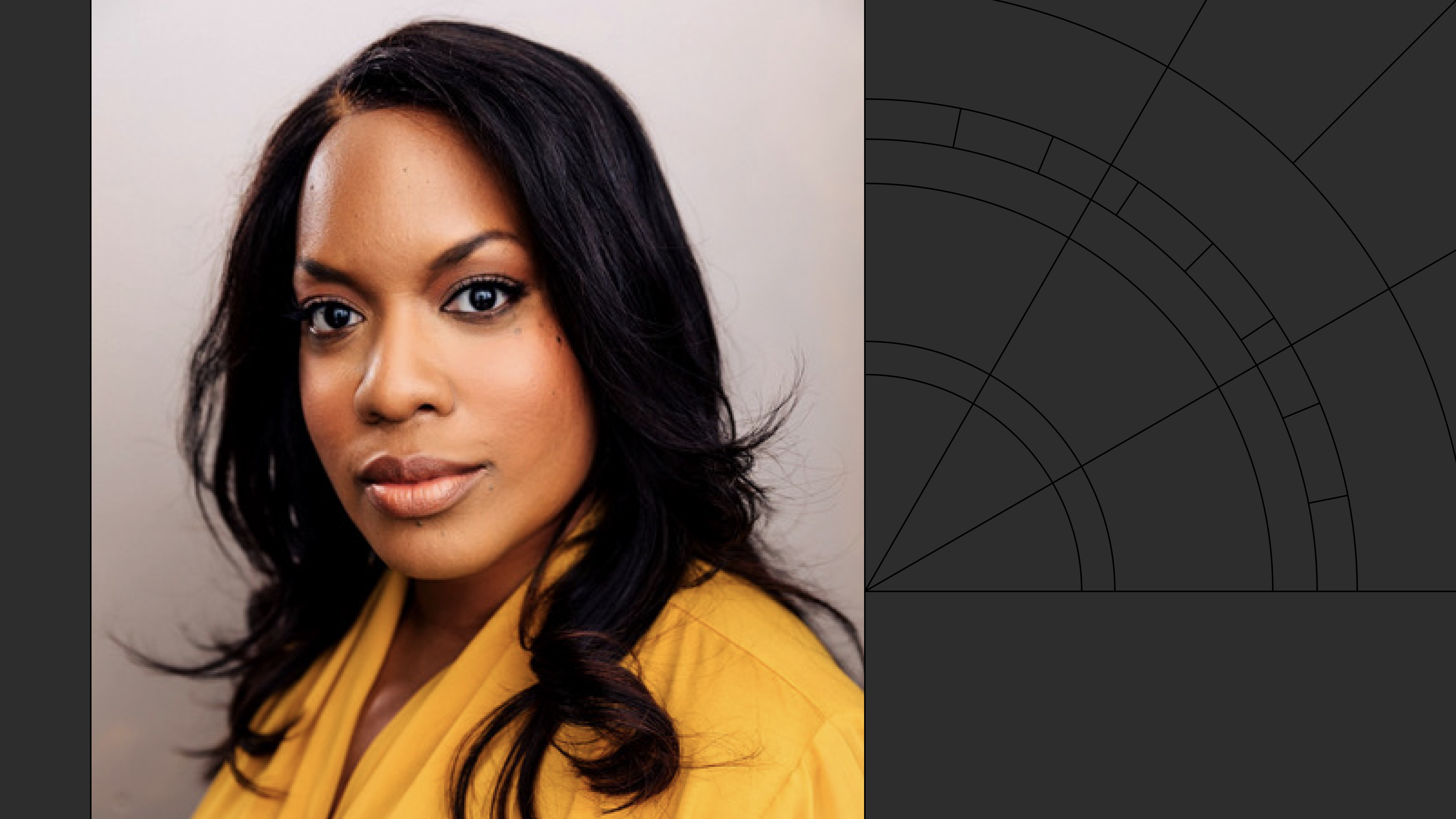
Allison Blackwell knows the power of ensemble storytelling firsthand. Currently appearing in Ragtime at Lincoln Center Theater as Sarah’s Friend, Allison is part of the acclaimed company behind one of Broadway’s most resonant productions this season. She has built a career defined by extraordinary versatility, emotional depth, and a deep commitment to collaboration onstage. 

In this conversation, Allison reflects on the path that brought her back to theater after nearly pursuing law school; what it has meant to revisit Ragtime across multiple productions; and what recognition for ensemble artists means to her personally.

Transcript

Allison Blackwell: Without an ensemble, there is no show and there’s no community. They are the heart and soul of any show, I think.

Monica Holt: Hey everyone. This is Monica Holt and welcome back to Arts Unscripted. It’s Tony Awards week, and this week, instead of one episode, we’re going to bring you three conversations over the next few days highlighting the performers, collaborators, and creative forces behind some of this season’s most nominated productions. The folks I’m talking to are essential to the work but rarely fit neatly into an awards category. My guest today is Allison Blackwell. Allison is a singer, a storyteller, and someone who’s been shaped by this art form since day one. Her mother, an orchestra conductor, brought her to Lincoln Center for the first time when she was just two years old to see Hansel and Gretel at the Met. Now she’s on that same campus every night on the Broadway stage of the Vivian Beaumont in Ragtime, a show that is moving audiences every day and asking all of us to sit with some of the most urgent questions about who we are and what we owe each other. Let’s dive in. Allison Blackwell, welcome to Arts Unscripted. I’m so happy to see you today.

Allison Blackwell: Thank you for having me.

Monica Holt: Oh no, thank you so much for making time. I know this is a wildly busy moment for you [and] for the whole New York theater community. And we’re going to chat a little bit about this season, but before we get there, I would love to hear from you about how art first came into your life.

Allison Blackwell: My parents. My mother was a conductor of orchestras and my dad was a concert pianist. So I grew up listening to music twenty-four seven, but mostly classical. Early on there was no Aretha, there was no contemporary. I didn’t start listening to that type of music until really middle school, high school. So I grew up with Chopin, Rachmaninoff, Beethoven, Bach, Puccini. It was all opera, all classical orchestral music. So that was what I grew up with first. My mother took me to the Met when I was two to see Hansel and Gretel for my first experience. And so just to be able to now be in Ragtime at that same campus where my mom first introduced me to music and the performing arts, it’s like such a full circle moment for me and kind of indicative of how the arts has really influenced my life and been with me since such a early age until now. Yeah.

Monica Holt: That’s going to make me tearful just thinking about it right now. Being on that campus is —

Allison Blackwell: Yeah. Two years old. And Hansel and Gretel for a long time was my favorite opera, was my favorite… I would just listen to it all the time. And it was in my cradle. They would play the [sings] “When I go to sleep at night…” [finishes singing]. That was what I would hear when I would go to sleep that would call me when I was little.

Monica Holt: Okay. Well, it’s almost like we need no explanation about how your musicality and your gorgeous voice has just blossomed.

Allison Blackwell: It’s a long story to get there because I grew up in a family with so much music that it scared me to actually go into it.

Monica Holt: I was going to ask, did you feel pressure?

Allison Blackwell: Well, the legacy of my parents — they both became music teachers [at] Temple University. And so they were teachers and also did music. So there was a stress of that a little bit on my shoulders. And so I think that kind of made me be a little scared of choosing it as a career. It took me some time to find my way.

Monica Holt: Yeah. When did you start really exploring, “Okay, if this was a professional journey I wanted to take, what does that look like for me?”

Allison Blackwell: Well, I did Godspell in my last year of high school and I fell in love. I was like, “Oh, musicals. This is it.” Because I was always singing in choirs. I was doing ballet, I was dancing, but that was the thing that gave me the bug. Stephen Schwartz’s Godspell. And I was like, “Mom, this is what I want to do.” And it was my senior year in high school and she was like, “It’s too late. You’re about to go to college. Julliard… These kids have been training for years and years to get into Julliard, to New England, to Cincinnati. All these top schools, they’ve been training. I know that you love to do this, but do you want to really do this?” And so my mom was like, “You’re going to go to a four-year college, get a degree, and if you want to do it after that, then you go ahead and do it, but you’re going to get an education and really figure out if this is what you want to do because you need to commit your life to it.” Because they knew how hard it was.

Monica Holt: And so from there, is that what led you to Spelman?

Allison Blackwell: It led me to Spelman because also my parents were like, “You need to live in this world and have a job besides being a performer.” I grew up with parents that had multiple jobs. My mom was a teacher but also a choir conductor. My dad, the same. Multiple jobs. So they were like, “Just doing theater or music is a wonderful thing, but not many of us can just do that and make a living.” So they’re like, “Go to Spelman, get your four years.” I was in Glee Club at Spelman. I did all the theater productions there, which was really, really great. But that was the route I took the four years was still singing and still doing theatrical, but also I got an English major, drama minor. I was like, “Maybe I can be entertainment lawyer. Maybe I can still be involved in music but not make it my life because I wasn’t sure yet if I wanted to do it.” But music never left me.

Monica Holt: I love hearing that. Fellow English major here, so fully here for that. So as you’re leaving Spelman, you took a brief look at law school. You mentioned entertainment law there. So what ultimately then pulled you back into the stage?

Allison Blackwell: This is a funny story. So in my senior year and junior year of college, I interned at law firms in Philadelphia. Then I applied to work for Congressman Stephanie Tubbs Jones of Cleveland, Ohio, got the job, and started working in the office as basically a secretary, but a congressional aid as they would call it on the Hill. And I would always get in trouble for singing at my desk.

Monica Holt: Stop.

Allison Blackwell: Yeah. I would be inputting things and I’d be like… [hums to herself]

Monica Holt: Of course.

Allison Blackwell: And they’d be like, “Allison, you’re singing.” It just was always in me.

Monica Holt: If only they knew how lucky they were to be hearing that. That’s what — I want to go rap on their doors and say, “You have no idea.”

Allison Blackwell: In my mind, I wasn’t singing. See? I thought I was doing the work, but I was always singing and I was like, “This is something. I can’t let this go.” I did a big concert with the Baltimore Symphony Orchestra and I was like, “I need to give this a try. I need to make this happen.” And I was working in Congress when 9/11 happened, which is a whole bigger conversation. So we know what happened in New York, but DC… The idea of every Congresswoman, Senator, on the streets of DC. Where do we go? The city is gridlocked. And I remember walking home that day from the House and being like, “Life is short and I’m afraid to make this my career, but I need to try.” So I applied to three programs for my master’s and then I got into Boston Conservatory and I gave my notice to the Congresswoman who knew I loved to sing and she gave me her blessing. She was like, “Go. I know that that’s what you want to do.”

Monica Holt: Oh, that’s beautiful.

Allison Blackwell: Yeah. Yeah. And then I went off to Boston Conservatory for two years, got my master’s. Hardest two years, just playing catch up. I didn’t get a degree in musical theater. I was four years kind of behind. So it was really rough, but I graduated, got out of there and the first gig I got was Pittsburgh Civic Light Opera Dreamgirls.

Monica Holt: Are you kidding me?

Allison Blackwell: With Norm Lewis, who’s now one of my —

Monica Holt: I know that production at the CLO!

Allison Blackwell: Yes.

Monica Holt: Of course!

Allison Blackwell: Billy Porter, Frenchie Davis, Montego Glover. It was nuts. I did an open call…

Monica Holt: Are you kidding me right now?

Allison Blackwell: …and then I got a random call like, “Oh, we want you to be a part of Dreamgirls.” And it was unofficial cover for Effie. Get real. So I had to step in sometimes for Frenchie doing Effie.

Monica Holt: Immediate masterclass. Well, it’s also so interesting. I think about your voice, the way that it blooms on stage, but also to think about then your first gig being Dreamgirls, which is such a different vocal property…

Allison Blackwell: …than what I was brought up with. For sure. And I just remember at school, Boston Conservatory, they were telling me, “I know you love legit. I know that you live in that world, but you’ve got to learn other styles. You’ve got to learn to find the other part.” Because in the classical world, that belting, that gospel, whatever that tone is, is not really loved. And so I had to just find a way to do it my way and to make it as authentic for me. I don’t consider myself a gospel girl or any of that type of stuff, but there is a soul to my voice that I can add. That was a good lesson I learned on versatility and how important that was for me to not only be able to use that legit classical side, but you’re going to be expected to do other things with your voice and can you do it?

Monica Holt: So then talk to me about how you kind of approached opportunities from there. I mean, I imagine being immersed in that setting at a venue as beloved as the CLO has got to be a pretty wonderful kind of first professional, as you were saying, moment. So then how did you take that and grow over time?

Allison Blackwell: Well, one, making the decision to move to New York City. Some people don’t make that move. I could have possibly stayed in Philly where I grew up, or Chicago has a great theatrical community. I could have done that, but I was like, “Let me move to New York and see what happens.” And I remember seeing Billy Porter on the street and I’d been there maybe for a couple months and stuff and I was like, “I want to be on Broadway.” And he just looked at me — you know how Billy — looked at me and was like, New York is not going anywhere and neither is Broadway. Go regionally, learn roles, learn who you are as an actor and as a performer and then come back here. And it was the best advice I’ve ever gotten from anyone. And regional theater has been my saving grace and the hub and where I’ve been able to do some of my favorite roles and learn who I am as a performer so that when you get Broadway opportunities, you’re not as scared.

It’s always scary getting a Broadway audition or going on Broadway. But once you have roles under your belt, you start knowing who you are as an artist and also as a human. So regional theater is what I did for many, many years all across the country. And I think the next gig I got was Aida at Arvada Center in Denver, Colorado. And I was understudy for Aida. Actually ended up going on. So it was like these opportunities to cover to go and do these roles. Then I got Paper Mill’s Ragtime. That was my first big gig in the city circumference, with the amazing David Loud, who was the original music director for Ragtime, who I consider my angel in New York City, who really ushered me through so many shows: Porgy & Bess, New York New York, things like that. Lifelong friends you get in these regional theater gigs. So that was kind of what I did for a while. And the big break for me was The Lion King Las Vegas original cast because that felt like Broadway, just not on Broadway.

Monica Holt: Not in New York. Right. I love hearing you talk about that importance of the regional theaters, that whole ecosystem. And also as you say, you never know the relationships you’re going to be making in those rooms that are actually going to serve well beyond any one production. I have to say, so you mentioned Ragtime as what you felt like was your first big kind of show in the tri-state, if you will. So I shouldn’t go too far without us saying, currently you’ve returned to Lincoln Center since your two-year-old days with Hansel and Gretel. You are currently on stage. You are Sarah’s Friend in this incredible company in Ragtime. There are so many roles that are so meaningful in the show, which is one of the reasons I think it connects so well, but Sarah’s Friend in a lot of ways has to hold that drumbeat that kind of ties the audience to the story on stage.

What was your experience like just joining this production as it moved to Broadway, coming into this role, having lived with a show like this before?

Allison Blackwell: Yeah. Actually, this is number six for me. I’ve done it many, many times. And so coming back to do it in this version, it felt like an old hat but a new hat because this is different. I’m older now. I’ve experienced more life. The world has changed. I’ve changed. So it was a whole different… Even though I knew the music very well, it’s a different show. It hits me differently and I think it hits the world differently now when you hear that show. So even though the show was in my DNA from so many times, this production and doing it in this time just felt really different on the soul and harder to honestly do.

Monica Holt: I wanted to ask about that because it’s a mirror show in the best of ways, right? It is going to reflect back to its audience every night society’s injustices across race, across immigration and class and the American dream. How does what’s happening in the world impact the way you’re telling the story today? Just how do you grapple with that and also take care of yourself and each other as a company in what must be frankly really hard?

Allison Blackwell: It is. That’s a multi-layered conversation because all of us go through different things. And so the Harlem experience is going to be different than the New Rochelle or the immigrant experience, even in the show. So how do you take care of yourself? I don’t watch a lot of TV. I know what’s going on in the world, but I try not to watch a lot of TV — CNN and stuff –because it will affect me through the show. Because the show does have hope, but I feel like Cats… their concept is the ballroom and celebrating Black joy. Our concept is America. And when you think about the concept of America, dreams and hopes, it’s a little rougher to break down what America stands for to us personally in the world, seeing what America was or is, is becoming, and then going and doing the show, but then having to have that layer of hope. You have to go through the show with hope or it’s a really rough three hours.

I think about what music I listen to before the show. I don’t listen to classical actually. I’ll listen to Bad Bunny. I’ll listen to stuff that gets me in a place so I can start in a place of joy and then my cool down will probably be more classical or more like R&B-light. Also too, we get along so well as a cast. We’ve known each other and worked with each other besides the show. I’m lucky in that way that we all get along really well. We have a wonderful leader in Josh Henry, and Brandon and Caissie. The three of them as our “trifecto,” I call [them], are just such powerful leaders. And we always start out with a group circle before we do the show. We have a word of the day. So it’s the cast. We get in the circle. We do stretches and Josh is like, “Allison, pick the word.” And you’ll just throw a word out and that’s what the word will be for each show. He’ll say some things and then he’ll say, “Monica, what’s the word of the day?” “Joy.” “Hands in. Joy.” And then we get ready to do the show. That’s how we maintain camaraderie, unity… because there’s some very hard things said in the show. So it’s very important that there’s a sense of community and trust to do this well.

Monica Holt: I love hearing you talk about that. You know, Cody Renard Richard was on when he was still stage managing and he was talking about that too, that the trust is the underpinning of everything.

Allison Blackwell: It is. It is.

Monica Holt: And in a show like this, I imagine that is even more centered and front of mind for folks.

Allison Blackwell: We have to with this type of story and what we’re putting our bodies through. The stage is massive, up and down the voms.

Monica Holt: Oh, it’s huge.

Allison Blackwell: The emotional toil and the vocal toil… I mean, the score is massive for us to sing for three hours and to stay grounded and honest through three hours of telling the story.

Monica Holt: As Sarah’s Friend, you’re also part of the incredible ensemble that you mentioned, which spans all of the storytelling. This year was the inaugural 2026 Broadway Ensemble Awards. Ragtime won for Most Outstanding Vocal Group in an Ensemble. And that score really is — I imagine you’re firing on all cylinders all the time. What does that recognition of ensemble mean to you personally?

Allison Blackwell: It’s so important and I just feel like the Tony’s needs a Best Ensemble.

Monica Holt: Yes.

Allison Blackwell: There’s just categories that are missing for me because I feel like without an ensemble there is no show and there’s no community. So we don’t connect with Coalhouse or Mother or Tateh without the immigrant ensemble, the Harlem Ensemble, the New Rochelle ensemble that builds these communities around these people. And as a principal, you need ensemble. You need people behind you to fill in that story. And so I just think the ensemble is so important. And I’ve been in so many great ensembles: Pogy & Bess, New York New York, Lion King… You need these ensembles in these shows. They are the heart and soul of any show, I think. And it’s about time they’re acknowledged. It was a great celebration to be honored for my song specifically, “Till We Reach That Day.” And my cast who supports me every night and goes through that funeral sometimes twice a day…

So to be acknowledged, it’s so important for not just our show, but for every show on Broadway and the ones that came before us. I think about the original Carousel that had like 9,000 people in it. Like, Oklahoma. The original Showboat. Like, these people that built the foundation of an ensemble singing group.

Monica Holt: That’s right.

Allison Blackwell: So I think it’s super important. I hope it continues and I hope that it hopefully eventually gets to the level of the Tony Awards acknowledging it, because it is super important.

Monica Holt: Yeah, I couldn’t agree more. The fact that it’s not currently a category continues to be a little baffling for me because there’s also, as you said, there’s honoring the present of the performances happening that season. There’s honoring the past of all that was built before, but it’s also how we tell the story of the future, how kids know more about what it takes to put on a show. And I think you mentioned Cats, Ragtime, all of these shows right now, the core is that story that the ensemble carries a lot of the weight in telling. And three ensembles, as you mentioned in Ragtime. Is there anything you think that is misunderstood about the work and the role of the ensemble and that community-building, that ability to be together, that audiences might not get?

Allison Blackwell: I think the misconception is just [that] the ensemble is the people on stage. There are so many people — swings and understudies — that have triple the work to make an ensemble work. I mean, the work that swings — some swings have 13 tracks to learn. Understudies —

Monica Holt: Which is insane. I cannot wrap my head around that.

Allison Blackwell: That’s super important to remember that ensembles aren’t just the people on stage. That swings are there. Standbys. Alternates. Understudies are just as important and they’re considered the ensemble as well.

Monica Holt: I appreciate you saying that. Ragtime is… I mean, it’s the Terrence McNally book, the score… It’s timeless. It’s timely. It captures so much of that reflection that we were talking about. You mentioned “Till We Reach That Day,” which obviously you profoundly perform every matinee and evening. I think sometimes we talk about the actor’s responsibility telling the story, but one thing that I like to talk about a lot is the audience’s responsibility of how they are receiving it. And when you talk about a show moving you, what you can do with that energy afterwards. Are there reactions that you’re seeing in the audience? I mean, it might just be all tears at the end, frankly. I know that’s what I’m guilty of. But conversations you pick up on as you’re kind of leaving the theater or things that have been interesting for you to hear?

Allison Blackwell: What I think is interesting about Ragtime specifically is how diverse the audiences have been. Seeing young folks to older folks coming to see our show, which makes me feel really good about theater in general because there’s always this idea like it’s a dying art form or we’re worried about people aren’t coming to theater. And just seeing the diversity of race and age of people coming to see the show is really, really powerful. I don’t know if I expected that. So to see younger people in the audience and parents bringing their kids to see this, that really touched me and was a good surprise, to see that we are still bringing in younger audiences and they want to hear this type of story. There’s a place for The Lost Boys, Beaches, these other wonderful shows, but there’s also a place for this type of story that’s a little heavier but needs to be seen and acknowledged.

Monica Holt: Absolutely. And I think this has been announced, the fact that Ragtime is going to tour across the country…

Allison Blackwell: Yeah. I’m thrilled about it because I feel like there was a time when everyone was doing Ragtime that it kind of petered off a little bit, but it’s also an expensive show. I get it.

Monica Holt: It’s big.

Allison Blackwell: It’s an expensive show. It’s a big, big show and we’re downsizing a lot more with musicals, but I think in this time, in this era we’re in, in this country, I think that this is a show that should be seen across the country. It’s just — take a gander, take a look.

Monica Holt: Take a look. Exactly.

Allison Blackwell: Take a look at where we used to be and where we are. And are we better or are we worse? It’s up to you to decide. We’re just showing the history of this country and what happened, what is still happening to some people, and you go off and make a decision and think about what your next move is going to be for this country.

Monica Holt: It is essential art as a mirror to society.

Allison Blackwell: Yes.

Monica Holt: I can’t not ask you what it’s like singing with the biggest orchestra in a Broadway theater this season.

Allison Blackwell: Oh, it doesn’t get any better. And our stage is huge. So it’s not only that you hear that, then the stage is huge. It’s an amazing thing because you don’t always get that and to sing “Till We Reach That Day” and even to sing — me, my favorite? The opening. The opening.

Monica Holt: Oh, when you guys all —

Allison Blackwell: Us all singing. It’s a dream to able to sing a score like this because you don’t hear scores like this anymore. So to have a full orchestra, 28 pieces, it’s a dream. It’s a great opportunity. It’s great.

Monica Holt: And it’s something to celebrate. Absolutely. Before we move to our little quickfire culture fun, could you talk about what is giving you hope about Broadway and the arts today?

Allison Blackwell: Again, the audiences I’m seeing, the diversity of all the people old and young, different races coming to see this, that really moves me. And so I just hope there’s a bigger uptick from this show to supporting performing arts in general. And that includes the orchestra, that includes the opera. I just hope that shows like this really get people excited about a fuller orchestra, fuller sound, all of that stuff.

So that encourages me and I hope bigger musicals come back. I know they’re expensive, but there’s something about seeing more voices, hearing more voices, seeing more people. It kind of makes you feel as an artist that I can make it. So I’m excited to see where musicals are going as far as, are they going to open up more of the orchestra? More of the ensemble?

But that’s what makes me hopeful is that more people are coming to the theater. There’s more options. There’s different types of theater for people to enjoy and I hope that that continues and people keep writing new material.

Monica Holt: Agree. And writing new material. And I’ll shout out Lincoln Center Theater and organizations like them that are nonprofit arts organizations that have found a way to commercially produce to help lift up this kind of holistic approach. They’re so important.

Allison Blackwell: And also seeing tons of kids come into our shows. That’s how I learned about musicals as well. So just seeing that these programs are happening at Lincoln Center and other programs are happening throughout Broadway is really, really important for our youth. So I’m excited to see how that helps us moving forward.

Monica Holt: Agree completely. Well, Allison, we have come to our little quickfire culture questionnaire. No wrong answers. The first question is, what is one piece of culture — that can be a book, a TV show, a movie, a TikTok trend — that you are currently loving?

Allison Blackwell: What’s his name? Billy Eichner on the street.

Monica Holt: Yeah. Billy on the Street.

Allison Blackwell: Yeah, Billy on the Street. I want that to come back. He’s fabulous.

Monica Holt: Amen.

Allison Blackwell: I saw that on TikTok or Instagram and I was like, “Ooh, let me watch all of these,” because they were so funny. He’s just great. So I miss that. Jessica Vosk does it with her show, which I love, but I really miss Billy.

Monica Holt: Well, shout out to Vosk in the City, and we’re personally asking Billy Eichner to come back.

Allison Blackwell: We need him right now. So that’s great. We need him. Billy on the Street. Let’s do it.

Monica Holt: Okay. If you could go back in time, what live performance or concert or event would you wish you had been present at?

Allison Blackwell: Oh, just one? How dare you.

Monica Holt: Oh, please make a list. We’re here.

Allison Blackwell: Okay. There are people I wish I had seen in their prime like Whitney Houston. I wish I had gotten to see Maria Callas in Tosca. I wish I had seen Leontyne Price’s last performance of Aida at the Met.

Monica Holt: These are genius answers.

Allison Blackwell: I wish I had seen Prince. I’ll stop there. But those are like, I think about people — Honorable mentioned Luther Vandross, for sure.

Monica Holt: When we have the time machine, we’ll let you know. Is there one free resource in any field that you think more people should make themselves aware of?

Allison Blackwell: Lincoln Center Library. I remember coming to the city and people telling me, “You need sheet music, you need to go to the Lincoln Center library.” And I remember spending countless years going to that library, pulling out scores, studying, photocopying music for auditions. That Lincoln Center library is legendary. Anything you need is there. So that’s what I would say. Bring back respecting libraries and going to libraries and studying and looking up material. You can watch videos of performances there, of ballets and operas and anything.

Monica Holt: Preach it. And then your final question, if you could broadcast one message about the arts across the country today, what would that message be?

Allison Blackwell: Honestly, stop cutting funding for the arts. We need money for the arts in middle schools, in elementary schools, in high schools, in colleges. Stop cutting funding for the arts. It’s important. It changed my life as a young woman and it’s changed so many people’s lives. I wouldn’t be here without the support of funding for programs. So it’s deserving of the support from our government.

Monica Holt: Well, Allison, seeing your face brings me joy. Ragtime has meant so much to so many of us, I know, and we are all just cheering you on truly, truly, truly.

Allison Blackwell: Thank you. Thank you. It’s an honor to do it and I’m just grateful.

Monica Holt: Thank you for listening to Arts Unscripted. If you enjoyed today’s conversation, please take a moment to rate us or leave a review. A nice comment goes a long way in helping other people discover the show. And if you haven’t already, click the subscribe button wherever you get your podcasts. We’ve got some great episodes coming your way and I don’t want you to miss them.

A huge thanks to our team behind the scenes, including Karen McConarty, Yeaye Stemn, Stephanie Medina, Jess Berube, and Rachel Purcell Fountain. Our music is by whoisuzo. Don’t forget to follow Capacity on Facebook, Instagram, LinkedIn, TikTok, and YouTube for regular content to help you market smarter. You can also sign up for Capacity’s newsletter at capacityinteractive.com. And I hope you’ll reach out to us and let us know what you think and who you’d like to hear from next on Arts Unscripted. I’m Monica Holt. Thanks for listening.

View More
About Our Guests
Allison Blackwell
Allison Blackwell
Broadway Performer, Ragtime

Allison Blackwell is currently appearing as Sarah’s Friend in the musical Ragtime at the Vivian Beaumont Theatre at Lincoln Center. Other Broadway shows include New York, New York, Pretty Woman: The Musical, A Night with Janis Joplin, Disney’s The Lion King, and Gershwin’s Porgy and Bess. Regional credits include Olney Theatre (Waitress, Helen Hayes Award Outstanding  Supporting Performer nomination),The Kennedy Center (Guys and Dolls, Bye Bye Birdie, Nine), Barrington Stage Company (Ain’t Misbehavin’, New York Times Critics’ Pick), Ogunquit Playhouse (The Sound of Music), Dallas Theatre Center (Les Misérables), TheatreWorks Silicon Valley (Caroline, or Change, SF Bay Area Theatre Critics Circle Award), and Marriott Theatre Chicago (And the World Goes ’Round). As a guest soloist, she has performed with The New York Pops, The Boston Pops, The Indianapolis Symphony Orchestra, The Philly Pops, The Houston Symphony, and The Atlanta Symphony Orchestra. Allison holds degrees from Spelman College and Boston Conservatory at Berklee. www.allisonblackwell.com 

FeaturedEpisodes

Arts Unscripted
Tune In

New Episode

Episode 176