
Skip to content
Follow Us

Get the best of Capacity Interactive delivered to your inbox.

This field is for validation purposes and should be left unchanged.
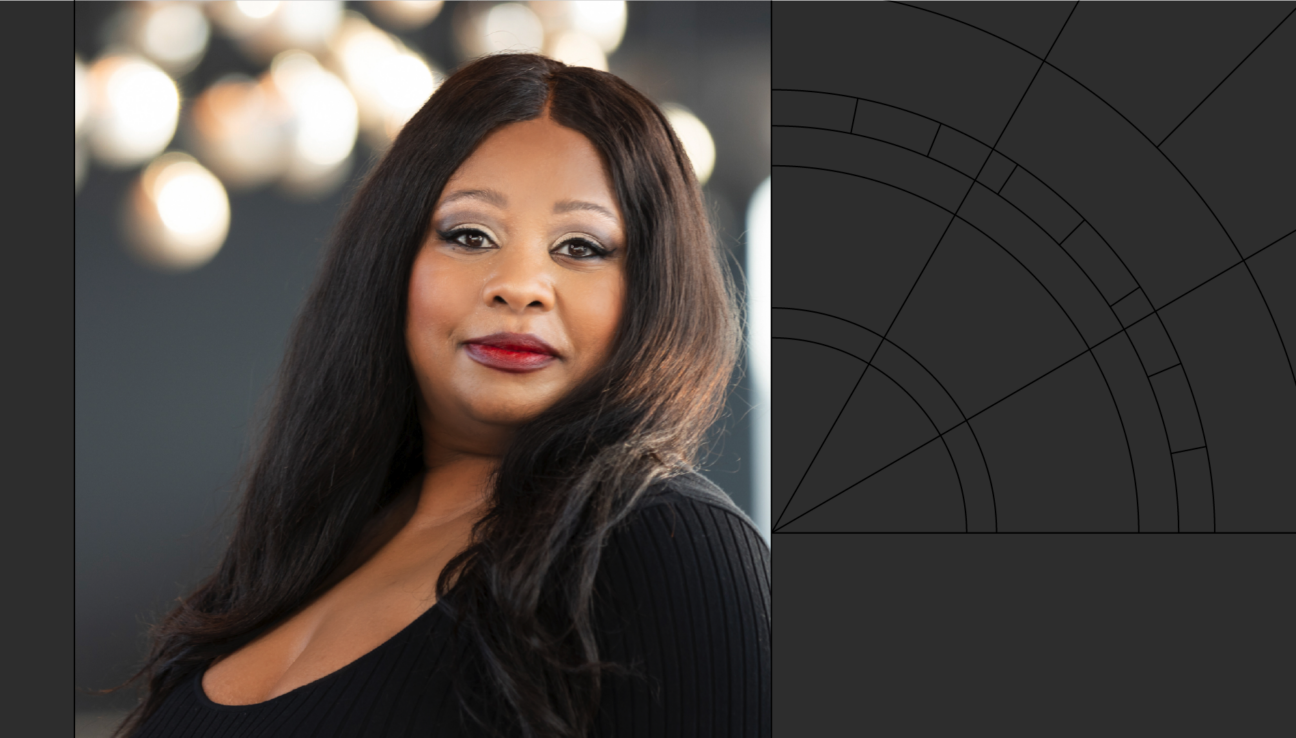
Pamela Tatge, Executive and Artistic Director of Jacob’s Pillow
Episode 169
estimation...

Pamela Tatge, Executive and Artistic Director of Jacob’s Pillow

This episode is hosted by Monica Holt.

0:00 / 0:00

In This Episode

A long history is a gift for any cultural institution, but it also invites a constant balancing act. How do you honor tradition while continuing to evolve for the future?

Pamela Tatge has spent the past decade exploring that question as Executive and Artistic Director of Jacob’s Pillow, one of the world’s most renowned dance institutions. Under her leadership, the Pillow has expanded from a seasonal festival into a year-round cultural hub, embraced a collaborative curatorial model, and explored how new technologies can broaden how dance is experienced and shared.

As Pamela marks her tenth year leading the Pillow, she reflects on guiding the celebrated institution through moments of upheaval; the growing role of technology in the arts; and the leadership lessons she’s gained in her tenure.

Monica Holt: Hey everyone. Welcome back to CI to Eye. I’m Monica Holt. This spring marks a decade since Pamela Tatge took the helm at Jacob’s Pillow, one of America’s most beloved dance institutions, a national historic landmark, and the first dance site in the country to receive that designation. It is, for those who haven’t been, a genuinely magical place tucked into the Berkshire hills of Massachusetts, and it draws dancers, choreographers, and audiences from around the world every summer. But before Pam was executive director at Jacob’s Pillow, she was an actor in New York auditioning and waiting tables until ultimately deciding she had too much she wanted to do in this life to wait for other people to determine when she worked. So she pivoted into fundraising, then marketing, then arts leadership, and spent 17 years at Wesleyan University building something remarkable, including launching one of the first master’s programs in performance curation.

In her 10 years at Jacob’s Pillow, she has navigated a pandemic, a devastating theater fire, and a complete re-imagining of what this institution can be. And she’s done it with a collaborative spirit and a generosity of vision that I find genuinely inspiring. In this conversation, we talked about sharing curatorial power, leading through crisis, and why at the 10-year mark she is still pushing forward, including with Jacob’s Pillow’s first ever winter programming. This is a conversation worth celebrating. Let’s get into it.

Pamela Tatge, welcome to CI to Eye. Thank you so much for being here today. I am so excited to chat with you.

Pamela Tatge: Oh, it’s great to be here. Thanks, Monica.

Monica Holt: We like to start every episode talking a little bit about what the guest’s first experience with art was. And of course, these days, we know you for your leadership at one of our nation’s most beloved dance organizations, but I think I’ve heard that your first love was actually theater. Is that right?

Pamela Tatge: Yes, exactly. And I was trying to think of my first theater moment that I witnessed, but it was actually, I wrote a play in fourth grade about a king, a queen, a prince, a princess, and a maid. I gave it to my fourth grade teacher and she cast me as the maid. So that was my first experience with theater, but obviously I must have witnessed theater to know what it was so I could write about it. But in fact, it’s the dance event that I saw first that really has stayed with me. And that was seeing Paul Taylor at the Kennedy Center when I was 13.

Monica Holt: Wow.

Pamela Tatge: And the program closed with Esplanade and there was something about that incredible exhilaration that those dancers, the women running across the stage, leaping into those arms just made me think that anything was possible. I remember not being able to stand after I saw that performance.

So yeah, those were some of my early moments.

Monica Holt: Thank you for sharing that with me. It’s always very special to me to hear about those memories in particular. If you were 13 when you saw that, what did you look at in high school? And leading up to college, were you able to participate at all in dance or did it always just kind of live in the back of your mind remembering that experience?

Pamela Tatge: I had taken ballet since I was in third grade, I think. So I took ballet all through college. In high school, I was taking voice lessons. I was taking dance and I was in the school play or musical. So it was a big part of my life. And I really felt that that was what I was going to go on and do. And I went to Wesleyan. I majored in history because I loved history and I loved languages and it was a way to bring my European loves together. My mother’s a native Italian, I should say. So I grew up with Italian and English, but I did, again, I did a full theater life and dance and voice and choir life while I was in college. And every summer I worked as an actor. I went to New York, auditioned, and I got into some summer stock.

Monica Holt: I love hearing about kind of an adolescence into early adulthood, rich with trying new experiences in the theater. Was there a particular moment where you realized after doing some summer stock, after being out there as an actor, where you realized that maybe you were ready to chart a different path?

Pamela Tatge: I know exactly when it was. I graduated from college and I moved in with my sister in New York and I was getting part-time jobs while I auditioned. And within about, I would say a year and a half, I realized that I simply couldn’t wait for other people to determine when I worked, that to see that control, that power, to feel that people were just seeing my surface. They weren’t getting to know me. They were hearing five bars or hearing a minute and a half of a monologue. I had too much I wanted to do in this life to wait. And I also didn’t have a big enough ego to say I’m going to self-produce myself in Hedda Gabler and everyone’s going to see what an actor I am. And the other thing was, is that I was in love with a man who was not in New York City.

He was in Connecticut. And I got an offer to do a national tour of the National Shakespeare Company to do the role of Hecate in Macbeth. And I was like, “I’m going away for nine months to do one monologue? No, that doesn’t feel right.” So for all those reasons, I said, “I’m going to find ways to work in service of the arts.” P.S. That man is my husband and we will be married 40 years next January.

Monica Holt: Oh, congratulations. Okay. Well, thank goodness.

Pamela Tatge: It was a good move.

Monica Holt: That is the best possible ending to that story, right? Well, congratulations. That’s absolutely wonderful.

Pamela Tatge: Yeah.

Monica Holt: I think knowing where your priorities lie, what you were valuing at the time and the way that that’s now, as you look to steward the arts, those decisions have shepherded your own journey. It’s a really beautiful thing to look at that exploration. When you first made that pivot, am I right that you started in roles that were supporting fundraising and development? How do you think — I think a lot about, my track was, I got in marketing, and how that has clearly informed the way that I have thought at every level of an organization I’ve been at. So I’m curious for you, starting in fundraising, but now obviously you’ve led major institutions, how did that entry point continue to shape the way that you think about your leadership in an artistic nonprofit model?

Pamela Tatge: Well, I think very much fundraising taught me so much about people, about strategy, about case-making, and that’s something that an artistic director, an executive director, has to do all the time. And I think being able to get people excited about and really authentically explain why something matters in this world is something that I learned in fundraising that transfers to everything I do.

Monica Holt: Yeah, that makes a lot of sense. So let’s talk a little bit about your leadership at the Center for the Arts at Wesleyan. How did you arrive in that role? Because that was I believe to be a role in which you were able to launch and shape a number of significant initiatives. So can you walk us through how you landed there? And then maybe can we talk through some of the projects that were really meaningful for you?

Pamela Tatge: So I had been at Long Wharf Theatre for 10 years and I was looking for a new challenge and the Center for the Arts job came available. I knew all about the job and yet, it was a programming job, it was an executive director/artistic director job. And I had one experience. I’d done fundraising. I also did marketing at Long Wharf, but I saw it as an incredible opportunity to grow. And as someone who had supported multiple artistic visions, the idea of having the president of the university at the time say to me, when I said, “What’s your vision? How will you define success for me in five years?” And he turned to me and said, “You’re going to have to tell us that.”

Monica Holt: That’s right.

Pamela Tatge: And to have someone say, “What is your vision?” Then I wanted that job and I really, I got so excited about the possibilities and it was a job where I had to work with faculty. So the Center for the Arts supports all the arts departments, student productions, faculty productions, as well as has a visiting artist series. And then it ended up having a lot more than that in the 17 years that I was there. But I would say the journey for me was stretching and having someone have belief in the fact that I could have a vision, which was so exciting. And so empowering

Monica Holt: Because that was your first executive leadership role, is that correct?

Pamela Tatge: That’s right.

Monica Holt: What ultimately prompted the shift for you away from Wesleyan, which clearly held a place in your heart — you were there for an extended tenure and I’m sure good memories from college itself — that moved you to head to Jacob’s Pillow, albeit one of the most magical places in the country. So I don’t imagine that that pull was too difficult to address.

Pamela Tatge: Right, right. Well, I should probably speak a bit about the work that I did at Wesleyan because it definitely informed the why of Jacob’s Pillow. Dance was swiftly becoming a focus of what I did and a number of initiatives. First, of the creative campus initiative, which was about bringing arts into non-arts areas of the university. In the idea that we have students captive for four years, how can we turn them on to being lifelong arts attenders, engagers, practitioners? And I paired theater artists with astronomers, biologists with dancers, photographers with historians. And the most successful marriages that I forged between faculty and artists were those with dance artists, those who were bringing the creative research that one can do through the body into the classroom. And they were also the experiments that really activated students. So my work with Ann Carlson, Eiko Otake, Liz Lerman… those are some of the artists who had transformational effects on me.

And at the same time, I started a contemporary dance series that really didn’t exist anywhere in Connecticut. I would say two other programs that I started at Wesleyan that again informed my view at the Pillow, one is the Green Street Arts Center, which was a community arts center that Wesleyan created in the north end of Middletown as a third space between community and campus with a robust afterschool program, and the Institute for Curatorial Practice of Performance, which was the first master’s degree in performance curation. And again, dance figured strongly in that curriculum. So all points were heading towards dance having a larger presence in my life. I really discovered the power of dance in ways that I’d never experienced quite in any other way. Yes, I’d danced before, taken dance, but to see it as a means of knowing and understanding the world was what really turned me on.

So almost 17 years in, when I began to lift my head up and say, “What am I going to do next?” I was headhunted for a job to be a managing director of a regional theater. And I said to the headhunter, “I like managing director tasks, but I’m an artistic director. I can’t imagine just doing that.” So [I] went to hang up the phone and he said, “Well, I have to tell you about Jacob’s Pillow.” And of course, I’d been to Jacob’s Pillow and I knew that Ella Baff, the director, was leaving, but it just didn’t occur to me. I didn’t put two and two together. And I’m the mother of four children. I have two stepdaughters and I have two of my own. My youngest was heading to college, so I really resisted leaving before he went to college. So when I knew that he was heading out, I thought, “Oh my goodness, I’m going to look seriously at this opportunity.” And it happened remarkably fast.

I applied in October and I got the job in December and I started in April. So after that long piece of time when the moment was right and the job was right, I was very lucky that the stars aligned, as they say.

Monica Holt: And they sure did. I love hearing you say that and also the way that you talk about those interdisciplinary, but also inter-industry, collaborations that you created and curated and worked through at Wesleyan. And I think that’s some of the most extraordinary work that we can do, particularly in this day and age. But moving to Jacob’s Pillow, it is a national historic landmark. It is the first dance site to receive that designation, and it’s a historic institution with tradition and expectations. So when you stepped into that role in 2016, what did that feel like? How did you want to approach honoring the legacy, but still moving as you wanted to as the new leader?

Pamela Tatge: Well, first of all, I have to say how grateful I am to Ella Baff who had completely programmed summer 2016 so that I could experience it. I have to just also thank the staff when I think of Norton Owen, our historian and founding director of preservation at Jacob’s Pillow and how he just sort of filled me with the history and helped me understand what I was walking into, to all of the staff that collaborated to make me feel welcome. But my goodness, talk about the weight, the whole imposter syndrome. Who am I to determine who are the 40 companies that are going to represent dance at its best in the world? And yet what I was certain of is how I felt about work. If I could feel that, then an audience would feel that. And so I also was able to draw on some of my favorite artists for my first festival, and that was also really exciting to welcome them for their Pillow debut and have them be a part of that celebratory feeling that I was feeling.

But I think the feeling that you have as a director at the Pillow — and the Pillow has not had many directors in its history. People do tend to stay. You feel this huge sense of history and continuum. I feel myself to be the steward of this organization at this period in time. It has existed before me and it will exist after me. And to have that kind of certainty is such a humbling feeling.

Monica Holt: One of the things I’ve admired so much about your leadership is that you are an artistic director and an executive director, but you’ve been very intentional about moving away from a single gatekeeper model and towards a very collaborative curatorial approach, which I think is such a beautiful way of also embracing the future and what the world looks, feels like, and needs today. For you, what prompted that shift? Because you were a pioneer in a lot of ways in doing that.

Pamela Tatge: It was very much informed by my time at Wesleyan. One of the distinctive natures of presenting at Wesleyan was that you had to in part do it collaboratively with faculty, and sometimes that was challenging and other times it was just so exciting because you knew if you could land on an artist that the faculty member was excited about, that they would integrate into their curriculum, then you’d have students engaged and then you’d be… I go back to what my mission there was. I could really achieve my mission if I found those matches. So I kind of missed that dialogue and that’s number one. Number two, I do feel that we all have lenses and biases and I wanted to widen that circle of who gets to decide and also understand that each of us, like I have been working in this field for whatever, 40 years, and I have the artists and the genres that I’m passionate about and I don’t have familiarity with everything, nor should I.

So if I could open up and hear who other people are passionate about and have them make the case as to why, that would be all the more thrilling. So I got a grant from the Ford Foundation to hire our first guest curator, and that was in 2019. The pandemic hit. I had done some early interviews, we had a hiring freeze, we had layoffs, it was the worst. Then I swiftly decided, no, actually this is the moment where we need to begin planning for the future. And I made the decision to, instead of hire a single person who I thought would feel so much pressure to be the first guest curator at Jacob’s Pillow, rather I hired two associate curators and the inaugural associate curators were Melanie George and Ali Rosa-Salas. And together we planned the festival [in] 2021, which was an all outdoor festival, and the Pillow Lab. And that — it of course takes so much more time to have a curatorial team.

It’s so much easier for me to say, “I want this person. I want this person.” And be done with it. But I think the fact that you have to make the case to each other as to why, that sort of ups the stakes a bit and makes it harder in a very important way, I think.

Monica Holt: Yeah. Well, community and collaboration take effort and of course it would be easier to take a central, single-line approach, but that’s not what builds for what comes next. And that’s not what strengthens everyone in terms of their own viewpoints and the way that they can exist in the world. So I think that hard work pays off in huge dividends and certainly we’ve seen that at the Pillow. I’m sure there are folks who are curious when you’re widening the lens of an organization, how does that collaborative process unfold? And I like this idea that you’ve set up of, you are explaining your thought process to other people around the table. You are having to consider each other’s opinions and insights. At the end of the day, when you’re also looking at creating a season that has cohesion or sense of purpose in and of itself, what does that practically look like in alignment with all of the teams at the Pillow as you’re building this collaborative culture in the day-to-day?

Pamela Tatge: Well, it’s complex, but I would say it’s about holding innovation and pragmatism in the same embrace.

Monica Holt: Very well said.

Pamela Tatge: And what that means is that if you’re putting a season together, there are certain engagements that you know right off the bat, they are a known quantity. People are going to want to come and see these artists for whatever reason, and you need a handful of those to pay for the handful of artists who no one’s ever heard of before, but you are passionate about and you know they have to see. So practically, it looks like: there are certain artists we all agree on off the bat. They’re making a new work and we’ve heard about it, we’re so excited about it. Then when it comes down to the, for example, the emerging artists that you want to feature, oh my goodness, those are difficult conversations. And for me, there have been moments where someone has said, “Actually, I draw this line. I don’t see us doing this.” And if I believe in this person, I may have to compromise what I believe because of what they believe. And sometimes that you swallow hard and you say, “Okay, I’m going to give that up.” But I think in the grand scheme of things, it makes us such a more rich and representative organization. And we stay that much more current because someone like me is not programming in isolation.

Monica Holt: Is there any particular instance or memory you have of a surprise that led you somewhere you might not have gone if you had just been curating on your own that you think about?

Pamela Tatge: Oh, a very important moment when Melanie and Ali were very interested in the importance of our archives. Thanks to Norton Owen, we have recorded everything since the ’80s, so every single performance. So the dance history in this snapshot that is the festival has been held by Jacob’s Pillow for almost 50 years. So, who’s not in the archives? And they asked that question and they said, “We want to think about who’s not in the archives and who should be in the archives because it’s not only about the festival, it’s about the recording of history. And when you look back, I mean, it’s thrilling to look back at who was being presented in 1950 and who made up that season and what was going on in the US at the time. Well, if you’re excluding a whole chunk of people or genres or traditions, then you’re not getting that view.

So to me, that was the moment of surprise. And of course, this falls to us to rectify. And so it led us to some really exciting artists and again, was the perfect rationale to why our curatorial process needed to open up.

Monica Holt: That’s brilliant. And you mentioned the pandemic and where you were in terms of curatorial process then. Obviously, 2020 was very destabilizing for the industry. It is something that has been much discussed, but I should add for the Pillow, the Doris Duke Theatre that year was destroyed in a fire. And so in a moment where there’s already all of this collective upheaval and grief, how did you and your team process that loss in the midst of everything else happening? And what did you think about in terms of your leadership and the collective in the aftermath of that fire?

Pamela Tatge: Well, I mean, it was the physical manifestation of everything we’d lost, right? It happened so fast. Once it was on fire, you could tell that there was no going back. It wasn’t going to be saved. So I think that my leadership at that time was deeply grounded in our organization’s values, the trust that thank goodness I had with the board at that time to be able to… I mean, the other thing that happened was that was November. And in January, we were slated to demolish the stagehouse of the Ted Shawn Theatre and rebuild it. And I had this moment of like, we shouldn’t rebuild the Shawn. I mean, we’ve got to rebuild the Duke! Let’s take the money that we’ve raised for the Shawn and put it into the Duke, or maybe we could do both at one time. I can tell you, my thought processes and all of our thought processes went down many different paths, but it was clear to me that we had to take a pause and think deeply about what we wanted the theater to be, that we were not going to rebuild what we had.

So it was more about just knowing what it takes to start over, to build a building, and having to go through that. So I think that at those times of crisis, you ground yourself in your values and what’s important. And again, no one tells you what to do when there’s three TV stations on campus wanting to interview you. What do you say? All of that, you have got to just rely on your best judgment and lean into it. So the staff was extraordinary because think of what they’d been through, the layoffs of their colleagues, the loss of so much. We had pivoted to an all-virtual festival that summer and were deep in thinking about this outdoor festival and everyone had to pivot yet again. And so it was tough. And I think of a similar moment last summer when we had the tragedy of the loss of our colleague, Kat Sirico, that had the kind of sudden tragedy this time of the loss of a dear, extraordinary theater professional.

All of us had to lean into our values, the trust, and move through what was a really difficult time.

Monica Holt: Yeah. Well, and all of our hearts were with you all in both of these moments. And I think it speaks to the creation of a culture that is truly supportive, not just of the art and the artists, but also of each other and how we take care of each other in a day-to-day when everything’s going right, I think really informs how we take care of each other when things are not okay.

Pamela Tatge: Absolutely.

Monica Holt: And I think leading through these moments is being grounded in the values and the culture you’ve set up. And that’s something that you’ve had to navigate more than most in this moment. So thank you for that.

Pamela Tatge: Thank you.

Monica Holt: You reopened the Doris Duke Theatre last summer, and it’s become, I think, a really wonderful exemplar of the intersection of performance and technology in a way that feels constructive and supportive and ambitious for the field right now. What inspired you to move in that direction? And can you talk a little bit about the new theater?

Pamela Tatge: Absolutely. So first of all, I want to thank the board of directors of Jacob’s Pillow for right when we were in the pandemic, beginning a strategic plan for when we would come out. Of course, that was even before then we lost the theater and we were thinking about then what would this theater serve in terms of our programs? It made us ask profound questions about who we’re here for. So we arrived at certain strands — I would say four pillars — that we wanted an architect to serve in the design. The first was we had in 2019 committed ourselves to really thinking deeply about the indigenous history of Jacob’s Pillow. Our land gives us our identity. How can we not be responsible to the peoples on whose land we dance? So we knew that we wanted to have indigenous values embraced by this theater. And we didn’t really know what that meant, but we asked every design team to have an indigenous artist on a par with the acoustician, engineer, right in the team when they bid on this project.

And Mecanoo from the Netherlands had Jeffrey Gibson, the MacArthur Award-winning artist who also has performance in his background, so was a perfect choice. Second, we wanted to build the most environmentally sustainable building that we could afford. We wanted a building that would be resonant with the land. So one of the features of this theater is if you imagine a black box, the side walls of the long side of the rectangle open up to the outdoors. So in the event of another pandemic — literally this is in our mind — we could have the doors open. We could have people socially distant and they could watch performances. The third was accessibility. We have building-by-building worked to make our campus as accessible as possible, which is not an easy feat when it’s basically a rustic place. But the Shawn, when we did the renovation, the Leir Stage, our outdoor stage, and the theater, the Duke, was — we were determined to make it as accessible as possible, down to the fact that our catwalk is wheelchair accessible.

Monica Holt: That’s wonderful.

Pamela Tatge: So we can have disabled technicians do the long side. Not all of the points are accessible, but most of them. And then finally, we knew that we wanted to build a theater that would be able to host the development and presentation of works that live at the intersection of dance and technology. And the why of that was, in fact, again, very much pandemic influenced. We shifted to an all-virtual festival, as I said, and we drew an audience of about 160,000 people and only 8% of them were crossover to our in-person audience.

Monica Holt: That’s right.

Pamela Tatge: So here’s Jacob’s Pillow that many people… I just talked to a choreographer in Cairo last week who said, “Oh my God, we studied Jacob’s Pillow and dance history in my first year of college.” So we are studied across the world, but many, many people will never get to Beckett, Massachusetts. It’s not easy to get to. And so it was all about access. And at the same time during the pandemic, artists were experimenting with technology. They had more time and space and the tools were becoming more and more available. So we made the decision that the theater should be future-proof, which you can never make it future-proof, but we wanted to make it —

Monica Holt: You can aspire. You can try.

Pamela Tatge: You can aspire. Yes, exactly. And so we put together what we call our Digital Futures Think Tank. It began with four artists, and it’s been expanded to eight now. And they’re all artists who work at the intersection of dance and technology or theater and technology. And we said, “Give us your tech rider for the thing that you want to make.” And we literally want to make sure that the plugs are in the right space. What I didn’t want to be, and how many times do you walk into a theater and say, “Oh God, if they’d only not put that thing there, we could have…” So to the extent possible, if I had any control for future directors, could we make this the most hospitable technically to as many types of productions? And so we gave that challenge to the architects and to Charcoal Blue, which was our theater consultants.

And I would say that we also decided that the technology was changing so fast that it was more important to build the most flexible space with tons of bandwidth, access points… We have a spatial sound system, we have remote cameras, we have multiple projection sites. Because frankly, the more I get into this work now, every artist has a different need. It’s not like everyone’s making the same thing. And I actually think that arts organizations, in order to stay relevant, have to have hybrid existences. I think ultimately we’re going to have to exist in person and online. And very swiftly, there’s going to be many more ways of interacting online than just witnessing a recording or even a live presentation and that we wanted a theater that could host the development of that kind of work. And so that’s why it became an anchor. And it was the anchor, in fact, that most interested our lead funder, the Doris Duke Foundation, and they were most excited about the fact that we were thinking about the future and not building what we had, but building something that would host artists into the future.

Monica Holt: Yes. And it’s a powerful partnership between those, your organization and the Doris Duke Foundation as well, who are and have been great champions for this intersection of work and how we are future-proofing what we can in what we are imagining now. And as you talk about how organizations need to look at what they are doing online, how they are having a duality of experience available to audiences, I would be remiss not to talk about that while at the same time you’re pursuing that endeavor, you are launching an inaugural spring season for the first time at the Pillow and expanding year-round programming. Why did right now feel like the right moment for that expansion?

Pamela Tatge: Well, I think first of all, we’ve been a year-round organization ever since we founded the Pillow Lab, which is our residency program for developing new works. We’ve had our community engagement programs, which happen between festivals, but we haven’t really had a winterized presentation space that is of the ilk of the new Doris Duke Theatre. How can we not use this theater for the benefit of artists, for the benefit of audiences? And I think it’s really important that we honor the year round audiences, not just the summer audiences, and there’s a great appetite to have more dance in our region. And the first experiment that we had last fall, which was Caleb Teicher and Nic Gareiss performed an incredible performance in the round and the Duke was nearly sold out and just a testament to, oh yeah, people want to come. And this is such a spectacular venue.

We want it to be used beyond the summer. Some of the things we also realized was that the technical demands of works that are tech heavy require more time to load in and load out than is typical of a festival format. So we’re having breadth. And why that is, is again, the Duke is its own entity. It really is. It’s a makerspace, it’s a presentation space. It doesn’t have to be in solely the festival calendar. And that was a really big discovery that we made, again, just by doing.

Monica Holt: Right. You mentioned about who you’re serving and the community around you year round. How do you think about your institution as not just the presenter of work, but also as a neighbor in that community?

Pamela Tatge: Well, I think Berkshire County, I sort of think about Berkshire County as our neighborhood. It’s curiously only about 120,000 year round. So it’s a very rural county, in fact, but it’s our home. It’s where our vendors are located. It’s houses our staff. It feeds our staff. Whether it’s the coffee shop or the gas station, it keeps us going. So we have a responsibility to be citizens of Berkshire County. And I think Jacob’s Pillow has long had an international gaze, a national gaze, but really not so much of a local gaze. And I would say when I came, the work that I did with the Green Street Arts Center in Middletown, Connecticut definitely informed the founding of the first community engagement department at Jacob’s Pillow. So we had community engagement programs, but we didn’t have an intentional strategy. And so to really understand how we can enhance the quality of life for people who live and work in our immediate neighborhood is really important.

And we’ve taken this very seriously, whether it’s having staff members volunteer at local organizations, our director of facilities, Vinny Vigilante, is a member of the volunteer fire department in Beckett. That’s his kind of dedication. So we’re very… We believe that it’s our responsibility to be citizens of the place where we live.

Monica Holt: Beautifully put. This spring marks your 10th anniversary with Jacob’s Pillow. When you think back to who you were stepping into the role a decade ago, what have you learned about arts leadership that may have surprised you then when you were first starting?

Pamela Tatge: What I’ve learned about arts leadership is patience, learning to live with ambiguity, waiting for the answer. Sometimes the answer’s not there, and if it’s not there, you’ve got to simply give it time and wait for it and not push it. And I’ve learned how humbling it is to hold a space for artists and audiences, what a responsibility that is to, year after year, make sure that we are that place that they can come to, and that you’ve got to understand the weight of that, but at the same time, have confidence in the place itself. It’s got its magic and you can lean into that magic.

Monica Holt: Excellent lessons all for all of us, no matter where we are in our career. As you’re looking across the broader cultural landscape right now, we are in a time where the resiliency of the field continues to be tested. What gives you hope about the future of the arts when you get out of bed in the morning?

Pamela Tatge: I’ll just harken back to the first week of the year where we started our first ever winter intensive in the school. We had 35 dancers come to the Pillow, immerse themselves in classes, in the archives. And there was an opening moment, which was led by Gerald Casel, our director of our school, where he asked the young artists, most of them college aged — I forget what the age range was, I think 18 to 25 — “What are you hoping that this week will bring you?” And how these young people were able to articulate what they wanted, that they wanted to know how to take up space. They wanted to find their voice, their courage at naming what it is they wanted at such a young age in a group setting, told me that, “My God, there have always been young people who just knew that in their hearts they were artists.

They had no other way of existing in the world.” And they wanted to find a way to be that artist in the world. And in all human times, the arts have existed as a beacon. And I think that having that next generation, that dose of the next generation at the start of this year has really fueled my work since. That gives me a great deal of hope, as well as the loyalty and devotion of our audience at Jacob’s Pillow. This place means so much to people. So it gives me great hope that we will get through whatever time, because people will always want to come to this magical place that has been this haven and refuge for so many.

Monica Holt: Wonderfully put. And yes, hope that we can all look to in our audiences and in the future artists that are rising up. Well, Pam, we’ve come to the last part of our time together today. We like to do a little quickfire culture questionnaire to gauge what’s on folks’ minds. So our first question is, what is one piece of culture right now — a TV show or a book or something that is just happening in the world — that you are currently obsessed with and loving to see?

Pamela Tatge: Well, the first thing I thought of was film right now. The films that have been nominated for Best Picture: Sinners, Hamnet… Like, I’m a film buff and I think film is getting better and better. And so yeah, that’s what I love. And seeing as much of the Oscar nominees as possible before the Oscars is my goal right now.

Monica Holt: That’s great. That’s great. The two you named are favorites in this household as well. If you could go back in time, what is a live performance or event that you would’ve wanted to attend?

Pamela Tatge: I think that I would have wanted to see the Royal Danish Ballet at the Pillow. When they first performed there, they made their US debut. The performance was apparently so stunning that the King of Denmark knighted Ted Shawn, and it was one of the — Ted Shawn being our founder of Jacob’s Pillow. It was one of the awards he was most proud of. And I think I would’ve loved to have seen that. I would’ve also loved to have seen — The first season in the Ted Shawn Theatre was 1942, and Ted Shawn in those days had what was so wonderful about how he got people excited about different forms of dance is he had them on a shared program. And he brought Asadata Dafora from Sierra Leone, who’s the first African artist to perform on a concert stage, was at Jacob’s Pillow. I would’ve loved to have seen what that was like, what the audience response was. So yeah, it’s hard to pick one.

Monica Holt: What is a free resource in any field right now that you would recommend everyone should avail themselves of?

Pamela Tatge: Jacob’s Pillow Dance Interactive.

Monica Holt: I was actually hoping you were going to say that.

Pamela Tatge: So people may not know this, but you can go online and you can see clips of the great dances in history. I just watched Ronald K. Brown performing a solo for Katherine Dunham when Jacob’s Pillow honored her. So first of all, we hear of Katherine Dunham. Well, what did she look like when she was sitting in a chair on the stage and what was a young Ron Brown and how he moved? So I think that that sort of element of surprise — and for those people who are dance experts, we have a game that you can, a guessing game that you can play. So it’s really wonderful. And a lot of people don’t know it’s there.

Monica Holt: That is wonderful. That is an excellent resource if folks haven’t checked it out. We will make sure to put it in the notes for the episode too, because it is really spectacular.

Pamela Tatge: Great.

Monica Holt: Our final question today is: if you could broadcast one message to executive directors, leaders, artists, and staff at thousands of arts organizations today, what would that message be?

Pamela Tatge: I would say during this time of uncertainty and darkness around the world, these jobs are difficult. They’re challenging, and so my message would be, be kind to yourself.

Monica Holt: Be kind to yourself. Thank you. Pam, this has been absolutely wonderful. I so appreciate your insights and time, and we are all better for having listened to your leadership and the way that you are moving through the space at Jacob’s Pillow. So thank you.

Pamela Tatge: Thank you so much, Monica. I really appreciate this very in-depth interview. It’s been a lot of fun. Thank you.

Monica Holt: Thank you for listening to CI to Eye. If you enjoy today’s conversation, please take a moment to rate us or leave a review. A nice comment goes a long way in helping other people discover the show. And if you haven’t already, click the subscribe button wherever you get your podcasts. We’ve got some great episodes coming your way and I wouldn’t want you to miss them. A huge thanks to our team behind the scenes, including Karen McConarty, Yeaye Stemn, Stephanie Medina, Jess Berube, and Rachel Purcell Fountain. Our music is by whoisuzo. Don’t forget to follow capacity on Facebook, Instagram, LinkedIn, TikTok, and YouTube for regular content to help you market smarter. You can also sign up for capacities newsletter at capacityinteractive.com. And I hope you’ll reach out to us to let us know who you’d like to hear from next on CI to Eye. I’m Monica Holt. Thanks for listening.


About Our Guests
Pamela Tatge
Pamela Tatge
Executive & Artistic Director, Jacob’s Pillow

Pamela Tatge is the Executive & Artistic Director of Jacob’s Pillow, a year-round mecca for dance creation, presentation, education, and preservation located in the Berkshires of Massachusetts. Affectionately known as “the Pillow,” the 94-year-old institution is inclusive of a professional School, one of the world’s most robust dance Archives, and the largest and longest-running international dance Festival in the United States. At Jacob’s Pillow, Tatge is responsible for setting the artistic vision and strategic goals for all aspects of the organization, including Festival programming, education, preservation, audience engagement, residency programming and artist support, long-term planning, collaborative programming, fundraising, marketing, and more.

Tatge began work at the Pillow in 2016 and in 2017 spearheaded the creation of Vision ‘22, a strategic approach to the Pillow’s development through 2022. This blueprint enabled Jacob’s Pillow to become a year-round center for dance research and development, and included creating the Pillow Lab, an incubator of new work; enhancing the Pillow’s civic leadership and community engagement; and renewing campus facilities. Following the pandemic and the destruction of the Doris Duke Theatre due to a tragic fire, Tatge led operations for the design, construction and 2025 opening of the NEW Doris Duke Theatre, one of the most technologically advanced theaters in the world dedicated to dance, and a digital program that provides access to the Pillow’s programs to audiences around the world. This year, Tatge will celebrate her 10-year anniversary as Artistic and Executive Director at Jacob’s Pillow.

For nearly 17 years, Tatge served as the Director of the Center for the Arts at Wesleyan University in Middletown, CT. Initiatives that were launched and developed during her tenure include the Creative Campus Initiative, integrating arts into non-arts areas of the curriculum; the Green Street Center for Teaching and Learning; Feet to the Fire, examining environmental sustainability through an arts lens; and the Institute for Curatorial Practice in Performance, the first-ever Masters degree in Performance Curation.

Tatge was named one of “The Most Influential People in Dance Today” by Dance Magazine in 2017 and is the recipient of the Association of Performing Arts Presenters’ 2010 William Dawson Award for Programmatic Excellence and Sustained Achievement in Programming. In 2022, she was awarded the Lifetime Achievement Award by the Jose Limón Dance Foundation and has served extensively as a panelist for grants and awards including as a member of the jury for the 2016 Pulitzer Prize in Music. She is also the recipient of the NAACP Berkshires Dunham Freedom Fund Award 2024, “An activist for Peace, Justice, Equity, and Equality in the Art of Dance.” Prior to her work at Wesleyan, Tatge spent a decade as the Director of Development at Long Wharf Theater in New Haven, CT.

Tatge holds a B.A. in History and an M.A.L.S. from Wesleyan University in Middletown, Connecticut. She is married to artist Jerry Zinser and is the mother of four children.

Read more

Related Episodes

Brent Reidy, Andrew W. Mellon Director of the Research Libraries at the New York Public Library
EP 174
Apr 16, 2026
estimation...
Brent Reidy, Andrew W. Mellon Director of the Research Libraries at the New York Public Library

Libraries are often thought of as quiet repositories. But at their best, they are living, evolving spaces where culture is preserved, interpreted, and reimagined.

Brent Reidy serves as the Andrew W. Mellon Director of the Research Libraries at the New York Public Library—one of the most expansive and dynamic cultural collections in the world. With a career that spans musicology, consulting with arts institutions, and nearly a decade at NYPL, Brent brings a unique perspective on how libraries function not just as archives, but as active participants in the cultural ecosystem.

In this episode, Brent reflects on what it takes to engage new audiences; how digitization efforts intersect with access and institutional mission; and how preserving the past can help shape a more inclusive and imaginative future for the arts.

Derek A. Johnson, Chief Marketing Officer of the Seattle Symphony and Benaroya Hall
EP 173
Apr 09, 2026
estimation...
Derek A. Johnson, Chief Marketing Officer of the Seattle Symphony and Benaroya Hall

The best leaders build conditions for others to shine.

Derek A. Johnson, Chief Marketing Officer of the Seattle Symphony and Benaroya Hall, has built his leadership philosophy around this very idea. Derek brings a thoughtful, people-centered approach to navigating the complexities of today’s arts landscape, drawing on years of experience across major cultural institutions like the Baltimore Symphony Orchestra and the Kennedy Center.

In this episode, Derek reflects on the power of servant leadership and how trust becomes the foundation for both strong teams and bold ideas. He also shares what it means to step into a senior leadership role at a pivotal moment for the Seattle Symphony, and how he hopes orchestra marketing will evolve in the years ahead.

Don’t Miss an episode

Don’t Miss an episode

Subscribe to CI to Eye and have your insight and motivation delivered on demand.

TUNE IN