
Jacob Jonas consistently questions who dance is for, where it belongs, and how it can be sustained.
Attract and engage your patrons with a fully-managed ad strategy across all your platforms.
We'll help your organization use AI to save time and spark creativity while staying grounded in your values.
Your creative assets + our impeccable execution = thumb-stopping social content.
Let's harness your website’s data and uncover opportunities to optimize and grow.
We’ll partner on a strategy to level up your email program and help your ROI shine.
Ensure visibility across the search landscape with a technically sound website and content that deserves to rank #1
Attract and engage your patrons with a fully-managed ad strategy across all your platforms.
We'll help your organization use AI to save time and spark creativity while staying grounded in your values.
Your creative assets + our impeccable execution = thumb-stopping social content.
Let's harness your website’s data and uncover opportunities to optimize and grow.
We’ll partner on a strategy to level up your email program and help your ROI shine.
Ensure visibility across the search landscape with a technically sound website and content that deserves to rank #1
This episode is hosted by Monica Holt.
Creative work is often romanticized as spontaneous: a flash of inspiration, a breakthrough moment, a burst of talent. In reality, many artists discover that creativity is less about sudden genius and more about the systems, rituals, and relationships that help ideas grow over time.
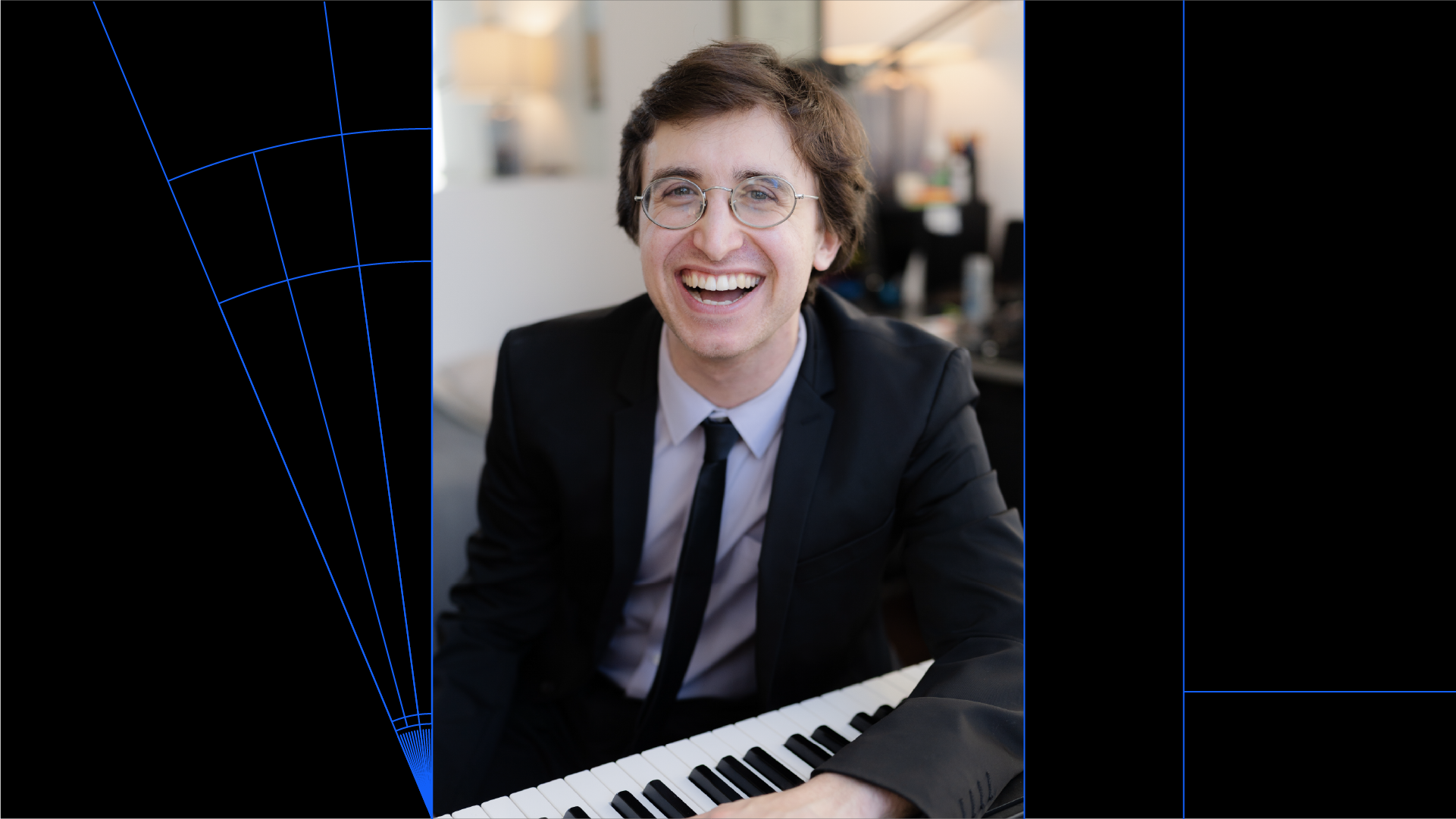
For Oliver Richman, creativity has been both an early spark and an evolving practice. As a child, his performances found an audience far beyond his years, from a widely shared rendition of “Defying Gravity” to performing alongside Stevie Wonder at just ten years old. Since then, he has continued exploring new creative paths: studying drama at NYU Tisch, writing and directing numerous projects, and building an online community through his ambitious song-a-day practice.
In this episode, Oliver reflects on balancing spontaneity with structure, building meaningful connections with online audiences, and why creativity thrives when treated as a daily practice.
Oliver Richman: In the world of art making, there’s a lot of fear around starting out of the fear of doing something wrong, but there is so much beauty to be found in not knowing exactly how things are going to go. And the thing that excites me is using art as a way to discover what those possibilities may be.
Monica Holt: Hi everyone. I’m Monica Holt. Welcome to Arts Unscripted. A few weeks ago, Susan Magsamen joined me to talk about what science tells us about daily creative practice and our wellbeing. Research points to something called an “upward spiral” of wellbeing and creative output. In other words, the more you make, the better you feel. And the better you feel, the more you make. Today’s guest is living proof of exactly that. Oliver Richman is an actor, songwriter, and director who over 800 days ago made a quiet commitment to write and share one song every single day. What started as a way to find his footing after a hard stretch became something much larger: a creative practice, a community, and a kind of invitation for anyone watching to witness what it actually looks like to make something with honesty and without apology every single day. We spend a lot of time in our field talking about institutions and strategy and scale, but some of the most meaningful community-building that is happening right now is organic, digital, and being led by emerging artists figuring it out in real time, sharing not just completed finished works, but the honest imperfect process of making it.
I encourage you to look up and follow Oliver on Instagram or TikTok. Those links are in our show notes. Maybe even listen to a song or two of his right now before you listen to the rest of his episode. But then come back and tune in for a conversation about childlike fearlessness, the gift of limitations, and why the imperfect, broken, real things are often the most beautiful. Let’s dive in. Oliver Richman, welcome to Arts Unscripted. I am so thrilled to spend some time with you today.
Oliver Richman: Thank you so much for having me. I’m such a fan.
Monica Holt: Oh my gosh. Thank you for being here. I am a fan of your work. You have been such a beacon of joy and music and I’m thrilled to get a chance to learn a little bit about what makes Oliver Oliver and how you came up with this incredible creative output that you’ve been sharing with all of us for the past few years. To start, you grew up surrounded by entertainers and performers. What are some of your earliest memories of the arts and of music?
Oliver Richman: Yeah. My whole family is obnoxiously in the musical world. So my mom is an amazing singer and songwriter and my grandpa was a songwriter and my dad is a piano teacher. My mom and dad would constantly sing to me growing up and I would dance everywhere just inspired by the music in my family.
Monica Holt: That’s wonderful. And I wonder if because your family just was so vibrant in the way that they both worked in and shared their creative gifts, do you think that made it more clear to you that there were viable career paths in the arts from an earlier age?
Oliver Richman: Oh, 100%. Yeah. It’s hard to picture a world where I wouldn’t pursue an artistic path.
Monica Holt: Yeah, no, of course.
Oliver Richman: And I know that’s kind of rare to feel and experience, but I owe everything to my family and the love that they show me and continue to bless me with and [feel] so inspired by the way I was raised.
Monica Holt: Well, that’s wonderful. What’s kind of fun is that – and people might not know this who just have been following you on socials more recently – is that at nine you went viral for a cover of Defying Gravity, which feels very timely in this moment. But by age 10, you have performed on stage with Stevie Wonder. Those are both two pretty remarkable things to happen to a young person. Do you remember at all what it felt like to be in the spotlight at such a young and formative age?
Oliver Richman: I don’t even know if my little 10-year-old brain could even process what was happening, but it is definitely fun to look back on those videos and realize that I peaked at 10. And that time I was simultaneously really shy and also somehow really fearless. And I feel like there are parts of that era that I am constantly striving to get back to: the childlike wonder and unapologetic fearlessness to just go for things that, after I learned about shame and stuff, it was harder to figure out.
Monica Holt: It’s interesting you say that: trying to find a way back to that sense of fearlessness and unbridled awe and joy. Because I really think that a lot of the work that you’re doing now and sharing now, that brings this reminder of a sense of what’s possible by just trying. I could never sit down and try to compose a song every day. But when you have and nurture those talents, being willing to just share them in more of a raw form, this willingness to be fearless with what you’re sharing online… I’m curious if some of that ties back to the fearlessness that you’re talking about having at a young age.
Oliver Richman: I think the cool thing about songwriting is I kind of use it as a way to learn and explore things. And so I think I aspire to find my way back to the childlike wonder, and songwriting is a fun vehicle to travel on.
Monica Holt: Yeah, absolutely. Being surrounded by art so much at a young age, do you feel like there was still a moment where you chose the arts for yourself versus it just being faded and written in the stars?
Oliver Richman: Yes. It wasn’t really until high school when I developed my own, “Oh, theater’s awesome. I think I maybe want to do this.” And I think I owe a lot of that to my high school drama department. Sue Freitag is our teacher’s name. We would often do shows that were more political and I realized during that time the power of art making and this medium that I didn’t realize as much until these productions in high school.
Monica Holt: That’s great to hear. And thank you for giving a little shout out to Sue. Having had wonderful artists and art supporters and administrators on the podcast, so much of it ties back to having a teacher or an advocate who was really invested in their students learning about all the possibilities of art making. So I love hearing that. And that’s so interesting to have the notion that all art is political in one way or another.
Oliver Richman: 100%. Yeah.
Monica Holt: Okay. So as you leave high school, you went to NYU Tisch, you studied drama there. How then did the more formal training part challenge you or expand what you already knew from working and being in the professional world already from being in LA?
Oliver Richman: I didn’t really have much singing training or I grew up just doing it and falling in love with it and exploring it. And so when I finally got to college, it was really cool to have a language to put all of the joy and exploring-ness of what I understood of music and kind of merged those two worlds. I am so grateful for my time at NYU. I was introduced to so many of the best people in the world, from amazing faculty to some of the most talented, generous peers who are still my best friends. And I think that was the main thing that I got from school.
Monica Holt: You were in school during some of the wildest and weirdest pandemic years, which particularly at a school for performing arts and for a medium that has so much to do with collaboration and community, I’m sure was a really interesting and strange experience. Can you share a little bit about that?
Oliver Richman: That was such an adventure and so much was happening in the world and I do attribute the limitations of that era to starting to create my own work, which is really interesting. And I feel like yes, so much happened, but it forced me to kind of trust myself, specifically for drama school. I couldn’t look around to see what the right thing to do was in a dance class or in a physical acting class. It also kind of made us realize how silly everything is when I was tap dancing or singing songs through Zoom or trying to kiss through the screen. I feel like there’s a tendency in BFA school to take everything really seriously. And I think just the idea of doing all of these shenanigans in our rooms across the country was funny and silly and made us realize it’s not that serious. And I think that that energy was really important for me and for our class culture to realize the joy in things. And I think that is a very important thing I took from that time. And then the limitation of connection was really important to me, and finding ways to connect with people and make things forced me to learn how to edit. And that’s when I started songwriting and –
Monica Holt: That’s really interesting.
Oliver Richman: Yeah. Like, what ways could I build community in this virtual world? And I think my brain thrives on finding fun ways to get creative within a very specific limitation. And the limitation of that time was literal connection and physical space.
Monica Holt: What you’re saying makes so much sense. And we’ve spent time talking about what’s happened at institutions during that kind of 2020 to 2023 timeframe and how institutions had to change and how established artists and leaders were reframing their thinking. But to get your perspective of the artist who is, if I may say, more at the beginning of their ascendancy and really getting their toolbox ready for what comes when they’re out of that training period in school, it’s fascinating to hear. And I’m actually really happy to hear you talk about some of the preciousness of process being taken away so that there was more experiential joy when you’re doing things like, you say, tap dancing on Zoom together. I also love that you mentioned the way that it drove you towards creating and seeking community and creativity together because I think I would love to start to talk about your song-a-day project. Would you call it a project now?
Oliver Richman: Yeah… an experiment? A practice? I don’t know.
Monica Holt: Oh, I like that. I like “a practice” because at first it might sound the way that any good habit or practice at first sounds. Like, okay, this is something I’ve committed to doing and so I’m going to do it. But now it has so much reach and importance to folks who are tuning in, so to speak, but I’m sure also for you as you’re cultivating your own craft, would you tell us a little bit about the practice you cultivated of starting to write a song a day and what inspired you to start that project?
Oliver Richman: I started songwriting in 2020. I just needed a place to put all of my feelings during that time. One of my now friends, Jacob Brian Smith, was doing this project writing a song every day in 2020 and I was like, “Whoa, what a concept!” That summer I made a private Instagram and I started exploring what that might look like.
And I think I made it a week and a half. I wrote a bunch of really bad songs, but I was like, “Oh my God, this is a really cool thing that I feel like is opening a lot of seeds of a dream.” And so that semester in college was my junior year, all on Zoom. I started putting myself in spaces where I would be forced to write things where I would just have a deadline and I had to have something by that deadline. And yeah, I continued that practice through college and then slowly but surely I was like, “Oh my God, I think I kind of enjoy writing.” And then when I graduated from school, I kind of did a year and a half of absolutely nothing and I was so sad and so stuck and depressed and reaching for a way to get back to the joy of making stuff and connecting with people.
And so I was like, I need some sense of structure, some sense of hopefully creative structure. Maybe if I just commit to making something every day, I would be a little happier. So that’s the origin of this artistic impulse to make something every day, just the desperation of needing something to do and connect with. And it’s changed my life in so many ways.
Monica Holt: That’s beautiful to hear that impulse and I didn’t know that that was the origin. I will try not to get too in my feelings about it, but I think it’s just another way that arts and health and mental health are all related, right? The acts of creativity. And we know how powerful that can be as a means of finding a way through times that bring a little more darkness into our life. But that’s a really beautiful impulse that you have, and how much even brighter that it’s one that ended up being shared with so many people. You’ve now been committed for over 800 days to this project. What feels different now than what it felt like in those first 30 days of writing and sharing?
Oliver Richman: Yeah. I think the thing that I feel the most is a grounded sense of possibility. When I was doing this in the beginning, I was like, I don’t even know if I’m going to make it this far, but now I feel like I could spend five hours ripping my hair out writing a song tomorrow, which is the same amount of time that I would three years ago. But I think the thing that feels different now is I know that I can get it done. I know that it’s possible and sustainable and I know that every day is a new way to explore and learn and test what my body is able to figure out.
Monica Holt: What kind of courage did it take those first few days that you were sharing the songs, like hitting send or publish or upload on whichever medium? What did that feel like?
Oliver Richman: It was actually really freeing in the beginning and part of that was because I made a separate TikTok account. I was embarrassed by the idea of posting every day. So I made a separate account. I was like, maybe a few friends will follow along. But in the beginning it was just for me to hold myself accountable. I mean, as more people have so graciously followed along, it’s been interesting to navigate those intentions with my mind’s need for external validation.
Monica Holt: A tricky thing to navigate for sure, for all of us. Yeah.
Oliver Richman: Absolutely. Yeah, constantly figuring out what that balance feels like.
Monica Holt: Well, and that – probably that shift might’ve happened more quickly. Am I right that it was day 34 that was “The Ballad of Phil and Phyllis”?
Oliver Richman: Yeah.
Monica Holt: For our listeners who, if they aren’t yet following you, can you talk a little bit about what “The Ballad of Phil and Phyllis” is, how it started, where it came from, and then give us the full evolution because it’s pretty extraordinary in my opinion.
Oliver Richman: Oh my God, that’s nice. Yeah. So I was doing my songwriting practice and then February 2nd came around, which was Groundhog Day. And I learned that Punxsutawney Phil, the famous groundhog who predicts the weather every year, he’s 138 years old. I was like, wait, do you all groundhogs live that long? No, the average lifespan of a groundhog is three to eight-ish years. And I was like, okay, how is this guy staying alive so long? So I found a Punxsutawney Phil Q&A website and I learned that every year Punxsutawney Phil has to drink a magic elixir so he can stay alive forever.
Also on the website, I learned that he has a wife named Phyllis and Phyllis doesn’t get to drink this magic elixir. That means Phil has stayed alive for all of this time, but his partners have kind of… I don’t know what has happened to his partners. Assuming that Phyllis doesn’t get to drink the magic elixir, she only has a limited amount of time left. So I was like, okay, I should write a song about this from the perspective of Phil. And so that’s what started it. I wrote this song from the perspective of Punxsutawney Phil singing to his mortal wife, Phyllis, about that and his feelings towards that.
Monica Holt: Well, I should say that the reason I bring this up is because it is day 34, so pretty early in this practice in terms of the public-facing, but then it leads to this beautiful recording. It’s this gorgeous ballad with you and Joy Woods who is this wonderful, wonderful Broadway actress. She was in The Notebook and Gypsy. Tell us a little bit about how the song evolved to that point and then what recording that was like.
Oliver Richman: Yeah. Joy is amazing and was one of the people who actually dueted the original video and Joy wrote this amazing, beautiful verse from the perspective of Phyllis and that’s how we connected.
Monica Holt: Interesting.
Oliver Richman: My friend was having a night of new work at a venue here in New York and was like, “Will you sing ‘The Ballad of Phil and Phyllis’ and will you sing it with Joy Woods?” And I was like, “Well, that means I have to finish ‘The Ballad of Phil and Phyllis.’ And also that means I have to ask Joy Woods if she’s interested.” So I finished the song, I DMed Joy and she was down, and we sang it that summer. I knew that I wanted to record it. So finally a year and a half later we recorded and released it and that’s the one that is currently available and I’m so honored and grateful that people know about it.
Monica Holt: It makes me smile all the time. It’s gorgeous. And also I just love hearing that origin story of it. It’s funny, you were talking before about [how] the difference now is that you know that you can finish a piece, you feel confident in that, but it still must require incredible discipline every day to approach this. Is it different every day? What’s motivating you to be working on a particular song? How does that creative process look and feel?
Oliver Richman: It’s so different every day. Some days it’s about letting myself be brave enough to make something really bad in a small amount of time and that’s part of the practice. And then other days it’s about pushing myself to really spend five hours finding the right words to say something. And I think both of those experiences are kind of what the song-a-day practice has given me and I think that is interesting and cool.
Monica Holt: One of the things you’ve talked about a bit already is you have – in addition to your own practice – been developing these kind of collaborations with other artists who are from across the discipline. What do you look for when you’re looking for a creative partner?
Oliver Richman: Well, another goal of song-a-day was to practice collaborating.
Monica Holt: I like that. Practice collaborating. Oh, I feel like that’s such a little gem that all of us need to take to heart a bit.
Oliver Richman: Yeah, because I do think it is a practice. I think four years ago I was aggressively bad at collaborating and especially in songwriting, I think it’s such a vulnerable thing to do and finding a compromise between the values of different people is something I’m continuing trying to practice. And it’s scary to open your heart to someone and know that this thing that you’re going to share isn’t what you wanted to say, but to have that trust with someone – often with people that you don’t know super well – is really scary. And I’ve been so fortunate to get to collaborate with some of my songwriting heroes and friends. It usually just happens organically. We’ll connect online or just be friends in real life and then be like, “Oh, do you want to make something?” And then it just happens. So it’s a beautiful way to make friends and I feel like I’ve become friends with people because we share this vulnerable, intimate moment of collaboration.
Monica Holt: I love that approach to it. That makes me smile. In the arts and culture space, organizations are always trying to figure out how to generate meaningful engagement digitally, which can sometimes feel a little colder or more difficult coming from an organization rather than a person and that human connection that we know is so critical to the work that you do. I think about – even though when you started you created your separate TikTok channel for your song-a-day practice, I would guess that over time you have learned something about the audience generally, or specific to folks who are really invested in following your journey. What do you think might be important for all of us to understand about online audiences generally?
Oliver Richman: I feel like there are so many people who are better at social media than me. The best thing that I’ve gotten from social media is the community and the connection with people. So I think if there’s a way to translate, reframing numbers to connection, a third of my friend group are people that I happened upon on Instagram or on TikTok. And I think that’s the thing that I’m chasing, the connection. And sometimes the virality of things is a cool byproduct, but the thing that I wouldn’t trade is the people that it’s led me to.
Monica Holt: Well, you might say you’re no social media expert. That’s a really keen piece of advice for folks to think about because we can often in our field get tied up in the metrics and the numbers of it all. And yes, there are sales tactics and the like that we need to stay on top of and be business-like about. But your point about really thinking about social from the perspective of outcomes, and community being that outcome, connection being that outcome, I think is something we can all take to heart a little bit as we’re thinking about why we’re posting what we’re posting or who we’re wanting to be in community with. I would say as I’m asking you about your creative process, thinking through the days… day 410 is one that’s on my mind because that’s when I finally worked up the courage to reach out to you because that was “Golden Age,” which I would love, if you don’t mind, you describing how that song came to you. And for those of you that don’t know, that was the day of or the day after President Trump had announced the takeover of the Kennedy Center in February of 2025.
Oliver Richman: It was a dark time and a dark day and I can’t imagine what you guys must have been going through, but I saw that tweet and I was like, this idea of ‘golden age’ is so frustrating to me and hypocritical in many ways. The discourse around making America great again and the golden age, it feels like a facade. And I think the first line is something like, “Someone put a rainbow in a cage.”
Monica Holt: “Someone locked a rainbow in a cage.” I have this committed to memory because I have to say, Oliver, when this song came out, it was a whirlwind of emotions, but the idea first and foremost that an artist took a moment and created art from something that was very much trying to suppress art from being made was beautiful in and of itself. That’s when I reached out to you and was so grateful for this moment of connection. Again, as you say, there’s the community that you had wanted to be part of that you were building in this, but it also created this broader community of connection of people who just understood the meaning of what was happening and could find that connection through the art that you were making. I would love if we could play a clip of this song, if you don’t mind.
Oliver Richman: Absolutely.
Oliver Richman: [Singing] Someone locked a rainbow in a cage, and tried to turn its colors into dye. They called this stolen light the Golden Age, and sold it to the people going by. They painted over mountains while the trees and rivers dried. They poured it on the books that told the truths they’d rather hide. And when another shining rainbow dared to take the stage, let’s not let the people read that page. Let’s not let the people ask, “What’s so golden about the Golden Age?” [Song ends]
Monica Holt: It’s so fun to go through your history through this practice because there are things that are personal to you. You wrote a song recently, I think, for a friend’s birthday and that was your song-a-day on that day and it was beautiful. We have the bunnies on the trampoline, another one of your great hits that people loved. But in 2025, Day 568, you then took it from the online to the in-person because you performed live at Joe’s Pub. Can you talk a little bit more about how that opportunity came about and what it was like to bring song-a-day to a live audience?
Oliver Richman: My two friends, who are producers, they were like, “All right, it’s time for you to do a show.” 568 was the day that Joe’s Pub gave us, which at first I was like, “It should be an even number, a significant…” But there’s something that my mom was saying about how cool it is. It’s just another day of the practice, which I think is kind of the whole impulse and intention. So it was kind of beautiful that it landed on this random date. It was this culmination of growth in many ways. Another reason I started writing a song every day was just for a way to literally practice playing piano, practicing singing, practicing playing and singing at the same time, all things that I didn’t have much confidence in in the beginning. So just 800 whatever days ago, I could have never imagined playing live and singing for people. The idea of that was something that wasn’t even in my realm of possibility. So it was really cool to push myself to experience that. And I felt so loved and supported. My family was there and all of my friends were there and it was a really beautiful experience. I felt so seen and held.
Monica Holt: I’m so happy to hear that. I would be remiss not to mention that in addition to singing and writing, you also direct. The kind of multi-hyphenate nature of being a creative right now feels like there’s even more pressure to be able to do so many of those things now than maybe there was 15 or 20 years ago because of the digital media space of it all. Is there this sense of one creative impulse feeding the others? Or is there work that you are more interested [in] now where maybe you thought you would be somewhere else, for instance, when you were in school?
Oliver Richman: Yeah, it’s definitely a different balance than I thought while I was in school. I feel like a lot of acting is waiting for someone else to tell you that you’re enough. And I think for me, that was a challenge. Building up something that I feel like I have control over was really healing for me and dipping my toes back into acting and performing more on my own terms with lower stakes and higher joy has been really good for me right now and it can totally change tomorrow. I feel very grounded in songwriting and want to continue to practice and learn and continue to see how that changes through the next few years.
Monica Holt: I am curious, we talked about how you grew up in such a supportive environment. You had access to a lot of arts and artists and support for artistry. What advice might you give to young people who have a creative impulse but maybe don’t have that direct support or community at their fingertips right now? How would you advise them? Because your story obviously takes a lot of initiative as well, and self-starting, but I think sometimes someone who has that impulse but might not have that direct surrounding and uplifting might not know where to start.
Oliver Richman: Yeah, 100%. I’m so fortunate and I think one of the things that I’m continuing to learn and challenge is there’s no right way or there’s no rules for making things. I felt a lot of fear around starting things because of the fear of it not being the right thing or not a good thing. I feel like daring to make a bad thing has often helped me in many ways to just make something. And it’s interesting, the idea of limitations often breeding a lot of creative innovation, which is something that I felt during COVID and something that I explore just in the act of making songs. I feel like a lack of knowledge is often a gift in many ways and forces you to find ways to build within the things that you know. If you only know four chords on the piano, what worlds can you build within those four chords?
I guess a question is what might be created within the framework of limitations? I think that’s the thing that song-a-day has taught me. Some days I have all day to write a song and then some days I have 20 minutes and I feel like, “What can I do with what I have?” is a very interesting question that I am continuing to interrogate and explore every day.
Monica Holt: I think that’s smart and that paired with this idea of overcoming failure as a negative outcome. The act of trying, the act of doing is the success. What is giving you hope about the greater field of arts and culture right now?
Oliver Richman: In a world where you could put in a prompt and generate a perfect thing, I think the thing that brings me hope is the truth of not knowing and the truth of voice cracks and imperfectness and being pitchy. And that is what I am so afraid of and continuing to practice revealing more. But that’s the thing that really inspires me nowadays, knowing that things are broken and real and that’s what makes them beautiful.
Monica Holt: I love that. Well, we have reached our quickfire culture section, if you’re ready.
Oliver Richman: Absolutely.
Monica Holt: Here we go. What is one piece of culture that you are currently obsessed with?
Oliver Richman: My favorite TV show is Lost. I’ve seen it six times. And Everything Everywhere All at Once is my favorite movie ever. That changed my life and I love that movie.
Monica Holt: What is it about that that you think changed your life?
Oliver Richman: I mean, the Daniels who directed that movie are… I just love their approach to making art and I’m so inspired by their process and they really much inspired me for limitations breeding so much creativity. And I just love the love that is infused in their art.
Monica Holt: Great answers. If you could go back in time, what is a live performance that you would’ve wanted to attend?
Oliver Richman: Oh, I never got to know my grandpa who was an amazing songwriter. I’d love to be in a room with him maybe.
Monica Holt: That’s really lovely. What is one free resource in any field that people should check out?
Oliver Richman: I’m constantly in the market for a free resource. I think the one that comes to mind is probably the most obvious answer, but the public library is amazing. But you can get so many things there. You can get instruments and in New York City, you can watch shows at the Lincoln Center archives.
Monica Holt: Yeah, the Library for the Performing Arts. Yeah.
Oliver Richman: It’s just remarkable.
Monica Holt: A great answer. A classic, a favorite, and one that we will keep reminding everyone [about] all the time. And finally, if you could broadcast a message to folks who work at arts institutions across the country, executive directors, or boards, or artists today, what would that message be?
Oliver Richman: I feel like in the world of art making, there’s a lot of fear around starting out of the fear of doing something wrong. But one thing that I’m continuing to try to push myself to do is to just do it. There is so much beauty to be found in not knowing exactly how things are going to go. And the thing that excites me is using art as a way to discover what those possibilities may be.
Monica Holt: That was perfect. Oliver, thank you. Thank you for the time. Thank you for the joy and the music and everything else to come. We’re cheering you on, but really grateful for all that you’ve brought to all of us through your practice and how it’s inspired some of our own.
Oliver Richman: Thank you so much.
Monica Holt: Thank you for listening to Arts Unscripted. If you enjoyed today’s conversation, please take a moment to rate us or leave a review. A nice comment goes a long way in helping other people discover the show. And if you haven’t already, click the subscribe button wherever you get your podcasts. We’ve got some great episodes coming your way and I don’t want you to miss them. A huge thanks to our team behind the scenes, including Karen McConarty, Yeaye Stemn, Stephanie Medina, Jess Berube, and Rachel Purcell Fountain. Our music is by whoisuzo. Don’t forget to follow Capacity on Facebook, Instagram, LinkedIn, TikTok, and YouTube for regular content to help you market smarter. You can also sign up for Capacity’s newsletter at capacityinteractive.com. And I hope you’ll reach out to us and let us know what you think and who you’d like to hear from next on Arts Unscripted. I’m Monica Holt. Thanks for listening.
Oliver Richman is a singer-songwriter, actor, and corn popsicle enthusiast—but you might know him better as the #1 fan of the TV show Lost. Currently channeling his angst by writing a song every day (@olivesongs11), Oliver has written over 850 songs over the last 2 and a half years. Whether they’re about immortal groundhogs or AI Bunnies, Oliver is electrified to find new ways of connection through songwriting and community building.