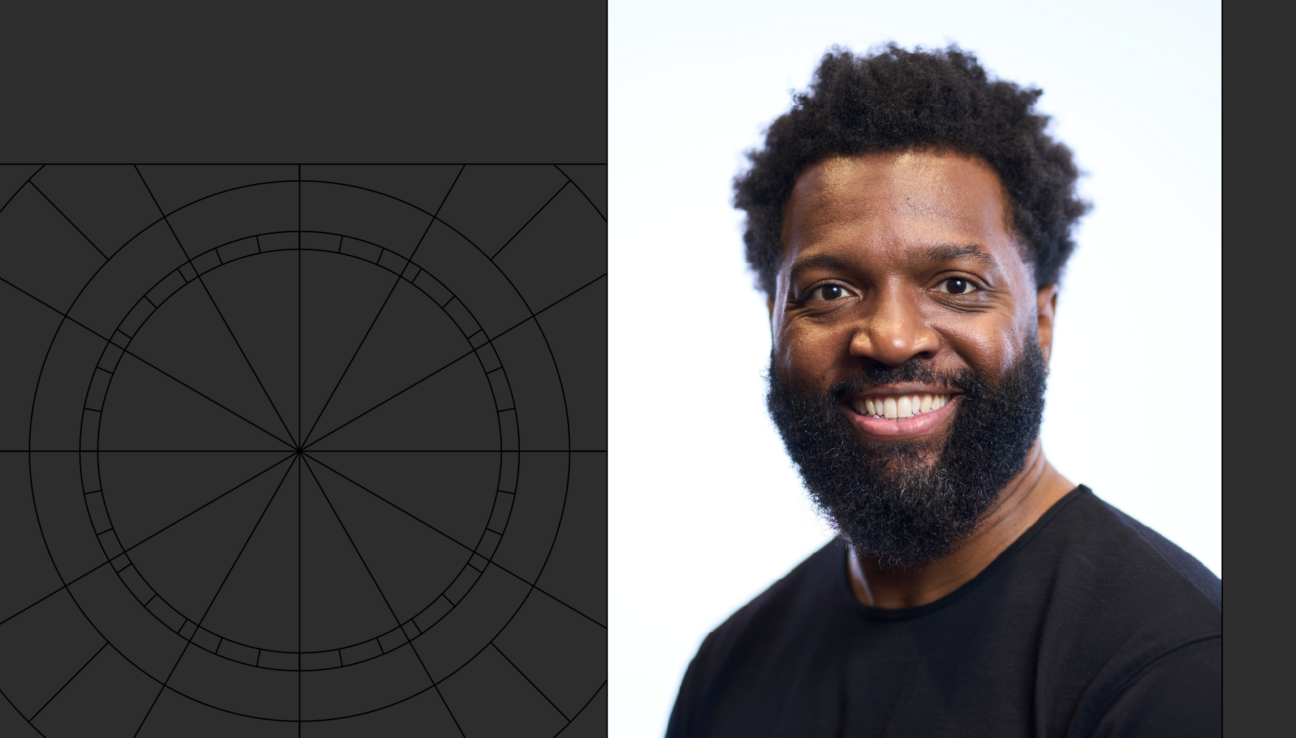
Cory Pattak, Lighting Designer
For Cory Pattak, lighting design has always carried a sense of magic.

This episode is hosted by Monica Holt.


Join Monica Holt for a live recording of Arts Unscripted with Marc Bamuthi Joseph, an internationally acclaimed cultural strategist, spoken word artist, and Chief of Impact at SOZO.
Bamuthi has built a singular career at the intersection of creativity, leadership, and social impact—from performing on Broadway and co-founding Youth Speaks to shaping civic and cultural strategy at Yerba Buena Center for the Arts and the Kennedy Center. Throughout it all, he has approached art not simply as expression, but as a tool for freedom, connection, and collective possibility.
Recorded live at the 2026 Tessitura Learning and Community Conference, this conversation explores what it means for arts organizations to be true civic partners. Bamuthi and Monica talk about collective joy, why “budgets are moral documents,” the idea of using the arts for non-arts outcomes, and what becomes possible when institutions see themselves not just as producers of shows, but as producers of culture and inspiration.
Along the way, Bamuthi reflects on the evolution of his own practice, the role of artists as “edge setters,” the grief and resilience that have shaped his recent work, and why—at a moment when inspiration can feel scarce—he still finds hope in the artists and arts leaders who keep choosing this field.
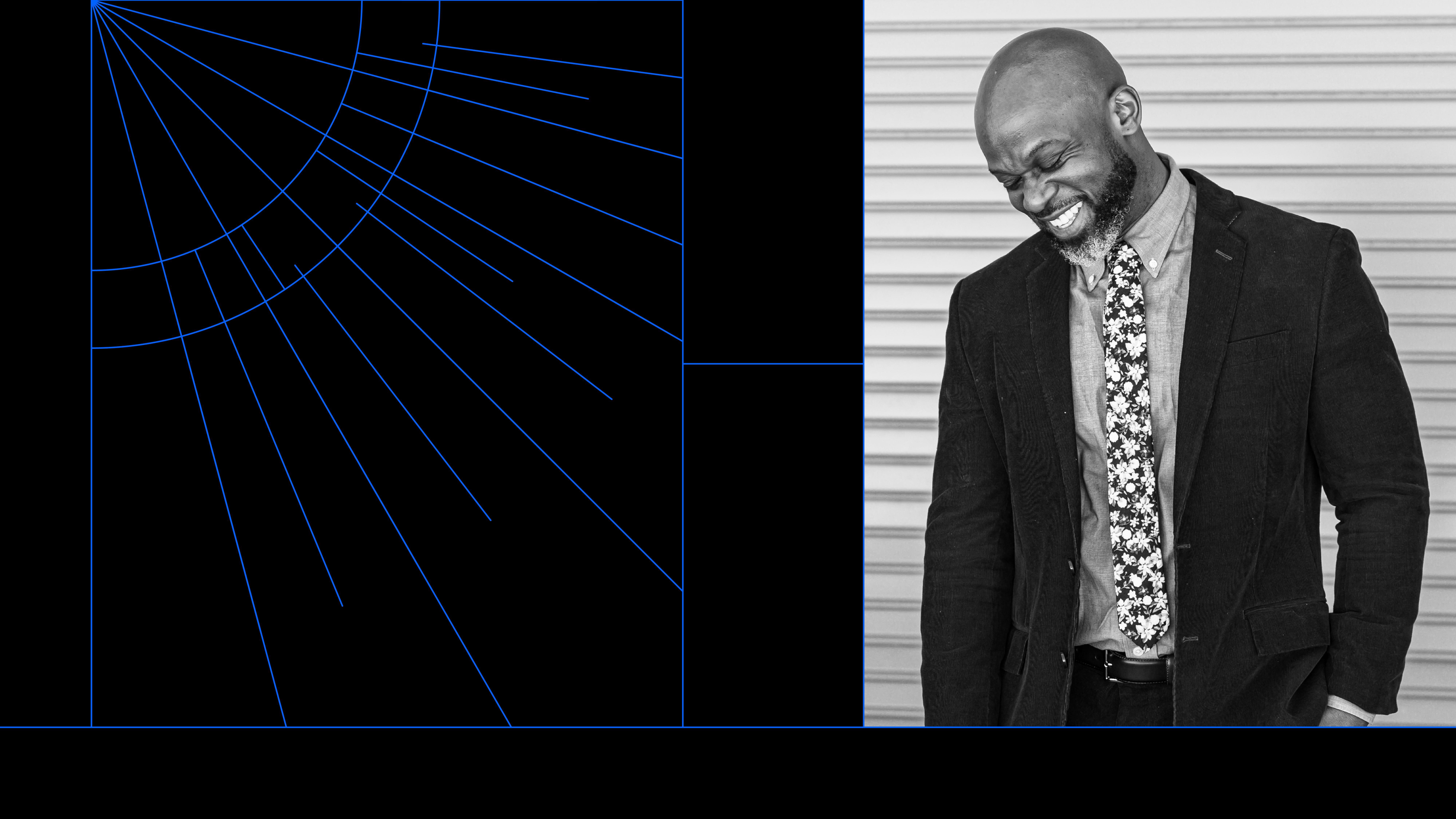
Marc Bamuthi Joseph: An institution doesn’t produce shows, it produces culture. The idea that an institution doesn’t produce events, it produces inspiration, is that’s the way into this rubric whose tagline is using the arts for non-arts outcomes.
Monica Holt: Hey everyone. This is Monica Holt and welcome back to a new season of Arts Unscripted. Arts organizations are constantly talking about centering artists, but I wonder sometimes whether all of the folks working in tucked away offices at our own institutions are hearing enough directly from the artists themselves, building those relationships and spending substantial time with the art. Last week, I was thrilled to have a chance to sit down with my friend and former Kennedy Center colleague, Mark Bamuthi Joseph, at the 2026 North American Tessitura Conference. Bamuthi and I talked about that trust and friction. What institutions actually owe artists, where the relationship between the two breaks down, and what honest repair of that really looks like. And as someone who has lived on all sides of this industry, what Bamuthi thinks arts and culture institutions are capable of becoming. What a gift it was to spend time together with him again.
I hope you enjoy our conversation.
Thank you. Thanks everyone for being here. Welcome to Arts Unscripted, a capacity podcast. I am so happy to be sitting here with Mark Bamuthi Joseph. Bamuthi is a spoken word artist, a libretist, a cultural strategist, so much more. He works at the intersection of art, justice, community. I’m going to brag on you a little bit, so just hang in there. Okay. Bamuthi is a Ted Global Fellow, an Emerson Collective Dial Fellow. He’s the inaugural recipient of the Guggenheim Social Practice Initiative. There are so many other accolades, including a Ted Talk with millions of views that I highly recommend. One of his most recent works, Good News Mass, which he just came back from performing at Ravinia, premiered in 2025 at the LA Phil. And he’s currently also, among everything else, chief of impact at Sozo. Most importantly, Bamuthi moves through the world with a generosity of spirit and a rigor that just brings new life to every room he’s in.
He is one of the best there is. So thank you so much for spending time with us today. Oh my goodness.
Marc Bamuthi Joseph: Wow.
Monica Holt: I’m so happy you’re here.
Marc Bamuthi Joseph: What a pleasure to be with you, my friends.
Monica Holt: Well, I’m thrilled to be here, and we’re just going to start with a really easy one.
Marc Bamuthi Joseph: Okay.
Monica Holt: What does collective joy mean to you?
Marc Bamuthi Joseph: Easy. When I hear that question, the first thing that I think about is New York City, Knicks in five.
Monica Holt: Knicks in five.
Marc Bamuthi Joseph: And I think it’s important to highlight that moment while we’re here at this particular conference, because I wondered how much that joy was worth to the global economy. How important is it to have millions of New Yorkers very specifically with that radius and that amplitude excited and inspired? Which brings us back to the feeling and not just the value of it. Collective joy is a movement through the body politic or through the social body or through institutional social capital that you can feel, but can’t necessarily measure.
Monica Holt: Thank you for that. A good way to start and ground us. Okay, now we’re going to go back in time.
Marc Bamuthi Joseph: All right.
Monica Holt: When did art first come into your life?
Marc Bamuthi Joseph: I don’t remember a world without art, even when it wasn’t called that. I have a distinct memory of dancing in the living room with my mom while she was pregnant with my sister. We’re in Queens. The sun is coming through the window. It’s dusk. She pulls me in close and she dances with me. Before that, I remember watching my mom and my dad dance in the living room to a Linda Ronstadt record. So I guess that’s it. Art is a codifier and a material for indexing joy. It’s a material for indexing memory. One of the questions that I love to ask people is to recall the five most joyful moments of their lives, and then to name the piece of music that they associate with those moments, a kind of yearbooking or soundtracking of one’s life. When did I become a practitioner and facilitator and medium?
When did I start making memories for people? I was like five.
Monica Holt: Yeah, you were young. But I’m going to put a pin in that for a second because, and maybe remembering you dancing or your parents dancing is one of those memories of joy for you. But if you ask everyone else that, will you give us one of yours, one of your other ones?
Marc Bamuthi Joseph: Yeah. Let’s see. I remember being 11, 10, 11. I was born and raised in New York City. And I was one of those kids that went to dance school and I played soccer and I went to dance school. And I remember being on stage and being awesome. I don’t know how else to put it. I was born and raised at the same time that hip hop was born and raised. So I remember being on stage, and when I say awesome, I don’t mean I was actually super dope. I just felt awesome. A 10-year-old feels awesome. And I remember being on stage and having an eight count solo or something and going pot of a ray, pot of a ray, double turn, crushed thrusters or some shit. And I remember what happened in the audience. I think that was one of the first times that I understood electricity in my body.
It was one of the first times that I was very clear about energetic reciprocity and the feedback, irony, the feedback that happens when a performer is electric in and of themselves and then is a conduit for the people in the room. So even though I’d performed in theater, I was in understudy on Broadway. On the Broadway. Yeah. Yeah. Very different feeling.
Monica Holt: Yeah. Oh, interesting.
Marc Bamuthi Joseph: Very different feeling than being unleashed in a less rigid way, in an unscripted way. And to feel that energy come back around to me, that’s one of my first memories of the possibility of energetic reciprocity.
Monica Holt: That’s so interesting to think about because from a biographical standpoint, the fact that you were living in a Broadway ecosystem when you were 10 is remarkable. And I am curious about if there were pieces of that that you understood professionally what it meant to be in the industry at that point. But to hear what the feeling is when you’re in a space that maybe isn’t that same construct is really interesting.
Marc Bamuthi Joseph: Yeah. I’m glad that you used the word industry because as many of us here know, and as many of your listeners know, when we talk about the creed economy or when we talk about the arts economy, we are by and large referencing the machine. And so much work gets put into the efficiency and durability of the machine. Broadway is a major cog in that particular ecosystem. And so God willing, even though I love live theater, God willing, the laughs come in the same place every night. And there is a kind of scale of audience participation, but the beats are the same. And we are on at 7:30, not at 7:31. You’re late for half hour and that’s your ass. You know what I’m saying? So what I learned on Broadway was the acumen that is required to make the machine go. What I learned on that stage somewhere in Hell’s Kitchen, dancing with Broadway Dance Center and Frank Hatchett was that I actually am a lightning rod and I should conduct myself as such.
Monica Holt: Yeah, I know. Imagine working with him for years and years and just being like, “Man, words have got nothing on Bumberty.” But okay, so we’ve talked about acting, hip-hop, spoken word, obviously, writing. Talk to me a little bit about how when you’re looking at, I’m going to say different art forms, although I think we can agree there’s a continuum of connection.
Marc Bamuthi Joseph: Sure.
Monica Holt: How you think about each, are they different ways of expressing yourself? Is it all building towards one voice or do you have distinct pieces of you that live more in one art form than another?
Marc Bamuthi Joseph: I make culture in service of freedom. I oddly, still, weirdly, perversely believe in humans. And that bites me in the ass all the time. But I do what it takes in my life through creative practice to bring the horizon of collective freedom just a little bit closer. And sometimes that means the articulation of institutional strategy. I am not one, as I think you know, that gets as excited by spreadsheets as I do by poems.
Monica Holt: Sure. It’s a good team then. Yes.
Marc Bamuthi Joseph: You
Monica Holt: Understand.
Marc Bamuthi Joseph: Yes. Although spreadsheets sexy.
Monica Holt: That’s what I’m saying. That’s what I’m saying.
Marc Bamuthi Joseph: They have their own kind of cadence, and I believe that budgets are moral documents. And so that too is part of the broad ecology of how I live and breathe as a practitioner and participant in the creative ecosystem. Typically, what comes first for me in the kind of matriculation of art signifiers is desire. And generally the desire takes a turn with a question. So desire and inquiry, generally personal inquiry and social inquiry are the antecedents of anything that I produce as a writer, actor, poet, executive, whatever. So I would just say that, that it’s not that I prioritize a particular form. I prioritize freedom and the form is in service of that.
Monica Holt: Well, and as you started to talk about there, and I want to return to budgets as a moral document because that’s something you taught me that I hold very closely. What you’re referencing is you shifted at a certain point from not artist only, but also administrator. Something all of us can relate to here. You were making the work, but you were also creating the conditions in which the work could happen. How did that adjoining addition transfer happen
Marc Bamuthi Joseph: To you? I want to be very clear that artists are hustlers. Artists are entrepreneurs. Artists are administrators that are not necessarily tethered to an institutional contract. Because most of us think of artists at the end of a transactional relationship without really taking in fully the level of self-administration that it takes for an artist to present themselves as worthy of the transactional moment. So there never was a time where I wasn’t an artist and administrator. There just happened to be a time when I got a gig that was more externally legible because it was a gig tethered to an institutional kind of viability and ethos. But I co-founded a nonprofit organization called Youth Speaks.
We founded a national poetry festival called Brave New Voices. And in those days, and maybe some of us in the room have been on the ground floor of starting a nonprofit, but in those days, it was me and the peoples. It was like four or five of us. We were in our 20s. We didn’t know shit. We were all poets, which you want to learn quick, start a business with poets. You feel me? And I was living in San Francisco at the start of, I guess, the first tech boom at the turn of the century. And I wasn’t getting paid in my nonprofit life. I was doing it for love because we ain’t had no money, but we had a mission.
You did. And so in that co-founding, I would write poems during the dead of the night, wake up in the morning, go to a high school and share those poems with young people in order to attract them to our workshops later on in the day or our open mics later on in the evening. I would then teach those workshops. I would then go to some beer hall, some bar, and try to win $25 at a poetry slam. And that was my rent money. And it would come around in a circle. And I say all that to say that I was educator, I was marketer, I was a copyright assistant.
I did all the things. And somehow the radius of that impact grew to this space where we became a very large player in the youth literacy space. We contracted with Stan Lathan and HBO to host Brave New Voices on HBO. And that was a different kind of administration. I co-hosted the final event with Idris Elba at the time. Idris Elba, handsome man, large man. Didn’t know. But yeah, it was all those things at once. And it was really when I started curating events within that space that I became eligible for a curatorial role at Yorba Wayne Center for the Arts in San Francisco and first became the lead curator. And then eventually my title was Chiva Program and Pedagogy. That was really the first time that I started to invest in the local creative economy with intention. But at the same time, I was making work.
I was still writing poems in The Dead of the Night. As a matter of fact, Yerba Buena Center commissioned a work of mine called Red, Black and Green of Blues. And it was part of the same season. It was part of a season at the same time that I was interviewing for what would be my role. So when I went into the interview room, there was a poster of me.
Monica Holt: Oh my gosh.
Marc Bamuthi Joseph: In the interview room, which I totally recommend. Next time – I’m
Monica Holt: Planning
Marc Bamuthi Joseph: This season. Yeah. Next time when you’re thinking about your next gig, just bring a poster of yourself. But what’s important about that is that there was a seamlessness, and it goes back to your previous question. I’m not a super binary cat, and I think artists by nature are squiggly.
Monica Holt: Sure.
Marc Bamuthi Joseph: And we need to be. Yes. We need to be. Somebody has to be weird. Somebody has to be a little bit strange so that the edge might be set. And the edge is not set in a straight line. And the pathway to get to the edge isn’t 180 degree vector. So all the things everywhere, all at once. All at once. Yeah.
Monica Holt: Yeah. Well, and you mentioned that experience at Yerba Buena in 2019 when you joined the Kennedy Center. I don’t know if there was a poster, but you weren’t unfamiliar.
Marc Bamuthi Joseph: I was not unfamiliar.
Monica Holt: To us all then. And the Kennedy Center, we all know the Kennedy Center now. If you didn’t before, it had a national mission.
Marc Bamuthi Joseph: Yes.
Monica Holt: Obviously. You really came in and were working. You were just talking about the local creative economy to really bring some balance to the Kennedy Center’s national mission and its commitment in DC and also as a demonstrator, as a beacon, as a light for what was possible for arts organizations to think about and hold together. When you walked in, which then of course, 2019, we know what comes next, but how were you starting to think about holding both of those things at once?
Marc Bamuthi Joseph: Yeah, I don’t think I ever bifurcated the local and the national. I think I thought in terms of value and values and what makes an arts center relevant beyond its brand or beyond its name. How is an institution a citizen? And one of the things that was really clear for me first moving to Washington DC was this idea of the constitutionality of inspiration, which is something that I think we talked about a lot. And it was the first guiding principle that I had while sitting at the Kennedy Center, because as a federal memorial to the 35th president, it had a national mission that had to be clear to board members and clear to Congress and those sorts of things. And there’s so much about what happens at a place like the Kennedy Center, which is easily discernible to external witness because there’s so many shows that happened.
And the primary thing that was happening in my department at the time was a daily show called the Millennium Stage. And I was like, “That’s cool, but that’s not actually reaching the people that you think you wanted to reach.” So I started making this argument about the 14th Amendment, that under the idea of equal protection under the law, a citizen must have access to the impulse of creativity in order to be enfranchised.
Monica Holt: There we go.
Marc Bamuthi Joseph: And by making a constitutional argument for access, which wasn’t an access based on demographics, it wasn’t based on ability, it wasn’t based on gender. It was based on the idea that a more humanist idea tied to the underpinnings of that constitutional edict, which is that to be fully realized as a human, you have to be inspired. And so then we started thinking about how do you create infrastructure for inspiration? And you had to do that at the local level first. The department that I inherited was either community engagement or performing arts for everyone, which I fucking hated. I fucking hated it.
Monica Holt: I think there are still, in that ghost town of a building, some labels on
Marc Bamuthi Joseph: Certain elevators. Get me spray cans that just, oh man, let me just baskeyach.
Monica Holt: But what you changed and evolved that
Marc Bamuthi Joseph: Too. So what we changed it to was social impact. And the argument was that we were not doing community engagement programs, that we were doing strategic investment. We were doing impact investment in specific communities in service of this kind of constitutionally undergirded principle of inspiration for all, which is a much more systemic approach. And it’s a systemic approach that necessitates buy-in from the local citizenship first. It’s hard to convince any institution that its actual work is systems change.
Monica Holt: And I’d love to tug on that thread a little bit because I think a lot of arts institutions, wherever they might be in the journey, want to or say that there’s an impulse to want to be more community-centered and
Marc Bamuthi Joseph: Yeah
Monica Holt: Focused. And I think to your point, is that the nomenclature, but regardless if that is the intention, what maybe are folks missing about that systems requirement piece that is really where you and the team had to start at an organization as large as the community center?
Marc Bamuthi Joseph: Word. Yeah. So this goes back to the idea of a budget as a moral document. Because if you want to be community driven, then you should not be spending all your money on shows. You know what I mean? This is going to be hard for some of us, but no, for real. You know how some of us are like, “Oh, my partner is the most important thing in my life, but you don’t spend time with your partner. And eventually your relationship withers, I’ve been there.” Let me not speak for y’all because y’all are probably perfect. But me, I have talked about my priorities in an intimate way. And my body has not shown up for what my mouth has said I actually prioritize. And so man, if you want to be community driven or if you want to be community centered and your community budget is 0.04% of your total budget, then miss me.
You know what I’m saying? Yeah. So the argument that you helped me make, thank you.
Monica Holt: You were just fine without me.
Marc Bamuthi Joseph: Was that we should expand the money involved. And generally what was required to do that I think was a pretty legible and kind of fiery vision of what the Kennedy Center could be five years hence if it did a couple of things. And we were really successful. I think in growing the impact budget, there were some sacred cows that were brought to pasture. In order to do that, we changed language and nomenclature in the building, which was very important. I think a lot of us are lazy when it comes to language. Oh, I know what that means. Oh, diversity. I know what that means. Equity, I know what that means. And once you get democracy,
I know what that means. Once you get lazy with language, you predetermine for yourself what the impact you’re having actually is relative to a bar that you have gradually lowered for yourself. And I think the arts economy has gradually lowered the bar for what it means to be community centered, community driven, community impacting. And so one of the strategies was to use new language in order to raise the bar, or at the very least complicate it to disrupt the institutional orientation. And that took a bit, and you alluded to it a little bit, but I got to the Kennedy Center in January of 2019. We opened the region September of 2019, and by March of 2020, we weren’t putting on shows. Nope. So the institution had to ask itself, who are we when we’re not putting on shows? And this is This is true of the entire industry.
I think one of the things that we had was at the very least a 15-month head start in terms of who we could be vis-a-vis community investment in the creative sector. And that really is what enabled us, I think, to move through an extraordinarily difficult time on the planet, but also helped in the re-identification and recalibration of who we could be relative to community.
Monica Holt: Yeah, that’s right. And I think the way you talk about the aspiration and the inspiration, also there were the pieces that became more mantras and focused for us. One, and for the members of my team that are here, this won’t now sound unfamiliar, what has been brought out to Des Moines Performing Arts, but the idea of arts for non-arts outcomes, I think is something that helps the whole idea become more legible and digestible as people learn the new vocabulary. I’m not sure that everyone is so familiar with that terminology or that concept. Would you mind just sharing a little bit about that?
Marc Bamuthi Joseph: Sure. Arts for non-arts outcomes. Okay. So when I was 23, I saw a Prince at the Oakland Arena. I think it was the first time I saw Prince. Best show ever. Pretty
Monica Holt: Amazing.
Marc Bamuthi Joseph: And after two hours of. This is like Prince full. So he’s playing every single instrument. He’s spinning, he’s dancing, he’s doing the thing, he’s doing splits. He is James Brown, he is Jimi Hendrix. And when the show is over, nobody left. Everybody was just, not just in awe, was just in the, man, just wanted to be in that energy field. And I had this thought which matured over time and became institutionally embedded. What if you could take the people in that room and make them a Congress? What happens to humans when the curtain goes down? And importantly, in terms of our kind of civic calculus, why do we let that energy disperse? What if you could hone that energy? What if you could curate it? What if you could intentionally deploy it? And in order to do that, I thought you had to actually find the people who were responding to that energy before the show.
And the earlier you could do it, the better. So that became a programmatic strategy, was not to take people who had been inspired, but to find inspiring people and bring them into the family early on and invest in their capacity to inspire others. The idea ultimately, and this is I think very germane to this particular conference, the idea ultimately is we wanted to generate systemic allyship and we wanted to generate a radius of empathy. So one of the things that I’m working on now is an apathy to empathy index. And we discussed measurements and what it is that we measure, what it is that we call for. The idea that an institution doesn’t produce shows, it produces culture. The idea that an institution doesn’t produce events, it produces inspiration, is that’s the way into this rubric whose tagline is using the arts for non-arts outcomes.
So instead of your business model being, okay, we produce 35 shows a year, we use the arts to entertain. Think about what that entertainment does. Go one, two layers further, maybe even an entire standard deviation beyond the show itself, using the arts for non-arts outcomes.
Monica Holt: Yes. I think that’s such a critical learning for me for my time working with you, being at the center. And I hope one that folks can really embrace and think about because listen, when Ba Muti Talks, you’re inspired in the first. It’s bars all the time basically. And I’d love to be like, oh no, no, this is not in any way performative. This is the human being you see. But for folks starting out, I think it’s also this manageable thing to think about it. What is one outcome that we even know about? We know there are links to science, to health, to wellbeing that come as these outcomes. We know there are links to democracy that come in these outcomes. And I think it’s something good to talk about with teams, with the people around you, because it also starts to spur that collective creativity and thinking that might not always happen in the systems that have been set up for our organizations to date.
Marc Bamuthi Joseph: Absolutely. I think a mark of our team, besides putting joy at the center, is we really encouraged dreaming at scale. And the danger of our business and our businesses is that it is a business and these are businesses. And so we kind of forget the art part. We forget the joy part because a lot of our work is about the sustainability of the businesses themselves and particularly in the nonprofit sector. But at this point, any kind of elevated speech is anathema to the edicts of the state. And consequently, these are very financially fragile as well as politically fragile times for anyone from the head of an arts institution to the head of a university. You are trafficking impossibility. And it is the position of the state to erode and minimize that possibility as much as possible. So I get it. It’s hard, it’s dangerous. Nobody wants to intentionally put themselves in what could be a financially or politically vulnerable situation.
And yet – And
Monica Holt: Yet.
Marc Bamuthi Joseph: You’re in this business. If you’re an arts professional, you really could do anything.
Monica Holt: That’s true. You
Marc Bamuthi Joseph: Could. I say that all the time to artists that I work with. We’re smart people. We really could do anything. We really could be anyone. But either you chose or you were chosen to work in this field. And as much as you’d like to think that your gig is the job description, the job description, generally speaking, is not just tactical. It is socio-spiritual. The same way that I said that somebody has to be weird, somebody has to set the edge. Arts institutions are the sanctuaries for edge setters. So you kind of got to think like one. Behave as one. And that is really where the collective dreaming comes into play.
Monica Holt: I think we all know that a year and a half ago, the Kennedy Center we’re talking about ceased to exist pretty quickly.
Marc Bamuthi Joseph: Yeah.
Monica Holt: I wanted to spend time though talking about social impact because those ideas, those dreams, that work still happens no matter what’s happening in a physical building. And I think in rooms like this where there’s an opportunity to have that manifest further and go beyond the walls is really important. And obviously, I mean, Bumuti is still enormously present in the industry. And as you learn from that introduction, every passing day, something new. I think there’s an album coming at some point.
Marc Bamuthi Joseph: Yeah.
Monica Holt: All right. Well, we won’t quite get there, but I’m excited about it. But yeah, a year and a half ago, some shit went down. And no, we’re not ready to talk about it that way yet. How do you now reflect on what happened and what is still happening? And I think if it’s okay for me to say, because you and your team were particularly and specifically targeted. Oh,
Marc Bamuthi Joseph: Yeah. Yeah. It’s awesome.
I mean, okay. My father became an ancestor six months ago, and I’m a person that lives with grief. The first time that I feel like I experienced true grief was in mourning the loss of what we were making together, because it was a harbinger of the loss of a country, an American promise that, again, for whatever reason, I totally believe in. So I will say that what was particularly difficult about that time was the callousness. To be in the orbit of a very, very, very small man’s very, very, very large ego to the detriment, not only of an institution, but also of an American horizon. It was extraordinarily painful. Jobs come and go. That job was pretty great.
Monica Holt: Yes.
Marc Bamuthi Joseph: That job was pretty great. That team was really awesome. There was absolutely a sense throughout the building that we were working towards something. Absolutely. The sense of moral injury, which I was saying to a colleague of ours, and I’ll say to you, Monica Holt, rockstar. Oh man, damn. I’m a water sign. I’d be getting sappy and shit. But Monica Holt with a plum and a gorgeous smile protected so many of us from the worst of what was happening in that building. What I will say is that beyond the institutional things, beyond the strategic things, there was moral injury in the building. All of us work in the arts, so we all know what it is to work in service towards a thing.That’s what all of us do. And it’s very weird and perverse to be in a building where you are working towards. And at the top of the food chain is someone who gives one, less than the fuck.
Two, is moving in the opposite direction. And to have to wear a mask every day in order to do a job that many of us feel underappreciated. It’s the difference between being underappreciated and being an enemy of the state when you go to work. Bruh. So that’s all the stuff that was happening in the moment. Mostly when I talk about grief, I grieve for my country.
I do, man.
And culture is how the world changes. And to imprison culture, to intentionally underfund it, to intentionally devalue it, to intentionally minimize culture as safe space. That is an antithesis of what I believe is the American promise. I actually believe, foolish as I am, that equity is the aspiration of America. That the American aspiration actually is, that is a widening of the social contract from the very narrow point from which the founding documents were created. The very narrow demographic point from where the founding documents were created from that period, 200 years since, 248 years since, there has been a widening of the cultural and social radius. This contraction of the social radius, this contraction of who has access to the impulse of creativity is anathema to what I think is the American aspiration. And so to be a ground zero for that was and is very, very hard.
Fortunately, I’m a poet, so I just wrote poems about the shit. And I’m engaged to a therapist. And so we just.
Monica Holt: You are. I mean, she, we are grateful for. Yes.
Marc Bamuthi Joseph: We are grateful for Dr. Goodspeed, for sure. But
Monica Holt: It’s funny you say that because also in March of 25, you went to Lincoln Center and did your Carnival of the Animals. Oh, yeah. And we don’t need to go all the way down, but will you just share what that piece was inspired for?
Marc Bamuthi Joseph: Okay, so that’s awesome. Carnival of the Animals is a piece that I made with the great Wendy Whelan directed by Francesca Harper. Wendy Whelan, iconic Prima Ballerina with New York City Ballet. And we know Carnival of the Animals is a piece of classical music very often played on children’s or family programs, which more than a hundred years old, composed by the Saisons, which essentially is a musical cataloging of various animals in the menagerie. So there is a movement that is inspired by the elephants. There’s a movement that’s inspired by the aquarium. Maybe the most famous movement is the swan. You’ve heard it. You’ve heard the music. Well, we decided to make a carnival of the animals that was set in the Capitol Building on January 6th. Who were the animals on that day? And so there were elephants and there were donkeys, but there was also a mythical animal called the hypocrite.
There was an animal, there was the goats, the greatest of all theories. Not the greatest of all times, the greatest of all theories. And the goat in our carnival of the animals was the Constitution. The idea that democracy is a critical document. It is an actual critical theory. So we performed this piece. It was commissioned by the La Jolla Music Festival. We performed it at Stanford Live Arts. It premiered at the Meany Center at the University of Washington. And then we presented it at Lincoln Center. We presented it on a Friday and Saturday. And then on Monday you were like, “Yo, so you ain’t got no job no more.” I’ll never forget that call. That
Monica Holt: Was insane.
Marc Bamuthi Joseph: It was insane. Yeah, they’d had it. They’d had it. And importantly, the piece was originally commissioned by the National Gallery of Arts, and we were supposed to perform that piece in September of 2025. And that was the first time ever in my life that an institution said, “Yeah, the work that you made is a little too hot for us.” So the commissioning body of that work was like, “Yeah, you can’t perform that here.” So that.
Monica Holt: That. I’m going to switch gears softly and a little. But still to new good works that you’re working on, we mentioned the Good News Mass. Yeah. Carlos Simon is a longtime friend and collaborator of yours. Dear to both of us. When I talked to him earlier this spring,
His message for all arts organizations was trust artists, amplify the work.
Marc Bamuthi Joseph: Yeah.
Monica Holt: Are you feeling that support from the field as you’re moving across the country with Good News Mass?
Marc Bamuthi Joseph: Yeah, I think institutions love artists. I think arts institutions love artists. I think arts institutions support as many artists as they possibly can, full style. I think arts institutions have a very tenuous relationship with cultural change, although they have a very strong relationship with culture. And that’s a dance. We want people to come. We want people to be excited. We want people to donate, and then we want them to come back. Totally. But we don’t necessarily want them to change. And definitely not at scale. And at a point in time, I think we have to reconcile that what we are stewards of are social laboratories. And going back to that room, going back to Prince, at some point, somebody’s going to get really excited to make art themselves, which I think we say we want, but what happens when we win and we’ve helped to co-create an inspired population?
Are we ready for that? So I think arts institutions amazingly support artists on the road to transactional output. And I would challenge arts institutions to think of themselves as agents in public and private partnerships to build the road beyond the transaction because that’s the road that artists ultimately want to walk. And I think that that’s the road where expansion of the social contract is possible.
Monica Holt: I love everything you just said. And as I think about what you and the social impact team brought to our time at the center, there is also this, you need people to believe that arts organizations, that arts and culture organizations can be doing more than maybe they have been taught or confined to think.
And I think part of that is also maybe an underestimation of what that influence can be.
Marc Bamuthi Joseph: There you go. Yeah. And
Monica Holt: So I’m curious for folks in the room who might be going back to their arts organizations, what advice might you give them to start having that conversation about not underestimating what they can do?
Marc Bamuthi Joseph: That’s a beautiful inquiry. And I guess what I would say is that there is an economic upside to being a conduit for justice.
Monica Holt: Say more. Say more. Go, go, go.
Marc Bamuthi Joseph: To be just a little cynical, this is 2026, this is a major election year. We are seeing millions and millions and millions and millions and millions, billions of dollars being invested in candidates. So somebody somewhere has figured out some kind of calculus that has some kind of political result. Now, that investment may be in the legislative space. It might be in the policy space, not necessarily in the justice space. But I do believe that there are both public and private monies that are interested in an argument for the positioning of arts institutions as civic partners on the road to an expansive democracy. In social impact, about five months before it all went down, we created an endowment for the social impact department. The endowment was $15 million, and we were able to establish that endowment with an $8 million gift or an eight and a half million dollar gift or something like that.
Something that got us halfway there. The generosity of that family and that initial investment really wasn’t about shows because we didn’t put any on. Well, no, that’s not true. We put on lots and lots of stuff. Awesome. But we didn’t necessarily put on guys and dolls.
Monica Holt: Sure.
Marc Bamuthi Joseph: Okay. So shout out. So I say that to say that there is philanthropic joy for an expansion, for a clearly articulated strategy that ties in arts production with social ingenuity, social innovation, and social vision that isn’t bifurcated by political allegiances. This is an idea of who we can be as humans together. And by making the argument that an arts institution is well positioned to be a conduit for that expanded view of the moral universe, there actually is money that’s possible too. So I make the economic argument because ultimately the sustainability of our institutions, it depends on an expanded portfolio. Sure. The money has to come in in all different kinds of ways. And tickets are one way and traditional philanthropy is another way. And the relationships to the donor class is another way. But who that donor class is and who those civic partnerships start with, that’s about your ability to articulate, I think, a social vision.
And we can do that without drifting from our mission, but it requires a little bit of energy on the front end. It is enduringly frustrating. Exit velocity is so hard to come by, but it’s worth it over time. You just have to name your horizon and not get frustrated when it doesn’t work right away.
Monica Holt: Well, I know we are getting close to time after everything you’ve seen so far on all sides of our industry. What today is giving you hope?
Marc Bamuthi Joseph: What is giving me hope? I think what continues to give me hope is a next generation of artists that continues to try to figure it out. A next generation of artists, a next generation of administrators. And people keep choosing this. And why would you choose this? And if you think I’m asking you, I am probably asking you, why would you choose this? Yeah, for some, you were chosen and you just kind of roll with it. In a world where content creation is ubiquitous, where entertainment is everywhere, inspiration, very scarce. Everybody has an opinion. Very few people have vision. Artists typically have both vision and a heightened inspiration quotient that is rare in our culture. And even if it’s common, it is rarely chosen. So I guess what gives me hope is that people keep choosing to be inspired.
Monica Holt: Thank you. Yeah.
Marc Bamuthi Joseph: Right on.
Monica Holt: This Was beautiful.
Thank you for listening to Arts Unscripted. If you enjoyed today’s conversation, please take a moment to rate us or leave a review. A nice comment goes a long way in helping other people discover the show. And if you haven’t already, click the subscribe button wherever you get your podcasts. We’ve got some great episodes coming your way and I don’t want you to miss them. A huge thanks to our team behind the scenes, including Karen McConarty, Yeaye Stem, Stephanie Medina, Jess Berube, and Rachel Purcell Fountain. Don’t forget to follow Capacity on Facebook, Instagram, LinkedIn, TikTok, and YouTube for regular content to help you market smarter. You can also sign up for Capacity’s newsletter at capacityinteractive.com, and I hope you’ll reach out to us and let us know what you think and who you’d like to hear from next on Arts Unscripted. I’m Monica Holt.
Thanks for listening.

Marc Bamuthi Joseph is a TED Global Fellow, an Emerson Collective Dial Fellow, an inaugural recipient of the Guggenheim Social Practice initiative, and an honoree of the United States Artists Rockefeller Fellowship. He is also the winner of the 2011 Herb Alpert Award in Theatre, and an inaugural recipient of the Doris Duke Performing Artist Award. In the Spring of 2022, he was elected into the American Academy of Arts and Sciences. An internationally renowned cultural strategist, Bamuthi is the co-creator of the paradigm-shifting allyship training HEALING FORWARD™. He has lectured in 25 different countries and his TED talk “You Have The Rite” has been viewed more than five million times.
Bamuthi has most recently completed commissions for Yale University, the Albany Symphony Orchestra, The Minnesota Orchestra, The New Jersey Symphony Orchestra, and the Washington National Opera. His new opera “Watch Night” with music by Tamar-kali and direction by Bill T. Jones premiered at PAC NYC in 2023, and his collaboration with NYC Ballet Associate Artistic Director Wendy Whelan “Carnival of the Animals” premiered at Meany Center, Seattle in 2024 and is currently touring. His most recent orchestral work “Good News Mass” with music by Carlos Simon premiered with the LA Philharmonic in April 2025. His latest collaboration with composer Daniel Bernard Roumain (DBR), Forgiveness, had an album release in late 2025 with Albany Symphony. Select works by Bamuthi are available for purchase and rental on SozoMart.com.
An emergent on screen talent, he is among the featured performers in HBO’s screen adaptation of “Between the World and Me” by Ta-Nehesi Coates. He is currently the Chief of Impact at SOZO. A proud alumnus of Morehouse College, Bamuthi received an Honorary Doctorate of Fine Arts from the California College of Arts in the Spring of 2022 and was the recipient of a second Honorary Doctorate from Middlebury College in the Spring of 2023. Bamuthi is represented by SOZO.