Skip to content

ResourcesPodcast

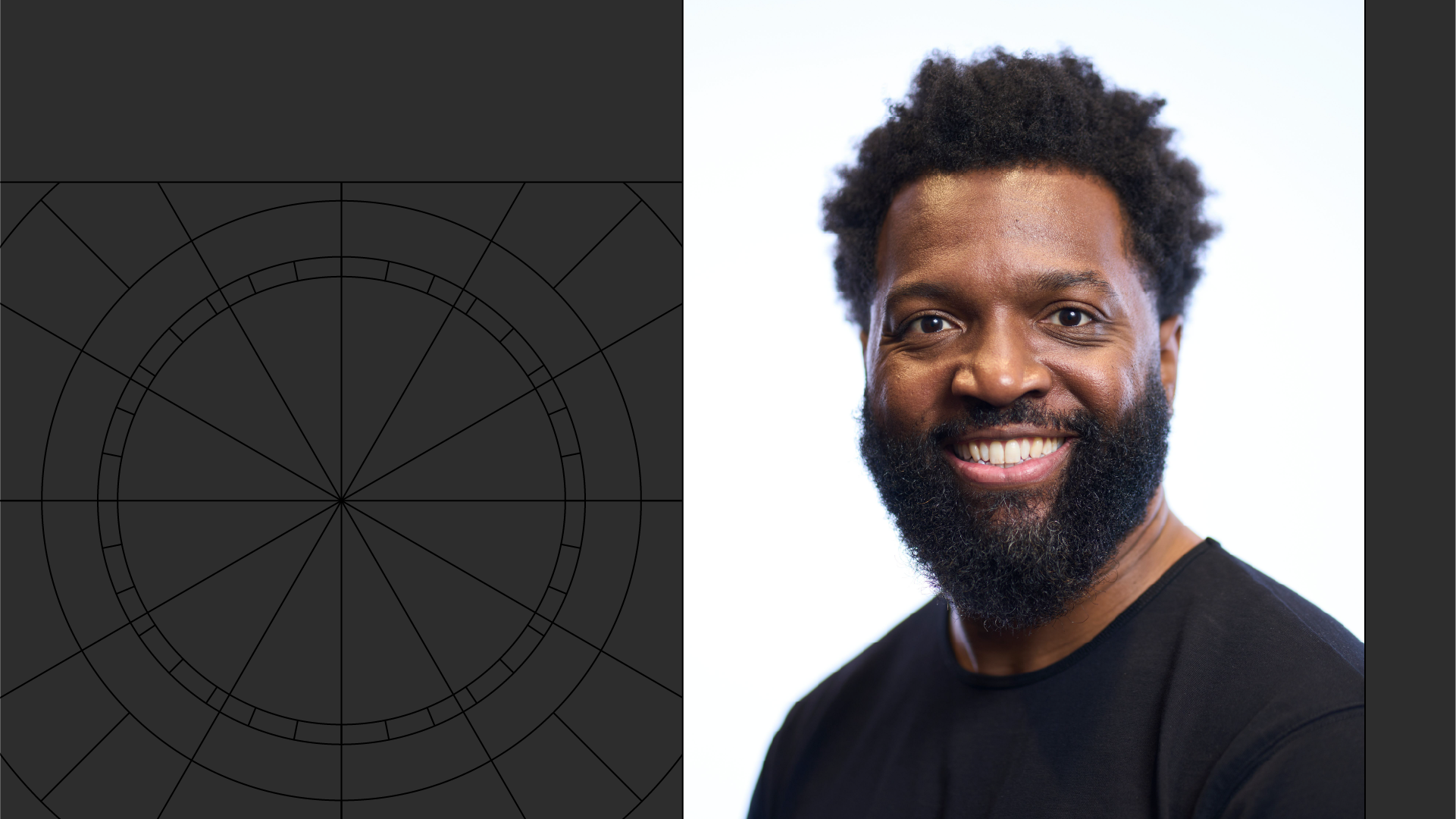
Baratunde Thurston, Writer, Comedian, and Earthling

This episode is hosted by Monica Holt.

--:--:--
Ep 190
0:00 / 0:00
Tune In

IN THIS EPISODE

The future isn’t something that simply happens to us. It’s something we help create through the stories we tell, the technologies we use, and the choices we make about how to live together.

Baratunde Thurston has spent his career exploring what that responsibility looks like across comedy, media, civic life, and nature. Again and again, his work returns to a deeply human question: how do we embrace change without surrendering our agency? His latest award-winning project Life with Machines turns this question on technology, exploring how new tech shapes our lives—and how we might shape it in return.

In this episode, Baratunde reflects on what it means to treat ‘citizen’ as a verb, why conversations about AI demand more nuance, and how we can all take a more active role in shaping our collective future.

Transcript

Baratunde Thurston: I think it’s important to have a very clear definition of what our own agency actually means. The industry of technologists promotes agency very simply as capability, you can do more stuff. There’s another access to agency, which is power. And power means choice, control, and community. It is deciding together because we already live together and we might as well do that well.

Monica Holt: Welcome back to Arts Unscripted, a capacity podcast. I’m your host, Monica Holt. Before we dive in, a few reminders. First, we want to hear from you. Join us on over at our new Instagram page @artsunscripted. You can tell us what you think, catch clips from the interview, and maybe even see a few cutting room floor moments. And don’t forget, you can also sign up for Arts Unscripted emails on Capacity’s website. Now onto today’s episode, and this was a fun one. My guest today is Baratunde Thurston, writer, host, and a critical leader working at the intersections of tech, democracy, and what it means to live well together. Every question he’s asking are the ones that arts organizations are also navigating. How do you build real community? How do you keep people invested in something collective when the culture keeps pulling them toward the individual? How do you hold onto hope about what’s possible without pretending that the painful parts aren’t also real?

Beratunde co-created How to Citizen, a podcast built on the idea that democracy is something we do, not something we have. He hosted and executive produced the PBS series, America Outdoors, and his latest project, Life with Machines, is where all of it converges. He’s bringing the same participatory people-first lens he applied to democracy and to the natural world, directly to the question of artificial intelligence and what it demands of us as humans. Let’s dive in.

Baratunde Thurston, welcome to Arts Unscripted. Thank you so much for making the time to spend with us today.

Baratunde Thurston: Thank you, Monica, for having me. Thanks to the whole Arts Unscripted team. Thank you to the arts and to the lack of scripts.

Monica Holt: Both in equal measure, I guess. Our podcast, we really have been talking recently about collective joy and how we promote that. I’m curious when you hear those words, collective joy, what do they mean to you?

Baratunde Thurston: Memory just popped into my head. So I went to a private high school and middle school in DC called the Sidwell Friends School. And it’s always special to have other black people around. We were a minority, but there was enough of us to have a community. And we started doing these annual productions in February, well on the nose of Black History Month production that was a musical historical review, basically a way of educating ourselves and the rest of the school on who we are. But I remember being in this gospel scene where I was playing the part of the preacher and I got to lead a multiracial chorus in singing all of these black gospel songs. And even the little knucklehead dudes who though of themselves as thugs, it’s hard to be a full thug in a private school in DC, but everybody has got their persona and the level of joy. We made eye contact, like little boys who were mostly trying to be tough, wearing way too many clothes, way too loosely, climate inappropriate, were on stage singing and dancing and looking each other in the eye with love and joy.

And that was a very collectively joyful moment.

Monica Holt: That’s a great memory. So that kind of leads us into how art first came into your life. And if you’re talking about musicals at that age, I’d imagine art was in your house and around you much earlier on. Is that fair?

Baratunde Thurston: It is very fair, very accurate. So I grew up in DC. I was born in 77 as the musical form known as Go-Go was just emerging out of funk, disco, some rapping level things were coming. There’s a lot of musical energy in DC, and I grew up to a mother, Arnita, and my older sister Belinda, and there was music in the house. There was always music in the house. My mother played guitar and she sang. She had an amazingly beautiful singing voice. I remember her doing a friend’s wedding and singing a Nat King Cole song…Unforgettable. Ironic that I almost forgot it. So I have a deep memory of that. My mother would sing in nightclubs in the Mount Pleasant, Columbia Heights, Adams Morgan neighborhood that we grew up in. Our neighbor, James West, he played cello and flute and bass, probably something else, but he crammed a lot of instruments into his tiny apartment and he and my mom played together. And then my sister Belinda, she was in a youth orchestra program, the DC Youth Orchestra program, DCYOP, and she played oboe and English horn. I’m nine years younger than my sister. And in her teen years, I think she was first chair in the orchestra. She had to be because she was our mother’s daughter. We both had to.

Monica Holt: No other option.

Baratunde Thurston: It was the job. But I can remember her making her reads for the oboe and going and watching her play all over DC. And she went on tour. I think she went to Spain with the DC Youth Orchestra program. And so that was present. I grew up with music on the radio, on our sound systems, but also emerging from these two women who raised me essentially. So when it was my turn, DC Youth Orchestra program was the obvious entree, and I’m talking six years old Suzuki violin.

Monica Holt: Wow.

Baratunde Thurston: Yeah. Yeah. Photos are adorable. It’s just like I’m wearing a button up white shirt, actually much like I’m wearing right now, maybe part of me knew. But the community, the playing with others, the Suzuki thing is its own trip because you’re not reading any. It’s just all by ear. So that’s what got my ear going and then eventually switched to the bass, upright bass and became

Monica Holt: Fresh. Yeah, there we go.

Baratunde Thurston: So music was a part of my foundation as what it meant to live with my family, what it meant to be a DC resident, and gave me this outlet for expression. And then from there, from the being on stage with an instrument, I started experimenting with using my own body as the instrument and getting into performing and doing plays and musicals, heavily ramping up in middle school. I did City at Peace was a great arts program. I think it still exists. Looking at conflict resolution, violence, all these challenges facing kids in cities, how do we deal with them? How are we going to deal with our tension with each other? We’re all in DC, but we come from different worlds and then you realize everybody’s got broken ass families, everybody’s got psychological challenges and confidence issues. And that art, that communal multiethnic, multi-class art project that was City at Peace really helped me humanize non-intellectually other people who I didn’t fully understand or have experience with.

And you’re like, oh, just because you got money doesn’t mean you don’t have problems. In fact, the opposite.

Monica Holt: Yeah. There is something about DC and growing up there where the art wraps around you no matter where in the city you are. But also what you were mentioning is the cultural diplomacy piece, which is most present in DC in a way that it’s just not talked about the same way across the country. Or it hasn’t been in my experience about what it is that the art can do to connect folks across borders, across oceans, et cetera.

Baratunde Thurston: There’s such a privilege to growing up in DC. DC special because of the blackness and that history, for me in particular, it’s very much a part of it. But that diplomacy piece, it’s really radical.

Monica Holt: Yeah. I have to mention though, obviously there were also some comedy influences in your life at that point. What do you think was it about comedy that captivated you?

Baratunde Thurston: It is hilarious to grow up in self-proclaiming proud democracy and be taxed without being represented. There’s just the joke of living in Washington DC.

Monica Holt: Speak on it.

Baratunde Thurston: And living inside of that punchline and being born into that my whole life. Everybody’s parents works for the government. That’s how DC works. That’s the company town. And yet we don’t have the same rights. It’s more of a territory, viva Puerto Rico. So I think that was an influence, unsubtle, but the contradiction of that was made present to me really early on. In the same way that I shared the soundscape of my household, being my sister and the oboe and I’m practicing bass and my mom’s playing guitar, the other sound in the house was Redd Foxx, was Richard Pryor, was Whoopi Goldberg, was Garrison Keillor. One of these is not like the other, but

Was Eddie Murphy. So watching a lot of comedy on VHS and listening to LPs, like physical round disc albums of comedy and then cassettes in the house on a speaker as we’re living our lives and just laughing. And then we were also a family that did a lot of road tripping, a lot of staying on KOA campgrounds and state parks and national parks and all of those trips in the car had cassettes, had books on tape and had comedy. So I’m absorbing, absorbing. I wasn’t a funny kid. I was a super serious, hyper-political, very judgmental, mostly right about everything kind of kid. I was pleasant. I wasn’t smarmy about it, but there was not a joke in me until a high school-ish, really college.

Monica Holt: What do you think changed? Where do you think the jokes found you or you found you’re in?

Baratunde Thurston: I think I reached my limit on how to process pain sincerely and earnestly. I remember. Sidwell was like a mixed bag. In hindsight, my vision’s 20 / 10 and I’m grateful for all of it. I’ve written about it in my book, How to Be Black. The net on the experience is I’m very glad I went there. And it was traumatizing. It was exhausting. It was stupid at times. It was highly racist and classist and all the things that America and much of the world can be on a child. And one of the moments I remember searingly is being so exhausted from butting heads with the administration about some race nonsense. So I remember going out to the track and I was a part of the track and field team and I just ran and ran and ran and I always carried a reporter’s notebook, like a classic, maybe three inches wide spiral bound over the top, not left to right.

I had a night job at the Washington Post, not as a reporter, as a photocopier and phone answerer. So I swiped a lot of reporters’ notebooks from the Washington Post. Love it. So anyway, I’m sitting on the bench, panting, writing all of my frustrations and some absurdity occurs to me that’s like, “Oh, this is kind of funny.” I started sharing jokes through our early internet access. Part of a privilege of going to this school in the ’90s is that we got very early access to the thing that became known as the internet. I’m on message board finding jokes that people are putting together, like early internet comedy, and I start a mailing list sharing all these jokes with my friends and schoolmates. And so I become known digitally. I’m basically like a proto influencer, right? It’s like I have my own little thumbstack.

Monica Holt: Before that existed.

Baratunde Thurston: Before any of that existed, people were like, “Yo, you got to get on Baratunde’s lists.This shit’s hilarious.” They weren’t my jokes, mind you. I was just like a joke DJ.

Monica Holt: Oh, I like that.

Baratunde Thurston: I was like a curator of internet comedy, but the pressure building up in my little body, my little mind of all this rage, just rage at the world and injustice, some distant, some structural, some just very personal. So when I got to my first year at Harvard, what finally broke open was my own voice

And I started a satirical email newsletter, original content for the first time. My take, I called it Newsphlash with a PH. It was the era of phat as a slang term for dope, for good, for cool. And so I started these generally weekly dispatches doing satirical sendups of campus life at Harvard, of life in Boston and Cambridge and Massachusetts. I just kind of spiraled out in a good way, like concentric circles of me talking trash about everybody, literally up into the world. I had jokes about Slovada Milosevic and stuff that was going on in Bosnia, Herzegovina because I was a news obsessed kid. I still carry reporter’s notebooks, but now I have a way to express it, the indirect approach through the arts, whether through those plays, those musicals in the Sidwell era, and ultimately this satire in my Harvard era, that’s where comedy emerges through frustration, anger, rage, and desperation.

It was like the outlet that didn’t hurt.

Monica Holt: As you’re leaving school and looking ahead at what’s down the pike while the internet and access to other people is changing, how were you thinking about your own voice and message in that context?

Baratunde Thurston: Initially, I wasn’t thinking about my voice or my message. I was thinking about college debt.

Monica Holt: Oh, sure.

Baratunde Thurston: Yeah. And I was thinking about how do I pay these fools back? I had three creditors, right? I had an order of reverse preference, the federal government of the United States, then Harvard University, then my mother, Arnita Lorraine Thurston. And I had made a deal with her in high school that because I stayed at Sidwell, which cost me money, she second mortgaged the house to keep me at that school. That’s part of the challenge of my perspective on that place. I kind of have to love it because it cost our family a lot. And doing that, she obviously also had to help pay for college, but she’s like, “You’re going to pay me back for this one because I was trying to put you back in public school when all this racist bullshit was happening and you said you wanted to stay. So college is on you. I’m good for it.

I’ll front you, but I want my money back.” And I conveniently forgot that after I graduated, and I’m just living several months and I got a corporate consulting job to pay back the university and eventually the government, but my mom was like, “Hey, where’s my money?

Monica Holt: It’s time.”

Baratunde Thurston: And so all of that priority, man, I took this corporate consulting job and I’m wearing khakis and polo shirt. It’s not exactly me. So yeah, finding my voice was a result of an intervention by my girlfriend at the time saying, “You like all this art stuff? You’re not doing it. What’s up? You have this newsletter. Where is it?” Really calling me to task on the drift in my life toward just making money. There’s a longer story there, but that’s the short one, lifetime of gratitude for that contribution and that partnership at the time. So that’s a part of me finding my outlet. I basically resurrected the newsflash list shortly after nine eleven. I enrolled myself in a standup comedy class at the Boston Center for Adult Education. Every week, Monday night, Steve Kalishman taught this class, and then I enrolled myself in a comedy writing workshop in Brooklyn.

I commuted every week to New York.

Monica Holt: Commuted to New York.

Baratunde Thurston: Yeah. When I decide to do something, I’m just like, “We’re going to crush it. Watch out. So I’m going to get funny. Let’s go.”

Monica Holt: I love it.

Baratunde Thurston: And that reset my commitment to its most serious level. And so I’m on stages doing terribly, but not so terribly that I don’t keep doing it. And I’m writing this newsletter again every week and now public. It’s not just campus people. It’s like real people. You’re not a friend of a friend. There’s no relationship with you and me except what I’m publishing that you’re into. So that’s like becoming a creator, we call it now. So that was it. And then I just kept at it. And ultimately that commitment for years, I did that six years from 2001 to 2007 and ultimately moved to New York City in 2007. No job there. I decided I would work remote and keep the consulting thing as a freelancer. And within a few weeks of getting to New York City, a friend, a friend from Harvard who had done improv, Justin Krebs, he forwarded me an email.

I still have it somewhere, pointing me to a job opening at The Onion. And he’s like, “This is you. This is who you are.”

Monica Holt: So that’s the start at The Onion. And then you head to The Daily Show and then there’s two seasons of America Outdoors. How would you describe your journey through it all?

Baratunde Thurston: So a lot of my journey is experimental and instinctive. It’s not like pre-planned strategic roadmaps. There was no five-year plan, not exactly. I did map out as a college senior on big butcher paper and a Sharpie, a scheme. I was like, “By the 25th reunion, I will be working on my own comedy series. I will recruit this person and this person to be a part of the team. I will have this internet presence.” It was actually, many of those pieces have come to be true and it wasn’t something that stayed on my wall I was looking at all the time. I wrote it down. It’s in a box somewhere. Maybe it’s been recycled by accident. There was a long-term suggestion of what I might do, but day to day, I’m just like, “How do I pay this with the opportunity? So-and-so says I should try that.

That feels right. I’ll give it a shot.” And a lot of failing along the way. And when you bring up How to Citizen, America Outdoors and my present focus on Life with Machines, the DC story is always the foundation. My mother is the foundation. And I could have started this household picture that I painted with the music influence like I did here because you asked me about art in my early life, but it was as much political influence. We were going to community meetings together. I was seeing her advocate. I was writing letters on our behalf to neighbors, to representatives. I was learning my political voice well before I learned my comedic voice. Then obviously I explained the comedy was an outgrowth of frustration with social and political reality and the technology piece present the whole time. She brought the computer home, a map of Africa, and a fricking Dick Gregory album and some organic seeds.

So if someone from the outside is like, “Wait, he was doing this satire newsletter,” then okay, yes, political blog. Okay. I get how to citizen out of that. He’s having outdoors. What’s up? And I’m just remembering myself.

It’s just a constant remembering. And there’s layers to what that word can mean if we just hear it flat. Remember, it’s like recall. It’s accessing your memory more fully. But if we break it, remember, turn member into a verb, then that is to belong and to do it again, to return in some way. So coming home to myself is also what I’ve been doing. It’s just way more public than most people.

Monica Holt: I mean, that’s beautifully put. You do love verb being a noun, and I’m thinking of citizen. The idea of citizen as a verb feels really important in this moment. And so for listeners who might not be familiar, would you share a little bit about what it actually means to say citizen as a verb from your whole chest and why that’s different than citizen as a noun?

Baratunde Thurston: First of all, to any listener who does not know about how to citizen, how dare you?

Monica Holt: How dare they?

Baratunde Thurston: How dare you not already know?

Monica Holt: Let’s shame them. That’s how we can spend the rest of this time together.

Baratunde Thurston: A good progressive judges people for not knowing

Monica Holt: This. Yes, exactly. That’s what we’ve learned, I guess.

Baratunde Thurston: Curiosity as a burden. You want me to explain to you? How else are people supposed to find out, bro? At any rate, citizen as a verb is a much more useful version of that word than citizen as a noun for our present circumstances in particular. The idea of drawing lines between people and we don’t want you here because you’re brown and we think you talk funny is objectively stupid and wasteful and we have scared off or deported off or incarcerated off or detained off or concentrated camped off. A lot of talented people, a lot of contributing folks, givers, not takers. So for me, that kind of enforcement, the white supremacist, simple-minded enforcement of citizen as noun is dumb. It’s self-defeating. It is suicidal collectively and sort of nation statewise, not good. But the verb is an invitation to do, and it is an acknowledgement that thinking of democracy merely as voting for people is insufficient to the moment we’re in, to any moment actually, and that there’s so many ways, so many creative, joyful, interesting, hard, sometimes confounding, but many, many ways to actually do democracy.

So that’s a little bit of the construct. And then what it actually means, citizen as a verb. It means we show up and participate. It means we understand power because this is all about power and power’s not a dirty thing. It’s just how we influence people. It’s how we get what we want from others, including systems. So we got to understand all the ways we can handle that and grow that and build that. It is committing to the collective and not just the individual because the whole point is to live with others.

Monica Holt: Yes. Can we say that louder though? Committing to the collective, not the individual. The whole point. I mean, I love hearing you speak on this. I really, all jokes aside, I do encourage everyone listening to check the series out. I think the whole how to citizen can see is so powerful and important right now. And your voice has been really meaningful in making that space legible to everyone, even those who maybe aren’t engaged or don’t think that politics is a place to be engaged every day. I love how you are speaking on it as a call of invitation. It’s just so important right now and I’m so grateful for that.

Baratunde Thurston: It is. It’s a recruiting drive. And I remember watching the 2016 election result and the thought that occurred to me then was the greatest threat to democracy is our blind faith that it will always be there. That it’s just this passive inheritance like, oh, just because you’re born into a democracy doesn’t mean you’ll get to live in one or that you’ll die in one. Shit changes, especially if you don’t participate to ensure that they change in the good way. And so the passivity was killing me. It was like that high school frustration running laps in my mind, where’s my reporter’s notebook? And so what emerges from that is my own memory of the participation that I’ve already seen, been a part of, grew up with of democracy as our friend Jon Alexander has put it. I’m pretty sure he put it this way. He gives me credit for it sometimes.

I’m like, I think this is you. Democracy is something we do, not something we have.

Monica Holt: Yes.

Baratunde Thurston: And I will take citizen as a verb, that was my own thing. I don’t know if I was the first, but the title for what became the podcast, how to citizen. Let’s highlight these stories of people who are participating and committing to the collective and understanding power and this fourth pillar and principle, investing in relationships. And what you just got excited about is the group act, is the living with others. And my frustration, which continues, it’s part of being an American, is this obsession with the individual has come at great expense. This mythological land of individual rights, individual property, my house, my kid, my woman, my gun. Oh, that feels like freedom, but it’s also a freedom without any responsibility to the group that we’re a part of. And that damaging energy, that extraordinarily selfish energy doesn’t just present itself in the form of individual human beings.

It presents itself in the form of institutions and corporations who may also feel like no obligation to others. So yeah, it’s an invitation to a big old party that we get to make ourselves, and it’s meant to be a shift in focus away from doom stories as well. And look at all this stuff we’re losing. No, look at all this stuff we’re building.

Monica Holt: Well, that’s exactly right. And I think in some ways, as I think about life with machines, it really does all tie back to your impulse for being a storyteller. I think you, I’m now going to quote you to you, which is my favorite thing to do, and hopefully we do it right. But you once said that storytellers make sense of reality for us. Certainly with How to Citizen, that’s immediately helpful. But Life with Machines, it’s a podcast, it’s a newsletter, you have your YouTube series. It is helping us navigate how we want or decide to live in a world that is increasingly filled with AI. And so I’m just curious how that work has developed and kind of what your story of creating life with machines has been so far.

Baratunde Thurston: It is a homecoming. Life with Machines was kind of like being called back, like mafia style. I thought me and tech were good. I’m out here literally running around the woods, making this beautiful PBS series, hanging out with Indigenous people, canoeing and kayaking and jumping the Wright Brothers glider and hang gliding over Utah and going to the Great Salt Lake. And I’ve gotten to see the vastness and the beauty and the common ground that we share in a divided time and that was inspiring, remains so. But ultimately ChatGPT gets launched at us, surprise. You have to change everything about everything. No vote, no even product market fit. It’s just like – No,

Monica Holt: No for real.

Baratunde Thurston: Even from a business market demand perspective is a lot more supply than demand of this version of AI. And so for me, it was like, okay, coach, put me back in. Let’s go. Let’s come back to tech. Let’s take what I’ve learned from these deployments into the democracy realm, into the climate and nature realm, and let’s bring that life affirming set of values that were bolstered through my exposure to all of these amazing stories and amazing people. Let’s bring that, bottle it up and spray it all over this tech thing to remember our humanness and our lifeness. And so even the title, Life with Machines, very conscious, life comes first.

Monica Holt: Well, and that’s what I wanted to say because there’s so much conversation on what machines are capable of doing. You are really more interested in the questions of human agency. So how is it being used? Who are the people that we can learn from? Given that you have had so many conversations with people in all of these different facets of your own history and remembering, what are the conversations that you’re having in life with machines right now that you just keep returning to that we all should be really availing ourselves of and thinking about together?

Baratunde Thurston: I think about Dr. Rumman Chowdhruy and this conversation. I try to say every time I say this to sigh her, but I’m sure I don’t. So this is a good opportunity. AI is not taking your job. People are making decisions. They’re blaming AI. They’re using AI as an excuse. They’re justifying it with AI. And they might even have intentions for AI to do your job instead of you, but the AI is not taking your job. Your boss is taking your job. The board member is taking your job. Some investor is taking your job. It’s a human being and that grammar is powerful. So she calls it moral outsourcing. And obviously it’s become clear to anyone listening or watching now, I’m obsessed with language. Language matters. Sequence matters and passive versus active voice. So this kid lost their job to AI. Whoa, whoa, whoa, whoa, whoa.

We are already lying through omission and poor construction. We are not saying the most accurate, most truthful version of what is happening here, which is that an administrator decided to deploy a system to outsource decision making from humans to that system.

Monica Holt: There we go.

Baratunde Thurston: Now we can have a useful conversation.

Monica Holt: That’s right.

Baratunde Thurston: As opposed to be distracted with turning humans against machines, which is the ultimate divide and conquer, which I know a little something about as a descendant of enslaved people, as someone who’s read enough history books to get the gist that this is a technique to consolidate power and keep those who might challenge that consolidation occupied with a less meaningful or even meaningless battle. So Dr. Rumman Chowdhruy, thank you so much. And there’s a lot of conversations that stick with me, but that AI is not doing anything is a really, really, really important one.

Monica Holt: It’s powerful to hear that named so clearly. It is so easy in casual conversation to let the nuance die. We know that. We know that over and over again, certainly from watching the news. But even just together with people when we just refer to, oh, Chat said this or Claude that or whatever. We’re not really thinking through. We have outsourced a particular service in some way and we need to figure out how it is that we the humans are taking whatever information or service that has been provided and incorporating it.

Baratunde Thurston: Yes to all that. This is arts unscripted.

Monica Holt: Sure is.

Baratunde Thurston: So let me just remember the arts. Dear listener, you deserve to know about something that should make you feel a lot better. I hope you’re so excited. I’m just not just about to tell you. So there’s a group called the Creators Coalition on Artificial Intelligence,

And it’s a cross sector alliance of creative professionals, people who earn a livelihood by editing, by writing, by shooting and filming, by performing. And so what they are doing is organizing the perspectives of all of these participants in the existing industry to A, help everyone understand what is actually happening. What is AI? How do these systems work? Let’s get more literate on the functionality so we can have a meaningful conversation. B, using participatory democratic tools to come to agreement about what terms even mean, the definitions. What does AI assisted mean? What does post-production AI editing mean? What does deep fake mean? What do these words mean? So then we can define standards, what is acceptable or not?

So we are all on the same page coming out of a process like that so that we can, as some of the founders of this, we can demand a collaboration from the industry, from our own industry executives, but also from the technology industry who has been launching these tools and systems and services at us without any inquiry. They’ve been imposing on their vision of the future. We’re going to come together, figure out what the impacts are for us, how we want to embrace them or not, and create a level of common language, again, the language, so that we’re arguing for the same thing.

Monica Holt: I love the idea of definition being so key between us. I’m curious from your perspective, as AI is continuing to develop, changing the way we live, what do you think is most essential for humans to protect? And then on the other hand, what ways can we really embrace AI to enhance that humanity?

Baratunde Thurston: I think it’s important to have a very clear definition of what our own agency actually means. The industry of technologists promotes agency very simply as capability, you can do more stuff.

And that’s alluring, especially in a rat race world. I got to do more stuff. That’s the only way to keep up with inflation, literally, is just to work harder. So I become a better output machine for this thing called the economy. Super inspiring stuff, guys. At any rate, there’s another axis, there’s another dimension to agency, which is power. That agency is capabilities plus power, and power means choice, control, and community. It means having meaningful choice of what tools to use, including the choice not to use any. It means control over your representation in the systems and the environment in which you deploy them. It means community that you are experiencing these systems with others, that you are deciding with others if, when, and how to use them and what limits you might want to place on them or on their use. And that is exiting us from single player mode, as I call it, to multiplayer mode.

It’s a graduation. It’s an upgrade. It’s democracy. But even if you don’t need that word, it is deciding together because we already live together and we might as well do that well. So the agency thing is a foundational idea concept to be clear on as we enter into the million little decisions that we’re going to have to make. One of these principles of how to citizen that didn’t flesh out is to citizen is to invest in relationships with yourself, with others and with the planet.

I think these concentric, these interwoven, interdependent relationships between self, other human and all other life is a boundless domain that we must constantly respect, rebalance, enhance, but mostly keep conscious. Apply that series of relationships to the question of technology and artificial intelligence. Does this tool, this service, this overall system, this specific model support or degrade my relationship with myself, with other people, with other life? If it’s support, let’s go to the future. I like that one. If it’s degrade, let’s slow down and think about it.

Monica Holt: And it goes back to that participation piece that you were talking about in all of your work. And it’s kind of this beautiful through line in what you essentially do advocate for every day for all of us is to be there and be there together.

Baratunde Thurston: I think be there and be there together. I think it can be so much fun too to, as a group, come together and wrestle with this stuff. As a parent group, how are we thinking about screen time? How are we thinking about the development of a mind and the good friction, ease and comfort are also these values held quietly but profoundly by people self-interested in selling you ease and comfort or people under-practiced themselves at being uncomfortable.

Monica Holt: Baratunde, that is such an important thing you just said, practice at being uncomfortable.

Baratunde Thurston: Yeah.

Monica Holt: That it is so important that we figure out how to bring discomfort back into the world. It is okay to be uncomfortable sometimes and we have to learn that because that’s the only way that we can all get through to what comes next.

Baratunde Thurston: I did a TED Talk in 2018. It was about white people calling the cops on Black people and Permit Patty and Barbecue Becky and this whole meme phase. And at core, the problem wasn’t like a little Black girl selling water on a stoop or a Black family barbecuing on Lake Merritt in Oakland. The problem was a white person who did not know how to hold their own discomfort. And so they were optimizing. They were just like, “I don’t like this feeling. There’s an unfamiliar presence. My only model for that is threat.” So A, I just named the business model of Nextdoor. B, there are other options.

If we don’t know how to handle our own discomfort, our own ruptures in our relationships, it finds a way out. It comes out sideways and we’re called the cops because the music is too loud. Or you could knock on the fricking door like a human being to another human being and say, “Why didn’t you invite me to your party?” And they could say, “Come on in, we got plenty.” Or it’s tense, but the tension isn’t the end of your whole world. It’s just a fact of life. And you as a member of the society of the living actually see that as a feature, not a bug, something to be optimized away. I want zero discomfort. I want zero delay. I want zero friction. You just described a well-oiled machine.

Monica Holt: Right. Not a life.

Baratunde Thurston: Not a human being, not any living being. And if you value learning, the deep irony of so much of this project is that learning involves discomfort, involves embarrassment, involves effort and struggle and error. It is literally a part of the process. I say this with a lot of sarcasm and judgment and side-eye energy, and I include myself in it because I’m a product of the same system. I’m just like, “Oh, you mean I got to talk to a person now? I just want it done.”

Monica Holt: We’ve all sent a text instead of picking up the phone.

Baratunde Thurston: I’m just like, “Claude, can you do this? I don’t want to deal with people.” So we need a communal effort, a communal set of standards and definitions.

Monica Holt: Well, but what I’ll say though is that even though yes, you can be funny and sarcastic, you still strike me as someone who deeply believes in what is possible and believes in humans, right? I do. You have to do what you do. Despite

Baratunde Thurston: All evidence to the contrary, I believe.

Monica Holt: But you can feel that come through. That’s a real genuine care behind some of the ways that make it more palatable for folks to understand. Yeah. And with that in mind, I guess my last real question is what is giving you hope today about how we might respond as a society to this moment of technological and profound change that is happening around us?

Baratunde Thurston: I’m holding up a book in my hand. It’s a book titled American Indigenous Democracy: A Call for Interdependence. This is a book that holds within it a lot of ways forward by reminding us of what indigenous people on this land that we call the United States, that they refer to as Turtle Island, have known, have learned through their own painful history. And in particular, the Haudenosaunee Confederacy of six nations now that has been present since before the United States was even the concept of a nation. These nations were practicing democracy as a result of their own internescent warfare system that was no good and to no blame for Europeans because they weren’t here yet, but they figured it out through a long struggle and started living under the great law of peace. And there’s a whole history to it. I won’t get into all of it.

I would just say that this book is a re-invitation to remember ourselves, to get close to each other, get close to the land, and to value life and to build systems that value life. And this gives me great hope. I was honored to have a small role in helping this book come into being, and I was invited to write the forward to the book as a bridge. So find this book at americanindigenousdemocracy.com. Do not take the invitation as one to become Haudenosaunee. That is not the invitation, my friend, but to become more human and to become a better ancestor and a better relative to all the living and the longest running democracy in the world has something to say about it.

Monica Holt: I so appreciate that and I look forward to reading it. So as we’re wrapping up, we end with some quick fire culture. What is one piece of culture, a book, a TV show, an online trend that right now you currently love and are obsessed with? Oh

Baratunde Thurston: Man. Lioness. Taylor Sheridan, I underestimated you. Let’s just put it like that. The show is fire.

Monica Holt: It’s fantastic. If you could go back in time to see any live performance or event, what would it be?

Baratunde Thurston: Hugh Masekela.

Monica Holt: Good pull.

Baratunde Thurston: With Miriam Makeba.

Monica Holt: Do you have a location, a venue?

Baratunde Thurston: I’ll pick the Carter Barron in Washington DC. I don’t know if it’s even still there, but I saw B.B. King there when I was a kid and I didn’t really know what I was getting. And so to be able to go back and see these two do their thing in Chocolate City, that would be cool.

Monica Holt: Yeah. What’s one free resource that you think everyone should be checking out?

Baratunde Thurston: Your public library.

Monica Holt: Yay. Our favorite answer.

Baratunde Thurston: Absolutely. I was honored to serve as a board of trustee for the Brooklyn Public Library for six or seven years and product of D.C. Public Library and most libraries wherever I’ve been. Librarians are the shit, they are fighters, and books are great and community deciding to make democracy physical. That’s what a library is. It’s a place for everyone, services for everyone, resources, access to knowledge for everyone. It is the promise of living well together in a building.

Monica Holt: Incredible. And very last, if you could broadcast one message to arts organizations all over the world today, staff, leaders, boards, what message do you think they should hear?

Baratunde Thurston: A lot of the jokes that were playing out as I was coming up in standup were some version of if you’re going through a lot of pain and trauma and trouble, especially as a kid, you’re going to be a great artist. And I do think there is a dark truth, but still truth in that. Arts organizations are going through a lot of pain, a lot of trauma, a lot of turmoil right now. You’re taking a lot of hits. To me, that also means we are going to make the best art ever. This is like these painful bullshit teen years and we are going to hit our Basquiat moments. We’re going to hit our Stravinsky moments. We’re going to hit our Zora Neale Hurston moments and take all of that pain and make freaking blues out of it. I want you to remember that as an artist and as a supporter of the arts, you’re a metabolizer.

And so the pain is part of your process literally. So look forward to the beauty that will come from you on the other side of this.

Monica Holt: Baratunde, thank you so much. Thank you for the time, the inspiration and the work. Really, really grateful.

Baratunde Thurston: Thank you.

Monica Holt: Thank you for listening to Arts Unscripted. If you enjoyed today’s conversation, please take a moment to rate us or leave a review. A nice comment goes a long way in helping other people discover the show. And if you haven’t already, click the subscribe button wherever you get your podcasts. We’ve got some great episodes coming your way and I don’t want you to miss them. A huge thanks to our team behind the scenes, including Karen McConarty, Yeaye Stemn, Stephanie Medina, Jess Berube, and Rachel Purcell Fountain. Don’t forget to follow Capacity on Facebook, Instagram, LinkedIn, TikTok, and YouTube for regular content to help you market smarter. You can also sign up for Capacity’s newsletter at capacityinteractive.com. I hope you’ll reach out to us and let us know what you think and who you’d like to hear from next on Arts Unscripted. I’m Monica Holt. Thanks for listening.

View More
About Our Guests
Baratunde Thurston
Baratunde Thurston
Writer, Comedian, and Earthling

Baratunde Thurston is a writer, host, and speaker exploring how we live well with technology, with each other, and with the planet. He has spent decades creating with and criticizing technology, from The Onion to The Daily Show to his Webby Award-winning project Life With Machines, focused on how we live well with AI and don’t just endure it. He also hosted the PBS series America Outdoors and co-created How To Citizen. At the end of the day, he’s an Earthling.

FeaturedEpisodes

Arts Unscripted
Tune In

Listen Now

New Episodes Weekly