

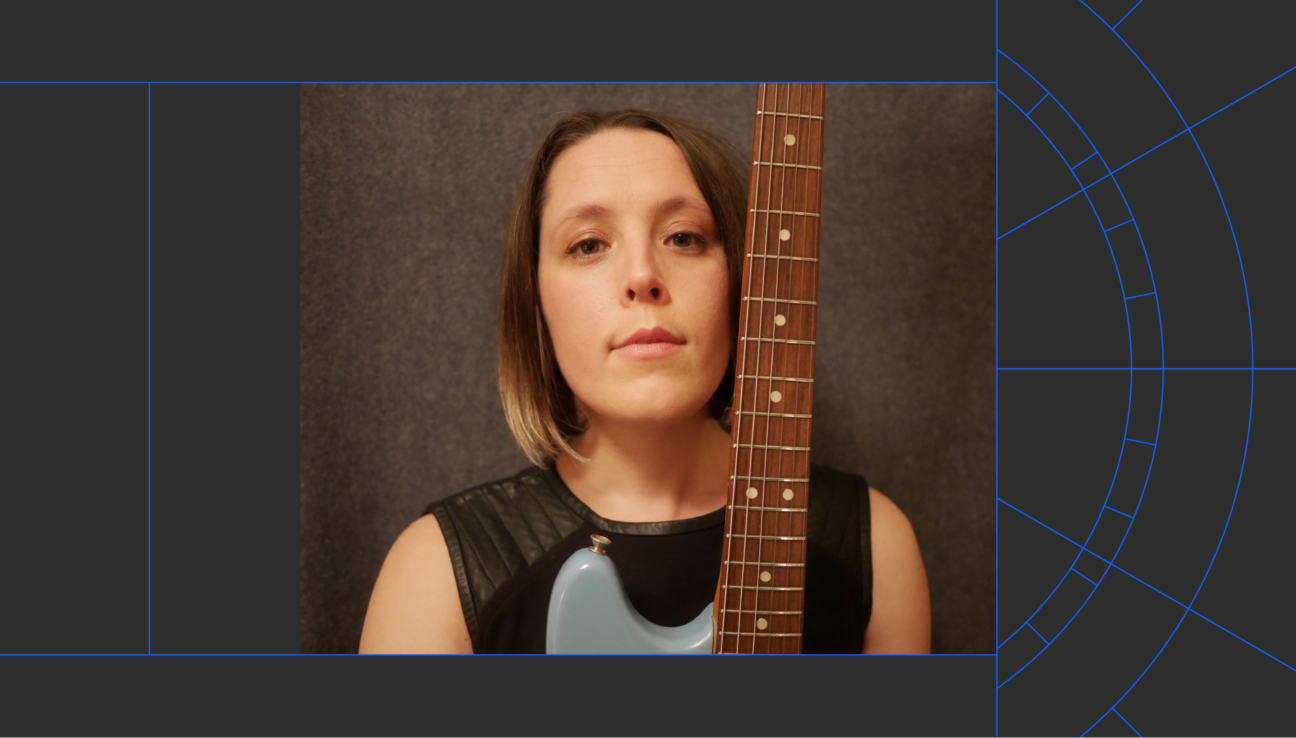
Music has the power to move a room. For composer Carlos Simon, that effect was first felt in church, where music was both a creative act and a shared experience.
Attract and engage your patrons with a fully-managed ad strategy across all your platforms.
We'll help your organization use AI to save time and spark creativity while staying grounded in your values.
Your creative assets + our impeccable execution = thumb-stopping social content.
Let's harness your website’s data and uncover opportunities to optimize and grow.
We’ll partner on a strategy to level up your email program and help your ROI shine.
Ensure visibility across the search landscape with a technically sound website and content that deserves to rank #1
Attract and engage your patrons with a fully-managed ad strategy across all your platforms.
We'll help your organization use AI to save time and spark creativity while staying grounded in your values.
Your creative assets + our impeccable execution = thumb-stopping social content.
Let's harness your website’s data and uncover opportunities to optimize and grow.
We’ll partner on a strategy to level up your email program and help your ROI shine.
Ensure visibility across the search landscape with a technically sound website and content that deserves to rank #1
This episode is hosted by Monica Holt.
Jacob Jonas consistently questions who dance is for, where it belongs, and how it can be sustained.
From his early days as a street performer on Venice Beach to founding his own company at just 21, his work reflects a conviction that art must evolve alongside audiences. That perspective has shaped his drive to build new models for the field just as much as it has informed his creative practice.
In this episode, Jacob discusses expanding access to dance beyond traditional ticketed spaces, and bringing movement to the screen through his global platform Films.Dance. He also reflects on the gaps he sees across the dance ecosystem—from outdated funding models to legacy approaches to marketing—where emerging leaders have opportunities to rethink the future of the field.
Monica Holt: Hey everyone. I’m Monica Holt and welcome to Arts Unscripted. If you’ve been listening for a while, you’ll know that we’ve recently changed our name: formerly CI to Eye. We’re entering a new chapter, but the podcast remains a place to connect with community and learn from each other through conversations about the arts and our shared futures. Today, I’m talking with Jacob Jonas, choreographer, filmmaker, entrepreneur, and someone who will make you rethink where dance belongs and who it’s for.
Jacob grew up performing on the Venice Beach boardwalk, learning that audiences don’t owe you their attention; you have to earn it every single time. That lesson has shaped everything from his company’s self-producing model in non-traditional spaces, to the 45-film global series he built during the pandemic. Jacob is also one of the clearest voices I’ve heard on the sustainability crisis quietly unfolding inside arts organizations.
He has a concrete point of view about what needs to change. This is a conversation about creativity, resilience, and what it means to keep building when the field is shifting underneath your feet. Let’s get into it. Jacob Jonas, welcome to Arts Unscripted. Thank you so much for taking the time to be here today. It is so wonderful to see you.
Jacob Jonas: Yes, grateful to be here. Thanks for having me.
Monica Holt: Well, you have so many gifts and talents that you have been sharing with the world in a variety of ways, and I cannot wait to talk a little bit more about that, but we do like to start by getting a sense of how art entered your life for the first time. Do you remember the first moment you felt pulled towards dance?
Jacob Jonas: I do. I grew up in a bit of a broken home. My parents were divorced, so my mom lived in Santa Monica and the weekends that I would stay with her, I would skateboard down to the Third Street Promenade and the Venice Beach Boardwalk. And I came across a bunch of street performers one summer. I was about 12 or 13. And they just really captivated me, doing street dance and acrobatics, and it really just pulled me in. I think when I first started hanging out with them, it wasn’t so much the dancing that I was interested in. They really just created this family energy that I wasn’t receiving at home. And so I wanted to spend a lot of time with them as older male role models and be a part of a family that I felt was absent for me.
Monica Holt: Yeah. I think feeling at home in that kind of space, but also it being tied to movement and physical communication – that makes a lot of sense. Is there a transition moment where you think about, okay, you were growing up in this community of street performance versus a formal training path, but then you decide to pursue this craft in a “professional” setting. Did you feel like there was a push and pull there between how you were raised and brought up in the tradition and what you were looking ahead to?
Jacob Jonas: Yeah, I think there’s a few things that first come to mind. One is in traditional forms of dance, a lot of people in the room are taught to move the exact same way as their peers. That you put your hand on the bar and everyone’s imitating and learning the exact same thing. Whereas in street dance and street performance, there’s a lot of references for people excelling in different disciplines and ways of moving, but you’re encouraged to create your own style of movement and individuality while still being part of a group. So I think that was really beneficial. I think the sense of mentorship and leadership was really important. I was 13, 14, but most of my peers are 25 to 45 years old. And so I was the little brother in many ways. And I think especially for boys and men, having mentors and people to look up to and not necessarily be told what to do, but definitely lead by example was really important for me.
And I think economically, I was watching this group make money every day. And then eventually when I got good enough, I started getting paid. Whereas in a studio environment, you’re paying the teacher to teach you how to do something. So I actually started street performing and then I was given a scholarship to a dance studio and I was shocked that all these kids were paying to go compete as opposed to getting paid. And so my relationship to money and performance was also unique at a very young age, watching a large group of tourists and everyday people put money in the bucket metaphorically and I have a whole script in the street show that encouraged people to donate to us in real time as opposed to paying for the education. So those are some things that first come to mind.
Monica Holt: It’s also so interesting to think about that immediacy then of the education you experienced about the meaning and importance of audiences as part of the craft as opposed to as a byproduct or an afterthought. When you’re starting out by being there directly with the people who are watching and participating versus being in a studio for the majority of the time without any sort of audience, does that change the way you think about the bridge between the performance and who it’s reaching or impacting?
Jacob Jonas: Yeah. A lot of people have been very straightforward with me that my work is very athletic and can be perceived as challenging. I think one of the things that inspired me initially was the explosivity that street performers have. The show is so short and you have to do back flips and front flips and headspins so the audience doesn’t walk away. You have to retain them there because they’re standing on the street and then you ask for the money at the end compared to high art or concert dance. Most people, they pay for their ticket and then they sit in a seat and watch the whole show, whether they like it or not. They kind of make that commitment upfront. Whereas with street performing, you really have to put it all out there every single time so that the patron or the audience member doesn’t walk away.
Monica Holt: There’s a good lesson in there for a lot of us, I think, who are thinking about that strategically. Can you walk me through a little bit how we go from the scholarship that you mentioned and some of that formal training to your founding of Jacob Jonas The Company in 2014?
Jacob Jonas: Yeah, so I was street performing around 13, and then 14, 15, I was in a recreational dance company at my high school. And then one of the owners of a local competitive studio gave me a scholarship there. And I was teaching hip hop and break dancing in exchange for learning more classical forms of dance. Around 17, 18, I started toying with choreography. There were some guest teachers that I was inspired by. And around that same time, I started learning improvisation and more emotional expressions of dance. So it was cool to find some more of those releases. And I just started experimenting with choreography. By the time I was like 19, 20, I was submitting some of my choreographic work to different festivals and competitions and won some. And part of the winnings was these opportunities. My partner Jill and I, we did this competition and one of the winnings was a one-hour mentoring session with Donald Byrd.
And that turned into a three-month opportunity in Seattle where he invited us up and I started to learn a lot about choreographic tools and compositions, but also he let me sit in on administrative meetings and a board meeting. So I got to learn a lot about nonprofits and nonprofit infrastructure. I always wanted to start a company. I definitely didn’t think I would do it so young, but this opportunity just presented itself at the time that it did. And because I’d learned some stuff from Donald and always had a curiosity about business, it felt like that was just the right moment to start.
Monica Holt: That makes so much sense. And I’m so glad that you mentioned Donald as part of this unofficial mentorship, but really taken under the wing from the business perspective. Because I think maybe we don’t value or think about that enough when we’re thinking about artistic mentorship, having it be so focused on the artist experience and creative development, but the business development side being absolutely critical. Were there things that you learned in the early days of forming your company or with Donald’s voice in your head about fundraising or operations or entrepreneurship generally? Were there things that have really stuck with you and shaped how you work in that space today?
Jacob Jonas: Yeah, I think one of the things Donald really helped me with was when you start a company, especially a nonprofit arts company, it takes five years to prove your concept in a way. And so he was really saying, if this is something you want to do, don’t let money, don’t let anything else get in the way, just be persistent and make good work. Those words have stuck to me today. So long as you make work and you’re able to build an audience and… everything else should come in place after that.
Monica Holt: That’s so well put. I imagine as a young leader in this space too, you are developing something while simultaneously developing your own style of leadership and business management, which I think is super compelling, especially coming from someone with so much artistic impulse as well, obviously. I can’t help but be curious that you were launching the company at a time when Instagram was also beginning to shape that connection between artists and audience, that presentation, that branding, all of those pieces. How were you thinking at the time about using digital platforms? Because it seems like maybe you saw something in them that others maybe missed at that moment.
Jacob Jonas: Yeah, I’ve always really cared a lot about marketing. I always saw the importance of telling the story and promoting the work. For me, I was very young and Instagram was just taking off and a lot of the traditional forms of marketing were buying ads in the New York Times or the LA Times or the subway stations. And I had seen this grassroots campaign that was growing online. And Instagram as a company was really, really interested in community. They had this weekend hashtag project that would encourage their whole community to be very creative. And so they’d give you a task and whoever did the best task, they would feature it on their platform, and that’s how you would build an audience. They started an initiative called the Worldwide InstaMeet Initiative where they would host meetups of other photographers in big cities around the world in Shanghai, Dubai, Berlin, et cetera.
And so these meetups were this really profound way for photographers to get to know who everybody was. So then I had this idea inspired by a friend of mine named Dave Krugman to start an InstaMeet called #CamerasAndDancers. And that was the launchpad essentially for not just creating my own work, but this all-ships-rise mentality of collaborating with other dance companies and creating visibility for them online too.
Monica Holt: Yeah. There’s something really beautiful about taking that approach in a space where folks are less familiar. This all brings us to Films.Dance, which is, I think, probably your largest scale project to date. Will you talk a little bit about the journey to Films.Dance and when the first idea emerged? Did you see it fully realized in your head what it could become, or was it more experimentation and a test and iteration process?
Jacob Jonas: Yeah. Well, when the pandemic first started, a lot of leaders within the community in New York and LA and also internationally came to me because I became the social media guy. A lot of these leaders, I think, were a bit confused when the curtain came down and the theaters closed. They were like, “How do we stay visible?” And I started leading a lot of conversations and coalitions because I had this whole history with #CamerasAndDancers. We’d produced 60 events partnering with large architectural firms, dance companies, people like New York City Ballet and Paul Taylor, Pilobolus, Royal Danish Ballet in Copenhagen, The Met, The Whitney, et cetera. And so we had had this wide net of collaborators and partners over the course of five years that we had built and cultivated. And after doing concert dance and some of this photography and social media work for about five years, we started to get commissioned by commercial artists and brands and different campaigns.
So we started to get into the commercial realm pretty deeply and producing our own projects in-house. So we learned a lot about production. With all these relationships and this moment during the pandemic, we were like, “Let’s start a film series to keep this medium going.” And after a few conversations with some friends, we’d built this committee of about eight people, some circus artists, some ballet dancers, some street dancers, a pretty diverse group of movers. And yeah, we set out to make 15 films initially. And I had called up Thor Steingraber at the Soraya in Northridge, who was someone I deeply admired in arts leadership, and asked if he would partner and come on board as a co-presenter. He was the first theater and he had also worked with us on #CamerasAndDancers, and he said yes. And then from there we’d called The Harris in Chicago, BAM, Stanford, and The Wallis in Beverly Hills, and five of these institutions gathered.
And we worked with them to build this whole series so that once the films were done, there was a distribution plan that they could all share these films with their audiences that weren’t seeing live shows and create this digital platform that hadn’t really existed until we did Films.Dance.
Monica Holt: Can I ask what the operational side looked like at that time? Because distributing creative work in that way… and you’re leading the charge there in a time where folks don’t really know what the future holds or what’s going on. What was that like from an operation side?
Jacob Jonas: Yeah. Well, what’s beautiful about Instagram is we had built such an interesting fan base of people that weren’t just in LA or the States, but there were people all over the world. And so when we decided to do this series, we really wanted to make it global. We really wanted to find these small pockets of the world and find dancers that really excelled in these pockets of the world. And so we made films in China and Nigeria and Brazil and Amsterdam. The creative direction and production was led by me, and then two people on my team, Jill Wilson and Emma Rosenzweig-Bock. We produced it all in-house. And then we’d built this committee of eight people. We would reach out to a dancer and then find a director who was in the same city as the dancer, and then we’d find a composer and a choreographer and the choreographer would create the composition virtually, and then we’d work with the director’s production team to edit it and go all the way from pre-production through post-production, and then create a schedule and a timeline to release it, distribute it, and put it all together.
Then we worked in tandem with the theaters to work on publicity, and then we created social assets. So we had a whole Instagram, YouTube campaign of distribution over the course of 15 weeks because we’d release each film on a weekly basis. It was a pretty large campaign to organize.
Monica Holt: Absolutely. It takes the full team. But I mean, clearly the video struck a chord because you’ve released, what, four more rounds and you’re working on the fifth right now? Is that about right?
Jacob Jonas: Yeah, we’ve made 45 films. And we’re now doing another round of films.
Monica Holt: It’s so impressive. And I’m curious, because I think about the films have all of these locations that feel like characters themselves. As you think about each film and the idea takes shape, how does that creative process work?
Jacob Jonas: Yeah, I mean, there’s definitely themes of authenticity and nature and celebrating the human spirit at its core. I think curatorially, diversity played a really big role in all of this. Diversity of age, of location, of movement, style and ability, and of religion, sex, race, culture, all those things. But we really wanted each location to really stand out. We really wanted to focus on the architecture, the landscape, and also the language. We worked a lot with the composers to try to incorporate the native language of the location itself or record sounds of the streets or to find different ways for the culture of that city to be incorporated in the films. And then there was just a significant amount of cultural research on our end, just like looking for different dancers that we admired online and choreographers. The choreographic curation was really interesting because so many people know William Forsythe and Bill T. Jones and the list goes on, but very few opportunities are being given to the dancers of these choreographers and these organizations. There’s a lot of red tape in how dance companies are curated and presented these days. And so we really wanted to make sure we were giving opportunities to choreographers that might not necessarily be presenting work at the largest scale just yet, but that were the next generation of voices in our field.
Monica Holt: You mentioned some of these kind of institutional constraints that you’re recognizing from your vantage point about who has the ability to experiment and try and be in those rooms. What is on your mind in the context of the larger dance field as it were?
Jacob Jonas: There’s a lot that’s on my mind constantly about the sustainability of the performing arts, the future of the performing arts. It’s interesting for me because something I love sharing about my story early on is I grew up in a broken home. Not that my parents were bad parents by any means, but that I had a custody schedule and I’d go from home to home and home to home. And the reason I love street performing is because it offered me a family. And in a way, that’s what the arts does for a community is it offers this third home where everyone can go and belong and have dialogue and feel themselves through the work. And I’ve been reading a lot of articles recently of executive leadership rotating one to three years. And I think that’s a really big problem because what happens is, okay, wait, we have this new executive director.
They’re going to do such great work. They get fatigued because of the board or because of whatever, and then they leave. And now we have this country of rotating executive directors that are all fatigued and challenged. And very few people are creating systems that are sustainable for 10 to 15 years or 20 years. And so what would be more amazing is if a CEO or an executive director stayed for 10 years and actually built that home so that all the staff and the artist relationships and the audiences that are there aren’t getting a new face every three years. So I really think we should just look at the performing arts as a whole and figure out, how do we change that model? How do we all work together to find the solutions?
Monica Holt: There’s definitely a lot to unpack with what you’ve just said because while having leaders rotate out every year or two is obviously a sign of instability or unsustainable practice, we also know that organizations can stagnate with leaders who stay too long. So really, I think what we’re talking about is how do we create opportunity for supported risk-taking in executive leadership?
Jacob Jonas: I mean, looking at someone like Pharrell Williams taking over Louis Vuitton, it’s interesting because you have a younger, disruptive, forward-thinking innovator who’s now leading one of the biggest fashion brands. And then you look at the age and the experience of many arts leaders in the performing arts, and there’s very few people that are willing to take risks and be as disruptive. I would love to run a big institution one day. I don’t know if I would ever be endorsed to do so or if people would trust me with that responsibility, but I think coming in and taking a lot of risk… I think there’s a lot of long-term planning in a world that is operating very short-term.
Monica Holt: Say that again.
Jacob Jonas: I listened to this podcast. John Mayer was on Rick Rubin’s podcast and he was talking about how agents and promoters used to do the 12 to 24 months out of touring, but now he’s really working within a three-month future. And I really loved that. Why aren’t the performing arts working in that realm where we’re thinking shorter term and a more sustainable term? I think marketing relies so much on buying ads and strategic promotion, and there’s still so much accountability on the institution to sell the seats. I think people want more of an exciting experience. And if we stay to traditional models, I don’t think there’s a lot of opportunity to disrupt the ticket buyer’s experience.
Monica Holt: I’m delighted to hear you talk about this. And I hope that we can actually make some progress because I do think now is the moment in a lot of ways. And if we’re operating from a scarcity mindset and a place of fear, then we’re just going to keep doing the same thing that’s been done and we’re not actually going to change the future of what the trajectory for our organization or what our field looks like. So one of the lenses on innovation you’re focused on right now is this use of your work as a demonstration of how you can make dance more legible to more audiences. Can you talk about the intersection of your live performance work with your film work as you are thinking about audiences and your own experimentation and risk-taking within your company?
Jacob Jonas: Yes, I do do a lot of work online and I do have the film series and #CamerasAndDancers and have built this online portfolio. However, the majority – probably more than 50% – of the focus of my nonprofit is live performance work. And one of the things that we did in LA was to create a self-producing model that was sustainable without the endorsement or recognition of any institution that we present ourselves. And instead of working within traditional theaters, which we do some of for traditional audiences, but the majority of our programming in the past few years has actually been taking over non-traditional spaces like vacant sound stages that Hollywood isn’t using as much these days or outside amphitheaters that sit vacant most of the year or empty warehouses or commercial real estate because so much of commercial real estate is sitting empty right now. And we rent Hollywood and cinema lights and create a really exciting museum-like or gallery-like environment for audiences to come in, have the autonomy to move around and be able to reposition themselves throughout the physical space the same way they kind of scroll through Netflix if they don’t like a movie.
And if it gets a little too overwhelming and intense, they can go outside and have a taco or buy some merch and then come back in. So we’ve been actually really considering the psychology of the audience’s experience, disrupting the psychological model for the ticket buyer. And after having some success, we’re noticing that the age range of most of our audiences is only getting younger as we do these experiments. So I’ve been studying that a lot more and figuring out, how do we do that with live experiences through these non-traditional environments?
Monica Holt: That sounds like a pretty incredible use of how to look at where we meet audiences where they are and then help them grow and develop their own tastes and their own understanding of the form. What I appreciate about you is that you can have this lens on the whole, on the field, on the community. You also keep tying your very personal experiences to the work that you offer and the way that creative expression can be coming from a very personal place where it has so much resonance. You shared very openly and caringly about your diagnosis with stage four lymphoma, but that period as you’ve discussed, and I’d love if you’d share a little bit… It led to your book, Cemented Beauty. It led to this beautiful performance piece, Keeping Score. How do you think about drawing from personal to creative? And is it something that you think about or does it just happen organically as you’re experiencing life around you?
Jacob Jonas: Yeah, battling cancer was hell. And I also think a lot of darkness and stuff came up in it, but I also feel like finding creative ways to share some of that darkness and the light and the joy and the pain and all of it with an audience… We recently premiered Keeping Score, this trilogy that was in large part about that and how we all hold pain and trauma within our bodies. It was about this book, “The Body Keeps The Score.” And the response from the audience was really interesting because it gives this opportunity and a canvas for people to sit with things that are uncomfortable or personal. And some of the feedback I got from both presenters was that the audiences very rarely stay in the lobby for that long after the show. And I just saw this really cool platform for conversation about people talking about their health or their life or their mortality or relationships in a really vulnerable way.
Monica Holt: Yeah. I mean, I think everything you’re talking about resonates and certainly it’s another level of gratitude for all of us to be for artists who can take something personal, painful, but also transform it into something that allows a community to process together, that allows individual people to process together. And so personally, I think there’s a lot of thanks for artists who are willing to have that exploration. I’m curious what it felt like to have it be on stage and what that felt like for you.
Jacob Jonas: It was challenging. It’s a three-part trilogy. The first part is called Product of Divorce, and it’s about life before cancer and why I believe illness manifested in my body was just from a very challenging home environment. The second piece is called Nature Sounds While the IV Drips, and it’s about war and battling itself. And there’s eight movements that represent eight chemotherapy cycles. And the third part is called Restart, and it’s about reacclimating back into life after. And then using text at the end of the piece, I say, “I never found my resolution in making this work. In fact, I lost myself in doing it.” And in a way, sharing all of it, it was this unique moment in time because there’s this great deadline to reach the finish line. And so you’re just like, finish the work, finish the work, and you finally do it, and the curtain comes up, and then the audience is with it, and their life is coming up, and they’re crying or laughing, or they’re going through it in this really profound way.
And yeah, it was just a lot of gratitude. It was a lot of gratitude to share, and it wasn’t perfect. I don’t think any art is, but I think the opportunity to give and to receive and to let go was really interesting. And it was also really powerful. Rob Bailis, the artistic director of the Broad – from what I had understood, they haven’t presented a lot of new work or commissioned a lot of new work. And so it was a risk for them, and I think it was a really interesting risk for all of us to take together and support each other through that. So it was really cool and special for everyone, I think.
Monica Holt: Yeah. What’s something that you feel strongly about when it comes to dance that you wish more people understood?
Jacob Jonas: Today, I would say health. Yeah, today I’d say health. I think before I got sick, it was more of an ego chase, and now I really understand that subconsciously I got into dance as a release, and I think movement and the physicality and gathering of dance is really healthy.
Monica Holt: Yeah. As you’re looking ahead, what’s giving you hope about where dance is and where the field at large is heading?
Jacob Jonas: I can tell you that every day that I’m in process and the dancers of the company open that door and I see them walk in, that will always be the most energizing moment, the time in the studio and the creative process with my team. That process and that relationship is more valuable than any of it. So I just think so long as we can sustain creative process and the sharing of work, then I think society will be in a good spot.
Monica Holt: Completely agree. We have reached our quickfire culture section of our pod.
Jacob Jonas: Here we go.
Monica Holt: Here we go. Here we go. I know. What is one piece of culture right now that you are currently obsessed with?
Jacob Jonas: I’m really into binaural beats right now.
Monica Holt: What is binaural beats?
Jacob Jonas: They’re sound healing frequencies and you listen to them for long durations of time.
Monica Holt: Yeah.
Jacob Jonas: Binaural beats.
Monica Holt: All right. If you could go back in time, what performance or event would you like to be present at?
Jacob Jonas: Of my own work or somebody else’s?
Monica Holt: Ooh, either. It can be either.
Jacob Jonas: Of my own work, one of the first opportunities we had was being at Jacob’s Pillow and the Inside Out Festival and laying on that stage before we started the show and the audience there – that was really profound. Of somebody else’s work, I’d probably have to say Anne Teresa De Keersmaeker’s work. I saw this trio she did at the Baryshnikov Art Center and it really blew me away and her work has always stuck with me in this really unique facet.
Monica Holt: Great. Oh, do you have one free resource that could be in any field that you think everyone should check out?
Jacob Jonas: Yeah, this short film “Briefly.” If you just type in “Briefly Vimeo” on Google, it’ll come up. [And] I love the show Abstract on Netflix. Those are both great.
Monica Holt: And then our last question is, if you could broadcast one message to executives, staff, artists, boards at thousands of arts organizations today, what would that message be?
Jacob Jonas: Interview the teenagers [about] what they want and listen to them.
Monica Holt: Great answer. Great answer. Jacob, thank you. I really appreciate your time, your candidness, all of your great ideas. I hope this is the first of many great conversations for the future.
Jacob Jonas: Thank you.
Monica Holt: Thank you for listening to Arts Unscripted. If you enjoyed today’s conversation, please take a moment to rate us or leave a review. A nice comment goes a long way in helping other people discover the show. And if you haven’t already, click the subscribe button wherever you get your podcasts. We’ve got some great episodes coming your way and I don’t want you to miss them. A huge thanks to our team behind the scenes, including Karen McConarty, Yeaye Stemn, Stephanie Medina, Jess Berube, and Rachel Purcell Fountain. Our music is by whoisuzo. Don’t forget to follow Capacity on Facebook, Instagram, LinkedIn, TikTok, and YouTube for regular content to help you market smarter. You can also sign up for Capacity’s newsletter at capacityinteractive.com. And I hope you’ll reach out to us and let us know what you think and who you’d like to hear from next on Arts Unscripted. I’m Monica Holt. Thanks for listening.
Raised by concrete and the Pacific Ocean. A product of divorce. An outlier in academia, displaced and repositioned into special education. Forced away from the traditional path. Movement became identity. A company, a family for belonging. A blank canvas, home. Overcoming illness, understanding health. The work is medicine. Nature, a necessity.
Born in Santa Monica, Jacob Jonas began his journey as a street performer, skateboarding along the Venice Beach Boardwalk. At 13, he joined The Calypso Tumblers, legends of acrobatics and street theater, under the directorship of Raymond Bartlett from Saint Kitts. Touring internationally to busker festivals, Jonas absorbed the discipline of the streets and the art of performance.
At 21, Jonas co-founded Jacob Jonas The Company with partner Jill Wilson and lighting designer Will Adashek, a nonprofit rooted in the intersection of dance, science, and community. By 24, he became the youngest artist to present work at the Wallis Annenberg Center for the Performing Arts. His career has since traversed institutions and landmarks, including Lincoln Center, Kennedy Center, Hollywood Bowl, The Getty Museum, The Music Center, Brooklyn Academy of Music, and more. To date, Jacob has created over 50 original works.
Jonas’s work challenges boundaries, living at the confluence of somatic innovation, architecture, and environmental consciousness. His technique, The System, is a fusion of movement, therapy, and creation, designed as a pathway for healing and expression. As a stage four cancer survivor, Jonas draws on personal resilience to explore the body as both a site of conflict and renewal.
A disruptor by nature, Jonas has collaborated with a spectrum of visionary artists and brands, from Kanye West to Elton John, Rosalía, SZA, SIA, Vanessa Beecroft, and Alejandro Iñárritu. His projects include the globally acclaimed films.dance, a series of over 45 short films uniting artists from 25 countries, and #CamerasandDancers, a monthly Instameet bridging dance, photography, and architecture with institutions like The Metropolitan Museum of Art and Zaha Hadid Architects.
Jacob Jonas’s art exists in dualities: rooted in rebellion and disruption, yet celebrated in the canon of contemporary culture. His work is raw yet refined, intimate yet universal, a testament to the transformative power of movement, nature, and collaboration.