Holiday Creative: Match the Moment, Not Just the Audience

 AUTHOR:
Aly Gomez
AUTHOR:
Aly Gomez
If you blinked, you might think the romance moment has already come and gone.
Social content around Bridgerton and Heated Rivalry hit a peak, and the mainstream conversation has since moved on to other moments in sports and pop culture.
But search behavior tells a more useful story.
Romance didn’t disappear when the premiere date passed. It settled into something far more valuable: sustained demand.

Data source: Google Trends (https://www.google.com/trends). Google Trends is a different data source from Google Ads.
Search trends show continued interest in:
These aren’t one-week wonders. They’re tropes people return to when they want to feel invested, swept up, and emotionally rewarded.
And if that sounds familiar, it should.
Across the arts, we are constantly telling:
Yet too often, marketing language flattens these stories into neutral descriptions — stripping away the very thing audiences are searching for.
Romance isn’t extra. It’s the engine.
The mistake isn’t missing a premiere date. The mistake is assuming the window closed with it.
February—and the weeks that follow—are still primed for:
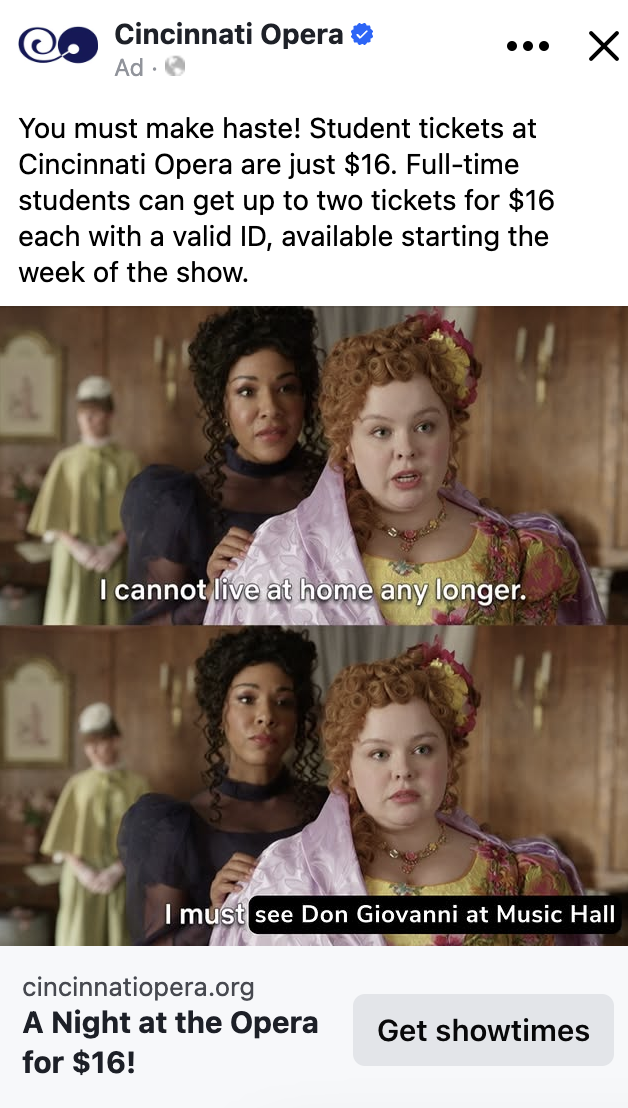
People are still searching for romance. They’re just not necessarily shouting about a single show anymore. (And you’re not competing with jewelers for Valentine’s Day targeting anymore.)
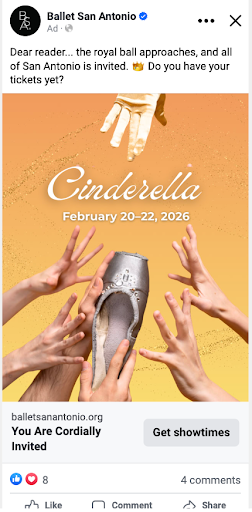
So whether you’re saying, Craving more romance? Put down the remote and pick up your ticket, or borrowing Lady Whistledown’s voice (as Ballet San Antonio did above), you’re tapping into the same truth: audiences respond best when you meet them where they are—and search behavior tells us exactly where that is.