Aly Maier Lokuta on the Intersection of Arts and Health
Aly Maier Lokuta knows that art and science aren’t opposing disciplines. They’re a shared language for strengthening public wellbeing.

This episode is hosted by Monica Holt.


Susan Magsamen has spent her career arguing that creativity and aesthetic experiences are not luxuries, but biological necessities woven into how we heal, learn, and connect.
A researcher, educator, and co-author of the New York Times bestseller Your Brain on Art, Susan has become one of the leading voices in the growing field of neuroaesthetics: the science of how the arts and sensory experiences shape the brain and body. Through her work with the International Arts + Mind Lab at Johns Hopkins and the NeuroArts Blueprint Initiative, she has helped bridge the gap between scientific research and real-world practice in healthcare, education, and community life.
In this episode, Susan reflects on the winding path that led her into this emerging field and explains what the latest research reveals about the profound impact of arts engagement on human wellbeing. She also explores how arts organizations can better communicate their value, why community-centered approaches matter, and what it will take to make neuroaesthetics a mainstream part of public policy in the years ahead.
Susan Magsamen: Without arts and culture, a community cannot grow, cannot thrive, cannot be economically viable. It creates the foundation for everything and it brings you back to safety, to security, to a sense of wellbeing, to social connection. And that’s what arts and culture does in a community.
Monica Holt: Hi everyone. I’m Monica Holt. Welcome to Arts Unscripted: formerly CI to Eye, but still dedicated to the conversations that help us all build a stronger, more impactful future for the arts. What if the most powerful tool for human connection, conflict resolution, and community health isn’t a therapy or a policy or technology, but instead a night at the theater?
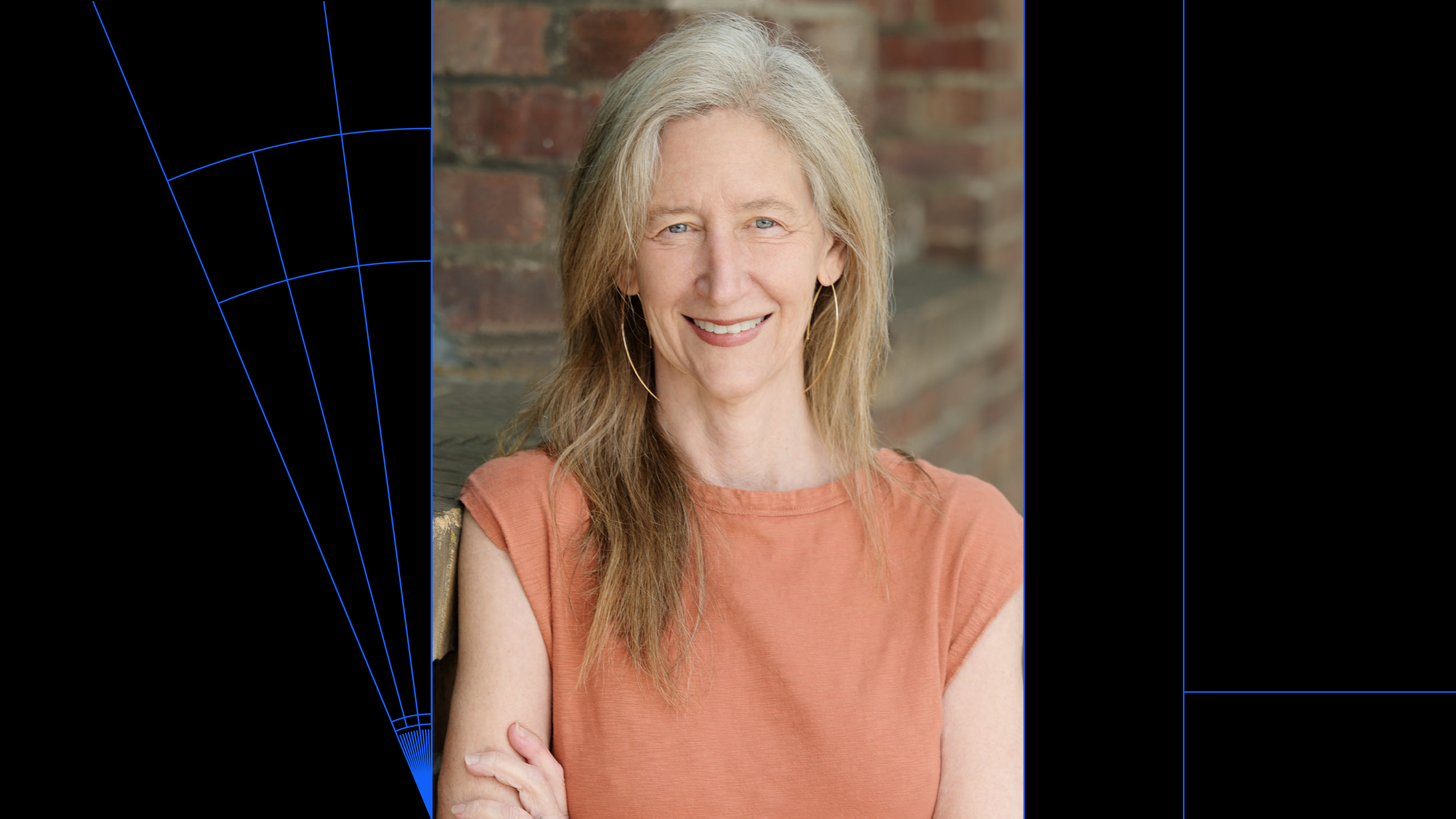
My guest today has spent her career building the scientific case for exactly that. Susan Magsamen is the founder of the International Arts and Mind Lab at Johns Hopkins, co-director of the NeuroArts Blueprint with the Aspen Institute, and co-author of the New York Times bestseller Your Brain on Art.
The research she and her colleagues have assembled shows that live arts experiences don’t just feel meaningful. They measurably change our brain chemistry. They synchronize us with the people sitting beside us and they activate biological systems that promote health, learning, and wellbeing.
For anyone who has ever struggled to explain to a friend, colleague, board member, or city council why the arts matter to a flourishing society, this conversation is going to give you some new tools. Let’s get into it.
Susan, welcome to Arts Unscripted. Thank you so much for spending time with us today. I am so delighted to get to talk with you.
Susan Magsamen: Well, it’s a pleasure. I’m very happy to be here.
Monica Holt: Well, we are thrilled. You obviously have been such a champion and pioneer for ways that are improving, changing, and revitalizing so much of the way the art sector is thinking right now. But before we get into that, just to start, would you talk to me a little bit about how art first came into your life?
Susan Magsamen: Yeah. I love that question. I used to — when I’d hear this question, my brain would go blank and I thought, “Well, that’s weird.” But then the more I reflected on it, what I realized was that this creative, making, aesthetic appreciation of the world, of smell, of touch, taste, has just been with me forever.
And I think that it’s like the fish in the water. You don’t know you’re in the water. You don’t know what water is. But I can tell you that the defining moment for me in this work when I knew that creative expression was a way that we process emotion was when I was about 12 years old.
I’m a twin and my sister, Sandra, was in a farming accident and almost lost her leg. Even now when she tells a story, it is just bone chilling. So she couldn’t really talk about it. She was stuck. In those days we didn’t have the word for trauma, but she was traumatized, and that really cut the connection, that porousness, that thin veil between the two of us.
And so I felt isolated. She felt isolated. I didn’t know what was going on. It was a really hard time. But my mom said, “Why don’t you start drawing? You like to draw. I think drawing would be really good for you.” And she did. And as she started to draw, she was able to create metaphors and symbols for what was happening.
And then I could understand this deep emotional well of fear and shame and uncertainty and unpredictability that she could never have expressed in words. And that was the moment when I realized that we’re so capable of deep feelings and expressions that talking can’t begin to touch, can’t begin to hold meaning the way some kind of expressive arts does.
And that’s kind of how I’ve sort of moved through the world since then, is seeing how people express themselves. Not with what they say always, but with how they find… It could be the weird shoes that they wear or the way they wear their hair or the poetry or the true art.
And so I see the world through creative expression.
Monica Holt: What a moment of clarity so early in your life, it sounds like. And I’m curious, you came up through recreational therapy and children’s television before even stepping into a research or research lab environment. Can you talk a little bit or share with us how those earlier hands-on non-academic experiences ended up really shaping the kind of scientist and practitioner that you’ve become?
Susan Magsamen: Yeah. I have always been incredibly hands-on as a kid. I was always in the mud. I was always making things. I was always creating things. I learned through my hands. That was just how I experienced everything. So it wasn’t theory to practice, it was practice to theory. And it still is.
And with recreation therapy, because I was such a nature lover and a horse lover and — I felt like I wasn’t an artist, so I couldn’t be an art therapist, but I really felt that wellness and being in these experiences where you were in community thinking about play was really the right place for me.
I was on the right planet. I might even have been in the right city, but I hadn’t found my neighborhood yet. And then Children’s Television Network, working in children’s television and also in adult learning moved me closer to different ways that we learn.
And my initial work was in looking at the psychology of Theory of Mind and a lot of the work that Howard Gardner and Kurt Fischer was doing at Harvard. I started my first company called Curiosity Kits, which were hands-on learning in arts, culture, and science.
And that was really fascinating to see how kids just learned better and retained information when they were making and how excited they were, how enthusiastic they were. And then the second piece of that was when children were engaged with a loving adult, they actually learned better and the validation of creating reinforced their desire.
Years later, I understood that that was reward systems and that was dopamine and serotonin and oxytocin.
So curiosity has really been a driver for me and we all have it and it’s not finite. That, you know, some things — IQ is finite, right? You can’t have higher IQ. But you can have what I call CQ: curiosity quotient.
Monica Holt: Oh, I love that. This is, curiosity — I might steal that from you.
Susan Magsamen: Do it. Do it.
Monica Holt: CQ. Curiosity quotient.
Susan Magsamen: But what ignites it is really the key. And again, for me, it’s been this area around creative expression and figuring things out with your hands and being in it.
Monica Holt: I am excited hearing you talk about that. I think the CQ part of it is such an enormous part of how I want to be approaching every day from a learning posture and you have to really be conscious in some ways of making sure that the folks around you understand how important that is.
Susan Magsamen: Maybe to add to that, because I don’t think you ever have to pitch it. I think you just have to embody it and it’s infectious.
Monica Holt: That’s absolutely right.
So neuroaesthetics is a relatively young field and I’m wondering for our listeners who might be newer to the conversation, could you establish a bit of a plain text foundation of: what is neuroaesthetics? What does it study and maybe a little bit on why you think it’s taken this long for it to get the kind of traction it has in the past several years?
Susan Magsamen: Sure. It depends on who you talk to, but a guy named Semir Zeki is often credited with the term and he was the first person that used imaging to find the seed of where beauty sits in the brain.
What he did was ask people to look at a painting and say, “Was it beautiful?” And this part of the brain lit up, but then the second question was, “Why is it beautiful?” And people thought it was beautiful for very different reasons. And there began neuroaesthetics.
And initially it was really around beauty, which is also a very complicated, contextually-layered term. But over the last now almost 30 years, because we now can non-invasively get inside our heads to look at the role of arts and aesthetic experiences without surgeries or things like that, we now have had the ability to study how these arts and aesthetic experiences measurably change our brains, our bodies, and our behaviors.
And adding to that, the natural progression of translation. How does this get translated into health — both physical and mental health; into learning; into communities. Thinking about innovation or collaboration and any outcome or any problem that we’re trying to solve for.
And so the definition of neuroaesthetics has really grown as it’s evolved over the last 30 years and it really has now served with the body of evidence that’s neurophysiological that’s important, but also you can’t begin to try to understand the arts only at a cellular level or at a biomarker level or an EEG level. It’s generative.
And so neuroaesthetics also really makes room for the artist, people with lived experience, Indigenous cultures who got there first, who’ve always understood the power of the arts are now weaving together with what we’re understanding from the neurophysiological or the psychological or the evolutionary biological perspective.
So we now have a fuller way to understand how the arts and aesthetic experiences change us and how we can use that because we know it’s evolutionary. We know that it’s our birthright and as we know that, we’re now able to apply it.
Monica Holt: And you’ve obviously spent decades in this work in various settings. In 2023, you co-wrote Your Brain on Art with Ivy Ross. Your Brain on Art becomes a New York Times bestseller, which I think really helps to democratize some of these ideas that folks were less aware of or didn’t have as much access to understanding.
How did that book come to exist? I mean, it became a textbook for a lot of us in the field and hopefully it will continue to do so, but what were you hoping that the book would do that the research alone maybe couldn’t?
Susan Magsamen: So right around the time that Ivy and I started to collaborate, I was working with the Aspen Institute and we had been bringing together people from all over the world that were engaged in the arts in some way. So arts and health, arts and learning, arts and community development.
And we began to start to see that the community of practitioners and researchers and policymakers were ripe for coalescing. Ivy and I did kind of a gathering, a salon at her home in Mill Valley around the same time where we brought together all the different stakeholders, researchers, policymakers, artists, practitioners.
And we asked them one question. We said, “How have the arts, if at all, ever impacted your life in some way?” And they had these extraordinary stories about how the arts had helped someone whose child was contemplating suicidal ideation, how someone with dyslexia had used art to build their reading skills, how somebody else had used it in business, how someone had used architecture.
And at the end of that gathering, I said to Ivy, “This field I am going to build. I’m committed to this work, but it’s going to take a while. And I think we have enough research that we could share this with the general public so people don’t have to wait to know this.” And I said, “Would you like to do it with me?” And she said, “Yes.”
And it took us four years to write the book. We interviewed over 120 people in all different disciplines and really we organized the book around the moments in our lives, the twists and turns in our lives.
And it really was something that surprised us when the book became a New York Times bestseller right away. It’s now been translated in over a dozen languages and [it’s] crazy. And so it’s really taken on a life of its own.
What’s interesting is I think it gave people language to what they already knew, and it also gave them permission — and this is amazing — it gave them permission to experience art again, because many people had felt so shamed and shut down.
And so it really began this cascade of validating that the thing that they knew that they weren’t even able to tap into was so important in their lives.
Ivy and I, in the book, we have something called the Aesthetic Mindset and the first thing is curiosity, is really being open to having that beginner’s mind. And then the second thing is playful exploration.
And this scares a lot of people because there’s no outcome, there’s no desired finished thing. You can’t check the box. It’s playing, exploring, messing around because you can.
And to be able to allow yourself to do that in a world that’s told you outcome matters, impact’s important, you have to finish what you start, why are you doing that, what’s the production line? And so that idea around playful exploration is really important and it’s so freeing when you do it. It’s almost like a guilty pleasure.
And then sensory experiences, right? How do you really know what the temperature is in the room? What does it smell like? What does it feel like? What’s the tension from the chair on your back? What are those sensorial things? What do you have your hands in?
And then the last one is being a maker and a beholder.
We’re both all the time. Right now, I don’t know what you’re going to say. I don’t know what I’m going to say. We’re in an improv, right? Instead of everything being so expected, surprise and novelty and navigating fluidity really does make you feel more alive.
And I think that’s what we all want is a sense of transcendence or transformation. And that’s what this work I think offers. And I think we’re just so hungry for it.
Monica Holt: You and the book have talked about how we are wired for art. And one thing that I know you’ve said before is this idea that art creates culture, culture creates community and community creates humanity. It is one of my favorite things.
But as you were just speaking, something that you said really makes me think about the difference between making art and experiencing it as an audience member. Does the science itself distinguish between those two interactions with art and aesthetics?
Susan Magsamen: Yeah, it does. And there’s certainly overlap. If you almost thought about it as a Venn diagram, there are things that — whether you’re a maker or a beholder — there’s commonality around engagement of the limbic system, engagement of the prefrontal cortex, and engagement of cognitive skills.
So when you’re a maker, it allows you to understand yourself. So making sense of the world, your world, and meaning making… and also then understanding it in context to the world.
And then the things about being a beholder that I like to talk about, one is perspective-taking. That when you are beholding, you are a little bit distanced from the experience. Let’s say it’s about theater or some other kind of performance work and it allows you to be able to experience. Try something on with a lower risk. And that can be really helpful in decision-making and processing your own emotions.
And then the other thing is empathy. And if you haven’t had the experience before and you can’t empathize, you can have compassion. And so that brings us together in terms of thinking about people that are not like us and we’re not like them, but understanding and valuing difference and doing that in a way that helps you feel from a safer, slightly stepped back place.
And then the connective tissue between audience members is also worth talking about. We know there’s synchronicity in audience experiences. So people come in as individuals, but they usually leave in an emotional state that creates synchronicity and unity and that’s also incredibly important.
Monica Holt: I think all of this is so moving, but what you just said, the audience leaving with some of that synchronicity, that moves me incredibly, particularly in moments like this. And as we think about, ‘How is it that we find points of connection and bringing people together?’ Would you talk a little bit more about that? What it means when an audience sits down together and witnesses something, what might happen?
Susan Magsamen: Yeah. So even to start by talking about the performer. So when a performer is on stage, a couple of things that happen depending upon what the art form is.
The first thing that happens is that they move out of a judgment space into a flow state. And so that’s a prefrontal cortex shift and it allows them to really open up and to lower their cortisol, their sort of anxiety and to be able to really share their gift and they’re so well trained that they know what they’re doing, right? They know it beyond practice.
The other thing that happens is that dopamine is released so they’re getting a reward for having that experience. And then the third thing that happens is their parasympathetic nervous system really is activated. So they’re actually really resonating in that space.
The audience is also releasing neurotransmitters like dopamine and serotonin and they are in training to whatever is happening with that performer.
And so they’re becoming a connective loop with that performer where their physiology, their EEGs, their electrical impulses are literally synchronizing with the performer, which is pretty extraordinary when you think about it and powerful.
And it could be calming or it could be stimulating or a range of… We have over 34,000 different emotional responses in terms of lived experience. So there’s lots of things that happen. You could feel grief, you could feel sorrow, you could feel awe.
But then the other thing that happens that I think is what you’re describing is the synchronicity that happens between the audience members. So they also entrain with each other and are releasing similar neurotransmitters where they’re really connecting on an electrical level as well.
And so they’re synchronizing together. So if you were going to do EEGs, you would see that there’s a similar brainwave pattern that’s happening across the whole group.
And so when you think about conflict resolution or you think about collaboration, you think about the ways that we universally can align and let our differences sort of dissipate, these art experiences allow that to happen.
And it happens, especially with music, in as fast as three milliseconds because sound resonates through our bodies. And so we are vibrating beings and sound and music has that ability to reach us almost instantaneously.
So it’s instantaneous that these things happen. And if you’re feeling good and safe in that environment, you’re more willing to collaborate and to be in connection and more at ease with the people that are around you, regardless of where they come from or what they know.
And you’re also willing to take more risks. And awe and wonder have a side effect of getting you to be more curious, to take that next step, be willing to say to the person next to you, “Hey, it’s great to meet you.”
That’s a risk, right? In a world where we’re more isolated, those risks are higher in some way. And so all those things are happening in one audience experience and I just think that’s extraordinary.
Monica Holt: It’s unbelievable to think about and it is so exciting because it also, again, just supports this idea that in moments of tension and moments of profound uncertainty, even, about how it is we find our ways back to each other in community… Arts are custom tailor-made to be helpful.
It’s just completely inspiring to think about and I’m just hopeful that more folks will really understand how brilliant this thing that’s right in front of us is and how lucky we are to be a part of creating, supporting, stewarding efforts that create such profound connection.
Susan Magsamen: And right in front of us. You just said that. It’s right there.
I want to make two points. One is that it can be on a street corner, right? It can be in your church, it can be in your living room. This does not have to be at a performing arts center, although it’s great to be at a performing arts center.
And so I always say it’s affordable, accessible, and immediate.
And if you go back and you think about our early ancestors and tribes and coming around the fire and the necessity to be able to communicate complexity, emotional complexity, and bonding for a community, music and dance were so essential because they were so limbic and they were so primal.
And I think that’s what happens from an evolutionary perspective when we come together and we sing and dance or we experience someone else’s storytelling and let those shields down because we’re coalescing around a common resonance, a common coherence.
And so it’s just extraordinary how smart the human experience is and how stupid we have been in forgetting that this is how we’re wired, right?
Monica Holt: Yeah. It’s so true. No, it’s so true.
The book also introduces the concept of the aesthetic triad. Can you walk us through that and what implications that might have for how we design arts experiences and the spaces that we’re presenting them in?
Susan Magsamen: Yeah. I love this work. This is by Anjan Chatterjee, who is a neuroscientist at University of Pennsylvania, and it’s a theoretical model, but it helps to explain why peak aesthetic experiences are so unique to each of us.
And it’s basically three circles that interconnect at the middle to create a peak aesthetic experience.
And the first one is sort of knowing what you know. So it has to do with where you come from, how you were raised, the geography.
The second is around sensory systems and we each have a very unique sensory profile and it’s not like anybody else’s. Maybe my hearing’s not as good as my vision, maybe my interoception is not quite as precise. We all have a unique imprint of our sensory systems.
And then the third is really reward-based and that ties into the Default Mode Network. So what do we value? What’s important to us? What do we like? What do we not like?
And so it’s the combination of those three things that come together that create your unique peak aesthetic experience.
The very early example of Semir Zeki asking what was beautiful and then when people… It was all in the same place of the brain, but when they talked about why it was beautiful, it was different because of their aesthetic triad and how they brought it together.
So I love it when people use visual teaching strategies to look at a piece of art. And that’s a really simple model that basically asks a group of people that probably don’t know each other to look at a piece of art and to simply say, “What do you see?” Not “What do you think it’s telling you?” but “What do you see?” And everybody sees something different.
Monica Holt: Yes. And it’s funny, there’s even some connective tissue between what you were just describing and some of the conversations that we’ve also been having just about language and design for marketing in terms of: how do you make it more about someone’s experience rather than about why the art is acclaimed?
Softly switching gears, I’m curious about the impact thinking model because I understand that perhaps it came out of a question that your mother asked you at Thanksgiving, which was, why aren’t these problems solved yet? Kind of asking you, how do we use the arts and neuroaesthetics to help us solve the problems of civic life?
Susan Magsamen: Yeah. My mother is really like a sage and we’re talking about all of these things and she’s like, “I just don’t understand. Why aren’t these issues being solved?” And I was like, “It’s a really good question. We often study things but we’re not so solution-oriented.”
So I brought together about 40 researchers, humanities folks, artists, public health people and I just asked that question. I said, “Is there a scientific model that we can use to really think about the arts and aesthetic experiences to really start to get at intractable problems?”
And we came up with this idea around what I call now Solution Science. And it’s first of all naming the problem and really understanding what the problem is that you’re trying to solve for.
And it can be a little problem, like there’s a hallway that kids are really afraid to walk down to get to their therapy because it’s scary and there’s no markers, or it can be a bigger problem around gun violence and youth decision making.
So really understanding, what problem are we really trying to solve?
The second phase of impact thinking is what I think about as collaborative discovery. What do we know about this problem through the lens of arts and aesthetic experiences? And then what’s our hypothesis about how arts and aesthetic experiences could address that based on what we know? And then doing the research, analyzing it.
But then really importantly, science — if you have a discovery today, it doesn’t make it to the real world for about 15 years maybe. With our work, you don’t have to go through the same process and so you can bring something to market literally very rapidly if you can prove that it really works.
So really looking at dissemination and scaling models and then evaluation of that work so that you can go back and it’s a spiral so then you can go back and do it again.
So the impact thinking work I think really honors the fact that the arts can be deployed so rapidly… and rigorous research and all of the different people that really need to be around the table to understand a problem and move it through those different stages. And we use that model in our lab for everything that we do.
Monica Holt: As we think about that, if you were an executive director at a regional arts organization, what would be the application of this framework? Because sometimes I think that getting-started piece is the hardest part for those of us at a nonprofit of any size frankly.
Susan Magsamen: So I think you still need to bring together the right stakeholders to identify what problems you’re solving for and really understanding what your community is needing.
When you’re doing this collaborative discovery piece, there’s so much information that’s now available. There’s the NeuroArts Resource Center, but there’s also really easily accessible ways to ask questions through the internet without going into doing primary research at your university.
We started something called the Community NeuroArts Coalitions that a lot of — we have now have 11 around the country that are bringing regional arts organizations, academic institutions, municipalities, and artists together to look at addressing some of the most intractable problems in their communities.
But I think I very much see the new community organizations as being arts organizations, as being cultural organizations, where people are coming for a myriad of reasons. So I don’t think you have to overtune the radio here.
I think you have to have the curiosity to say, “What is it that my community needs?” And then to start to create the solutions for that through arts and aesthetic experiences that you’re already going to be programming but framing them in a way that helps to address some of those problems.
Monica Holt: Yeah. I think that’s actually a really helpful roadmap for folks to think about in terms of how they can get started if, in their community, the NeuroArts Coalition there hasn’t been built yet — and maybe that’s something that they can be on a path to for the future.
For listeners who are newer to the conversation, NeuroArts Blueprint is the field-building initiative you co-direct with Aspen Institute designed to make the science of arts and health mainstream in medicine, in policy, and in communities.
2025 was a big year for the NeuroArts Blueprint. You launched, as you mentioned, the Community Coalition Networks. You launched the NeuroArts Resource Center and the Academic Network.
What does that acceleration tell us about the field today and what keeps you excited about all of these new opportunities?
Susan Magsamen: Yeah. Last year was a huge year. We had started to look at what were the initiatives that needed to be stood up in order to move towards sustainability in this coalesced integrated space where the arts are being used in so many different ways.
And so the resource center, the academic network, and the community neuroarts coalitions really fit in this infrastructure space. Two years prior, we had spent a lot of work working on evidence and research, because if the science and the evidence is not rigorous, you can’t do everything else because it’s like the snake that eats its tail.
And so launching these infrastructure pieces were really monumental.
Monica Holt: There’s a World Bank report that links arts engagement to economic development, and I’m just thinking of all of these different ideas and how we can help guide arts organizations who are trying to make the case for city government or a hospital system to join with them, to partner, to look at this bigger picture.
Is there one compelling data point that you’d want to put in front of them as they are developing what programs might fit their community’s need?
Susan Magsamen: I think one of the most compelling pieces of evidence that I have seen that the World Bank and the WHO and some of the other non-governmental agencies have really shared in different ways, is that without arts and culture, a community cannot grow, cannot thrive, cannot be economically viable.
Think about that. It creates the foundation for everything and it brings you back to safety, to security, to a sense of wellbeing, to social connection. And that’s what arts and culture does in a community.
So then you can think about the sectors, right? You can think about government, you can think about healthcare systems, you can think about the education system. But if you are not anchored in culture and in the arts and aesthetic experiences, you cannot thrive.
So we need to really begin to understand that. And when it’s not there, it’s like taking out a building block of a foundation and expecting that a building’s going to hold. It won’t.
Monica Holt: Yeah. That’s incredibly well put. And I think music to our ears and something that we all need to take to heart and make sure that we are being good spokespeople for across the board.
The Blueprint’s stated goal is to make arts and aesthetics mainstream in medicine and in public health. How close are we? What do you think the obstacles are in front of us?
Susan Magsamen: So I think it’s a long game. I think we’ve made tremendous progress in the last seven years in, first, bringing the communities together and really being a steward for weaving the narratives around how this is something that is essential to society, but it’s going to take time.
The last five years have been absolutely meteoric. I think the next five years are going to be even greater. And I think the momentum and the pace is going to be picking up even more because now people are getting it and they’re starting to adopt it and a thousand flowers are blooming, but the science, the research really needs to continue to grow. I’m hugely optimistic.
The one thing I will say is that we will always have to be hypervigilant in demanding that neuroarts and arts and aesthetic experiences are our birthright, that they are fundamentally guaranteed as human rights.
I think we’re always going to have to be beating the drum. I think it’ll get easier and I think the songs will harmonize more, but right now it’s just building, building, building, building. And there are obstacles always within that and challenges and silver linings and all of that.
Monica Holt: Yeah. That is well said.
Is there anything that a genuinely neuroarts-informed arts organization is doing or modeling in practice that others can learn from? What might a Tuesday look like at an organization that already has their foundation under them versus an organization that maybe hasn’t gotten started on their journey yet?
Susan Magsamen: Yeah. So every arts organization has a strategic plan and what their mission and their vision and their values and their principles are. And then based on those, what are the recommendations that they’re going to unpack, and then how do you implement those recommendations?
And I think for an arts organization that has spent the time to build a genuinely informed — I love that term — neuro-arts arts organization, they’ve done that work. So when they’re implementing on their programming, they are bringing evidence-based practices forward.
I think of things like: OrchKids is in our community, where in schools youth are using instruments to work together to build collaboration, to build communications.
I see that happening in many cultural arts organizations, that they’re bringing it out into the community and using the arts to help promote those different skillsets for young people.
But then also looking at the way that the arts can be used for longevity or reducing symptoms of different kinds of illnesses, like Parkinson’s and dance, or thinking about music and Alzheimer’s, and things like that.
And what I have seen at the High Museum, for example, is that their programming reflects the weaving of neuroaesthetic evidence throughout everything that they’re doing, but they also take the time to have conversations after performances where they’re bringing in other people in the community, they’re bringing in the practitioners and explaining how this can be taken into the real world in home or in schools or in community.
But also bringing in the researchers to explain the science makes a really big difference.
Monica Holt: Yeah, absolutely. We’ve talked a lot about how much progress has been made and how much excitement and momentum is there. Is there any example in particular that is giving you hope or bringing you joy today in the field?
Susan Magsamen: Well, so Renée Fleming and Ivy Ross and I are developing a PBS series, a national series called Wired for Art. At least, that’s the working title.
And last night we had a fundraising dinner where 50 people were brought together in Washington D.C. So finance and resources and both sides of the aisle, senators and congressmen were there, heads of education, heads of cultural arts organizations, artists and practitioners and researchers.
And the conversation was really about how to make neuroarts a thing, how to weave it into the culture. And the camaraderie and the synchronicity was so palpable.
And so when you have that kind of energy and it’s directed in a strategy, I love that. I just love that it is happening.
And can we make it happen faster? Yes. Can we make it happen better? Yes. But it is happening and I think that gets me really excited. And last night was kind of like, whoa, this is really exciting.
Monica Holt: That’s great. One of my great pleasures of my time at the Kennedy Center was being exposed to and getting to work on projects that uplifted these ideas and partnering with you and your colleagues across the board. So thank you. Thank you for all that you shared.
So we have reached our final segment, our quickfire culture. I must ask, is there one piece of culture right now, whether that’s a book or a TV show, that you are currently obsessed with and loving?
Susan Magsamen: I would say right now I’m really into His Dark Materials by Philip Pullman.
Monica Holt: Oh, sure.
Susan Magsamen: I love it.
Monica Holt: Fantastic series.
If you could go back in time, is there a live performance or event that you wish you could have attended?
Susan Magsamen: I would’ve loved to have been on the roof with The Beatles.
Monica Holt: That’s a fantastic answer.
What is one free resource in any field that everyone should be checking out and availing themselves of?
Susan Magsamen: The NeuroArts Resource Center!
Monica Holt: Amen. Say it loud and we’ll link it in the comments for the episode too.
Susan Magsamen: It’s amazing. I’m so proud of it and I think it’s just such a great resource.
Monica Holt: Yes, agreed.
And finally, if you could broadcast one message to executive directors, leadership teams, staff and boards of thousands of arts organizations today, what would that message be?
Susan Magsamen: The first message would be thank you for all that you do. And I think the second piece of that message is: the neuroarts work is here to help you and for us to grow this work together.
And we will not solve the problems of today, let alone the problems that we face in the future, alone. And that the marriage of arts, science, Indigenous culture, lived experience is the power, is the alchemy.
And I am so excited to be able to really build this work together and really excited about the future. So thank you.
Monica Holt: Well, me too. Thank you.
Susan, thank you so much for your time. It is always a gift to hear you talk about this and both instructive and inspirational all at once. So thank you very, very much.
Susan Magsamen: Well, you make it so easy. Man, you make it so easy.
Monica Holt: It’s my joy, truly.
Thank you for listening to Arts Unscripted. If you enjoyed today’s conversation, please take a moment to rate us or leave a review. A nice comment goes a long way in helping other people discover the show. And if you haven’t already, click the subscribe button wherever you get your podcasts. We’ve got some great episodes coming your way and I don’t want you to miss them.
A huge thanks to our team behind the scenes, including Karen McConarty, Yeaye Stemn, Stephanie Medina, Jess Berube, and Rachel Purcell Fountain. Our music is by whoisuzo.
Don’t forget to follow Capacity on Facebook, Instagram, LinkedIn, TikTok, and YouTube for regular content to help you market smarter. You can also sign up for Capacity’s newsletter at capacityinteractive.com.
And I hope you’ll reach out to us and let us know what you think and who you’d like to hear from next on Arts Unscripted. I’m Monica Holt. Thanks for listening.
Susan Magsamen is the founder and executive director of the International Arts + Mind Lab Center for Applied Neuroaesthetics (IAM Lab) which is part of the Pedersen Brain Science Institute of the Johns Hopkins University School of Medicine where she is a faculty member in the Department of Neurology. At the intersection of science and the arts, for more than 40 years, her work incorporates academic research and other ways of knowing to inform the design and implementation of arts-based programs and products to improve health, well-being, and learning. She is also co-director of the Neuroarts Blueprint: Advancing the Science of Arts, Health and Well-Being, a collaboration between the Johns Hopkins International Arts + Mind Lab and the Aspen Institute’s Health, Medicine and Society Program.
Susan has worked in both the public and private sectors on initiatives addressing early childhood development, physical and mental health, playful learning, workforce innovation, family engagement, aging, creativity, social justice, and under-resourced communities through the lens of the arts. She is the creator of the Impact Thinking translational framework, developed to advance effective interdisciplinary practices and approaches using the arts and aesthetics. She serves on the advisory boards of Creating Healthy Communities: Arts and Public Health, an initiative working to support public health applications of arts-based programs; the EpiLab at the University of Florida; the American Neuroscientists for Architecture (ANFA); Brain Future; Playful Learning Landscapes Action Network; and The Metropolitan Museum of Art’s education council. Additional advisory roles include the Science of Learning Institute at Johns Hopkins, First Book, Brookings Institution, the Clinton Global Initiative, and Sylvan Learning. Susan is a member of the Society for Neuroscience, American Psychological Association, the National Organization for Arts and Health, and the Alliance for the Arts in Research Universities. She is also a Royal Society of the Arts Fellow.
Susan served as guest editor of Child Art, the journal of the International Child Art Foundation, for a special edition called Your Brain on Art. She is also the co-host of The Arts + Mind Village Webinar Series, and a co-author of Creating Health Community Through Cross-Sector Collaborations. Additionally, she has published a range of peer-reviewed articles on the role of the arts in health and wellbeing including The Aesthetic Brain: A Growing Case for the Arts, in Cerebrum, a Dana Foundation journal.
In 2014, Houghton Mifflin Harcourt (HMH) acquired Curiosityville, an online personalized learning world Susan founded. She was named senior vice president of Global Learning Sciences at HMH, where she developed a global learning strategy for children, families, and childcare providers. She is also the creator of Curiosity Kits, a hands-on, multisensory learning company acquired by Torstar in 1995. Under Susan’s leadership, Curiosity Kits expanded from children’s educational arts programs into the health and wellness sector. She created more than 600 arts-learning programs and products in the arts, sciences, and world cultures for children and adults at home and in institutional settings.
Author of a number of books for children and families, Susan’s body of work includes The Classic Treasury of Childhood Wonder and Family Stories (Random House, 2010) and The 10 Best of Everything Families (National Geographic, 2009). She was also the author of Family Stories, a five-part series that included Nighty Night, Tooth Fairy Times, My Two Homes, Family Night, and Making Spirits Bright (Barnes & Noble, 2007).
Susan is a frequent speaker at national and global conferences.