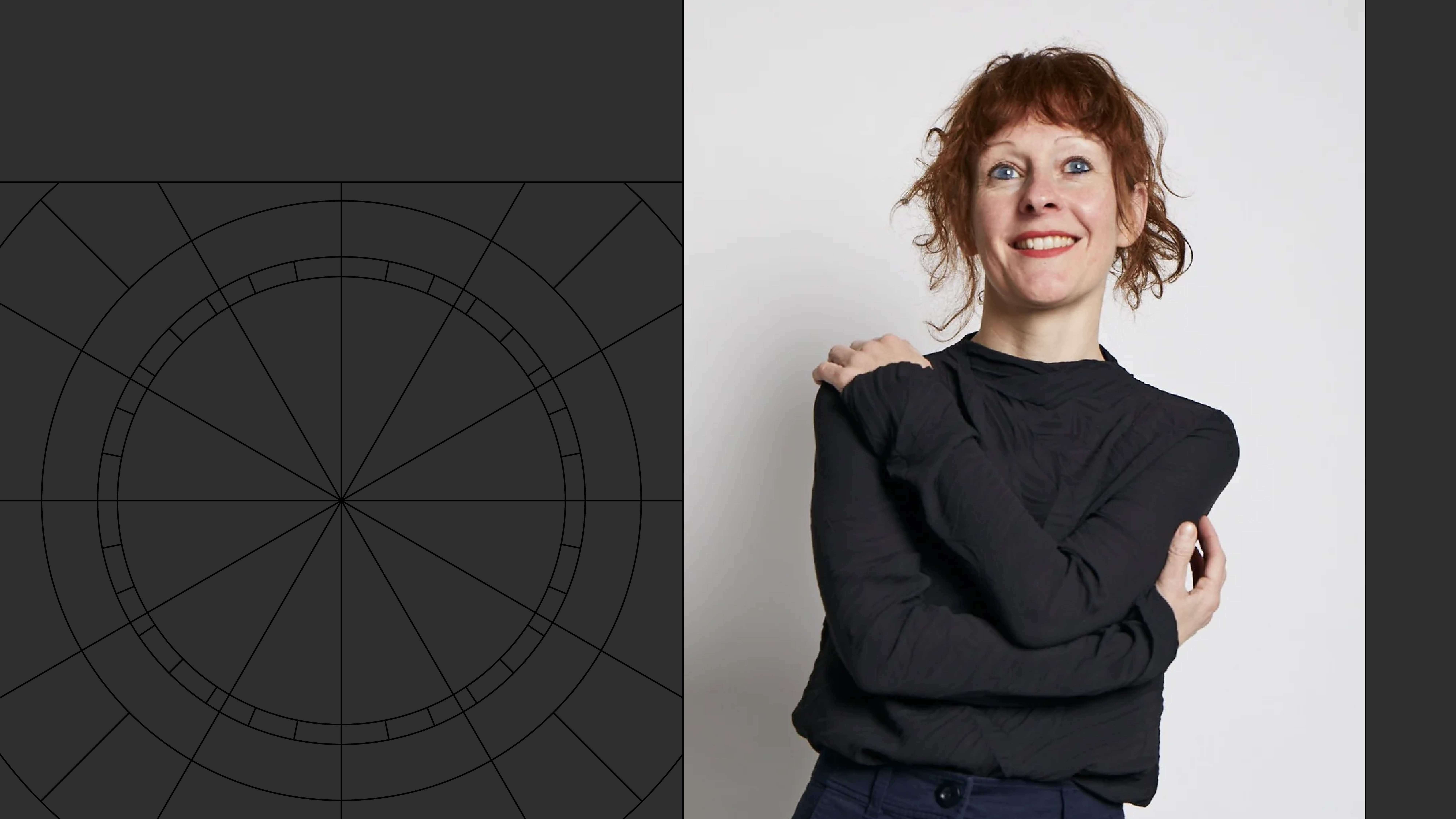

AI is changing how we work. What does that mean for arts and culture? Jen Taylor, Capacity’s Director of AI Strategy and Integration, shares what her research with over 100 arts leaders and administrators reveals about where the field really stands with AI: a mix of curiosity, caution, and untapped opportunity.

Giorgia Lupi, Partner at Pentagram
This episode is hosted by Monica Holt.
In This Episode
Giorgia Lupi has built a career at the intersection of design, storytelling, and information, treating data not as cold fact but as something deeply human.
From organizing buttons in her grandmother’s tailor shop in Italy to becoming a partner at Pentagram, her work consistently challenges the idea that analysis and artistry exist in separate worlds.
In this episode, Giorgia reflects on her path from architecture to information design, and unpacks her philosophy of data humanism: an approach that embraces subjectivity, emotion, and storytelling as essential to how we understand data. She also talks about her work in branding, including Capacity’s recent rebrand, and what it means to design in a world increasingly shaped by AI.
Transcript
Monica Holt: Hey everyone. This is Monica Holt. Welcome to Arts Unscripted. You heard that right. We’ve entered a new chapter here at the podcast. Since launching in 2017 with Capacity’s founder, Erik Gensler, we’ve brought you 175 episodes as CI to Eye, connecting with more than half a million listeners and speaking to dynamic leaders across the arts and beyond. Now, we’re entering a new chapter as Arts Unscripted: new name, new look, but the same commitment to meaningful conversations about the arts and our shared futures. This evolution is part of Capacity’s broader rebrand as we center promoting collective joy and helping organizations connect more deeply with the people they serve. And for that reason, today’s guest feels especially fitting. Giorgia Lupi has built a career at the intersection of design, storytelling, and information, treating data not as cold fact, but as something deeply human. From organizing buttons in her grandmother’s tailor shop in Italy to becoming a partner at Pentagram, her work consistently challenges the idea that analysis and artistry need to exist in separate worlds.
In our conversation, Giorgia reflects on her path from architecture to information design and unpacks her philosophy of “data humanism”: an approach that embraces subjectivity, emotion, and storytelling as essential to how we understand data. We also talk about her role guiding Capacity’s rebrand, and what it means to design in a world increasingly shaped by AI–what changes, and what remains distinctly human. Today is about seeing data differently, designing with intention, and finding meaning in the patterns that shape our lives. Let’s get into it.
Giorgia Lupi, welcome to Arts Unscripted. Thank you so much for being here today. I am so excited to chat with you.
Giorgia Lupi: Thanks so much, Monica. I’m really thrilled to be here.
Monica Holt: There’s a lot for us to get into both in your history and obviously this very exciting moment for Capacity with the rebrand. But before we get there, we like to start each episode by asking, what was your first relationship to art growing up? Were you involved in visual or performing arts and how did it touch your life?
Giorgia Lupi: Yeah. So I was a dancer. I studied ballet when I was four years old, and then I transitioned into modern at the end of my first grade. And then I really, in my teenagers and early 20s, loved contemporary dance. And so that was one part of my performing arts, but also I used to play the piano. And then when I was a teenager, I played the keyboard in a heavy metal band because I was very much into heavy metal.
Monica Holt: Well, that took an unexpected twist from ballet, modern, piano to heavy metal. I like that. We love a woman of all trades. So you grew up in Italy. Can you tell us a little bit about what that experience was like for those of us living in America whose childhood might have looked a little different than yours?
Giorgia Lupi: Yeah. I am from a very small town. 15,000 people. I would say pretty much in the middle of nowhere. It’s the big, plain, north center of Italy. But I believe that even looking back in retrospect, I’ve been born and raised with this beauty of the architecture around me. And then I ended up studying architecture, but I kind of think that the sense of this kind of rich and historically dense, aesthetic landscape really stayed with me. I also was and am an only child and my parents were both only children, so very, very small family. I needed to find ways to entertain myself. And I spent a lot of time with my grandmothers. Both of them were seamstresses. And that was me growing up, plus the piano and dancing. And I also used to draw all the time, like many kids, I suppose.
Monica Holt: Oh, I love that. I heard that perhaps as a child, you were constantly collecting and organizing things — buttons and textiles, you mentioned — from your grandmothers. Was that the moment that you started to think about kind of the analytical mind and how that intersected with your artistic brain?
Giorgia Lupi: I think so. I mean, obviously right now, looking back, that was the beginning of being an obsessive data collector and visual organizers, but I really loved spending time in my grandmother’s tailor shop. And in different days, I would pull out all of her buttons and threads and ribbons and just organize them visually on the table according to different visual rules, like the buttons that have one hole and then two holes and three holes or the colors or kind of like the lengths. And I just really remember the satisfaction of that little exercise. And probably my parents thought she’s just a little OCD, but I think that was really nice. But I also used to chart boys that I liked in late elementary school and middle school. And I had four boys that I was charting at the same time and they just got a little ranking grade every day.
And so at the end you’d see some trends and you’d see a guy that was really high in the beginning just going down, not sure what happened.
Monica Holt: This is the most scientific approach to girlhood crush that I’ve ever heard.
Giorgia Lupi: I have a visual. I have a photo that my mom gave me. I’ll send it over after in case…
Monica Holt: I love this. Well, between… I’m thinking of you organizing buttons and just thinking, oh, she would be really great to do a puzzle with, because I bet that when you sit down to do a puzzle, you first look at how you line up the similar… So I love seeing how these different wheels in your brain work. Talk to me a little bit about then how you took this youth filled with analytical mindset, but maybe not formal training, and then what that turned into as you headed off to school for architecture.
Giorgia Lupi: Yeah. So at the same time that I needed to decide what to do for college, also with my dancing practice, I actually won a beautiful and kind of prestigious dance scholarship in France that I decided not to take in the end because it was a struggling decision. But when you have like a fork in your life and sometimes you’re like, would I be a really fulfilled dancer? But I think I’m really happy where I am and I kept dancing afterwards. But I decided to go to school for architecture because truthfully I didn’t know what to do, as in, I knew that I wanted something… I wanted to study something that had some sort of like solid foundation and structure and I loved math. And so I was very drawn to that. But at the same time, I loved expressing myself creatively. And so going into fine art seemed like one step too far in that spectrum and studying engineering or math seemed the other way around. And somehow I found studying architecture was a way to merge these two parts of my brain in a way.
Monica Holt: Yes. And I haven’t ever heard architecture described in quite that way, but it really, that’s kind of an unlock for me in how you think about that marriage of these two sides of a spectrum. But it’s also funny you say this because your curiosity shifted towards data visualization, which of course is another marriage of these two types of ways of thinking. When did you realize that your curiosities and your interests were shifting away from architecture directly?
Giorgia Lupi: I mean, I think pretty early on because within my architectural studies, obviously you could choose some electives and I was always very drawn to urban mapping. And so the art of kind of like mapping and planning the city in a way and representing things that were happening in the city in a graphic way that could abstract all these fluxes and complexity into something digestible. And then looking into similar things that existed in the world, I did discover data visualization, which to me is the same thing, just not limited to geography. And then I really fell in love with the idea of being able to represent reality through these graphic forms that could reveal something better and more precise.
Monica Holt: I’m glad to hear you start to talk about that because I think sometimes when people hear the phrase data visualization, they’re imagining something hyper technical and analytical, but you have been able to bring this really emotional and intimate approach into the work that you are doing. Do you remember the first time you realized that data could also be something that’s deeply human?
Giorgia Lupi: Yeah. I think that perhaps it was like really during the studies. And so there was this urban sociologist that I used very much as a basis for my own thesis, master’s thesis, and his name is Kevin Lynch, and he has this beautiful book that is called The Image of the City. Or like, I think it’s a similar translation, A Imagem da Cidade, in Italian. And pretty much what he went on and did is like interviewed thousands of people talking about their perceived experience of the city that they lived in. And through these thousand interviews, he was able to map the pillars of our urban experience, like whether our walks every day have some particular kind of landmarks or edges and how that shapes our perception of what we feel that it’s a neighborhood, what we feel that is like our own area versus others. And I think that that fascinated me very, very much because ultimately it was really bringing human nature out into the urban studies that I was doing.
And I think I’ve always been so fascinated by human nature. I think if I didn’t study architecture or didn’t become a dancer, maybe I would’ve studied psychologies or human nature in a way and like what makes us who we are and what makes us interact in the world the way that we do. And so I think that in all of my work when I can, I try to represent people in the data because ultimately I think that’s what interests me. And I think that’s how also people relate to data in general through the experience of themselves as an individual in a dataset, if that makes sense.
Monica Holt: That’s really beautifully put. And it also makes sense to me because you’ve said that data is your favorite material to work with. And when you talk about it, you talk about it the way that a designer might also talk about typography or photography. I’m curious what it means to you to treat data like a material rather than just info or facts or outputs.
Giorgia Lupi: Yeah. Let me try to unpack that. So I don’t want to get too philosophical here, but if we think about what is data, data to me is an abstraction of the world that we human beings created because we couldn’t store reality on a hard drive. And so we needed to be able to select things to observe and to have these lenses and filters in a way where we could analyze reality one subject at a time. Like for example, we focus on credit card transactions, we focus on documenting something specific. And so that’s like a filter. And then once you’ve collected these quantitative and hopefully also qualitative data, those elements that you have become a material that you can encode visual variables on to represent them. And so if you think about any data visualization, you’re using shapes and colors that you give meaning to. Now, there’s convention obviously for height, for a certain value, but I thinking about data as this narrative element that gives you a privileged point of view on reality, and then an element that really you can use to encode any kind of like visual variable with. To me, it’s a way more interesting and kind of like open-ended way of thinking about it than just there’s this analytical way of representing numbers, right?
Monica Holt: Oh, I really love that idea of thinking about data as the narrative, not data as the numbers that help reinforce a narrative that already exists.
Giorgia Lupi: It’s interesting how you said that, because I’ve recently published a book that is called Speak Data that is a book of interviews where I didn’t only want to talk about my own view of the world of data, but together with my co-author, we interviewed experts in a very of different fields, not data experts, but kind of like writers, scientists, doctors. And while having them talk about their own experience in the real world with data, we also asked all of them about what is their definition of data. And I found the one from Naresh Ramchanda, who’s a writer that was a partner at Pentagram before, very interesting because, and I hope I’m going to do a good job quoting the actual definition, but “data is irrefutable points of drama in a plot of a story.”
Monica Holt: Oh, I love that.
Giorgia Lupi: There are these moments and facts that are data, but ultimately there is a story that follows. And so those can be kind of like anchoring points for a bigger story. And I kind of really liked his way of thinking about it.
Monica Holt: Yes. And it’s funny, when I think about the book that you mentioned, Speak Data, you write a bit in there about how the U.S. census is a reminder that data is never totally neutral. And as we’re reframing how we think about data, that too was a similar kind of change of opinion.
Giorgia Lupi: Yeah. And that specific example was to explain a project that we did with the Museum of the City of New York that was around the release of the 2020 census. We kind of proposed an interactive visualization where instead of focusing on the census questions that are very quantitative and limited, ask people to reflect and create their own data portraits about what makes them them, whether thinking that the next generation will need a better future, or how they feel in relationship to their country and their age, versus where you’re from and what age bracket you are. And so questions that started from the senses itself, but made them really more human. And obviously, again, that was an artistic speculation to make people reflect and create these visuals that collectively kind of like piled up over the course of the months. What we wanted to get with that in general is also that, it’s true that everybody thinks — or most people think — about data as this objective truth, but data is highly subjective because ultimately it’s human made.
And even if it comes from a sensor or a device, a human being decided what to record and what to leave out. And so I think in a way, really thinking about data always as subject to some choices, it’s an important reminder. I don’t think that undermines the power of data to be able to provide really important information, but it really reminds us something about its own nature, which I think it’s just important to have as a general practice.
Monica Holt: Yes. And what you just said, the subjectivity of data, that is, I think, come into even clearer light with all of the latest kind of movement in AI and what that’s teaching us about the data that we are feeding tools that then we are using the outputs of, and hopefully that is also helping with our recognition of that subjectivity. With that in mind, what do you think it means to be fluent in data today?
Giorgia Lupi: I think it means pretty much being able or being willing to ask yourself the questions about the things that you and I are talking about. Where do the data come from? Asking yourself when you see a chart, what are some of the things that might not have been represented here? And this is not to criticize or judge the chart itself, but just to have a critical eye on what’s the point of view. Because imagine that we read an article on the New York Times, on a respectful outlet, and we know that this article has been written by somebody. And so we take into account that as much as they want to be objective, there’s some sort of angle to that. But we see a chart and we think that that’s the truth. That’s reality. It’s numbers. And I think we should just consider it the same as the article itself.
So just really encouraging people to ask these critical questions and to be aware of when, for example, context might be needed to understand the particular number. And again, to also remember that these data have been collected by somebody that simply had an angle on reality that they wanted to share and understanding the complexity that sometimes I think is needed to represent reality versus an oversimplification could be good points to start. My ideal would be that people fell in love with data and treated it as a language that they can learn how to use, right? But I know that it’s not for everybody’s career or life.
Monica Holt: Well, I think after listening to this, there will be a lot more folks who are feeling that way. We spoke a little bit just now about your book, but I wanted to go back for a second to one of your other well-known projects, which is Dear Data, which started out as a series of hand-drawn postcards. Tell us a little bit about that project.
Giorgia Lupi: Yeah. So Dear Data is a 52-week correspondence with this other designer — her name is Stefanie Posavec — that lives in London. I live in New York, and we only met two times at a conference, speaking at a conference before we started this weekly data correspondence in the form of a postcard that was sent across the oceans. And so pretty much we decided to try to get to know each other through data only. And every week we would collect our own personal data around the weekly shared, mundane topics, from our interaction with our partners, to the thank yous we said, to the time that we complained, to the sounds around us. And then we would draw the data visualization — hand draw or hand paint or whatever kind of material. And so over the course of 52 weeks, first of all, we really got to know each other. We’re friends right now and the project got pretty viral.
It’s in the permanent collection of the Museum of Modern Art right now, which is quite nice, but I think —
Monica Holt: Extraordinary.
Giorgia Lupi: No, I mean, I’m obviously way beyond happy about it, but I think what I’m even happier about is how well received it has been. We have seen thousands of people, not even designers or artists, who learned about the project and really wanted to try it out. Even pairs. And hundreds of them, they were able to go through all the 52 weeks, which was an insane amount of power, I think. Will power. To just collect and draw and collect and draw every week. And so yeah, that’s the essence of the project.
Monica Holt: Why do you think it is that people connected so closely to it? Do you think it’s the permission that it gives folks to notice really what’s happening in their own life? What are your theories about that connection?
Giorgia Lupi: I mean, maybe a few things. I think that mundanity of it, like the fact that we’re collecting very mundane topics. I’ll make an example: a week of complaints, collecting the time we complained. We didn’t only collect a number, like I complained 200 times. For everyone, we added details about why, what was happening, who was I complaining to? Was it even necessary? And then encoded all of these categories and qualitative data in the symbols. But it’s something kind of mundane if you think about it. It’s not like a grandiose thing. It can happen in any moment of your life. And then probably the fact — and I heard that actually quite a few times — people, because they’ve learned how to just have quantities and things to visualize, were less afraid of the white page compared to starting a drawing or a craft project from scratch and like without data.
Monica Holt: Did it change at all for you the meaning of the project when it went from being one-on-one and very personal to something that then the world… it was on view for the world, all of this information about your life?
Giorgia Lupi: I always see the projects that I do as something that I hope will live a life of their own. I hope that they will get to outcomes that I don’t expect. I think that that’s the beauty of them. Learning more about what worked and what didn’t, what could stick around and what didn’t. And I’m just like really, really happy, honestly. I’ve seen incredible things that came out with people that have been like knitting their personal data and sending it to each other. So took it to a completely different level. And that’s kind of really inspiring.
Monica Holt: So all of this feeds into the idea of data humanism. Could you explain that phrase for all of us and what that means to you?
Giorgia Lupi: Yeah. Data humanism is a combination of two words that came to me and I wanted to put out in the world. A couple of years after Dear Data, I’d been asked to write an essay around my practice for Print Magazine at the time. And I just like paused and reflected and looked back at the work of my career and wanted to find a common thread. And for me it was really, really that like every project that I made tried to highlight the human aspect of data in many ways. And so trying to put together all of these things that I’ve done, I wrote this visual manifesto of what I call data humanism that ultimately is a suggestion to an approach that is: always remember what data stands for, which are our messy, imperfect, uncertain human lives. And even if we want to display them through metrics, all of these elements that are imperfection, uncertainty, uniqueness in a story need to be taken into account and rendered. And so that was the origin of that data humanism word.
Monica Holt: Well, and the embrace that you have for the complexity, it’s a stirring thought when so many of us want to simplify. I like that you are looking at it through a different lens. We talk about all of this. You are now a partner at Pentagram, right? This is an iconic name in design. As you became part of Pentagram and you were thinking about all of these different inputs from your life, artistically, creatively, from data viz, from all of these different areas, what perspective did you want to bring into the firm when you joined in 2019?
Giorgia Lupi: Yeah. Yeah. It’s been a wonderful experience. I think at that point in my career, I was kind of ready to widen a little bit the breadth of what I was doing because as much as I think that I will always think in data, I was kind of thinking that generally representing content in a way that has a visual impact, it was something that I was interested to explore. And I remember my partner, Paula Scher, who’s this incredibly accomplished and amazing graphic designer, at some point in the beginning of the conversation with me said, “Well, I know that formally you haven’t designed a brand identity, but what you do is visual identity because what is an identity that is visual? It’s something that is recognizable. It’s something that responds to a broad content and story and is able to translate it into visual form. It’s something that is memorable and it’s something that is there to stay.”
And she said, “Well, your work does that. You’ll be a no-brainer for you to join.” And then obviously by joining, I have an amazing team of people that are brand identity designers, content strategists, like digital designers. They all have a passion for data. I have a data researcher that works with me. And so I think we’re really able to have a, I would say data informed mentality and like mindsets to all sort of broad graphic design projects that we take on. And I kind of love it. And I hope that I am bringing something to the firm with this different approach.
Monica Holt: I think I can speak confidently by saying, I think you bring quite a significant amount to the firm with that mentality and approach. A lot of the projects that I know Pentagram is so well loved and respected for are coming in at moments where a brand is reinventing themselves. And you are coming into those rooms and I’m thinking probably have to immediately be building trust and partnership with new people every time. Can you talk a little bit about how you create these great creative partnerships with clients and with folks that you’re meeting through the work that you do?
Giorgia Lupi: Well, I think that one thing that we really always want to do is a fair and really planned amount of time, whether it’s a formal strategy aspect and deliverable to project or like a big phase of content analysis. We really immerse ourselves in the world of our clients, where we understand their core mission, we understand where they’re coming from, we understand who they are in the organization and what’s the vision for their own world. And I think that probably also because we care so deeply about content, because of all the work that I’ve done before where, again, before doing any data visualization, I mean, you really need to learn and immerse yourself in the content to be able to tell the story. I think to me, this is where the great partnership begins, which is really making sure that before we even get to explore any design in a way, absolutely have a design brief that is 100% informed by a deep understanding of the client itself.
And I know that sometimes it’s hard to fit it in a short timeline, but I really don’t think that this is a phase that can be skipped. And I think in general, great partnership also comes from great clients that have an open mind, that they are willing to be challenged in a way, that they’re willing to really trust us. And I think that’s how we start everything.
Monica Holt: That makes sense. Are there any common themes that you see in terms of what organizations uncover about themselves through these processes?
Giorgia Lupi: Well, especially if we’re talking about a rebrand, it’s really a moment in time where a client needs to take stock of what still works, of what they used to communicate to the world in the past however many years, and also discover what is it they’re still attached to and what is it they’re ready to let go. And I think this is a process that is really interesting to try to facilitate and not to force in a way and really to try to be good listeners. And I think that sometimes, or at least I’ve heard from younger designers, that a rebrand needs to change everything because otherwise you as a designer don’t bring your own value. I really don’t believe that. I think you really need to be trusted partners, to hold hands to the client that is in a moment where there’s a big change, whether it’s from the top, whether it’s from changes in the organization or in how they want to position themselves in the world.
And it could be a scary and challenging moment. And so I think that maybe a common theme is really that moment of reflection where as an entry point, a lot of clients come and they seem to be super, super open to change everything. And then the more that you guide them through the process, the more simply they recognize that they’re still attached to part of the previous way of describing or visualizing themselves and that they’re not letting that go. And I think that then our job, informed by the strategy and informed by what we think is the right move for where they want to go, again, we try to guide them. I see our work obviously in creating a visual world and a verbal world for them to use, but also really to try to translate what they already know and do very well into, again, the world of identity expression.
Monica Holt: Well, we are obviously also excited about the conversation because by the time this episode is airing, Capacity… We will have just launched a rebrand with Pentagram’s support. As you are reflecting back on that process on this launch day, what made Capacity feel like the right partner for you and your team and what drew you into the conversation?
Giorgia Lupi: Yeah. I mean, it was an amazing, amazing collaboration. And even within the team and with our partners, we have kept saying how great of a project, of a client, of a real day-by-day kind of collaboration it was. And I think, well, in general, from the beginning, there’s very many similarities between the organizations themselves. We are a service-based company, and so we have clients and we consult ourselves too. We feel really we understand their challenges in a way. We also have different scale clients like the Capacity team, and so bigger clients, it might be more institutional, and also smaller and scrappier clients that we love as well. And we kind of work with them in a different way. And so that also felt like a challenge that we knew. I also feel that generally all of our team loves the arts and culture. We are really lovers of the arts as a team, and maybe there’s a self-selecting kind of vibe, and so that was perfect.
But honestly, it was also the vibe from the first conversations that we had even before we were confirmed as the firm that you guys chose for the project. It really just felt that there was a really, really nice feeling in the room. We genuinely liked the people, and we thought that this could be a great partnership. And in fact, it really was.
Monica Holt: Yes. And I’m curious, as you first start trying to answer some of those questions about an organization’s identity, obviously you were talking to the whole Capacity team, but you were also interviewing clients. What are the kind of important factors to bring into the room at the beginning of these conversations?
Giorgia Lupi: Well, I think our job in the beginning, and again, we had months of strategies and finding and positioning and brand architecture and brand values before we even move into design. I think what we really wanted to do that we do every time is ultimately understand the core of what makes a client unique, really. What is the real voice that needs to speak through the elements of the brand? And so we interviewed obviously a lot of members of the Capacity team, but also some of their clients. And I think this is important to confirm in a way or to have nuances from what we’ve heard from the internal, but really thinking about the people that work with you on a daily basis, the people that trust you as a client, like learning what it is that makes the collaboration special. Because in a brand expression, in a brand identity, I don’t think that only the core mission and values that are from the inside to the outside need to come out, but really the ethos and the nature of the people that make the company itself.
And so really talking to people gave it the real nuance that then we were able to use as leverage for the visual brand.
Monica Holt: Yeah, that completely makes sense to me. And as I think about my time when I was a client of Capacity’s, I really think about the deep trust, the joy, and the data-first approach that Capacity took throughout our time together. How did you think about translating that feeling into a brand expression?
Giorgia Lupi: It was so amazing to bring this to life. And I think today we can reveal the tagline for the brand, right? And it is promoting collective joy, which I believe is a lot of the essence of what we’ve been trying to translate in a way. And it’s interesting because the tagline didn’t start as a tagline that was external facing. It was part of the brand essence in a way. And I think it’s interesting because it talks about the promotion aspect, but not promotion of a particular service. Really the idea and the passion for it, really the world that we want through this kind of promotion of collective joy. That was one guiding pillar. But also throughout interviews, we also kept hearing that we are a lighthouse for our clients. And so that aspect of really being able to shine a light on what matters. And obviously there’s a beautiful visual metaphor here with the world of stages, of audiences, and with the New York of the bright lights in a way that feels such an iconic pillar and essence of the brand itself.
So these were, I think, the main core visual inspirations for the brand itself. And obviously we should mention that through the strategy project, we ended up with a renaming, which is dropping the word interactive and remaining with the actual capacity.
Monica Holt: We’re just capacity now.
Giorgia Lupi: Just Capacity. And I think this was also an aspect of really reflecting how Capacity has been through the years able to evolve through digital and technological transformation and really maintain the ethos of the passion for the art world, for their clients, for the joy that it brings, through being savvy consultants in a digitally changing world. And so the word interactive felt great for when Capacity started. It was years ago when the digital world lived through the word interactive. And right now, it was really a moment to be ready to embrace capacity. That obviously has an interesting metaphor about an audience that is filling, but also the skillset and the rigor and the trust to help a client move forward. And so long story short, if we have to describe the visual brand, there is a primary logo that is inspired by classic art deco typography.
Again, this bright city of bright lights in a way, the sparkly theater area in New York, but then it’s actually chiseled and edited for digital expressions. And then in the identity, we will see this radial pattern that is flexible and dynamic that is interspersed throughout the elements of the brand. And again, speaks to the stage and the light that gets turned on and turned off and an audience that gets full in a way. And there’s this feeling of tension and release, like if you are at a performance with some suspense, then the feeling that you have. And through the layout also to anchor some of the elements… And you’ll tell me if I’m getting too nerdy about all of it.
Monica Holt: No, no, this is fantastic.
Giorgia Lupi: We’ve been very inspired by the most subtle visual moves of the tickets in a way, the tickets that you used to have, and now you have on your phone. The colors are playful and joyful and pay an homage to the light that shines in a way. And so hopefully — really, I mean, we are so, so excited about this brand. And the Capacity team, you guys are too. And we’re really, really happy for it to see the real light today.
Monica Holt: Yes. I think it was so beautifully done. When Christopher first told me about promoting collective joy, I about started crying. I thought that was so beautifully put and completely embraces all that I have felt in my journey with Capacity. And I think you found a way to really bring the warmth and humanity and trust that we all associate with our colleagues and who we work with into something that also speaks to the aspiration and the ambition for the field and for all of us together. We’re all so grateful for your work and for Pentagram’s work to bring that vision to life for us.
Giorgia Lupi: I mean, I really have to say to all the things we were discussing at the beginning of the branding conversation — and I swear I’m not saying it because you’re here, but — collaborating with the team was incredible because I think that you all were so really open and trustful in us. But at the same time, I think it was amazing because it feels like the ideas on where the world of Capacity needed to go were clear, were there, were in sync. It was a very choreographically synced team of people in a way that made the work for us pleasant, beautiful, and easy, to be honest.
Monica Holt: I’m thrilled to hear that. It’s also interesting for us to be thinking about what distinctly human design means in this moment where we know that we are part of conversations about the role of generative AI and how that can work to our advantage, but also how we distinguish what is necessary in terms of the human personal viewpoint. How do you think about that alongside the future of design and as you’re thinking through projects like this one, or others that you have in the pipeline?
Giorgia Lupi: That’s a really good question. And I think especially when I talk to students in a way, I have a very, very strong point of view on the fact that AI can be used for many things that can be useful to optimize and maybe shorten some execution time, but absolutely not to generate ideas. I mean, we as a team use AI. And even for the Capacity project, at the end of the project, we actually wanted to give the team the tools to be able to implement all of these interesting motion assets and even the data visualization guidelines that we’ve made them on a daily basis in an efficient way. And so we used some coding of AI to create for them these generators that will ultimately help them implement these on a daily basis. And I think this is a good — personally, I think this is a good use of AI.
You’ve already crafted the system. You’ve already just really worked with the people to understand where they need to go — something that I think only a human can help you translate. And I believe that this will always be the thing that only a human will be able to do successfully. And so I kind of think that in general, I am a little worried about the flattening of the quality, the flattening of the spectrum of storytelling and narrative in general with generative AI. I have a team that I hire because of a reason, because of all of their personal ways of parsing the world through their own eyes, through their own brains, through their own references, and then being able to be a generator of ideas with me because of their very specific way of looking at the world versus like a broad pull —
Monica Holt: Exactly.
Giorgia Lupi: — that actually will always, I think, end up feeling pretty generic, even if you are very good at prompting. But I mean, I think that I also don’t want to be that person that says, “Oh, I wish we could get back to the world before AI.” Maybe personally I could say that, but I think we can’t escape it. And I think it’s really just about maintaining the critical thinking on when it’s good to use it or not.
Monica Holt: Right. And you don’t want it to interfere with what is authentically who you are. Giorgia, we have come to the end of our time together, which means it’s time for a little quickfire culture questionnaire. So to start, what is one piece of culture right now — and that can be a TV show, a book, a performance, Instagram reel — that you are currently obsessed with?
Giorgia Lupi: If I have to be really honest about my current obsession, it’s about something that might not be considered very popular culture, but it’s my Ashtanga yoga practice. It’s a very specific type of yoga that I do every morning where you pretty much repeat the same sequence over and over. And it’s the most traditional form of yoga. And there’s so much that goes into your own nervous system, spirituality, physicality, and life into this practice that right now my Instagram feed is pretty skewed through that and readings about it. But I think it’s like, again, maybe comes back to that in this world that is completely digital, I kind of come back to real physical practice and craft, but that’s what I’m obsessed about right now.
Monica Holt: It’s a great obsession. If you could go back in time, what is a performance that you would’ve wanted to attend?
Giorgia Lupi: I actually was thinking about it because I knew we were going to ask this question. And I think that to me is Italo Calvino reading Invisible Cities. That was the early ’80s, early 1983 at Columbia. And at that point, he was already writing what would become the Six Memos for the Next Millennium, which is another really beautiful book, thinking what literature is and what it is for, what does it mean? That is kind of the room where I would want to be.
Monica Holt: That is an excellent response. What is one free resource in any field that everyone should check out?
Giorgia Lupi: I think I want to say generally the Letterform Archive and their online collection. It’s a beautiful century-spanning of graphic design that is fully available online. And I think even just for a pleasant visual experience, it’s really something I’d recommend.
Monica Holt: Wonderful suggestion. Our final question today is if you could broadcast one message to executive directors, leaders, staff, and boards of thousands of arts organizations today, what would that message be?
Giorgia Lupi: I think it’s more a message of appreciation and support than a message of change because I think that arts organizations right now are really what are keeping us human. And I think I would say to keep making work that is in alignment with their core mission and values and not driven by any cultural trend. Keep being weird and surprising and challenging and keep bringing us collective joy.
Monica Holt: Giorgia, what an absolute delight. Thank you for the time and thank you for your beautiful work with Capacity on this branding and overall representation to the world. We’re very excited.
Giorgia Lupi: Thank you, Monica. This was a wonderful conversation.
Monica Holt: Thank you. Thank you for listening to Arts Unscripted. If you enjoyed today’s conversation, please take a moment to rate us or leave a review. A nice comment goes a long way in helping other people discover the show. And if you haven’t already, click the subscribe button wherever you get your podcasts. We’ve got some great episodes coming your way and I don’t want you to miss them. A huge thanks to our team behind the scenes, including Karen McConarty, Yeaye Stemn, Stephanie Medina, Jess Berube, and Rachel Purcell Fountain. Our music is by whoisuzo. Don’t forget to follow Capacity on Facebook, Instagram, LinkedIn, TikTok, and YouTube for regular content to help you market smarter. You can also sign up for Capacity’s newsletter at capacityinteractive.com. And I hope you’ll reach out to us and let us know what you think and who you’d like to hear from next on Arts Unscripted.
I’m Monica Holt. Thanks for listening.
About Our Guests
Giorgia Lupi
Partner at Pentagram
Giorgia Lupi is an award-winning information designer whose work synthesizes data and storytelling in innovative ways to create unique and singular brand expressions.
In her practice, she designs engaging data-driven visual narratives across print, digital and environmental media that create new insight and appreciation of people, ideas, and organizations. Her vibrant and inspiring design work empowers leading global organizations to achieve their mission through data-driven storytelling and reflects her belief that data has the capacity to make us all more human—advancing our intelligence, engagement, and delight.
One of the most lauded designers of her generation and a prominent voice in the field of data design, Lupi was the 2022 recipient of the National Design Award from the Cooper Hewitt, Smithsonian Design Museum, and the first data visualization practitioner ever to be named in its communication design category. In 2022 she also received an honorary doctorate from the Maryland Institute College of Art.
Across her career, Lupi has built rich, visually driven experiences around data for international clients such as Google, the Gates Foundation, Verizon, IBM, Deloitte and Starbucks. Recent cultural clients include MoMA, TED, Triennale Milano Design Museum and Getty Museum. She has designed custom data visualizations for national and international publications like The New York Times, Wired, Popular Science, Bulletin of the Atomic Scientists and Italy’s Corriere della Sera. A proponent of using data to help bring awareness to some of the world’s most pressing problems, non-profit clients and causes include the Bill & Melinda Gates Foundation, Knight Foundation, World Health Organization and United Nations.
Lupi was born in Italy and received her Master’s degree in architecture from Università di Ferrara and her PhD from Politecnico di Milano, where she focused on information mapping. In 2011, she co-founded Accurat, an acclaimed data-driven research, design and innovation firm with offices in Milan and New York. She joined Pentagram as a partner in 2019.
Her work is part of the permanent collection of the Museum of Modern Art and she has been commissioned for original art installations also by MoMA, Museum of the City of New York, New York Botanical Garden and TED. A former MIT Media Lab Director’s Fellow, she is a member of the World Economic Forum’s Global Future Council on New Metrics and a Fellow of the RSA.
Her TED Talk on her humanistic approach to data has over one million views. She has published four books: Speak Data (Princeton Architectural Press, 2025), exploring data as a language with a range of perspectives from experts across disciplines; This Is Me and Only Me (Corraini Edizioni, 2024), a children’s book introducing the concept of data to kids; Observe, Collect, Draw! A Visual Journal (Princeton Architectural Press, 2018), a guided journal for collecting visual data; and Dear Data (Princeton Architectural Press, 2016), exploring the details of daily life through hand-drawn visual data. Lupi has been featured in international media including The New York Times, The New Yorker, The Guardian, The Washington Post, NPR, BBC, T Magazine, Vogue and Vanity Fair.